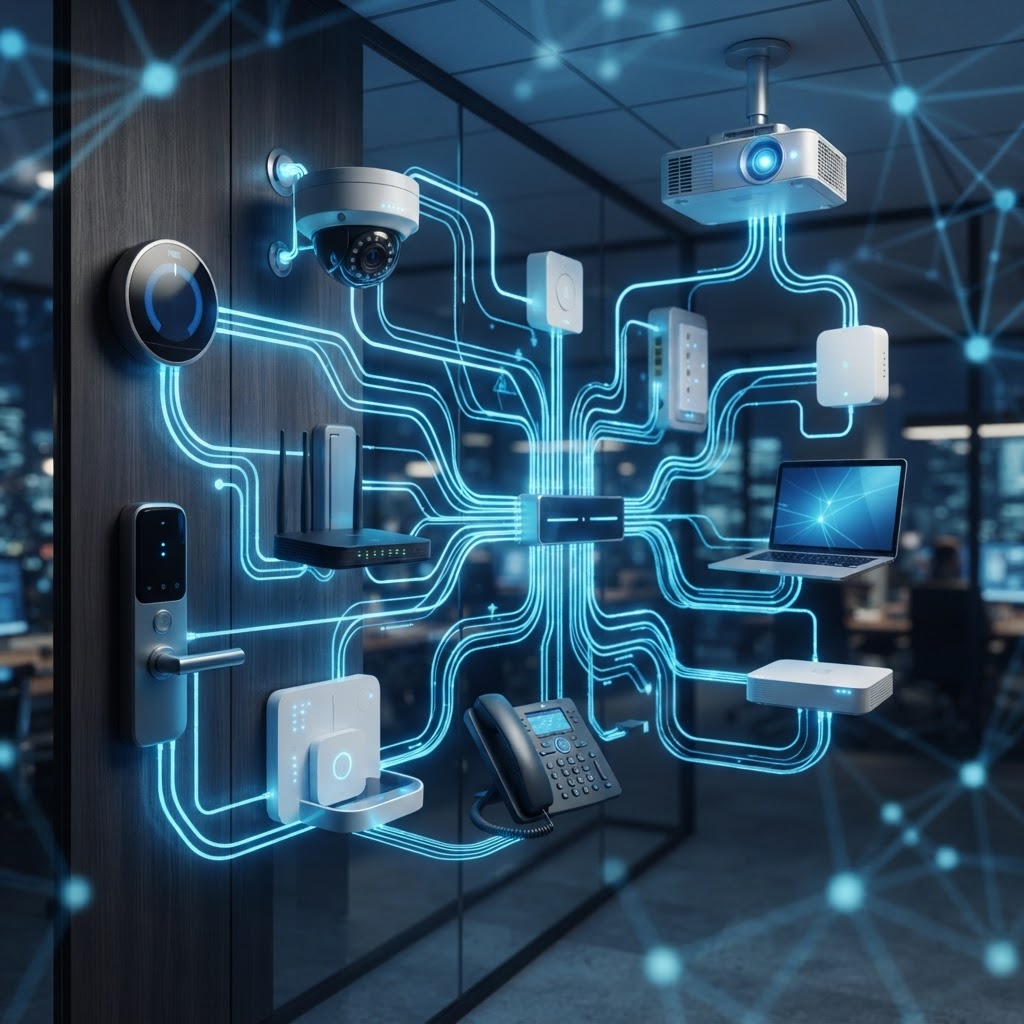
- Critical infrastructure requires specialized insurance due to the integration of legacy Operational Technology (OT) with modern IT networks.
- Standard cyber policies are often insufficient because they focus on data privacy rather than physical kinetic damage caused by cyber incidents.
- Effective OT cyber risk management demands coverage that accounts for business interruption caused by equipment failure, not just ransomware data encryption.
- Insurance carriers now mandate granular compliance audits regarding industrial control systems to verify baseline security postures.
- The shift toward digital-first utility management increases exposure to supply chain vulnerabilities, necessitating coverage for contingent business interruption.
As we navigate the operational realities of 2026, the convergence of Information Technology (IT) and Operational Technology (OT) has fundamentally altered the threat landscape for essential services. For providers in the energy, water, and transportation sectors, the primary concern is no longer just the theft of customer records or the exposure of sensitive internal memos. Instead, the focus has shifted to the potential for systemic, cascading failures that can paralyze regional economies and threaten public safety. While cybersecurity was once viewed as a niche concern for the IT department, it has matured into a core enterprise risk that dictates the insurability of the entire organization. This guide examines how the shifting architecture of our power grids, water treatment plants, and logistics hubs demands a modernized approach to risk transfer—specifically, how critical infrastructure cyber insurance must evolve to address the physical consequences of digital breaches.
The Unique Cyber Risk Profile of Critical Infrastructure
The risk profile for critical infrastructure is fundamentally different from traditional commercial enterprises. While a retail firm might experience a breach as an inconvenience involving customer data, a utility provider experiences a breach as a potential threat to life and physical assets. This distinction is rooted in the architecture of Industrial Control Systems (ICS). Many components within these environments were deployed decades ago, designed for longevity and local connectivity rather than the robust, internet-facing security required in a contemporary threat environment. These legacy systems are often “brittle,” meaning they may not support modern security patches, encryption standards, or even basic multi-factor authentication protocols without risking system instability.
Furthermore, the dependency chain in critical infrastructure is highly interconnected. An incident in an energy distribution substation does not stay siloed; it has the potential to trigger outages in hospitals, traffic management systems, and financial data centers. Consequently, cyber risk in this sector is frequently “cumulative.” Insurers assessing the sector often note that a single well-coordinated attack on a common software vulnerability across multiple grid controllers could cause simultaneous failures across a geographic region. This systemic risk is the defining characteristic of OT cyber risk in 2026.
Another crucial element is the presence of the “Insider Threat” combined with remote access. As utility operators move toward more automated, remote-managed systems to improve efficiency, the attack surface expands. Contracted maintenance workers, remote vendors, and automated firmware update services provide numerous entry points. Unlike a typical corporate office, where the worst-case scenario is a loss of productivity, a successful breach of a utility’s Supervisory Control and Data Acquisition (SCADA) system can lead to the physical overheating of turbines, the manipulation of chemical levels in water treatment, or the physical disabling of emergency shutdown mechanisms. This reality necessitates that risk managers treat digital threats as potential kinetic events. The insurance industry is responding by moving away from binary, data-centric underwriting to a holistic model that evaluates the physical resilience of the infrastructure itself, including its recovery time objectives (RTOs) for restoring manual operations if the digital layer is entirely compromised.
Why Standard Cyber Policies Fail Industrial Control Systems
Standard cyber insurance policies were largely built on the blueprint of the retail and financial services sectors. Their primary architecture is designed to address first-party costs associated with data breaches—namely forensic investigations, legal fees, notification expenses, and credit monitoring services. While these are essential for a firm dealing with PII (Personally Identifiable Information), they are largely irrelevant to a power grid provider that has just suffered a logic-based attack on its power generation turbines.
Most commercial cyber policies contain specific exclusions for “physical loss or damage” unless that loss arises directly from a covered digital act that causes a computer system to fail in a specific, documented way. This creates a “gray zone” of coverage. If a ransomware actor encrypts the workstation of a grid operator, the insurance may cover the data restoration. However, if that same actor pivots into the PLC (Programmable Logic Controller) network and causes a machine to physically burn out, insurers often attempt to categorize the damage as “physical property damage” rather than a “cyber incident.”
Energy sector cyber insurance providers are increasingly seeing disputes where the policyholder and the insurer disagree on the nature of the claim. Because standard policies are often silent or ambiguous regarding physical damage caused by malware, policyholders are frequently left under-insured. Furthermore, standard policies are designed for rapid containment and remediation of networks. In critical infrastructure, “remediation” can mean weeks of testing physical hardware to ensure it is safe to restart. Standard business interruption coverage is often capped in time or value, whereas an OT incident might require a long-term “downtime” recovery phase that extends far beyond the traditional 30-to-90-day window offered by off-the-shelf policies. Specialized industrial control systems insurance is thus required to bridge this gap, offering extensions that specifically define cyber-physical incidents and provide higher limits for industrial downtime that does not involve data exfiltration. Without these bespoke endorsements, utility providers risk discovering that their coverage is predicated on the wrong type of catastrophe.
| Coverage Approach | Primary Focus | Best For |
|---|---|---|
| Standard Cyber Policy | Privacy/Data Breach/Ransomware | Administrative/IT-focused offices |
| Utility Cyber Extension | Network availability/PII | Regional utility providers |
| OT/ICS-Specific Policy | Physical impact/Industrial uptime | Grid operators/Water systems |
| Comprehensive Parametric | Defined outage thresholds | Large-scale industrial clusters |
Key Coverages for Operational Technology Disruptions
When engineering a robust insurance strategy, utility providers must look beyond general coverage and demand specific endorsements that account for the unique operational realities of OT. The most critical of these is “Cyber-Induced Business Interruption.” Unlike traditional business interruption, which is often tied to physical damage from fire or storm, this coverage should trigger specifically when a digital attack prevents the functionality of an industrial asset, regardless of whether that asset was physically damaged or merely locked out of operation. Given that modern utility cyber security coverage often requires proving the *causality* of an event, this language must be meticulously negotiated to ensure it includes “denial of service” or “unauthorized access” as triggers for recovery costs.
Another essential component is “Contingent Business Interruption” for OT supply chains. Utilities are heavily reliant on specialized vendors for software updates, equipment monitoring, and hardware components. If a third-party vendor experiences a breach that forces the utility to disconnect its remote monitoring for safety reasons, the utility loses revenue and operational efficiency. The insurance must account for this “cascading” downtime. Similarly, “Emergency Response and Remediation” for industrial environments is distinct from IT remediation. It involves coordinating with physical engineers, OEMs (Original Equipment Manufacturers), and field technicians who understand the specific control systems involved. Coverage should ideally pay for these specialized consultants rather than relying on standard cybersecurity forensic firms, which may lack expertise in PLC or RTU (Remote Terminal Unit) architectures.
Furthermore, providers should seek “Public Safety/Regulatory Liability” extensions. Because utilities are under heavy scrutiny from public utility commissions and federal oversight boards, a cyber incident almost always triggers a regulatory investigation. If the investigation finds that the breach resulted from a failure to meet compliance standards—even if those standards were poorly defined—the costs of defending against these inquiries and paying potential fines can be astronomical. A high-quality policy provides explicit coverage for the defense costs associated with regulatory investigations, ensuring the provider is not forced to bear the full cost of the legal fallout while also paying for the restoration of the physical grid. Finally, given the persistent threat of ransomware, policies must include “Ransomware-Specific Coverage” that explicitly accounts for the technical complexity of ICS recovery, which may require manual rebooting of thousands of controllers, a task that is significantly more expensive than simply decrypting a server rack.
Assessing Physical Damage vs Digital Data Loss
The distinction between digital data loss and physical damage is the greatest point of friction in the current cyber insurance market. In the context of critical infrastructure, “Data Loss” generally implies the unauthorized access or exfiltration of sensitive information, such as consumer account records or corporate intellectual property. In contrast, “Physical Damage” refers to the impairment of operational hardware—such as a tripped breaker, a seized valve, or a malfunctioning sensor—that results from a cyber-originated command. Historically, these two types of loss were handled by different types of insurance: cyber policies covered the former, while property/casualty insurance covered the latter.
The rise of integrated OT systems has effectively obliterated this separation. Modern sensors and controllers transmit data to cloud-based monitoring systems, meaning a single, unified data stream now governs the physical operation of the entire facility. If an attacker breaches the software interface and sends false feedback to the operators, they may be tricked into shutting down a system or causing an unsafe state. The damage that ensues is clearly physical, yet the root cause is purely digital. Insurance underwriters are now grappling with how to define these “blur” cases.
Experts generally recommend that critical infrastructure providers secure a “Difference in Conditions” (DIC) or a “Difference in Limits” (DIL) policy. This approach layers coverage to ensure that there is no “coverage gap” between the property policy and the cyber policy. For example, if the property insurer denies a claim because the damage was “digitally initiated,” and the cyber insurer denies it because the damage was “physically manifest,” the DIC policy acts as a catch-all. Additionally, the assessment of loss must account for the high cost of manual overrides. When digital systems are compromised and must be taken offline as a precaution, the cost of staffing personnel to manually operate grid switches or treatment pumps is substantial. This “manual operations expense” is a critical category that providers often overlook when calculating their insurance limits. By properly quantifying the difference between the recovery of data and the recovery of physical functionality, providers can move toward a more accurate assessment of the potential financial fallout from an OT-specific breach.
Regulatory Compliance Challenges in the Utility Sector
Utility cyber security coverage is increasingly contingent upon demonstrating compliance with a tightening web of federal and local standards. As of 2026, the regulatory landscape has shifted toward mandatory reporting and strict audit requirements for all critical infrastructure providers. Insurers, in turn, have shifted their underwriting process from a questionnaire-based model to an evidence-based model. They no longer accept the statement “we are compliant with standard X”; they require proof, such as the results of recent penetration tests, internal audits of ICS asset inventories, and documentation of the network segregation between IT and OT systems.
The challenge for utilities is that compliance is often a “moving target.” Regulations designed to address current threats may become obsolete or insufficient within eighteen months as attacker techniques evolve. When an insurer requires “strict adherence to security protocols,” and those protocols are updated by federal authorities midway through a policy period, the utility provider can suddenly find itself in a state of technical non-compliance. This has led to the emergence of “Compliance Indemnity” within insurance policies, which protects the policyholder against gaps between internal practices and shifting federal mandates.
Furthermore, regional variances in utility regulations create significant complexities. A provider operating across state lines may need to navigate two different sets of reporting requirements, both of which affect their insurability. If a breach occurs, the utility may be required to report the event to multiple agencies within a very tight timeframe. Failure to do so can invalidate their insurance coverage, as many policies contain “notice and reporting” triggers that are tied to regulatory compliance. Consequently, risk managers must treat their insurance policy as a compliance document in itself. They must ensure that their incident response plan—which the insurance company likely vetted—is perfectly aligned with the reporting protocols of the utility commissions that govern their license to operate. This alignment is not merely a formality; it is a financial necessity, as insurers are increasingly denying claims where the insured failed to report a breach within the mandated window or failed to follow the prescribed forensic cooperation steps required by the policy terms.
Integrating Cyber Insurance with Business Continuity Planning
For critical infrastructure operators, the siloed approach to risk management is a relic of the past. As operational technology (OT) becomes increasingly connected to enterprise networks, the barrier between IT security, business continuity planning (BCP), and cyber insurance coverage has eroded. Effective resilience in 2026 requires a symbiotic relationship where insurance is not merely a financial safety net, but a core component of your operational continuity strategy.
Business Continuity Planning centers on the ability to maintain essential functions during and after a disaster. When a utility or manufacturing facility experiences a cyber-incident, the clock starts ticking immediately. If your insurance policy contains strict “duty to notify” clauses or requirements for pre-approved forensic vendors, your BCP must explicitly integrate these timelines. Failing to align your internal incident response protocols with the requirements of your cyber insurance provider can lead to coverage disputes or delayed disbursements at the exact moment liquidity is needed most.
To achieve this integration, organizations should conduct periodic “tabletop exercises” that include representatives from their insurance carrier or broker. These simulations should move beyond technical patching scenarios and delve into the complexities of business interruption. For example, if a power grid suffers a ransomware attack that compromises industrial control systems, how does the business continuity team determine the threshold for declaring a “loss of use” that triggers business interruption claims? By testing these triggers in a controlled environment, providers can ensure their documentation—such as digital evidence logs and system uptime reports—meets the evidentiary standards required by insurers.
Furthermore, cyber insurance policies often provide access to “pre-breach” services. These can include tabletop exercise facilitation, threat intelligence feeds, and incident response planning software. Integrating these resources into your existing BCP framework ensures that your organization is not only compliant with insurance terms but is also actively hardening its operational posture through the guidance of specialists who see the threat landscape across the entire utility and energy sector.
The Role of Ransomware Protection in OT Environments
Ransomware in the context of operational technology (OT) presents a fundamentally different challenge than standard enterprise IT extortion. While IT ransomware often focuses on data exfiltration and encryption of administrative documents, OT ransomware threatens the physical safety and operational integrity of kinetic processes. A compromised programmable logic controller (PLC) or human-machine interface (HMI) can result in physical damage, environmental hazards, and prolonged outages that span across regional power grids.
Modern industrial control systems insurance has evolved to address these “physical-cyber” risks. Insurers now place significant emphasis on how an applicant segregates their networks. The “air-gapped” myth has largely been debunked, as modern industrial IoT (IIoT) requires data flow to the cloud for predictive maintenance and remote monitoring. Consequently, underwriters look for “micro-segmentation” as a non-negotiable requirement for coverage. Micro-segmentation effectively creates digital “firebreaks” that prevent a ransomware infection from traversing from a corporate email server to a critical substation controller.
Additionally, cyber insurance policies for infrastructure providers now frequently incorporate “Ransomware Recovery Clauses” that account for the massive costs of system rebuilding. Unlike IT environments where data can often be restored from backups, OT recovery may involve re-calibrating physical sensors, firmware verification, and extensive hardware testing. Policies that cover “Betterment”—the cost to upgrade systems to a more secure state following an incident—are becoming highly desirable. These clauses recognize that simply reverting to an unpatched, vulnerable system is a recipe for a recurring breach.
It is crucial for organizations to understand the “Silent Cyber” exposure in their older commercial property policies. Historically, these policies might have excluded damages caused by cyber-events that led to physical failure. Today, the industry standard is to ensure that cyber insurance policies are “affirmative,” meaning they explicitly state that coverage extends to physical damage, environmental cleanup, and business interruption caused by a cyber-triggered OT malfunction.
| Coverage Feature | Traditional IT Policy | OT-Specialized Infrastructure Policy | Best For |
|---|---|---|---|
| System Restoration | Data recovery from backups | Full kinetic system recalibration and firmware hardening | Power Grid & Utilities |
| Business Interruption | Revenue loss based on web-uptime | Loss of operational utility/throughput/service delivery | Manufacturing & Water Treatment |
| Betterment Clauses | Usually excluded | Often included for security upgrades post-incident | Aging Infrastructure Sites |
| Physical Damage | Excluded | Included (for cyber-triggered physical incidents) | Oil, Gas & Chemical Processors |
How to Evaluate Specialized Insurer Expertise
Not all cyber insurance carriers are created equal, especially when it comes to the highly technical nature of critical infrastructure. When evaluating an insurer, the first step is to assess their claims history within your specific sub-sector. A carrier that specializes in retail or financial services will lack the nuanced understanding of industrial control systems (ICS) and SCADA environments required to handle a complex utility breach.
A key indicator of expertise is the insurer’s “Panel of Experts.” When a breach occurs, the insurance company will dictate which digital forensics and incident response (DFIR) firms you can use. You must evaluate whether these firms have actual experience in OT security. Many “big-name” forensic firms excel at identifying data theft from a server but may be entirely unequipped to navigate the proprietary protocols of a Siemens or Schneider Electric control system. Inquire whether the insurer’s panel includes specialists who hold certifications in industrial cyber security, such as GICSP (Global Industrial Cyber Security Professional).
Furthermore, look for an insurer that offers a collaborative underwriting process. Rather than simply sending a 50-page questionnaire that can be filled out by an administrative assistant, a specialized insurer will often request a call with your Chief Information Security Officer (CISO) and your Lead OT Engineer. They should ask probing questions about your “crown jewels”—the specific industrial assets that, if compromised, would result in the highest operational impact. An insurer who asks, “How do you manage the firmware update cycle for your remote terminal units?” is far more qualified than one who only asks, “Do you have multi-factor authentication on your email?”
Lastly, review their financial stability and their track record with complex, multi-year litigation. Critical infrastructure cyber incidents often lead to regulatory inquiries from federal agencies. An expert insurer will have in-house legal teams and public relations partners familiar with the reporting requirements of bodies like CISA, FERC, or the EPA, ensuring that your communication strategy is handled professionally from the first hour of the incident.
Mitigating Third-Party Vendor Risks in Infrastructure Projects
Critical infrastructure providers rarely operate in isolation. The ecosystem of contractors, system integrators, maintenance providers, and cloud service vendors represents an massive “attack surface” that is often overlooked in traditional risk management. Insurance underwriters for the energy and utility sectors are increasingly scrutinizing “Supply Chain Cyber Risk” as a primary factor in premium calculation.
To mitigate this risk, organizations must implement a rigorous vendor risk management (VRM) program that is integrated with their cyber insurance requirements. This includes requiring that all major vendors maintain their own cyber insurance policies with minimum coverage limits that match your risk exposure. You should request “Certificates of Insurance” (COIs) regularly and ensure that your own policy has “Contingent Business Interruption” coverage, which protects you if a critical third-party vendor experiences a breach that leads to your own operational downtime.
Contracts with these vendors should explicitly outline security standards. For instance, if a vendor requires remote access to your industrial control system for maintenance, the contract should mandate the use of jump servers, multi-factor authentication, and audited log access. Many forward-thinking utilities now require vendors to submit to independent security audits or penetration tests as a condition of the master service agreement.
On the insurance side, look for coverage that includes “Dependent Business Interruption.” This is a specialized form of insurance that triggers if a breach at a supplier (like an internet service provider or a cloud-based grid management platform) prevents you from conducting your business. As infrastructure projects become more “as-a-service” dependent, this coverage is essential to protect against the cascading failure of the digital supply chain. Always verify if the policy covers the physical costs of removing malicious software introduced by a compromised vendor’s update, which is a common vector for large-scale industrial espionage.
Frequently Asked Questions
Does standard business insurance cover cyber-attacks on power grids?
Typically, no. Standard commercial property or general liability policies often contain “silent cyber” exclusions or are ill-equipped to address the complexities of digital business interruption. Specialized cyber insurance for infrastructure is specifically designed to cover the unique operational technology (OT) risks, such as the restoration of industrial control systems, which standard policies usually ignore.
What is “Betterment” in the context of utility cyber insurance?
Betterment refers to the provision in some high-end cyber insurance policies where the insurer covers the cost of upgrading your security infrastructure to a more resilient standard following a breach. Since reverting to a previous, vulnerable configuration after an attack is dangerous, insurers may pay to replace outdated software or hardware with modern, secure alternatives to prevent recurring incidents.
Why is specialized OT cyber insurance different from IT cyber insurance?
IT insurance focuses primarily on data privacy, PII/PHI leakage, and digital document recovery. OT-specialized insurance recognizes that the threat to critical infrastructure is kinetic. It covers risks associated with physical damage, environmental harm, and the complex, specialized nature of industrial control hardware, which requires a much longer and costlier recovery process than standard office IT systems.
How does an insurer verify my company’s OT security posture?
Insurers specializing in critical infrastructure perform a technical underwriting process. This involves reviewing your network segmentation strategies, examining your incident response plans for industrial assets, and often conducting interviews with your OT engineering teams to understand how your physical machinery is shielded from corporate network breaches. They look for specific controls like micro-segmentation and robust firmware management.
Can insurance help with regulatory fines following a cyber-attack?
Many cyber insurance policies for the utility and energy sector include coverage for regulatory fines and penalties, provided those penalties are insurable by law. Given the stringent reporting requirements from federal agencies regarding infrastructure security, having coverage for the legal and defense costs associated with these investigations is a crucial component of a comprehensive risk management strategy.
Is “air-gapping” enough to avoid the need for cyber insurance?
No. While air-gapping (physically isolating systems from the internet) is a best practice, it is rarely absolute in modern, connected infrastructure. Updates, remote diagnostics, and data logging requirements often create “hidden” connections that attackers can exploit. Because total air-gapping is almost impossible to maintain in a modern industrial setting, insurance remains a vital necessity to cover the inevitable risks of inter-connected operations.
Conclusion
The protection of critical infrastructure in 2026 is no longer just a task for engineers and IT professionals; it is a fundamental pillar of national security and business stability. As cyber threats against energy grids, water systems, and manufacturing facilities grow in both sophistication and physical impact, traditional risk management strategies fall short. A robust cyber insurance policy tailored for operational technology is the linchpin of a proactive, resilient organization.
By integrating cyber insurance into your broader business continuity planning, prioritizing OT-specific coverage, and demanding higher standards from third-party vendors, you transform your risk posture from a vulnerability into an advantage. Do not wait for a catastrophic breach to expose gaps in your security—begin a comprehensive review of your current coverage today. Contact a specialized broker to audit your operational exposure and ensure your utility or infrastructure asset is protected against the realities of the modern threat landscape.
By insureiqguru Editorial Team