⭐ EXPERT-REVIEWED  |  ✅ UPDATED 2026  |  🔒 NO SPONSORED BIAS  |  📚 EVIDENCE-BASED

Author: admin

  • Equipment Breakdown Insurance vs Property Insurance: Which Is Best?

    Equipment Breakdown Insurance vs Property Insurance: Which Is Best?

    Key Takeaways

    • Commercial property policies typically exclude internal mechanical or electrical failures, leaving a coverage gap for machinery.
    • Equipment breakdown insurance provides financial protection against the costs of repairing or replacing essential business technology.
    • The distinction between commercial property vs equipment breakdown insurance is vital for operational continuity.
    • Business machinery protection encompasses more than just the repair bill; it often covers business income loss and spoilage.
    • Proactive risk management involves understanding that standard warranties rarely cover the full scope of operational downtime costs.

    For most business owners, the machinery, computer networks, and climate control systems that keep the lights on and the production lines moving are the lifeblood of their operations. However, a common misconception in the commercial world is the belief that a standard property policy acts as a catch-all safety net for these essential assets. While your policy might protect you from a fire or a hurricane, it rarely accounts for the subtle, internal forces that cause equipment to fail. Understanding the nuances of equipment breakdown insurance is not just a matter of policy maintenance—it is a critical strategy for ensuring your enterprise survives an unexpected technical catastrophe.

    What Is Equipment Breakdown Insurance?

    Often referred to historically as boiler and machinery insurance, equipment breakdown insurance is a specialized form of coverage designed to protect businesses against the financial fallout of sudden and accidental damage to their internal systems. Unlike standard property insurance, which typically triggers coverage only when a “peril”—such as a fire, storm, or theft—strikes from the outside, this specific coverage looks inward. It addresses the internal mechanical or electrical malfunctions that are often excluded from conventional commercial packages.

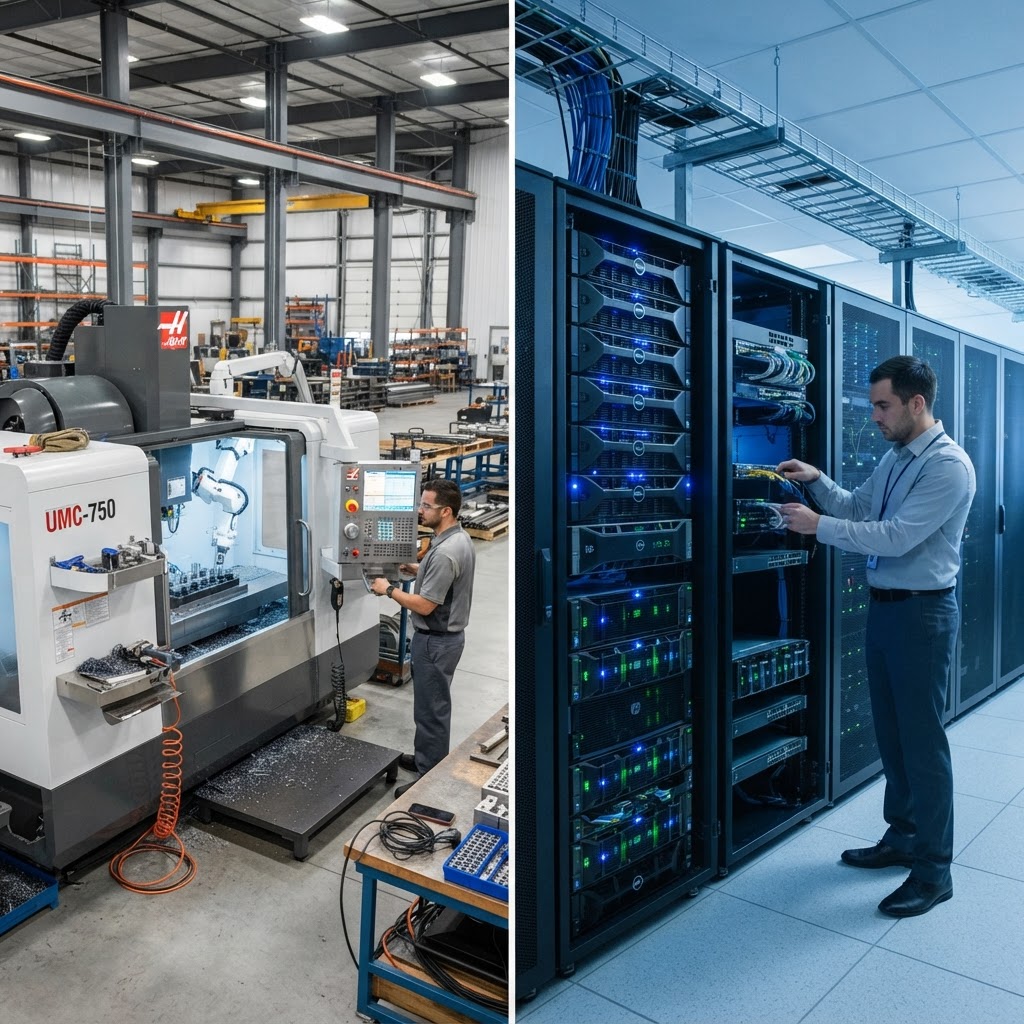
    The scope of this coverage is broad. It typically applies to a wide range of hardware, including electrical systems, heating and cooling units, computer networks, communication systems, and specialized production machinery. When a surge of power fries a main server, or a critical cooling pump experiences a catastrophic mechanical seizure, the costs to repair or replace the equipment can be staggering. Furthermore, the expense often extends beyond the hardware itself; it includes the labor for installation, the cost of specialized technicians, and the lost revenue sustained while the equipment is offline.

    Industry experts generally agree that mechanical breakdown coverage is essential for any business that relies on complex infrastructure. For instance, consider a medical office with expensive diagnostic imaging equipment or a boutique bakery with high-end ovens and refrigeration systems. If these machines fail due to a short circuit or a mechanical jam, the business faces an immediate threat to its income. Equipment breakdown insurance fills the “gap” that standard policies leave behind, providing the funds necessary to restore operations quickly. This policy doesn’t just cover the machine; it covers the continuity of your business model, ensuring that a simple mechanical fault does not become a financial disaster that forces a permanent closure.

    Furthermore, this insurance often includes “expediting expenses.” If a critical piece of equipment fails, you may be tempted to pay for overnight shipping or weekend overtime labor to get it back up and running. A standard insurance policy might not cover these premium costs, but equipment breakdown policies are specifically structured to account for the urgency of the repair process. By understanding this, business owners can transition from reactive, panicked spending to a structured recovery process backed by their insurer.

    Why Your Commercial Property Policy Isn’t Enough

    One of the most persistent myths in the business community is that a “comprehensive” property policy covers everything inside the four walls of the office or warehouse. In reality, most commercial property policies are named-peril or all-risk policies that specifically focus on damage caused by external forces. Fire, lightning, windstorms, hail, and vandalism are the primary targets of these policies. When these events occur, the damage is visible, measurable, and clearly outside the owner’s control.

    However, when we contrast commercial property vs equipment breakdown, the primary difference lies in the origin of the damage. Mechanical and electrical failures are frequently classified as “wear and tear” or “inherent vice” by standard property insurers—both of which are almost always excluded from standard coverage. A property insurer generally assumes that you, as the business owner, are responsible for the ongoing maintenance of your assets. If a belt snaps on a motor because it hasn’t been serviced in five years, the insurer views this as a failure of maintenance rather than an accidental loss.

    The danger is that “accidental” is a broad term. Even if you maintain your equipment perfectly, an electrical surge can still melt a circuit board, or a sensor can fail, causing an engine to overheat and crack its block. Because these failures happen internally, standard commercial property insurance will typically deny a claim based on the policy language regarding equipment malfunction. Many business owners do not discover this reality until they are standing in front of a broken machine with a denial letter in their hand.

    Beyond the hardware, there is the issue of “Business Interruption.” Standard policies might cover your lost income if a fire shuts down your building, but they will not pay out if you have to close because your critical software server malfunctioned or your manufacturing arm stopped due to a mechanical failure. Equipment breakdown insurance frequently bundles in coverage for these interruptions. Without it, you are left paying for the repair and the lost revenue simultaneously, which can be the death knell for small to mid-sized businesses. By relying solely on a property policy, you are essentially gambling that your equipment will never suffer an internal catastrophe, a gamble that rarely pays off in the long run.

    Equipment Breakdown vs Business Equipment Insurance

    Navigating the terminology in the insurance world can be daunting. You will often hear terms like business machinery protection, equipment breakdown, and business equipment insurance used interchangeably. While they share the goal of protecting your assets, they cover very different types of risks. Understanding these differences is essential for creating a balanced insurance portfolio that leaves no stone unturned.

    Policy Type Primary Focus Best For
    Commercial Property External events (fire, theft, weather) Physical assets and building structure
    Equipment Breakdown Internal mechanical or electrical failure Production lines, HVAC, servers
    Inland Marine Assets in transit or mobile equipment Contractors’ tools, off-site gear

    Business equipment insurance—often structured as a “floater” or inland marine policy—is designed to protect mobile assets. If you carry your laptops to a client site, or if you transport heavy machinery between construction locations, you need a policy that covers that movement. These policies are excellent at protecting against theft, dropping, or damage that occurs while the item is not at your primary place of business. However, like property insurance, these policies usually exclude the internal electrical failure of the equipment. They are meant to cover accidents involving the movement of goods, not the internal failure of a system that is stationary.

    Conversely, equipment failure insurance (as equipment breakdown is often called) is site-specific. It is intended for the equipment that sits in your facility, humming along, providing the foundation for your operations. It covers the machine when it is doing exactly what it is supposed to be doing, only to stop suddenly due to an internal technical issue. The distinction is key: if your laptop is stolen, you need business equipment coverage. If your laptop’s motherboard fries due to a power surge, you need equipment breakdown coverage.

    Many business owners mistakenly believe that their equipment’s manufacturer warranty acts as a substitute for this insurance. However, warranties are limited in both time and scope. A warranty will typically only cover the cost of the replacement part for a specific duration—usually one to three years—and it never covers the consequential loss of income or the damage to other property caused by the failure. Furthermore, warranties do not cover power surges, operator error, or environmental factors. Equipment breakdown coverage acts as the permanent, comprehensive safety net that persists long after the manufacturer’s warranty has expired, providing peace of mind regardless of the machine’s age or original warranty status.

    Common Scenarios Covered by Breakdown Insurance

    To truly appreciate the value of this coverage, one must look at the real-world events that typically trigger a claim. The beauty of this policy is its versatility; it does not just protect one piece of equipment, but the entire technological ecosystem of a business. Perhaps the most common scenario is the “short circuit” or electrical arcing event. This can happen in any office environment, whether it is a small retail shop or a massive data center. If a power surge hits your main electrical panel, the resulting damage can be widespread. Without the correct coverage, you are looking at replacing sensitive panels, wiring, and every piece of office equipment connected to that system.

    Another frequent scenario involves HVAC and climate control systems. For many businesses—especially those in the hospitality or food service industries—a broken air conditioner or freezer is not just an inconvenience; it is a catastrophe. If a condenser unit suffers a mechanical seizure, the business may lose inventory due to spoilage. Equipment breakdown coverage can be written to include “spoilage of perishable goods,” meaning the insurer covers the cost of the lost stock as well as the repair of the unit. This specific inclusion is a vital component of business machinery protection for any restaurant or warehouse operator.

    Computers and communication systems are also major areas of concern. In the modern era, a business is only as strong as its server rack. If the cooling fans in a server room fail and the processors melt, the business may lose access to its entire database, customer records, and operational software. This is not just a hardware failure; it is a complete operational stoppage. The insurance covers the cost of replacing the server, but it also helps cover the costs of data recovery and system restoration, which are often far more expensive than the physical hardware itself.

    Even simple, industrial-level machines like commercial-grade sewing machines, printing presses, or hydraulic lifts fall under this coverage. These machines have intricate internal moving parts that, if neglected or accidentally jammed, can snap, leading to a chain reaction of damage. An expert assessment of these failures often reveals that they were caused by a sudden, accidental internal fault. Because these items are rarely covered by a standard “building and contents” policy, their owners would otherwise be forced to shoulder the entire burden of the repair or replacement cost. By contrast, those with proper coverage find that they can return to full capacity much faster, minimizing the long-term impact on their profit margins and customer relationships.

    The Hidden Costs of Mechanical and Electrical Failure

    The sticker price of a new part or a repair technician’s hourly rate is often the only cost that comes to mind when considering an equipment breakdown. However, professional risk managers understand that the “hidden” costs of an electrical or mechanical failure can easily exceed the cost of the hardware itself by a factor of three or four. These costs are often what push a struggling business into insolvency. When a machine fails, you aren’t just paying for the repair; you are paying for the vacuum created by the loss of utility.

    Consider the cost of downtime. If your production line is down for four days, you are still responsible for paying rent, utilities, and potentially the wages of staff who have no work to perform. These are “fixed” costs that continue to drain your bank account even when you are generating zero revenue. Some equipment breakdown policies offer specific riders that provide “Business Income and Extra Expense” coverage. This acts as a bridge, keeping your cash flow positive while your machinery is being restored. Without this, a two-week repair window could lead to a month of negative cash flow, potentially exhausting your emergency reserves.

    Another major hidden cost is the “expediting expense.” When you are in a crisis, standard shipping isn’t an option. You need the part flown in on the next available flight. You need the specialist technician to work through the night and over the weekend at triple-time rates. You need a rental machine to temporarily bridge the gap until yours is fixed. Standard property policies rarely touch these extra costs. They only want to pay for the “actual cash value” of the damaged part. Equipment breakdown insurance, however, recognizes that time is the most expensive commodity in business. It covers these emergency measures so that your downtime is measured in hours rather than weeks.

    Lastly, there is the cost of damaged reputation. If you are a manufacturing business and you fail to fulfill a contract because your primary machine went down, you risk losing that contract permanently. Your clients may lose trust in your reliability. While some aspects of “reputational loss” are difficult to quantify, the loss of future revenue from a jilted customer is very real. Investing in comprehensive coverage allows you to fulfill your promises even when disaster strikes. It shifts the burden of the repair and the associated logistical challenges from your balance sheet to the insurer’s, allowing you to focus on managing your employees and maintaining your relationships. By accounting for these hidden costs, you realize that insurance is not just an expense—it is a fundamental operational necessity.

    Does Your Business Actually Need This Coverage?

    Determining whether your enterprise requires equipment breakdown insurance often depends on a simple risk-assessment exercise: could your business survive if its core operational machinery suddenly stopped working for a week, a month, or longer? Many business owners mistakenly believe that their standard commercial property insurance acts as a catch-all safety net. However, when evaluating commercial property vs equipment breakdown policies, it becomes clear that property insurance is primarily designed for “named perils” like fire, theft, or windstorms. If a compressor in your HVAC system burns out due to an electrical surge or a mechanical fault, standard property insurance typically excludes that event entirely. This is where mechanical breakdown coverage becomes vital.

    Consider the nature of your hardware. If you operate a restaurant, your refrigeration units, high-speed ovens, and specialized ice machines are the heartbeat of your revenue stream. If these fail, you do not just lose the equipment; you lose the inventory stored within it, and potentially your reputation if customers cannot be served. In manufacturing, the stakes are even higher. Specialized production lines, CNC machines, and industrial boilers are expensive to replace and even more expensive to repair when specialized parts or technician expertise are required. If your business relies on technology that is “under the hood”—meaning it is not easily visible or easily replaced—you are likely a prime candidate for this protection.

    Furthermore, this coverage is essential for businesses that are interconnected. If your operations depend on a central server room, sophisticated telecommunications hardware, or complex building systems, a single equipment failure can trigger a cascade of downtime. Business owners should ask themselves if they have the liquid capital to cover an emergency repair bill that could easily reach five or six figures. If the answer is no, the relatively modest premium required for business machinery protection serves as a necessary fiscal stabilizer rather than an optional luxury.

    How to Calculate the Coverage Limits You Require

    Selecting the right limit for your boiler and machinery insurance is a balancing act between risk appetite and budget. Unlike property insurance, which often involves insuring a building for its total replacement cost, equipment breakdown coverage requires a granular look at the replacement value of individual assets and the financial impact of their absence.

    Start by creating a comprehensive equipment inventory. This list should include every piece of machinery that drives your profit or protects your physical location. For each item, record its current replacement cost, including installation and shipping fees. Do not simply rely on the depreciated “book value,” as this will leave you underinsured when you are forced to buy a modern replacement in a hurry.

    Once you have an asset total, you must factor in the “Extra Expense” component. This covers costs associated with speeding up repairs, such as expedited shipping of parts or overtime wages for technicians. Many policies also include “Business Income” coverage, which offsets the revenue lost during the downtime. To calculate this, examine your average daily gross profit. Estimate the longest period you could realistically endure a shutdown before your financial reserves are exhausted. Multiply your daily average by that number of days to determine an appropriate sub-limit for business interruption.

    Finally, consider the “Off-Premises” risk. Does your business rely on power from a utility provider that is prone to outages? If a surge from an external grid damages your systems, do you have adequate protection? Always consult with your insurance broker to perform a gap analysis. They can help you determine if your chosen limit covers “spoilage” (the cost of lost inventory) and “data restoration,” which is increasingly critical for modern, digitized machinery.

    Factors That Influence Equipment Breakdown Insurance Costs

    The cost of equipment breakdown insurance is not a “one-size-fits-all” figure. Insurers assess risk through a variety of lenses, focusing on the likelihood of a breakdown and the severity of the potential loss. Understanding these factors can help you manage your premiums effectively.

    1. The Age and Maintenance History of Equipment: Newer equipment that adheres to modern safety and efficiency standards is generally cheaper to insure. Conversely, older, legacy systems are viewed as higher risks. If you can provide documented proof of regular, proactive maintenance—such as HVAC servicing records or electrical inspections—you may be able to negotiate more favorable rates. Insurers reward businesses that treat their machinery with longevity in mind.

    2. The Industry and Operational Complexity: A retail store with a single HVAC system carries a different risk profile than a chemical processing plant or a high-volume printing facility. Industries that utilize pressurized vessels, heavy motors, or highly sensitive electronic diagnostic tools face higher premiums due to the catastrophic potential of their equipment failures.

    3. Deductible Selections: As with most insurance products, a higher deductible translates to a lower premium. However, be realistic. If your business has slim profit margins, setting an excessively high deductible to save on premiums might backfire during a crisis, leaving you unable to afford the initial repair costs to kickstart your operations.

    4. Building Infrastructure and Protection Systems: If your equipment is protected by state-of-the-art power surge suppression systems, fire-suppression units, or climate-controlled environments, the risk of breakdown is significantly reduced. Providing evidence of these protective measures to your underwriter can often lead to reduced premiums.

    Insurance Type Primary Focus Best For
    Standard Property External perils (fire, theft, wind) Physical building structure and non-mechanical assets.
    Equipment Breakdown Internal mechanical/electrical failure Complex machinery, HVAC, and power systems.
    Boiler & Machinery Pressure and high-temp systems Large-scale industrial heating/processing units.
    Comprehensive Policy Combined protection Businesses wanting to close the gap between both.

    Steps to File a Claim for Equipment Failure

    Experiencing an equipment failure is stressful, but having a systematic approach to filing a claim can significantly improve the outcome and speed up the resolution process. When the worst happens, follow these professional steps to navigate your policy effectively.

    1. Ensure Safety and Mitigate Further Loss: Your immediate priority is the safety of your staff. Once the area is secure, take reasonable steps to prevent further damage. If a pipe has burst and is flooding a server room, turn off the water and move electronics if it is safe to do so. Your policy requires you to mitigate loss, and failing to do so could jeopardize your claim.
    2. Document Everything: Before the repair technician arrives or anything is moved, document the scene. Take high-resolution photos and videos of the damaged equipment, the surrounding area, and any secondary damage to inventory. Keep a detailed log of the events leading up to the failure.
    3. Notify Your Insurance Provider Immediately: Most policies require prompt notification. Contact your agent or the claims department as soon as the failure is discovered. Provide them with your policy number, a description of the damage, and the contact information for any parties involved.
    4. Do Not Dispose of Damaged Parts: Keep the broken parts. An adjuster may need to inspect the equipment to determine the “root cause” of the failure. If you dispose of the evidence before they can verify it, the insurer may struggle to process your claim, leading to delays or denials.
    5. Request an Itemized Estimate: Ensure your repair service provides a detailed invoice that separates labor, parts, and, if applicable, emergency charges. This level of transparency makes it easier for the insurance adjuster to verify the costs against your policy’s coverage limits.
    6. Track All Expenses: Create a dedicated file for the claim. Include receipts for temporary equipment rentals, costs for data recovery, and any additional overhead incurred because of the downtime. This documentation is essential for recovering “Business Income” and “Extra Expense” payouts.

    Frequently Asked Questions

    Is equipment breakdown insurance mandatory for small businesses?

    While equipment breakdown insurance is rarely required by law, it is often a contractual requirement for businesses that lease their space or have equipment financed through a bank. Even if not mandated, it is a critical component of risk management for any company that relies on specialized machinery to generate revenue.

    Does this insurance cover wear and tear?

    Standard insurance policies, including equipment breakdown coverage, generally exclude “gradual wear and tear.” Coverage is designed for sudden and accidental occurrences, such as a short circuit or a mechanical seizure, rather than the natural aging process of a machine that has simply reached the end of its functional life.

    Can I add this to my existing commercial property policy?

    In many cases, yes. Most major commercial insurers offer equipment breakdown coverage as an “endorsement” or a “rider” to your existing commercial property policy. This is often the most cost-effective way to get the protection, and it helps ensure that there are no gaps or overlaps between your standard coverage and your specialized equipment needs.

    What exactly is covered under “spoilage” in these policies?

    Spoilage coverage is a sub-limit designed specifically for perishable goods. If your cooling system fails and your inventory (such as food, medicine, or flowers) is ruined, the policy pays for the cost of the lost goods. It is an essential feature for restaurants, pharmacies, and grocery stores.

    Will my business interruption coverage apply if a breakdown occurs?

    Yes, provided you have chosen to include Business Income and Extra Expense coverage within your equipment breakdown endorsement. This portion of the policy is designed to replace lost profits and cover the operational costs—like rent or payroll—that continue even while your business is forced to remain closed or limited in its operations due to the failure.

    Does equipment breakdown insurance cover cyber-related failures?

    Modern policies are evolving to include some digital components, but they are not a substitute for standalone Cyber Liability insurance. While an equipment breakdown policy may cover physical damage caused by a power surge or an electrical fault, it typically does not cover losses resulting from software viruses, hacking, or digital data breaches.

    Conclusion

    The distinction between standard property insurance and specialized equipment coverage is more than just a matter of fine print; it is a fundamental pillar of business continuity. As modern businesses become increasingly reliant on complex, digitized, and highly integrated systems, the risk of a single mechanical or electrical failure turning into a catastrophic financial event grows daily. Whether you are operating a small service-based business with a single high-efficiency HVAC unit or managing a complex manufacturing facility, business machinery protection provides the financial resilience needed to weather unexpected mechanical disasters.

    By conducting a thorough inventory of your assets, accurately calculating your potential loss, and working with a trusted insurance partner to secure the right limits, you can transform your risk profile from vulnerable to robust. Do not wait for a critical breakdown to discover the limitations of your current coverage. Review your commercial property policy today, assess your mechanical exposures, and reach out to your insurance broker to discuss adding the essential safeguards discussed in this guide. Securing your machinery is, quite simply, securing your future.

    By insureiqguru Editorial Team
  • Umbrella vs Excess Liability Insurance: Which Do You Need?

    Umbrella vs Excess Liability Insurance: Which Do You Need?

    Key Takeaways

    • Commercial umbrella insurance provides both excess limits and broader coverage terms than primary policies.
    • Excess liability insurance strictly follows the underlying policy terms, providing only additional monetary limits.
    • The core difference between umbrella and excess lies in the potential for “drop-down” coverage when primary limits are exhausted.
    • Risk management strategies should dictate your choice, with umbrella policies offering a safety net for unknown or excluded perils.
    • Reviewing your business liability limit is essential to ensuring your coverage keeps pace with company growth and inflationary legal costs.

    In the complex landscape of modern commerce, protecting your enterprise against catastrophic financial loss is not merely an administrative task—it is the bedrock of corporate longevity. As litigation becomes more frequent and jury awards continue to climb, standard business liability coverage often proves insufficient to shield a company’s assets from ruin. This realization often leads business owners and risk managers to explore supplemental options: commercial umbrella insurance and excess liability insurance. While these terms are frequently used interchangeably in casual conversation, they represent distinct mechanisms for risk transfer, each with unique implications for your company’s financial stability. Understanding the nuance between these commercial insurance types is essential for any business leader looking to build a resilient, future-proof organization.

    Defining Commercial Umbrella Insurance

    Commercial umbrella insurance is widely regarded as the broadest form of supplemental protection available to business entities. At its core, an umbrella policy is designed to provide two critical layers of security: additional monetary limits above your primary policies and broader coverage language that may fill gaps left by your underlying insurance programs. Unlike standard policies that strictly mimic the primary coverage, an umbrella policy acts as a secondary layer that can “drop down” to provide coverage in scenarios where the primary policy might not respond, provided the loss is not specifically excluded by the umbrella contract itself.

    The primary advantage of this type of insurance is its ability to cover exposures that primary policies often overlook. For instance, if your general liability policy contains specific endorsements or sub-limits that leave you exposed in a unique professional scenario, a robust umbrella policy can act as a safety net. This is particularly valuable for businesses with complex operations, such as those in manufacturing, construction, or large-scale retail, where the nature of business liability exposure is fluid and highly unpredictable. When a major claim arises that exceeds the limits of your primary policy, the umbrella policy assumes the burden of the excess, protecting the company’s balance sheet from the catastrophic erosion of assets.

    Furthermore, commercial umbrella insurance requires the policyholder to maintain certain “underlying limits.” This means the business must keep active primary policies—such as Commercial General Liability (CGL), Employer’s Liability, or Commercial Auto—at specified minimum levels. If the business fails to maintain these underlying limits, the umbrella policy may only respond as if the primary coverage were active, leaving the business owner personally responsible for the “gap” in the middle. Because of its broad scope, umbrella insurance is often favored by organizations that prioritize comprehensive risk transfer over simple limit stacking. It provides a level of peace of mind that is difficult to replicate with narrower excess liability vehicles, essentially functioning as a strategic, holistic defense mechanism against unforeseen liabilities.

    Understanding Excess Liability Insurance

    Excess liability insurance is a more targeted financial instrument. While it functions as a buffer to increase your business liability limit, its scope is intentionally narrow. An excess policy is written on a “follow-form” basis, meaning the terms, conditions, exclusions, and definitions of the excess policy are strictly governed by the underlying primary insurance policy. Essentially, the excess policy acts as a direct extension of your primary coverage. If a claim is covered by your underlying policy, the excess policy will pay out once those primary limits have been fully exhausted; however, if the underlying policy does not cover the claim, the excess policy will typically not respond.

    For many businesses, excess liability insurance is a cost-effective way to fulfill contractual requirements. For example, a commercial landlord or a government agency may require a business to carry a specific, high-level aggregate liability limit before they are permitted to sign a lease or bid on a contract. If the business already has a stable primary policy that they are satisfied with, purchasing an excess liability policy is often the most straightforward way to meet those contractual thresholds without the potentially higher premium costs associated with the broader umbrella coverage. It is a precise tool for a specific requirement.

    When selecting between commercial insurance types, it is important to recognize that excess liability does not offer the “drop-down” feature found in umbrella policies. It is purely a limit-enhancement vehicle. This means that if you have a primary policy that excludes a specific type of environmental cleanup cost, an excess liability policy will also exclude it. Because the underlying policy defines the scope of the excess coverage, the complexity of managing these policies is often lower, provided the primary policy is well-vetted and comprehensive. For established companies with predictable, stable risk profiles who simply need higher limits to satisfy legal or partner mandates, excess liability insurance provides a streamlined, often more predictable path to security. It ensures that you aren’t paying for extra bells and whistles—like broader definitions or expanded coverage territories—when you are solely focused on meeting a strictly defined monetary ceiling for business liability.

    Coverage Type Primary Function Scope of Protection Best For
    Commercial Umbrella Excess limits + expanded terms Broad; includes “drop-down” potential Businesses with diverse, evolving, or complex risks.
    Excess Liability Strictly adds limits Follows primary policy terms exactly Businesses needing to meet specific contract requirements.

    Key Differences in Coverage Scope

    The difference between umbrella and excess policies boils down to the “breadth of protection.” While excess liability insurance is a vertical expansion—simply adding more zeros to your current coverage limits—commercial umbrella insurance is both a vertical and horizontal expansion. This is a critical distinction for risk managers. A horizontal expansion means the umbrella policy can potentially respond to claims that were never even contemplated by the primary policy, provided they fall within the general language of the umbrella agreement. This breadth is what makes the umbrella policy a more versatile defensive tool.

    Consider a scenario involving personal injury claims such as libel, slander, or “advertising injury.” A primary general liability policy might have limited coverage for these specific types of claims, or perhaps those risks were overlooked entirely during the initial policy design. If a business carries only excess liability insurance, they are effectively capped at whatever protection their primary policy provides. If that policy is silent or restrictive regarding advertising injury, the excess policy will provide no help. Conversely, if the umbrella policy includes these areas in its definition of covered occurrences, it will “pick up” the claim once the primary limit is hit, or even potentially function as primary coverage if the underlying policy offered no protection at all, subject to a self-insured retention.

    The nuance of coverage territory and jurisdiction also plays a role. Businesses that operate across state lines or internationally often find that umbrella policies offer more expansive language regarding where and how claims are settled. Excess policies are often rigidly tethered to the underlying policy’s geographic and jurisdictional definitions. If your business is scaling rapidly into new markets, the umbrella’s broader definitions can prevent a scenario where you are suddenly operating in a jurisdiction that your primary policy does not fully contemplate. By providing a wider “catch-all” net, the umbrella policy accounts for the reality that businesses are dynamic entities. Risk management strategies should reflect this growth. While excess insurance is a reliable workhorse for static compliance, the umbrella is a strategic asset for the growing business that recognizes it cannot possibly foresee every potential legal challenge it may face in the coming fiscal years. Understanding this gap is the first step toward true organizational resilience.

    How Trigger Mechanisms Differ for Claims

    The mechanism that “triggers” a policy into action is perhaps the most technical yet vital aspect of these insurance structures. For excess liability insurance, the trigger is binary and objective: the limits of the underlying primary policy must be completely exhausted by the payment of covered claims. Once that primary limit is eroded, the excess policy automatically steps in to fulfill its obligation. It is essentially an “if-then” relationship that mirrors the underlying policy in every way. Because the excess policy follows the form of the primary, there is rarely ambiguity regarding when the excess coverage kicks in—if the primary pays, the excess pays.

    Commercial umbrella insurance, however, operates with more complex triggers. Because the umbrella policy may offer coverage that the primary policy does not, it often utilizes a “self-insured retention” (SIR) mechanism. If an umbrella policy provides coverage for a claim that is not covered under the primary policy, the insured business must first pay the SIR amount—a predetermined deductible—before the umbrella policy steps in to cover the remainder of the loss. This provides a mechanism for the insurer to share the burden of “gaps” in the primary coverage without the primary insurer having to be involved in the claim adjustment process at all.

    Furthermore, because umbrella policies often have broader definitions of “occurrence,” they can be triggered by different types of events than a standard excess policy. For instance, an umbrella policy might recognize a “personal and advertising injury” as a distinct trigger, whereas an excess policy would only recognize that injury if the primary policy explicitly defined it as an occurrence. This creates a multi-tiered response system: the primary policy handles the majority of standard claims; the umbrella policy acts as a safety valve for catastrophic standard claims and a bridge for uncovered, specialized liability exposures; and the excess policy acts strictly as a booster for the primary. Navigating these triggers requires a thorough review of your company’s claims history and potential liabilities. If your business frequently faces litigation involving complex, multi-faceted claims, the umbrella policy’s ability to respond to a wider array of triggers provides a significant, measurable advantage over the rigid structure of excess liability.

    Assessing Your Business Liability Exposure

    Determining the right level of coverage starts with a candid assessment of your business liability exposure. This process is not a one-time event but a continuous cycle of identification, analysis, and evaluation. To start, conduct an audit of your current assets and potential revenue streams. What would a catastrophic lawsuit mean for your operations? Would it necessitate the liquidation of key assets, or would a robust insurance program allow the business to survive the ordeal? Experts generally agree that businesses should model their potential liability based on the worst-case scenario, such as a major product recall, a significant cybersecurity breach, or a series of high-profile personal injury claims involving your employees or commercial vehicles.

    Once you have identified these potential hazards, consider the current business liability limit you carry. If your contracts, lease agreements, or industry standards mandate a specific amount, that serves as your floor, not your ceiling. Consider the current trends in litigation in your specific sector. Are settlements increasing? Is the nature of the risk shifting due to technology or changes in regulation? For example, a decade ago, many small businesses did not consider cyber liability a primary concern; today, it is often a leading factor in bankruptcy. Your liability assessment should be an evolving document that keeps pace with your company’s growth.

    Engage with your insurance broker or risk advisor to perform a gap analysis between your primary coverage and your overall enterprise risk. Ask specific questions: “If we were sued for X, which policy would respond?” or “Are we over-relying on a primary policy that has restrictive definitions for modern business risks?” By comparing the potential cost of an umbrella policy against the cost of a catastrophic loss that is currently excluded from your primary coverage, you can make an informed decision on whether the investment in broader protection is worth the premium. Remember, the goal of these insurance types is to ensure that no single incident can terminate your business operations. A well-constructed risk management strategy will leverage these tools not as costs, but as vital capital protections that allow the business to take calculated risks and focus on growth rather than vulnerability.

    Cost Comparison and Premium Factors

    Determining the financial outlay for commercial umbrella insurance versus excess liability insurance involves more than just looking at the quote on the page. Because these policies serve different functions within your broader business liability coverage, the pricing models reflect the complexity of the risk exposure. Businesses often find that premiums are influenced by a diverse set of variables that underwriters analyze to determine the likelihood of a catastrophic claim.

    For excess liability insurance, the cost is typically tied directly to the underlying policy. Since excess coverage usually follows the exact form—meaning it adopts the terms, conditions, and exclusions of the primary policy—the premium is often calculated as a percentage of the underlying premium. If your primary general liability or auto liability policy is expensive due to high-risk operations, your excess layer will reflect that cost structure accordingly.

    Commercial umbrella insurance, by contrast, requires a broader underwriting review. Because an umbrella policy may broaden coverage where the underlying policy is silent, insurers must assess the entire scope of your business operations. Factors such as industry classification, historical claims data, and your geographical footprint play significant roles. A business operating in a litigious state or one that involves significant interaction with the public will likely see higher premiums for umbrella coverage than a professional service firm with limited physical risk.

    Several key factors generally influence how much a business will pay for these supplemental layers:

    • Primary Policy Limits: The higher your underlying coverage, the lower the risk to the excess or umbrella carrier, which can lead to more favorable pricing.
    • Risk Profile and Industry: High-hazard industries—such as construction, manufacturing, or commercial trucking—face different actuarial expectations than office-based consulting firms.
    • The “Self-Insured Retention” (SIR): Much like a deductible, a higher SIR on an umbrella policy can lower the immediate premium but requires the business to assume more financial responsibility in the event of a loss.
    • Claims History: A record of frequent, high-severity losses will almost universally result in higher premiums or even a refusal to provide excess layers until the business demonstrates improved risk management strategies.
    • Coverage Aggregation: Some businesses attempt to stack multiple carriers to reach high limits. While this provides redundant protection, it can sometimes be more expensive than securing a single, high-limit umbrella policy due to administrative fees and individual carrier pricing structures.

    Ultimately, when comparing costs, business owners should not focus exclusively on the lowest premium. An excess liability policy might be cheaper, but if it lacks the “drop-down” coverage or broader definitions found in a commercial umbrella policy, it may leave the business vulnerable to uninsured claims. Expert risk managers generally suggest that businesses evaluate the value of the coverage—the total potential liability exposure against the cost of the premium—rather than treating these policies as commodities.

    When Businesses Need Both Types of Coverage

    While many small to mid-sized businesses may only require one form of supplemental protection, larger organizations or those with highly complex risk profiles often find that they need both. This “layered” approach to risk management allows a business to build a robust safety net that addresses both predictable high-cost scenarios and unforeseen gaps in coverage.

    Consider a large logistics firm with a fleet of commercial vehicles and a significant physical warehouse presence. This company might utilize a primary auto liability policy and a primary general liability policy. They might purchase an excess liability layer that specifically tracks with their auto policy to provide high limits for vehicle accidents—the most frequent and costly risk for their operation. However, because they also face unique risks related to product liability and specialized warehouse operations, they might also carry a commercial umbrella policy. This umbrella policy acts as an enterprise-wide safety net, covering the gaps that the excess auto policy does not touch, such as broad-form property damage or non-owned watercraft liability.

    Integrating both types of coverage provides a strategic advantage in three primary scenarios:

    1. Broadening the Scope: When a business wants to ensure that “silent” risks are addressed—such as defamation, libel, or errors that might be excluded by standard excess forms—an umbrella policy provides the necessary security that excess layers lack.
    2. Strategic Layering: Businesses can save money by layering excess policies specifically over high-risk areas while using a smaller, broader umbrella policy for general organizational exposure.
    3. Compliance and Contracting: Large government contracts or complex commercial leases often mandate specific liability limits. A business might need the targeted high limits of an excess policy to meet a contract-specific requirement while maintaining a commercial umbrella policy to protect their own assets from general negligence claims.
    Feature Excess Liability Commercial Umbrella Best For
    Coverage Scope Follows underlying policy Broader than underlying policy Excess: High-risk specific areas; Umbrella: Broad protection
    Drop-Down Provision Rarely included Typically included Umbrella for self-insured gaps
    Underwriting Focus Underlying premium driven Full business risk assessment Umbrella for complex operations
    Cost Structure Generally lower Generally higher Excess for budget-conscious, Umbrella for peace of mind

    Evaluating Existing Policy Gaps

    Before selecting additional liability protection, it is vital to perform a thorough audit of existing commercial insurance types. Many business owners make the mistake of assuming that “more is better” without first understanding what their current policies do not cover. An audit serves as the blueprint for your insurance strategy.

    Start by reviewing your primary policies, specifically looking for restrictive endorsements. Insurance carriers often include language that limits the definition of “insured” or excludes specific types of damages, such as pollution liability or certain classes of professional services. If your primary policy has a narrow definition of “bodily injury,” your excess liability coverage—which follows that same definition—will be equally limited.

    Next, analyze your aggregate limits. Most business liability coverage is structured with a “per occurrence” limit and an “aggregate” limit. The aggregate limit is the maximum amount the insurer will pay during the entire policy period. If you have several small claims in one year, you could exhaust your aggregate limit, leaving the business unprotected for the remainder of the term. A commercial umbrella policy is often the only way to effectively bolster these exhausted limits.

    Ask your insurance broker for a “gap analysis.” This involves creating a list of potential loss scenarios—such as a data breach that leads to third-party litigation or a specialized piece of equipment causing massive damage—and mapping those scenarios against your current policy language. If you find that the potential cost of a settlement exceeds your primary limits or is excluded by your current terms, you have identified a clear gap that an umbrella policy is better suited to fill than an excess policy.

    Top Considerations Before Purchasing Additional Liability

    Purchasing additional coverage should be the final step in a comprehensive risk management strategy, not the first. Before pulling the trigger on a policy, consider these critical elements:

    Financial Strength of the Carrier: An excess liability policy is only as good as the company backing it. Research the “AM Best” rating of your insurance carrier. In a catastrophic event, you need to be certain that the insurer has the liquidity to pay out massive claims without dispute.

    Consistency in Policy Terms: Ensure that your excess policy forms match the underlying policy terms exactly. A “misalignment” between an underlying policy and an excess policy is a common cause for coverage denials. If the underlying policy has a specific exclusion, the excess policy will almost certainly follow it, rendering it useless for that specific risk.

    Legal Defense Costs: Some policies include defense costs within the limit of liability, meaning that paying for your legal team reduces the amount available to pay a settlement or judgment. Other policies provide defense costs in addition to the limit. For high-stakes litigation, defense costs can be substantial, and you should aim for the latter structure whenever possible.

    Future Business Growth: Consider where your business will be in three to five years. If you are planning an expansion into new markets, new states, or new product lines, your risk profile will change. An umbrella policy that is flexible enough to accommodate these changes is often more cost-effective in the long run than purchasing specific excess layers for each new division or territory.

    Frequently Asked Questions

    Does commercial umbrella insurance cover everything that my general liability policy doesn’t?

    No. While umbrella insurance is broader, it still contains exclusions. Common exclusions include professional liability (malpractice), workers’ compensation, and intentional acts. It serves as an extension of coverage for the types of liabilities already covered under your underlying policies, plus a few select “drop-down” coverages.

    Can I have multiple excess liability policies over one primary policy?

    Yes, this is known as “stacking” or “layering.” Large corporations often do this to reach very high total limits (e.g., $50 million or more) by purchasing multiple layers from different insurance carriers. This approach helps manage risk distribution among different insurers.

    What does “drop-down coverage” mean in an umbrella policy?

    Drop-down coverage occurs when the umbrella policy steps in to cover a claim that the underlying policy should have covered but did not, usually because the underlying policy’s aggregate limit was exhausted or the underlying insurer became insolvent. It effectively fills the “hole” in the primary protection.

    Is excess liability insurance the same as professional liability (E&O)?

    No, they are distinct. Excess liability provides additional limits for general liability and sometimes auto liability. Professional liability insurance (Errors and Omissions) covers claims of negligence in the professional services you provide. They address entirely different categories of business risk and generally require their own separate excess layers.

    How often should I review my liability limits?

    Experts recommend reviewing your liability limits at least once per year or whenever there is a significant change in business operations, such as acquiring new assets, hiring a large number of employees, or expanding into new geographic markets. Inflation and changing legal precedents also make annual reviews a best practice.

    Will an excess liability policy protect me if my business is sued for breach of contract?

    Typically, no. Most general liability, umbrella, and excess liability policies exclude contractual liability unless the business assumed the liability under an “insured contract” as defined in the policy. Breach of contract is generally considered a business risk that must be addressed through separate management strategies or specialized coverage.

    Conclusion

    Navigating the nuances of commercial umbrella insurance and excess liability insurance is a cornerstone of responsible business management. By understanding that excess liability is designed for targeted, high-limit protection while commercial umbrella insurance acts as a broad-spectrum safety net, you can build a defense structure that shields your assets from the unpredictable nature of litigation and accidents. A well-constructed liability program does not just pay for losses; it provides the peace of mind required to innovate, grow, and take calculated risks in a competitive marketplace.

    Do not wait for a catastrophic claim to discover your coverage gaps. Take the proactive step of auditing your current policies, evaluating your risk exposure, and consulting with a qualified insurance broker to determine if your current business liability limit is sufficient for your long-term goals. Your business is your livelihood—protect it with the right tools.

    Ready to fortify your business? Start your insurance audit today and ensure your company is protected against the unexpected. Reach out to a licensed professional to review your current policy terms and discover the gaps in your coverage.

    By insureiqguru Editorial Team

  • Pollution Liability Insurance: Do You Need It for Your Business?

    Pollution Liability Insurance: Do You Need It for Your Business?

    Key Takeaways

    • Standard General Liability insurance policies almost always contain an “absolute pollution exclusion,” leaving businesses exposed to environmental costs.
    • Pollution Liability Insurance is designed to cover both cleanup costs and third-party damages arising from contamination.
    • Environmental risks are not limited to industrial plants; small retail shops, contractors, and offices face significant exposure through waste disposal and chemical storage.
    • Coverage distinctions between sudden, accidental events and gradual, long-term contamination are critical to understanding your policy scope.
    • Investing in environmental risk management is a proactive step to protect your bottom line against catastrophic remediation expenses.

    In the modern commercial landscape, operational safety is often equated with physical security, data protection, and financial management. However, a significant blind spot remains for many entrepreneurs and executives: environmental exposure. Whether you are operating a local dry cleaner, managing a complex manufacturing facility, or running a construction firm, the potential for environmental impact is pervasive. When hazardous materials inadvertently escape your premises or contaminate local water tables, the financial consequences can be devastating. Navigating the nuances of Pollution Liability Insurance is no longer a luxury for major corporations; it is a fundamental pillar of responsible business environmental liability management. This guide explores the critical components of specialized environmental insurance and why relying on generic coverage may be a dangerous gamble.

    What Exactly Is Pollution Liability Insurance?

    Pollution Liability Insurance, often referred to under the broader umbrella of environmental insurance, is a specialized financial product engineered to bridge the significant gaps left by standard business liability policies. At its core, this coverage is designed to provide protection against claims resulting from the release, discharge, dispersal, seepage, migration, or escape of pollutants into the environment. These pollutants can take many forms, ranging from traditional hazardous waste and toxic chemicals to more subtle environmental hazards like mold, legionella, or even electromagnetic fields in certain jurisdictions.

    The primary function of this coverage is to address the two most crushing costs associated with environmental incidents: the expense of cleaning up the affected site and the legal liability for third-party damages. Cleanup costs include the often exorbitant prices associated with testing, containment, excavation, and restoration of land or groundwater. Third-party damages, meanwhile, cover the claims made by neighbors, local governments, or affected individuals who suffer property devaluation, loss of business revenue, or physical bodily injury due to the contamination originating from your business activities.

    Unlike standard policies that focus on sudden mishaps, pollution legal liability is structured to account for the unique lifecycle of environmental contamination. Environmental damage is rarely static; it often migrates over time, meaning a business might be held liable for events that began years prior. Consequently, these policies often include “claims-made” structures, which provide coverage for incidents that are reported during the policy period, even if the actual contamination occurred earlier, provided there is a retroactive date established. This distinction is vital for businesses that may have historical environmental footprints they are unaware of.

    Furthermore, Pollution Liability Insurance is highly customizable. Experts generally agree that no two environmental risk profiles are identical. A painting contractor, for example, faces a drastically different set of pollutants—such as volatile organic compounds (VOCs) and lead-based materials—compared to a real estate developer managing brownfield sites. The insurance market has responded to this complexity by creating modular coverage plans. You can secure coverage that spans from onsite remediation of your own property to offsite coverage that protects you during the transport of hazardous materials to disposal sites. By integrating this coverage into your overall risk strategy, you are not just buying a safety net; you are fulfilling a fiduciary duty to your stakeholders to ensure that an unforeseen environmental accident does not necessitate the dissolution of your business.

    Common Environmental Risks Your Business Faces

    Many business owners labor under the misconception that environmental risks are exclusively the domain of heavy industrial sectors, such as oil, gas, or chemical manufacturing. In reality, the scope of business environmental liability is vast and affects a surprisingly wide range of industries. Whether you lease your office space, manage retail properties, or provide professional consulting services, the risk of triggering an environmental claim is ever-present.

    Consider the professional services sector, such as a law firm or a software development office. While these entities don’t deal with chemical barrels, they are not immune to environmental concerns. Sick building syndrome, resulting from poorly maintained HVAC systems or water intrusion that leads to toxic mold growth, can trigger significant liabilities. If employees or visitors suffer respiratory issues due to indoor air quality, the resulting lawsuits are frequently categorized as environmental claims. Without adequate pollution coverage for small business, the legal defense fees alone can be financially paralyzing.

    Construction and contracting businesses face perhaps the most immediate threats. Excavation work is a classic example of high-risk activity. Striking an underground storage tank (UST) that was long forgotten by previous property owners can lead to an immediate release of petroleum or industrial solvents into the soil. In such scenarios, the contractor is often held responsible for the containment of that spill, despite having no knowledge of the tank’s existence. Environmental risk management is crucial here; without prior site assessments and specific pollution liability, the contractor’s standard liability coverage will likely deny the claim.

    Retail and hospitality sectors often deal with everyday materials that, if handled incorrectly, become catastrophic liabilities. A restaurant or a hotel with a failing grease trap that leaks into the city’s sewer system can face severe fines from municipal environmental agencies. Similarly, retail outlets that store large quantities of cleaning supplies, pool chemicals, or even electronic waste face the risk of fire-related pollution. When a fire breaks out, the runoff from firefighting foam and chemical-laden smoke can contaminate adjacent properties, turning a standard property damage event into a multi-million dollar environmental remediation crisis.

    To help business owners categorize their exposure, the following table illustrates the common approaches to environmental risk protection:

    Product Type Key Focus Best For
    Contractors Pollution Liability (CPL) Damage caused by work performed by the insured at a project site. Construction firms, trade contractors, and landscape designers.
    Pollution Legal Liability (PLL) Cleanup and liability stemming from property ownership or operations. Real estate owners, landlords, and commercial property managers.
    Products Pollution Liability Pollutants released by a product after it has left the manufacturer’s control. Manufacturers, wholesalers, and specialized distributors.
    Transportation Pollution Liability Spills resulting from the transit of cargo between facilities. Logistics companies and businesses with private delivery fleets.

    Ultimately, the environment is interconnected. Your business is not an island; it is part of a complex web of municipal water systems, soil conditions, and neighboring ecosystems. A minor spill that seems contained can easily travel via underground pathways to affect parties miles away. Recognizing these risks is the first step toward securing the specialized coverage required to mitigate them.

    Does Your General Liability Policy Cover Pollution?

    A common mistake made by many business owners is the assumption that their General Liability (GL) policy acts as a catch-all for any unfortunate event that occurs on or near their property. While GL policies are essential for protecting against slips, falls, and basic property damage, they are distinctly unsuited for environmental events. This gap is not accidental; it is a fundamental design feature of modern insurance, solidified by what is known as the “absolute pollution exclusion.”

    For decades, insurance providers have systematically removed environmental coverage from standard GL forms. This change followed a series of massive, high-profile environmental catastrophes in the late 20th century, which forced insurers to rethink the catastrophic potential of pollution. Consequently, most GL policies explicitly state that they will not cover bodily injury, property damage, or cleanup costs arising from the discharge, dispersal, or release of pollutants. This exclusion is typically very broad and often covers not only the primary contamination event but also any “testing, monitoring, or cleanup” costs, even if the insured is legally required to perform those actions by a government body.

    The danger of this exclusion is exacerbated by the legal interpretation of “pollution.” Courts have frequently interpreted this term broadly, meaning that substances one might not traditionally consider “pollutants”—such as drywall dust, excess sediment in runoff, or even certain common cleaning agents—can trigger the exclusion if they cause damage to third parties. If you rely solely on your GL policy, you may find yourself in a position where your insurance carrier denies a claim at the exact moment you are hit with an environmental enforcement order.

    Furthermore, even if you managed to secure a minor exception or “buy-back” for a specific incident, these sub-limits are often woefully inadequate. An environmental cleanup project involving groundwater remediation can easily escalate into the hundreds of thousands or millions of dollars. A standard GL policy, even if it provided nominal coverage for a pollution event, would likely be exhausted before the initial containment phase was even completed. The legal defense costs associated with environmental litigation, which often involves complex scientific testimony and regulatory proceedings, are also typically beyond the scope of a standard GL budget.

    It is important to understand that standard business liability insurance is focused on accidents that result in immediate physical impact, like a customer tripping on an uneven floorboard. Environmental damage, by contrast, is often insidious, invisible, and persistent. Because it operates on a different timeframe and involves regulatory bodies, it requires a different insurance mechanism. Relying on your GL policy is essentially operating without a safety net in the area of your business most likely to result in bankruptcy-level liabilities. By acknowledging the limits of your current coverage, you are taking a necessary step toward identifying the specific Pollution Liability Insurance products that match your unique operational hazards.

    Key Coverage Features of Environmental Liability Policies

    Once you recognize the necessity of dedicated Pollution Liability Insurance, the next challenge is understanding the specific features that differentiate a robust policy from a weak one. Environmental insurance is not a standardized commodity; it is highly bespoke, allowing for various endorsements and adjustments that can significantly alter the scope of your protection. To make an informed decision, business owners must evaluate several core coverage components that define how the policy will respond during a crisis.

    The most fundamental coverage feature is “third-party cleanup and bodily injury.” This protects you from lawsuits filed by others who claim that your pollutants caused them personal harm or damaged their property. This usually includes claims related to the loss of use of their property, which is often a significant portion of the damages in environmental litigation. However, a comprehensive policy should also include “first-party cleanup” coverage. This addresses the costs of cleaning up your own premises. If a pipe bursts and leaks chemicals into your own soil, you are legally and morally obligated to remediate the land. Without first-party coverage, these costs—which can be immense—fall entirely on your company balance sheet.

    Emergency response costs are another critical feature to look for. In the event of a chemical spill or release, time is of the essence. You need to mobilize specialized cleanup crews immediately to mitigate the damage. A high-quality policy will often cover the expenses incurred during these first critical hours, even if formal liability has not yet been established. This can include the costs of containment booms, absorbent materials, and the immediate deployment of environmental consultants to assess the situation. Having an insurer that supports immediate response is often the difference between a contained event and a total environmental catastrophe.

    Legal defense costs, or “defense outside the limits,” is a crucial distinction in environmental policies. Because environmental lawsuits are notorious for being long, drawn-out affairs involving scientific experts, researchers, and government regulators, the legal fees can grow very quickly. If your defense costs are included “within the limits” of your policy, the money spent on lawyers will directly erode the funds available for the actual cleanup or settlement. Ideally, you want a policy where defense costs are handled separately, ensuring your liability limits remain intact for the actual remediation and settlement payments.

    Finally, consider the inclusion of “regulatory re-opener” protection. Environmental regulations are constantly evolving. A site that was cleaned up to today’s standards might be declared non-compliant five years from now due to changes in toxicity thresholds or testing methodologies. A forward-thinking environmental policy will provide coverage for these “re-openers,” protecting you if the government requires further remediation on a site that you thought was already resolved. This feature provides peace of mind that a past incident will not continue to haunt your business’s future financial health. When working with your broker, ensure these specific elements are included in the policy terms, as they are essential for effective long-term environmental risk management.

    Understanding Sudden vs Gradual Pollution Events

    The distinction between “sudden and accidental” events and “gradual” pollution is perhaps the most significant concept in the world of environmental insurance. Historically, these two types of risks were treated very differently by insurers, and the legacy of this distinction still informs how many businesses assess their own coverage needs today. Understanding how these terms define your policy scope is essential to avoiding coverage gaps that could result in devastating out-of-pocket expenses.

    A “sudden and accidental” event refers to an incident that happens abruptly and has a clearly defined beginning and end. Think of an explosion at a tank farm, a truck collision that causes a fuel spill, or a pipe rupture that immediately releases chemicals into the environment. These incidents are discrete, visible, and typically receive immediate attention. In the past, some GL policies included a “sudden and accidental” exception that provided limited, short-term coverage for these types of incidents. However, even within this definition, insurers often placed strict time constraints, requiring the event to be discovered and reported within a specific window—often 48 to 72 hours—to qualify for any limited assistance.

    Conversely, “gradual” pollution represents the much larger and more dangerous risk for most businesses. This involves contamination that occurs over an extended period through slow, often undetected leaks or releases. Examples include a micro-leak in an underground storage tank that seeps into groundwater over several years, the persistent emission of vapor into the atmosphere, or the slow migration of chemical runoff from a property into a nearby stream. Because these events are not “accidental” in a moment-by-moment sense, and because they are not “sudden,” they have almost always been completely excluded from standard GL policies.

    Modern Pollution Liability Insurance is designed specifically to capture both ends of this spectrum. A robust policy will cover not just the sudden event that catches everyone’s attention, but also the long-term contamination that may be occurring beneath the surface of your property right now. For many businesses, the risk of gradual pollution is higher precisely because it is so difficult to detect. You might be operating your business for years without realizing that a faulty gasket in your waste processing unit has been slowly leaching contaminants into the soil. When an environmental audit eventually discovers the plume, you are suddenly liable for years of cumulative impact.

    This is why environmental insurance experts emphasize the need for “claims-made” policies that include coverage for unknown, historical conditions. By ensuring your policy covers both sudden and gradual events, you are protecting yourself against the reality of how most environmental damage occurs. It is rarely the singular, headline-grabbing explosion that ruins a business; it is the slow, silent accumulation of liabilities that creates a financial hole too deep to climb out of. As you review your environmental risk profile, ask yourself: is your current strategy focused only on the obvious accidents, or are you prepared for the silent risks that could be growing beneath your feet?

    Industries Most at Risk for Environmental Claims

    While any business entity—from a boutique accounting firm to a large-scale manufacturing plant—could theoretically trigger an environmental event, certain sectors face a disproportionately high level of risk. Understanding these vulnerabilities is the first step toward securing the appropriate pollution liability insurance. When insurers evaluate your risk, they look primarily at your potential for releasing pollutants into the environment, either through ongoing operations, accidental spills, or historic contamination.

    The construction and contracting industries are frequently at the top of the list for environmental risk. A general contractor, even when working on a straightforward renovation, might inadvertently disturb asbestos, lead-based paint, or buried underground storage tanks. If these materials become airborne or seep into groundwater, the resulting liability can be staggering. Excavation projects are similarly risky; breaking a sewer line or hitting an unknown utility pipe can lead to immediate and costly environmental damage.

    Manufacturing and industrial processing facilities remain the most obvious candidates for environmental insurance. These businesses often deal with hazardous chemicals, solvents, heavy metals, and oils. Even with robust containment protocols, human error, mechanical failure, or extreme weather events can lead to a containment breach. Furthermore, legacy issues—such as contamination that occurred decades ago on a property you currently own or lease—can suddenly become your financial responsibility if regulatory requirements tighten or if the contaminants migrate to an adjacent property.

    Logistics, transportation, and warehousing companies also encounter significant exposure. If your business transports chemicals or even standard commercial fuels, a transit accident—such as a vehicular collision or a shipping container spill—can lead to hazardous material discharge on public roads or into waterways. Warehousing facilities face risk from the storage of third-party materials that may be toxic, corrosive, or flammable, potentially resulting in catastrophic fire-driven pollution events or leaks that penetrate the soil and groundwater.

    Finally, property management and real estate firms often overlook their need for business environmental liability coverage. Owners of commercial and multi-family residential properties can be held liable for mold growth resulting from plumbing failures or inadequate ventilation, as well as exposure to chemicals used in property maintenance (such as pesticides or industrial-strength cleaning solvents). If a tenant is exposed to hazardous conditions, the property owner is often the first entity named in a lawsuit.

    How to Assess Your Business Environmental Liability Exposure

    Assessing your environmental risk management profile requires a systematic approach that moves beyond simple checklists. It involves a deep dive into your operational footprint, your historical data, and your geographical vulnerabilities. To get started, conduct an internal audit of every chemical, substance, or material stored, processed, or transported by your business.

    Consider the “cradle-to-grave” trajectory of your operations. Where do your raw materials come from? How are they stored, used, and disposed of? If you utilize third-party disposal sites, remember that in many jurisdictions, you retain “generator liability.” If the landfill or disposal facility you contract with suffers a massive leak, you could be named as a responsible party in the remediation effort, even though the pollution occurred off-site. This is why pollution legal liability is so vital; it acts as a safeguard against risks that you may not even control directly.

    Geographical assessment is equally critical. Is your facility located near a sensitive ecological zone, a public water source, or a densely populated residential area? The “target” you present to the public and regulators changes based on proximity to vulnerable populations. A small spill in a remote industrial park is significantly less costly to clean up than a spill that flows into a municipal storm drain or a public lake.

    Review your historical site usage. You might be the third or fourth owner of your business property. Conduct an Environmental Site Assessment (ESA) if you have not already done so. Phase I ESAs identify potential environmental contamination risks by reviewing government records and historical land use. If the Phase I report suggests concerns, a Phase II ESA involving soil and groundwater testing may be necessary. These reports are foundational documents that help insurance underwriters determine the scope of coverage required for your specific business.

    Insurance Product Primary Focus Best For
    Site-Specific Pollution Liability Fixed-location premises contamination Manufacturing, warehousing, and commercial landlords
    Contractors Pollution Liability Jobsites and third-party property damage Construction firms and specialized subcontractors
    Transportation Pollution Liability Spills during loading, transit, or unloading Freight carriers and logistics companies
    Combined Environmental Package Integrated site and operations coverage Companies with multifaceted risks and diverse operations

    The Financial Impact of Cleanup Costs and Legal Defense

    The financial volatility associated with an environmental claim cannot be overstated. Unlike a standard property insurance claim, which usually involves a defined loss—like a fire-damaged roof—an environmental claim is often “open-ended.” Cleanup costs are notoriously difficult to predict because they involve regulatory compliance, scientific remediation, and sometimes decades of monitoring.

    Regulatory agencies often have the authority to dictate the standard of cleanliness required for a site. If they determine that groundwater needs to be treated to a certain level of purity, you are legally and financially obligated to meet that standard, regardless of the cost. The expenses mount quickly: specialized consulting firms, laboratory testing, heavy equipment rentals for soil removal, and water treatment systems can lead to invoices reaching into the millions of dollars before a single legal fee is even paid.

    Legal defense costs are the hidden engine of environmental financial ruin. Pollution claims frequently involve complex litigation between multiple parties—neighboring property owners, government regulators, insurance carriers, and other potentially responsible parties (PRPs). Proving that your facility was not the sole source of a contaminant often requires hiring hydrologists, environmental engineers, and toxicology experts as expert witnesses. Their hourly rates are substantial, and the duration of environmental litigation can extend for years or even over a decade.

    Without specific pollution coverage for small business, you would have to pay these costs out of your operating budget, which could lead to business bankruptcy, asset liquidation, or an inability to maintain payroll. General liability policies almost always contain an “absolute pollution exclusion,” meaning your standard insurance will not respond to these claims. Relying on such a gap in coverage is perhaps the single largest risk a business owner can take.

    How to Choose the Right Limits for Your Business

    Determining the appropriate limits for your business liability insurance is a balancing act between risk tolerance and financial reality. When working with an insurance professional, you must look beyond minimum requirements. Often, the minimum limits required by a contract or a landlord are woefully insufficient in the face of a true environmental catastrophe.

    Start by considering the “worst-case scenario” cleanup cost in your specific region. If you operate a fuel depot, what is the cost of excavating and replacing five acres of contaminated soil plus the cost of cleaning up an adjacent stream? Your limit should ideally cover the upper bounds of such an estimate, including legal defense. Remember that legal defense costs are often “outside the limit” in some policies, meaning they do not erode your coverage for the actual cleanup; verify this aspect of your policy wording carefully.

    Consider your revenue and balance sheet. A large enterprise may be able to absorb a $500,000 incident, whereas that same event could shutter a medium-sized firm. Your limit should correlate with your ability to absorb a loss without sustaining permanent damage. Furthermore, consider the potential for “aggregate” versus “per-occurrence” limits. An aggregate limit is the total the insurer will pay for all claims during the policy period, while per-occurrence limits apply to each individual claim. If your industry is high-risk, a higher aggregate limit is essential to ensure that you are not left unprotected if you face two major incidents in a single year.

    Always perform a “stress test” on your coverage. Ask your broker: “If we have a fire that leaks chemicals into the municipal sewer, what is the maximum exposure?” By simulating these events, you gain a clearer picture of whether your $1 million, $5 million, or $10 million limit is appropriate for your business. Experts generally agree that for companies handling significant hazardous materials, higher limits are a prudent investment that acts as a form of capital preservation.

    Integrating Pollution Coverage into Your Risk Management Strategy

    Environmental insurance should never be a siloed effort. It must be woven into your broader environmental risk management strategy. This integration begins with proactive communication between your risk manager, your operations team, and your insurance broker. Everyone needs to understand that environmental compliance is not just about avoiding fines—it is a core component of your business’s financial viability.

    Use your policy application process as an opportunity to improve. When you apply for pollution liability insurance, underwriters will often identify specific vulnerabilities in your processes. Treat these findings as a high-priority risk assessment report. If the underwriter suggests installing better secondary containment or adopting a stricter chemical inventory system, take those recommendations seriously. Often, implementing these safeguards will result in lower premiums or higher-quality coverage options.

    Your strategy should also include a formalized Emergency Response Plan (ERP). In the event of a spill or leak, minutes matter. Having a pre-vetted cleanup contractor on retainer is vital. Many insurance policies for environmental risk provide support services that can connect you with approved remediation firms immediately after a loss. Ensure that your operations team is trained on the ERP and that they understand their obligations to report incidents to the appropriate authorities, as timely reporting is almost always a condition for insurance coverage.

    Finally, review your environmental coverage at least annually or whenever you make significant changes to your business. Expanding to a new facility, changing the chemicals you use, or altering your logistics routes can all change your risk profile. An integrated risk strategy views your insurance policy as a living document that must evolve in tandem with your business growth.

    Frequently Asked Questions

    Does my general liability policy cover pollution-related incidents?

    Most standard commercial general liability (CGL) policies include an “absolute” or “total” pollution exclusion. This language effectively removes coverage for bodily injury or property damage resulting from the discharge, dispersal, or release of pollutants. Consequently, businesses relying solely on a CGL policy for environmental protection are typically left entirely exposed.

    What exactly is meant by “pollutants” in an insurance context?

    In insurance terminology, pollutants are defined broadly as any solid, liquid, gaseous, or thermal irritant or contaminant. This includes smoke, vapor, soot, fumes, acids, alkalis, chemicals, and waste. Waste includes materials to be recycled, reconditioned, or reclaimed, meaning common office or industrial materials can qualify as pollutants if leaked into the environment.

    How do insurance companies determine my premium for environmental insurance?

    Underwriters evaluate several factors: the nature of your industry, the types and quantities of hazardous materials used, the age and condition of your facilities, your historical environmental record, and your proximity to sensitive environmental receptors like lakes, rivers, or residential developments. High-risk operations naturally result in higher premiums.

    What is the difference between “first-party” and “third-party” environmental coverage?

    First-party coverage pays for the costs to clean up pollution on your own property, which is often excluded from other policies. Third-party coverage protects you against claims made by others—such as neighbors or local governments—for damage to their property, bodily injury, or the costs of cleaning up off-site pollution caused by your business activities.

    Does environmental insurance cover fines and penalties from government agencies?

    Generally, insurance policies are prohibited by public policy from covering punitive damages or certain criminal fines. However, many pollution liability policies do provide coverage for the “defensive” costs associated with regulatory investigations and can sometimes cover civil penalties, depending on the specific policy language and the jurisdiction of the claim.

    Is pollution insurance mandatory for small businesses?

    While few small businesses are legally mandated by the government to carry pollution liability insurance, it is frequently a contractual requirement. Landlords, general contractors, and project developers often require proof of environmental insurance before allowing a business to sign a lease or work on a site. Regardless of legal or contractual requirements, it remains a critical financial backstop for any business handling hazardous materials.

    Conclusion

    The reality of doing business in the modern world is that environmental risks are everywhere. From the chemicals used in production to the potential for hidden historic contamination on your property, the liabilities are vast and the financial consequences can be cataclysmic. As we have explored, the standard liability protections businesses rely on are rarely enough to safeguard against the unique, high-stakes nature of pollution claims. Investing in dedicated pollution liability insurance is not merely a bureaucratic checkbox; it is a fundamental pillar of responsible risk management and long-term financial health.

    By understanding your industry’s specific exposure, assessing your site-specific vulnerabilities, and integrating environmental coverage into your broader strategy, you ensure that your business remains resilient even when faced with unforeseen events. Take the time to evaluate your limits, audit your operational procedures, and consult with a specialist who understands the complexities of the environmental insurance market. Protect your future, your reputation, and your community by acting before a loss occurs.

    Ready to secure your business against environmental risks? Reach out to your insurance advisor today to request a comprehensive pollution liability review and get the protection you deserve.

    By insureiqguru Editorial Team

  • Commercial Flood Insurance: Do You Need It for Your Business?

    Commercial Flood Insurance: Do You Need It for Your Business?

    Key Takeaways

    • Standard commercial property policies typically exclude flood damage, creating a significant coverage gap for business owners.
    • Assessing your specific flood risk requires looking beyond just FEMA maps to consider local topography, drainage systems, and historical climate patterns.
    • Commercial flood insurance provides financial protection for structural damage and business personal property destroyed by rising waters.
    • Distinguishing between flood, sewer backup, and water intrusion is vital, as these require different policy endorsements or stand-alone coverage.
    • Reviewing FEMA flood maps is essential for determining if you are in a high-risk zone and if your lender will mandate flood insurance.

    For most entrepreneurs, the phrase “property insurance” feels like a catch-all safety net. You pay your premiums, you secure your physical assets, and you sleep soundly knowing that if disaster strikes, your business will be rebuilt. However, this sense of security is often tested during extreme weather events. The most common and devastating realization business owners face is that standard commercial property policies almost never cover flood-related damage. In an era where extreme weather patterns are shifting and urban development is changing drainage landscapes, failing to understand your vulnerability can be an existential threat to your company. Whether you operate a retail storefront in a low-lying valley or an office in a high-rise, navigating the complexities of commercial flood insurance is a foundational component of risk management. By taking a proactive approach to understanding your exposure and the limitations of your current coverage, you can ensure that a single storm does not dictate the end of your business venture.

    Understanding the Gap: Why Property Insurance Excludes Flooding

    Many business owners are shocked to discover that their standard commercial property policy contains a specific exclusion for “flood” or “rising water.” This is not a malicious oversight by insurance carriers; it is a fundamental pillar of the insurance underwriting industry. Insurance models are built on the concept of “fortuitous loss”—events that are accidental and unpredictable. Conversely, flooding is often perceived as a peril that is geographically specific, predictable, and prone to “correlated losses,” meaning thousands of policyholders could be affected simultaneously by a single event.

    If every commercial property policy included flood protection, insurers argue that premiums would become prohibitively expensive for every business, regardless of their location. Instead, the industry separates flood coverage from standard property protection. A standard policy typically covers “perils” such as fire, windstorm, theft, or vandalism. Even if a pipe bursts inside your building, your property insurance likely covers that water damage because the source of the water is contained within the structure. However, once water enters your premises from the ground up—due to overflowing rivers, storm surges, or massive accumulation of rainfall—it is classified as a flood.

    The “gap” in coverage occurs because business owners assume that if they have “all-risk” coverage, they are covered for all risks. While “all-risk” sounds comprehensive, it is technically an “open perils” policy, meaning it covers everything *except* what is specifically excluded. Flood, earthquake, and war are the “big three” standard exclusions found in almost all business property contracts. If you experience a flood and attempt to file a claim under your standard property policy, your insurance adjuster will likely point to the water damage exclusion clause, leaving you solely responsible for the cleanup, structural repairs, and business interruption costs.

    Closing this gap requires dedicated commercial flood insurance or a specific flood insurance endorsement. Small business owners should not assume that their landlord’s policy covers them either. If you lease your space, your landlord’s policy likely only covers the building shell, not your business inventory, equipment, or improvements. Relying on a landlord’s insurance creates a dangerous vulnerability where you are left with no recourse if your inventory is destroyed. Understanding that this gap exists is the first step toward business continuity. By actively separating your flood risk from your general liability and property risk, you create a tiered strategy that accounts for the reality of modern weather patterns rather than the assumed coverage limits of your primary policy.

    How to Assess Your Business’s Local Flood Risk

    Conducting a thorough flood risk assessment is not a task meant to trigger anxiety; rather, it is a necessary exercise in data-driven business management. Many business owners make the mistake of believing that if they are not in a “high-risk” zone according to government maps, they are entirely safe. This is a common misconception that has led many businesses to disaster. True flood risk assessment considers a variety of factors beyond official designations, incorporating local environmental variables that often change faster than mapping services can update.

    Start by evaluating your business’s elevation relative to its surroundings. Even if you are not near a river, you could be located at the bottom of a basin or in an area with poor drainage that becomes a collection point for heavy rainfall. Look at the impervious surfaces around your building—parking lots, concrete sidewalks, and densely packed neighboring structures. These surfaces prevent water from soaking into the ground, forcing it to channel toward the nearest available space, which is often your front door. If you observe water pooling in your parking lot or streets during heavy rain, you are already seeing a red flag.

    Another critical step is reviewing local historical data. Talk to long-term neighbors or your local chamber of commerce to learn about previous flooding events. Has the neighborhood experienced “nuisance flooding” where heavy storms cause streets to become impassable? If your building has a basement, crawlspace, or ground-level entrance, you are at a significantly higher risk than a business located on the second floor of a commercial complex. Consider how your HVAC systems, electrical panels, and critical servers are positioned. If these are located on the ground floor or in a basement, a relatively minor flood could incapacitate your entire technical infrastructure.

    Furthermore, consider the “macro” environment. Urban development projects near your business can inadvertently change the flow of water. If a new residential complex is built upstream, it may increase the amount of runoff directed toward your area. While you cannot control these environmental factors, you can assess them. Using online mapping tools provided by municipal governments or national agencies provides a baseline, but observing your building during a severe weather event is often the most honest assessment of risk you will ever receive. Documenting these observations helps you make a better case to your insurance provider regarding the limits and premiums you require for your business flood protection.

    Assessment Tool Purpose Best For
    FEMA Flood Maps National regulatory compliance Determining if you are in a mandatory purchase zone.
    Municipal Drainage Maps Hyper-local infrastructure analysis Identifying bottlenecks or low points near the property.
    Historical Weather Reports Temporal data analysis Understanding the frequency of “nuisance” flooding events.
    Professional Site Survey Elevation and structural integrity check High-value assets or critical infrastructure planning.

    What Commercial Flood Insurance Actually Covers

    When you invest in commercial flood insurance, you are essentially purchasing a specialized financial instrument designed to respond to one specific type of peril. Generally, these policies are split into two primary buckets: Building Property and Business Personal Property. Understanding the distinction between the two is vital for ensuring that you are not underinsured at the time of a loss.

    Building Property coverage under a flood policy typically protects the physical structure of your building. This includes the building itself, the electrical and plumbing systems, HVAC equipment, water heaters, and often the permanently installed carpeting or paneling. For business owners who own their building, this coverage is essential because the cost to repair structural damage after a flood is immense. Waterlogged walls often require total gutting to prevent mold growth, and the electrical systems in a flooded building frequently need a full replacement to meet modern safety codes.

    Business Personal Property coverage, however, is where many small business owners find their greatest relief. This segment of the policy covers the “contents” of your business. This encompasses everything from office furniture and specialized machinery to finished inventory and stock. If you run a retail shop, your merchandise is likely your biggest asset; if that merchandise is stored on the ground floor and damaged by floodwater, your personal property coverage is what enables you to replace that inventory and get back to business. It is important to note that many policies operate on an “Actual Cash Value” basis, meaning they cover the depreciated value of your items, though “Replacement Cost” coverage—which pays for the cost to buy new items at today’s prices—is usually available for an additional premium.

    It is equally important to understand what is not covered. Most commercial flood policies will not cover financial losses related to business interruption. If your building is flooded and you are forced to close for three weeks, a standard flood insurance policy will pay to fix the building and replace the inventory, but it will not pay for the lost profits during those three weeks. To bridge that gap, you often need separate Business Interruption insurance. Furthermore, many policies have specific limitations on items located in basements or lower-level areas, as these are considered high-risk zones. Always review the declarations page of your policy to see if there are specific exclusions for high-value items like electronics, artwork, or high-end machinery, which may require additional coverage riders or special endorsements to ensure they are fully protected.

    Distinguishing Between Surface Water and Sewer Backup

    One of the most confusing aspects of commercial insurance for small business owners is the technical distinction between flood, surface water, and sewer backup. While these events can occur simultaneously during a storm, they are treated differently by insurance companies, and if you have the wrong policy, you could be left with a catastrophic bill for an event you thought was covered.

    “Flood” is generally defined as the overflow of inland or tidal waters, or the unusual and rapid accumulation of surface water from any source. This is the definition used by most flood insurance policies. When a river rises and enters your building, that is a classic flood. However, consider a situation where a massive storm overwhelms the municipal sewer system, causing sewage to back up through your floor drains and into your business. This is commonly referred to as “Sewer and Drain Backup.”

    Many business owners erroneously assume their flood insurance covers this. In reality, standard flood insurance usually excludes damage caused by a failure of the city sewer system. To cover this, you need a specific endorsement added to your property insurance policy. Conversely, if you have a sewer backup endorsement on your property insurance, it will not cover you if the water entered through your front door due to a rising creek—that is a flood.

    This creates a “gray area” that can lead to significant disputes during the claims process. For example, if a massive storm causes local flooding AND causes the sewer system to fail, the insurance company must determine the “proximate cause” of the damage. If they determine the damage was primarily caused by the external flood, they will refer you to your flood insurer. If they determine it was caused by the sewer backup, they will refer you to your property insurer’s endorsement.

    To protect your business, it is a best practice to ensure you have both: a dedicated commercial flood insurance policy and a sewer/water backup endorsement on your primary property policy. This “belt-and-suspenders” approach ensures that regardless of whether the water enters via the door or the floor drain, you have a path to recovery. Speak with your agent specifically about “water intrusion” as a broad category, and ask them to map out which policy would respond to different scenarios. You should also consider the physical steps you can take to mitigate these specific risks, such as installing backflow prevention valves in your plumbing system. These valves can physically prevent sewage from backing up into your building, which serves as a first line of defense that keeps you from having to rely on the insurance claim process entirely.

    Understanding FEMA Flood Maps and Insurance Requirements

    For many businesses, the interaction with FEMA (Federal Emergency Management Agency) maps is their first and only foray into flood risk analysis. FEMA’s Flood Insurance Rate Maps (FIRMs) are the industry standard for determining the risk level of a specific geographic area. These maps delineate Special Flood Hazard Areas (SFHAs)—often referred to as the “100-year floodplain”—where there is a statistical probability of flooding reaching a certain level in any given year.

    If your commercial property is located within an SFHA, and you have a mortgage from a federally regulated lender, you are legally required to carry flood insurance. This is a non-negotiable mandate for loan compliance. However, even if you are outside of these high-risk zones, you are not immune to flood risk. The “100-year” terminology is often misunderstood; it means there is a one percent chance of such a flood occurring in any given year. Over the life of a 30-year commercial mortgage, that one percent annual chance actually represents a much higher cumulative probability of experiencing a flood event.

    Understanding how to read these maps is a skill every business owner should cultivate. You can access these maps through the FEMA Flood Map Service Center online. By entering your business address, you can see if you are in a high-risk zone (typically marked with an ‘A’ or ‘V’ zone) or a low-to-moderate risk zone (usually ‘X’ zones). However, FEMA maps are not always updated in real-time. They are the result of extensive hydrological studies and can take years to finalize. If your area has seen recent land development, the FEMA map may not reflect the current reality of how water flows through your neighborhood.

    Do not allow the absence of a mandatory FEMA requirement to breed complacency. Many businesses located in “X zones” suffer devastating losses precisely because they relied on their status as “low risk” to forgo coverage. Use the FEMA map as a starting point, but view it through the lens of a minimum standard. If your business’s financial stability would be compromised by a temporary closure or the loss of your inventory, then the official FEMA risk classification is largely irrelevant. The true test of your need for coverage is your balance sheet, not a government map. If you choose to purchase coverage in a low-risk zone, you will often find that the premiums are significantly lower than those for high-risk zones, making it an affordable way to secure peace of mind against the unpredictable nature of climate volatility. Always consult with your insurance agent to see if you qualify for preferred risk policies, which are specifically designed for businesses located in lower-risk zones.

    How Commercial Flood Insurance Premiums Are Calculated

    Understanding how insurers price commercial flood insurance requires looking beyond simple property value. While residential premiums might lean heavily on home replacement costs, commercial policies factor in the operational complexity of a business. Underwriters engage in a rigorous process of risk assessment to determine the likelihood of a loss event and the potential severity of that loss.

    One of the primary determinants is the specific location of the business relative to FEMA flood maps. These maps classify land into various zones, ranging from low-risk areas to high-risk Special Flood Hazard Areas (SFHA). Properties located in an SFHA—often designated as “Zone A” or “Zone V”—will typically command higher premiums due to the statistically higher probability of flooding. However, modern actuarial science now incorporates granular data, such as elevation certificates and proximity to secondary water sources, such as drainage canals or non-mapped creeks, which may not appear on legacy FEMA documents.

    Building characteristics play an equally significant role. The construction type—whether steel-framed, masonry, or wood-frame—influences how a structure reacts to standing water. Furthermore, the elevation of the first floor relative to the base flood elevation (BFE) is a critical metric. A building elevated above the BFE is viewed as a significantly lower risk than one with a slab-on-grade foundation, as the former is far less likely to suffer structural saturation during a surge event.

    Business activity and contents are also assessed. A warehouse containing high-value electronics or moisture-sensitive inventory will carry higher risk profiles than an office space with minimal physical stock. If a business occupies a basement or a subterranean level, the premiums will often reflect the high probability of total loss for any equipment stored below ground. Lastly, the deductible chosen by the business owner drastically impacts the premium; opting for a higher deductible can serve as an effective tool to lower annual costs, provided the business maintains sufficient cash reserves to cover that out-of-pocket amount in the event of a claim.

    Key Factors to Consider Before Buying a Policy

    Selecting the right commercial flood insurance policy is not a task that should be rushed during a renewal cycle. Business owners must evaluate their unique operational requirements against the limitations of various insurance products. The following factors should guide your decision-making process.

    First, evaluate the difference between Replacement Cost Value (RCV) and Actual Cash Value (ACV). RCV policies pay out the amount needed to repair or replace damaged property with materials of like kind and quality, without a deduction for depreciation. ACV policies, by contrast, subtract depreciation from the settlement, which can leave a business with a significant financial shortfall when trying to rebuild. For most small businesses, an RCV policy is the preferred choice for business continuity.

    Second, scrutinize the scope of business interruption coverage. Many standard commercial flood policies cover the physical building and its contents, but they may not automatically include lost income if the business is forced to shutter during repairs. If your business depends on physical foot traffic, ensuring that your flood policy includes or is supplemented by a robust Business Interruption rider is essential to survival.

    Third, examine the “Excess Flood” options. Standard policies often have caps on total payout limits. If your business assets significantly exceed these caps, you may need to pursue an excess flood insurance policy through a private carrier to bridge the gap. Relying solely on a primary policy when your total exposure is $2 million but your coverage stops at $500,000 is a recipe for bankruptcy.

    Finally, investigate the waiting periods. Unlike general liability insurance, which might take effect immediately, flood policies typically enforce a 30-day waiting period from the date of purchase before coverage kicks in. This is designed to prevent “adverse selection,” where business owners buy insurance only when a major storm is already in the forecast. Planning ahead is the only way to ensure you are protected when the skies turn dark.

    Insurance Option Primary Benefit Best For
    NFIP (Standard) Backed by federal government; consistent rates Low-to-moderate risk small businesses
    Private Flood Insurance Higher limits; faster customization High-value assets; unique risk profiles
    Excess Flood Coverage Provides protection above NFIP caps Large enterprises; high-inventory warehouses
    Business Interruption Add-on Covers lost revenue during repairs Retail shops; high-traffic service businesses

    Steps to Take After a Flood Damage Event

    If your business is impacted by a flood, the first 48 hours are critical. The way you document the event will dictate the efficiency and success of your insurance claim. Panic often leads to oversight, but following a structured approach can help preserve your rights to a full settlement.

    1. Ensure Personal Safety: Before re-entering any facility, ensure the building is structurally sound and that utility lines (gas, water, and electricity) have been disconnected. Never wade through floodwaters if you suspect the power is still active, as electrical current can remain lethal in standing water.

    2. Document Everything: Before beginning any cleanup or debris removal, take extensive photographs and videos of the damage. Capture wide shots of the overall room and close-ups of specific damaged assets. If possible, keep damaged inventory, furniture, or equipment—or at least a portion of it—as evidence for the adjuster. If immediate cleanup is required for health reasons, take high-quality photos before anything is discarded.

    3. Notify Your Carrier Immediately: Contact your insurance agent or the claims department of your insurance carrier as soon as it is safe to do so. Provide them with a preliminary assessment of the damage and obtain a claim number. The insurance company will assign an adjuster to inspect the site; keep a log of every conversation, including the name of the representative and the instructions they provided.

    4. Implement Temporary Repairs: To prevent further damage, such as mold growth or water rot, take reasonable steps to mitigate the situation. This might include boarding up broken windows, placing tarps over holes, or using professional drying equipment. Keep receipts for all these emergency measures, as most policies reimburse for reasonable mitigation efforts.

    5. Maintain Detailed Records: Keep a running folder of all expenditures related to the flood. This includes invoices from contractors, cleaning companies, and temporary facility rentals. The more organized your documentation, the faster the claims process will proceed.

    How to Mitigate Flood Risks and Lower Your Insurance Costs

    Mitigation is an investment in your business’s longevity. By physically hardening your facility against flood events, you demonstrate a commitment to risk reduction that many insurers reward with lower premiums or better policy terms.

    Start by auditing your building’s envelope. Ensure that all ground-level vents are flood-resistant and that drainage systems, such as gutters and downspouts, are clear and directed away from the foundation. If your building sits on a slab, consider installing flood barriers or waterproof shields over doorways. While these might seem like minor improvements, they can significantly reduce the amount of water ingress during a minor surge.

    Relocating critical assets is perhaps the most effective strategy. If your warehouse keeps expensive inventory in the basement, moving that stock to a higher level or utilizing elevated racking systems can save your business from a total loss. Furthermore, consider installing smart-water sensors that can alert you via smartphone if water is detected in susceptible areas, allowing you to move equipment before the flood reaches a catastrophic level.

    Another powerful tactic is to engage a professional to update your elevation certificate. Over time, infrastructure improvements in your municipality—such as improved levee systems or larger storm drains—may have reduced the flood risk for your property. If your current insurance policy is based on outdated data, an updated elevation certificate could result in a reclassification of your property risk, leading to lower premiums.

    Finally, always perform a recurring flood risk assessment. As your business grows, your inventory levels change, and your reliance on specific equipment may evolve. By reviewing your flood readiness annually, you can ensure that your mitigation efforts are keeping pace with your business’s actual exposure, preventing costly gaps in both safety and insurance coverage.

    Frequently Asked Questions

    Does my standard commercial property insurance cover flood damage?

    In almost all cases, the answer is no. Standard commercial property insurance policies typically exclude damage caused by flooding, rising water, or surface water. Flood coverage must be purchased as a separate, stand-alone policy. It is vital to check your policy language or consult with your broker to ensure you have specific flood protection, as assuming you are covered can result in a devastating financial surprise during a disaster.

    What is considered “flood” under insurance definitions?

    Insurance policies generally define a flood as an overflow of inland or tidal waters, or the unusual and rapid accumulation of surface water from any source. This includes heavy rainfall, storm surges, or the overflowing of rivers and lakes. Water damage that originates inside the building, such as a burst pipe or a leaking roof, is typically covered under a standard property insurance policy, while water that originates from an external natural source is handled by flood insurance.

    Can I get flood insurance for a business in a low-risk zone?

    Yes, and experts often recommend it. Even if your property is located in an area designated as a low-to-moderate risk on FEMA flood maps, you are still eligible for, and can often benefit from, flood insurance. Many flood claims occur in these areas, and because the risk is perceived to be lower, premiums for these properties are often quite affordable. It serves as a cost-effective safety net for what could be an unpredictable natural event.

    Do I need an elevation certificate to get insurance?

    While not always strictly required to purchase a basic policy, having an elevation certificate is highly recommended. This document provides precise data about the building’s elevation relative to the base flood elevation in your area. Insurance companies use this data to calculate a more accurate risk profile. Without it, you might be placed in a higher risk tier by default, which could lead to significantly higher premiums than if you had provided the verified elevation data.

    Does flood insurance cover the cost of business interruption?

    Standard National Flood Insurance Program (NFIP) policies generally do not provide coverage for lost business income or extra expenses incurred while your business is closed for repairs. However, many private insurance carriers offer supplemental coverage or endorsements that can address business interruption. It is essential to review your specific policy add-ons to see if your loss-of-income needs are being met by your current plan.

    How does the deductible impact my flood insurance premium?

    The deductible is the amount you agree to pay out-of-pocket before your insurance coverage begins to pay for a claim. Similar to other insurance products, choosing a higher deductible can lead to lower annual premiums. However, business owners must balance this against their immediate cash flow. If you choose a high deductible, ensure you have sufficient emergency funds set aside to cover that amount, as you will need to pay it before the insurance payout becomes available for repairs.

    Conclusion

    Commercial flood insurance is not just a line item on an expense report; it is a fundamental pillar of business continuity. Natural disasters, particularly floods, are unpredictable and can strike even in areas with no history of previous water damage. By understanding how premiums are calculated, performing regular flood risk assessments, and ensuring your coverage limits align with your actual asset value, you are positioning your business to survive and thrive even in the face of environmental challenges.

    Do not wait for a flood watch to begin your evaluation. Take the time today to review your current policy, consult with your insurance agent about potential gaps in your protection, and prioritize the hardening of your physical facility. Proactive measures today will pay dividends in the form of peace of mind and financial security for your business’s future.

    Ready to secure your business? Contact your insurance professional today to request a quote or an updated flood risk assessment for your property.

    By insureiqguru Editorial Team

  • Business Interruption Claims: 7 Mistakes to Avoid in 2026

    Business Interruption Claims: 7 Mistakes to Avoid in 2026

    Key Takeaways

    • Understanding specific policy limits is essential to avoid significant coverage gaps during a total or partial shutdown.
    • Immediate documentation of financial losses prevents the common pitfall of under-calculating your final business insurance settlement.
    • Revenue projections must be rooted in historical data and objective market trends rather than optimistic speculation to ensure claim legitimacy.
    • Failure to demonstrate proactive mitigation efforts—such as relocating operations—can lead to a reduced payout or a denied insurance claim.
    • Recognizing the specific waiting period stipulated in your policy is critical for managing cash flow expectations during the claim filing process.

    In the high-stakes environment of 2026, business resilience is measured not just by your ability to operate during calm waters, but by your preparedness for the unexpected. When a disaster strikes—whether it is a supply chain collapse, a physical property loss, or a widespread cyber-incident—business interruption insurance claims become the lifeline that prevents a temporary halt from turning into a permanent closure. However, the complexities of these policies often lead policyholders into traps that can jeopardize their financial recovery. Navigating the claim filing process requires more than just a proof of loss; it demands a strategic, detail-oriented approach that aligns with the specific nuances of your coverage. By avoiding the most common insurance claim mistakes, business owners can protect their balance sheets and ensure a smoother path to restoration.

    1. Understanding Your Business Interruption Policy Limits

    One of the most profound errors business owners commit is failing to reconcile their internal growth with the static limits defined in their insurance contracts. As businesses scale, their revenue streams, fixed costs, and operational footprints expand, yet many fail to update their coverage accordingly. When a loss event occurs, discovering that your policy limits are insufficient to cover your actual financial exposure can be devastating. Business interruption insurance is designed to restore you to the financial position you would have occupied had the loss not occurred, but this restoration is strictly bound by the sub-limits and overall caps outlined in your declarations page.

    Policy limits are often misunderstood as “blanket” coverage, but they are frequently granular. For instance, many policies impose specific “period of restoration” limits, which define the maximum amount of time for which you can claim lost income. If your business requires a six-month recovery timeline due to specialized equipment procurement, but your policy only provides for ninety days of coverage, you will face a significant out-of-pocket shortfall. Furthermore, understanding the interaction between your property damage limits and your business interruption limits is vital. If your property coverage is exhausted through physical reconstruction, you may find that no capital remains to address the resulting business interruption losses.

    To navigate this, policyholders must conduct an annual audit of their coverage in coordination with their brokers. Experts generally recommend stress-testing your policy by simulating a worst-case scenario. Ask yourself: if our primary location were closed for six months, what would our fixed expenses look like? Does our current policy account for potential spikes in utility costs or emergency overhead during a displacement? Many companies also overlook “Extra Expense” coverage, which is often a separate sub-limit designed to pay for the costs incurred to avoid further loss, such as renting temporary office space or expediting shipping. Ensuring these limits are sufficient is a fundamental component of proactive risk management. Without a clear understanding of these boundaries, you are essentially gambling that your loss will fall within a narrow band of affordability—a gamble that rarely pays off in the modern, volatile commercial landscape.

    2. Failing to Document Financial Losses Immediately

    In the aftermath of a business disruption, the psychological toll can be immense, leading many owners to prioritize immediate crisis management over administrative rigor. However, the failure to document financial losses at the exact moment they occur is perhaps the leading cause of a denied insurance claim or an unsatisfactory business insurance settlement. The burden of proof rests entirely on the policyholder; the insurer is not obligated to recreate your financial history for you. Consequently, if you cannot provide a precise, timestamped record of how the interruption affected your bottom line, adjusters will often default to the lowest possible valuation.

    Documentation must begin the very second the business is interrupted. This includes creating a dedicated “loss file” that houses every piece of relevant financial data. You should maintain comprehensive logs of all lost sales, including cancelled contracts, refunded deposits, and missed invoices that can be directly attributed to the interruption event. It is not enough to show a decline in year-over-year revenue; you must provide evidence that links the decline specifically to the insured peril. This might involve emails from customers stating they cannot do business with you due to the closure, or documented gaps in service logs. The more granular the data, the harder it is for an insurer to challenge your claim.

    Furthermore, consider the role of fixed versus variable costs. During an interruption, many fixed costs—such as rent, insurance premiums, and core salaries—continue to accrue. If these are not meticulously tracked as part of your loss assessment, they may be overlooked during the settlement negotiation. We recommend that businesses implement a cloud-based financial tracking system that can be accessed remotely even if the primary business site is destroyed. Having real-time access to ledger entries, payroll reports, and production schedules allows you to quantify your losses in real-time rather than relying on retrospective estimates that may be viewed with skepticism by claims adjusters. Establishing this disciplined habit early in the filing process creates a “gold standard” of evidence that significantly accelerates the review process and reduces the likelihood of tedious disputes over valuation.

    Documentation Strategy Key Benefit Best For
    Real-Time Ledger Tracking Reduces retrospective estimation errors Mid-sized firms with high transaction volume
    Third-Party Independent Audit Adds credibility to complex loss claims Large corporations with multifaceted revenue
    Cloud-Based Document Repository Ensures accessibility during site displacement All businesses, regardless of size

    3. The Danger of Inaccurate Revenue Projections

    When presenting your business interruption insurance claims, you are essentially asking the insurer to compensate you for the “what ifs.” You must demonstrate what your revenue *would have been* had the incident not occurred. While this allows for a degree of forecasting, the danger lies in relying on overly aggressive or unsubstantiated revenue projections. Insurance adjusters are trained to identify inflation in these numbers. If your claim suggests a 50% year-over-year growth trajectory that lacks historical support or market verification, your credibility—and the integrity of your entire claim—will be severely compromised.

    To avoid this pitfall, your projections should be built on a conservative, evidence-based methodology. Use your historical performance as the baseline, then apply industry-standard growth factors that can be verified by independent market analysis. If your industry was trending upward, document that trend with credible third-party reports or trade association data. If your projection includes a spike due to a new product launch, ensure you have documented evidence of pre-orders or marketing campaigns that were active before the loss event. Essentially, you are building a narrative that the adjuster cannot easily dismantle.

    Many policyholders make the mistake of using “gross receipts” as their primary metric without accounting for the corresponding variable expenses they avoided during the downtime. If you were closed and did not have to purchase inventory, pay shipping fees, or incur variable utility costs, these “saved expenses” will almost certainly be deducted from your final business insurance settlement. Attempting to hide these cost savings is a common insurance claim mistake that leads to accusations of bad faith. Instead, be transparent. Show your work. Present a clear, logic-based model that separates fixed from variable costs and applies growth projections only to the net profit margin. By proactively providing a reasonable, well-supported projection, you minimize the “argument” phase of the claim process and move toward a settlement based on objective, quantifiable data rather than speculative optimism.

    4. Neglecting to Mitigate Further Damages

    One of the most frequently overlooked clauses in any business insurance policy is the “Duty to Mitigate.” This is not merely a suggestion; it is a contractual obligation. Your policy is generally designed to cover losses that were unavoidable, not losses that occurred because you failed to take reasonable, practical steps to keep the business running. If a fire damages your primary server room, and you simply wait for the insurer to send a check while your data services remain offline, you have failed to mitigate your losses. Should it be found that you could have migrated to a cloud provider or set up a temporary workstation to fulfill core client obligations, the insurer may decline to pay for the period during which you could have been, but were not, operational.

    Mitigation looks different for every business, but it typically involves aggressive problem-solving. This might mean renting alternative office space, outsourcing specific production tasks to a third party, or utilizing “work-from-home” arrangements to maintain communication with clients. While these efforts may incur “Extra Expense” costs, these are usually reimbursable under your policy’s specific provisions. The key is to keep meticulous records of these mitigation efforts. Document the dates you contacted vendors, the steps taken to secure new equipment, and the rationale behind your decisions. Proactive mitigation shows the insurer that you are an active partner in minimizing the loss, which fosters a more cooperative and less adversarial relationship during the claim filing process.

    Furthermore, failing to mitigate can have a cascading effect on your reputation. Clients who are left in the dark because you did not attempt to resume service are likely to find a new vendor. Insurance might cover your lost revenue for the duration of the policy, but it rarely covers the “long-tail” loss of client goodwill or brand damage. By prioritizing mitigation, you are not just fulfilling a policy requirement; you are protecting the long-term viability of your firm. When you sit down with your claims adjuster, a portfolio of evidence demonstrating your mitigation efforts serves as a strong signal of professional competence. It shifts the conversation from “what went wrong” to “how we successfully managed the crisis,” which often leads to a more efficient and favorable settlement outcome.

    5. Misunderstanding Your Policy’s Waiting Period

    The “waiting period,” often referred to as the “deductible period” or “time deductible” in business interruption insurance, is a critical variable that many business owners treat as an afterthought. Unlike a standard dollar-amount deductible, a waiting period is a temporal requirement. It defines the minimum amount of time an interruption must last before the policy begins to trigger coverage. If your policy has a 72-hour waiting period, you are responsible for covering all losses incurred during those first three days. Understanding how this period is calculated is essential for managing your company’s cash flow and expectations during the early stages of a crisis.

    The confusion often arises regarding what constitutes a “start time.” Is the waiting period triggered the moment the disaster occurs, or when the loss of income begins? Depending on the policy wording, it might be the moment the facility becomes inaccessible due to physical damage. If you do not track this start time precisely, you may accidentally report your loss as beginning prematurely, which allows the insurance company to push back on your timeline and potentially delay the entire claim filing process. You must have a clear understanding of the exact moment the clock begins and how the waiting period interacts with your other coverage triggers.

    Moreover, the waiting period can significantly impact your financial liquidity. If your business has high overhead, a 72-hour or even a 48-hour gap where no revenue is coming in—and no insurance funds are being released—can put an immense strain on your bank account. In 2026, where digital interruptions and supply chain shocks can happen instantaneously, the lack of a contingency reserve to cover this “gap” period is a common mistake. Experienced business owners often maintain a liquid “emergency bridge fund” specifically sized to cover the costs associated with these policy-mandated waiting periods. By understanding the exact duration of your waiting period, you can adjust your cash reserves accordingly, ensuring that you don’t have to compromise on vital business functions while waiting for your insurance claim settlement to kick in. Being caught off guard by a waiting period is an avoidable error that typically stems from a lack of deep policy review during the underwriting phase.

    Incomplete Records of Extra Expenses Incurred

    One of the most frequent hurdles businesses encounter during the recovery phase is the inability to substantiate extra expenses. When a disruption occurs, the natural tendency is to pivot into crisis management mode. You are focused on keeping the doors open, fulfilling backorders from a secondary location, or renting temporary equipment. However, if these out-of-pocket costs are not meticulously documented from the very first hour, they often become unrecoverable during the settlement phase.

    Business interruption insurance is designed not only to cover lost net income but also to mitigate losses by covering expenses incurred to reduce the length of the interruption. Common examples include expedited shipping fees for replacement machinery, overtime pay for staff working to restore operations, and the costs associated with leasing temporary office space. Insurance carriers, however, operate under the principle of strict indemnity. They are only obligated to pay for documented, reasonable, and necessary costs that directly relate to the disruption.

    To avoid this mistake, establish a dedicated expense tracking protocol immediately following a loss. Create a separate accounting code within your ledger for all invoices, receipts, and payroll entries specifically labeled as “Disaster Recovery.” Do not rely on memory or retroactive bookkeeping. If you are forced to rent an alternative vehicle because your delivery fleet was damaged, store the rental agreement, the fuel receipts, and a brief memo detailing why the specific vehicle was necessary to maintain business continuity. Without this “paper trail,” adjusters may categorize these as elective upgrades rather than necessary emergency expenditures, leading to a significant shortfall in your final reimbursement.

    Why You Should Not Settle Too Quickly

    There is immense pressure to resolve business interruption insurance claims as rapidly as possible. Business owners are often desperate to inject cash back into their operation to stabilize cash flow. Unfortunately, this rush to reach a settlement is exactly what insurance adjusters—and the policy terms themselves—often capitalize on. Early settlement offers are frequently based on initial, incomplete estimates of the total damage and the projected duration of the business downtime.

    When you accept a preliminary offer, you are almost always required to sign a “Release of All Claims.” Once signed, this document acts as a permanent waiver. If you discover months later that the disruption to your supply chain was more profound than initially calculated, or that your customer base has not returned as quickly as projected, you have zero recourse to request additional funds. The insurance contract is essentially closed.

    The prudent approach is to allow the full extent of the loss to manifest before finalizing the numbers. Recovering from a major disruption is rarely a linear process. Sometimes, the true impact on your revenue streams—such as lost contracts or damaged brand reputation—does not become apparent until the business attempts to resume normal operations. Experts generally suggest that you should only discuss final settlement figures once you have a comprehensive, audited view of your financial standing compared to the business’s performance prior to the loss. If your insurance carrier pushes for a quick, “global settlement,” treat this as a signal that they are likely attempting to cap their own liability rather than ensure you are made whole.

    Benefits of Hiring a Public Adjuster for Complex Claims

    Navigating the complexities of a commercial claim is an adversarial process by design. The insurance company’s staff adjuster is a professional whose primary loyalty is to the carrier, not the policyholder. They are tasked with investigating claims to determine the coverage amount, but their objective is often to interpret policy language in a way that minimizes the payout. This is where a Public Adjuster becomes a vital asset for your business.

    A Public Adjuster acts as your personal advocate throughout the claim filing process. Unlike an independent adjuster hired by the insurance company, a Public Adjuster is licensed to represent the policyholder’s interests exclusively. They bring a level of expertise to the table that can significantly influence the outcome of the business insurance settlement. They are trained in reading the fine print of commercial policies, identifying coverage “pockets” that a layperson might overlook, and preparing detailed proof-of-loss statements that satisfy the rigorous requirements of insurance carriers.

    The benefit of hiring a Public Adjuster is particularly pronounced in complex claims involving business interruption. Because these claims are based on financial projections and accounting theories rather than simple physical damage assessments, they require a sophisticated level of forensic accounting. A Public Adjuster helps you quantify “lost income” by analyzing historical performance and industry trends in a way that is difficult for a carrier to dispute. While they do work on a contingent fee basis (typically a small percentage of the final settlement), the difference they make in the total recovery amount often far exceeds their fee. By removing the burden of negotiation from your plate, you can focus your energy back on the primary goal: managing your business through the crisis.

    Service Level Adjuster Role Primary Loyalty Best For
    Company Staff Adjuster Company Representative Insurance Carrier Minor, routine physical damage claims
    Independent Adjuster Third-party contractor Insurance Carrier High-volume or regional catastrophe claims
    Public Adjuster Policyholder Advocate Business Owner Complex, high-value business interruption losses

    Common Communication Errors with Your Insurance Provider

    In the digital age, communication with your insurance provider is constant, but the format of that communication is often where mistakes occur. Many business owners rely on phone calls, text messages, or informal discussions to update their carrier on the status of their recovery. This is a strategic error. In the world of insurance, if a conversation is not documented in writing, it effectively did not happen.

    One of the most damaging mistakes is providing inconsistent information to different departments or representatives. If you tell an adjuster on Monday that your business will be operational in two weeks, and you tell the accountant on Wednesday that you might be closed for two months, you have created an inconsistency that will be exploited during the investigation. Insurance adjusters look for discrepancies in your statements as a reason to delay or deny a claim based on “misrepresentation” or “lack of cooperation.”

    Always maintain a formal channel of communication. Follow up every phone conversation with an email summary that begins with: “As per our conversation today, I understand that…” This creates a contemporaneous record that can be used if a dispute arises later. Furthermore, be cautious when describing the cause of the loss. Never speculate on “why” something happened before you have confirmation from official investigators (such as fire inspectors or engineers). If you suggest a cause that turns out to be excluded under your policy, you may inadvertently give the carrier the ammunition they need to deny the claim. Keep all communications professional, brief, factual, and strictly focused on the data required to prove the loss.

    Frequently Asked Questions

    What is the typical time frame for receiving a business interruption insurance payout?

    The time frame varies widely based on the complexity of the claim and the efficiency of the documentation provided. Simple, well-documented claims might reach a partial settlement within 30 to 60 days, while large-scale complex claims involving multiple stakeholders can take six months to two years to resolve fully.

    Does business interruption insurance cover loss of revenue if my shop isn’t damaged, but my customers can’t get to it?

    This is known as “Civil Authority” or “Ingress/Egress” coverage. Standard policies usually require direct physical damage to your premises to trigger coverage. Unless your policy specifically includes extensions for loss of access caused by a covered peril nearby, you may not be entitled to compensation for revenue lost due to road closures or regional access restrictions.

    Can I claim for lost customers or brand reputation damage?

    Generally, business interruption insurance covers the lost net income and continuing expenses required to get back to your pre-loss financial position. It does not typically compensate for “lost goodwill” or prospective customer damage that cannot be directly linked to the period of restoration. Proving these losses is notoriously difficult and usually requires extensive expert testimony.

    What if my insurance company disagrees with my forensic accountant’s calculation of loss?

    When there is a material disagreement regarding the loss assessment, the first step is usually to review the policy’s “Appraisal” clause. This provision allows for both parties to hire independent appraisers who then select a neutral umpire to settle the dispute. This is often faster and less expensive than pursuing litigation in court.

    Is it possible to receive an advance on my business interruption claim before a final settlement?

    Yes, many insurance carriers offer “advance payments” or “partial payments” on large, documented claims to help businesses maintain cash flow during the restoration period. You must formally request this and provide a preliminary estimate of loss to justify the advance. Always ensure that the paperwork specifies this is a partial payment and not a final settlement.

    What are the most common reasons why business interruption claims are denied?

    The most common reasons for denial include failure to prove direct physical damage, missing policy deadlines (such as filing proof of loss), inadequate financial records to support the claim, and failing to mitigate the loss (e.g., failing to take reasonable steps to resume operations quickly after the incident).

    Conclusion

    Navigating the landscape of business interruption insurance claims is one of the most stressful experiences a business owner will ever face. The stakes are incredibly high, and the process is inherently designed to favor the institution, not the individual policyholder. By avoiding the common pitfalls—ranging from sloppy documentation to premature settlements—you significantly increase your chances of securing a fair and timely payout. Remember that your goal is not merely to “get back to normal,” but to leverage the coverage you have paid for to ensure your business survives the disruption and emerges with a path forward.

    Knowledge is your best defense. Take the time to understand your policy, maintain meticulous records, and do not hesitate to bring in professional experts when the financial impact reaches a critical threshold. Your business is your livelihood; treat the claim process with the same level of discipline, focus, and professional intensity that you apply to your daily operations. If you feel overwhelmed or are hitting a wall with your provider, seek out qualified legal or public adjustment representation before signing any documents that might limit your future recovery. Your path to financial restoration starts with precision, patience, and a proactive stance against common errors.

    If you are currently managing a complex business interruption claim and need expert guidance on documentation or negotiation strategies, explore our comprehensive resource library or contact a verified claims expert today. Don’t leave your recovery to chance.

    By insureiqguru Editorial Team

  • Commercial Crime Insurance: Do You Need It for Your Business?

    Commercial Crime Insurance: Do You Need It for Your Business?

    Key Takeaways

    • Commercial crime insurance protects businesses from financial losses due to theft, fraud, forgery, and embezzlement.
    • General liability insurance typically excludes criminal acts, making a dedicated policy essential for asset protection.
    • Policies cover both internal threats, such as employee theft, and external threats, like burglary or robbery.
    • Distinguishing between cyber crime policies and standard crime insurance is critical to avoid coverage gaps.
    • Investing in a commercial crime policy provides a vital safety net that preserves cash flow and operational stability after a criminal event.

    Every business owner dreams of growth, innovation, and long-term stability. However, lurking behind the scenes of even the most well-managed company is the constant threat of dishonesty—both from the outside world and from within your own payroll. Many entrepreneurs operate under the dangerous assumption that their standard business insurance covers all types of losses. In reality, criminal acts such as embezzlement, wire fraud, and inventory theft often fall into a blind spot of traditional insurance coverage. Protecting your bottom line requires a proactive approach to risk management, and that starts with understanding the scope and necessity of commercial crime insurance. This guide will walk you through the nuances of this essential coverage, helping you determine whether your company is adequately defended against the multifaceted threats of modern business crime.

    What Is Commercial Crime Insurance and How Does It Work?

    Commercial crime insurance is a specialized form of protection designed to reimburse a business for losses caused by the dishonest acts of individuals. Unlike property insurance, which focuses on physical damage from perils like fire or wind, this policy focuses on the intentional, deceptive, or criminal actions taken against your company’s assets. It essentially serves as a financial shield against the illicit activities of people who have targeted your hard-earned revenue, securities, or physical inventory.

    The mechanics of how these policies function are relatively straightforward, though they can be highly customized. When a business experiences a loss—perhaps due to a bookkeeper siphoning funds or a sophisticated social engineering scheme—the policyholder submits a claim. The insurance carrier evaluates the event to determine if it falls under the specific “insuring agreements” defined in your commercial insurance policy. These agreements can range from employee theft to computer fraud. Once the claim is substantiated, the insurer reimburses the business for the covered financial loss, often minus the deductible specified in the contract.

    A critical aspect of how this insurance works involves the “discovery trigger.” Most modern policies are written on a “discovery basis.” This means the policy in force at the time you *discover* the crime is the one that responds, even if the theft actually occurred years prior. This is particularly important for crimes like embezzlement, which are often hidden for long periods. Because discovery can happen months or even years after the act, maintaining continuous coverage is essential. If a business allows its policy to lapse, it may find itself without protection for a crime discovered shortly after the policy expired, even if that crime occurred during the policy term.

    Furthermore, commercial crime insurance is not a one-size-fits-all product. Businesses often have the flexibility to select “insuring agreements” that align with their specific risk profile. For example, a retail store with high foot traffic might prioritize coverage for robbery and safe burglary, while a professional service firm handling large digital transactions would prioritize coverage for wire transfer fraud and computer fraud. Working with a broker to tailor these agreements ensures that you are not paying for protection you don’t need while leaving critical vulnerabilities exposed. It is also worth noting that these policies typically have a “limit of insurance,” which is the maximum amount the insurer will pay for a covered loss. Setting this limit requires a candid assessment of your company’s liquid assets and your potential exposure to fraud.

    Common Types of Business Crimes Covered by Insurance

    To truly grasp the value of business crime coverage, one must look at the specific scenarios that frequently lead to insurance claims. Crimes against businesses are constantly evolving, as perpetrators find new ways to exploit trust and technology. The primary categories covered under a robust policy include theft, forgery, robbery, and computer-related fraud. Understanding these distinctions is the first step toward building a resilient defense.

    Theft is the broadest category. It includes the unlawful taking of money, securities, or other property. This can happen on your premises—such as a break-in where cash is stolen from a register or safe—or off-premises, such as when an employee is transporting business deposits to the bank. Burglary and robbery are subsets of theft that often involve force, violence, or the threat of violence. For example, if a thief breaks through the front door of your office after hours to steal laptops or proprietary hardware, that is a classic burglary event covered by the “inside the premises” portion of a commercial crime policy.

    Forgery and alteration are also major areas of concern. This involves the illegal reproduction or modification of checks, promissory notes, or other financial instruments. Even in an era of digital banking, paper checks are still frequently targeted by sophisticated fraud rings. A policy covering forgery provides recourse if someone produces a document in your name or alters an existing document to draw funds from your accounts. Similarly, securities fraud coverage protects your investments and bonds from being stolen or manipulated.

    Money orders and counterfeit paper currency coverage are also commonly found within these policies. While digital payments dominate, businesses that handle large volumes of physical cash are susceptible to counterfeit schemes. If your business accepts a sophisticated counterfeit bill during a busy shift, having the right coverage can prevent that loss from eating into your daily profit margins.

    Lastly, it is important to address the emergence of “social engineering” and “computer fraud.” As businesses have migrated their operations online, fraudsters have followed. Computer fraud involves the use of a computer to transfer money or property fraudulently. This might involve a hacker gaining access to your systems and transferring funds to a third-party account. Social engineering fraud, often called “fraudulent impersonation,” occurs when an employee is tricked into voluntarily transferring funds to a scammer who is posing as a vendor, client, or even a high-level executive (the so-called “CEO fraud”). Because these crimes do not always involve a physical “hack” of the system, many businesses mistakenly believe they are covered when, in fact, they need specific riders or endorsements to address this evolving risk.

    Coverage Type Scope of Coverage Best For
    Employee Dishonesty Internal theft of cash or assets Businesses with high employee access
    Premises Burglary Theft of property via forced entry Retailers and physical storefronts
    Computer/Wire Fraud Digital theft of company funds E-commerce and service firms
    Forgery Unauthorized use of financial docs Businesses with high volume of checks

    Employee Theft vs External Fraud: What Is Included?

    One of the most persistent myths in business insurance is that “theft is theft,” regardless of who commits the act. In reality, insurers classify crimes based on the perpetrator and the method of the crime, which dictates whether coverage applies. Employee theft insurance—often referred to as a “fidelity bond” or “employee dishonesty coverage”—is a cornerstone of a crime policy. It covers losses resulting from the dishonest acts of your staff. This includes the stealing of money, securities, or tangible property, as well as the unauthorized transfer of funds. Importantly, this coverage usually applies regardless of whether the employee acts alone or in collusion with others outside the organization.

    External fraud, by contrast, involves parties who have no authorized role within your company. This covers the burglar who breaks your window at night, the scammer who sends a phishing email to your accounting department, or the organized crime syndicate that intercepts your business mail to obtain account information. While both employee theft and external fraud can bankrupt a small business, they require different underwriting considerations. For instance, employee theft coverage often includes “investigative expenses,” which can help pay for the forensic accounting needed to uncover the full extent of a long-term embezzlement scheme—a feature not typically found in standard property policies.

    The distinction becomes critical when discussing “Computer Fraud” versus “Funds Transfer Fraud.” Funds transfer fraud usually involves a third party sending a fake instruction to your bank to move money out of your accounts. Computer fraud is broader and includes the use of your own computers to facilitate the theft. When you structure your commercial crime policy, you must ensure that the definition of an “employee” is understood clearly. Most policies provide broad definitions, including temporary staff, leased workers, and even former employees for a short window after they leave. However, independent contractors are often excluded unless you explicitly add them via an endorsement. Failing to account for this can lead to a disastrous surprise when a contractor walks away with proprietary data or funds.

    It is also worth noting that employee theft coverage often requires a specific level of proof. Because the act is internal, it is often more difficult to detect until the damage is significant. Insurers may require the business to maintain internal controls—such as dual-authorization for wire transfers or periodic audits—as a condition of coverage. If you fail to maintain these controls, the insurer may deny a claim for employee theft, arguing that the business facilitated the loss by failing to mitigate the risk. This highlights the symbiotic relationship between insurance and operational management. Insurance is not a replacement for good security practices; it is a safety net for when those practices are circumvented by a determined actor.

    Why General Liability Insurance Is Not Enough for Crime

    Many business owners believe they are “fully covered” because they carry a comprehensive general liability (GL) policy. While GL is the backbone of business protection, it is fundamentally designed to cover third-party claims. Specifically, GL is meant to address situations where your business is held legally liable for bodily injury or property damage to someone else. If a customer slips on a wet floor in your lobby, your GL policy covers the legal costs and potential damages. If you accidentally damage a client’s property during a service call, your GL policy has you covered.

    However, GL policies contain specific exclusions for criminal acts and intentional wrongdoing. Because commercial crime involves theft, embezzlement, and fraud—all of which are intentional acts—they are almost universally excluded from standard GL language. Relying on GL for protection against crime is a significant oversight that can lead to total loss in the event of an incident. Even property insurance, which protects your physical assets, usually has strict limits or exclusions regarding “money and securities.” While property insurance might cover the replacement cost of a stolen safe, it generally will not cover the cash that was inside it. This is where the gap between standard coverage and commercial crime insurance becomes apparent.

    Furthermore, standard policies are not equipped to handle the nuances of “first-party” losses. First-party losses are those suffered directly by the business itself. Because GL and property insurance are heavily focused on third-party liability or physical perils, they lack the specific insuring agreements needed to prove and recover a crime loss. For example, the forensic investigation of digital records to determine how a sophisticated hacker siphoned funds is a specialized service. A commercial crime policy may cover the costs of hiring these experts, whereas a standard GL or property policy would likely deem these costs outside the scope of their coverage.

    Another point of confusion for many business owners is the role of cyber insurance versus crime insurance. While there is some overlap, they are not the same thing. Cyber insurance focuses on data breaches, privacy liability, and the costs associated with restoring digital infrastructure after a hack. If a hacker releases your customer list, your cyber policy handles the fallout. If that same hacker transfers $50,000 from your company account, your commercial crime policy is the one that responds. While some insurers offer “blended” products, treating them as interchangeable is a mistake. A business that relies solely on a cyber policy may find itself exposed to direct financial loss, while one with only a crime policy may lack the funds needed to notify customers or recover data following a breach. To build a truly bulletproof insurance portfolio, these policies should be viewed as complementary, not overlapping.

    Key Benefits of Carrying a Commercial Crime Policy

    The primary benefit of carrying a commercial crime policy is, quite simply, the preservation of capital. A major embezzlement event or a high-level wire transfer scam can drain the liquid assets of a small to mid-sized business almost overnight, threatening the ability to meet payroll, pay vendors, and cover rent. By transferring the financial risk of these crimes to an insurer, you ensure that your business has the resources to weather the storm and remain operational. This financial continuity is invaluable, as many businesses that suffer significant criminal losses without insurance coverage are forced to close their doors permanently.

    Beyond the direct reimbursement of stolen funds, these policies often provide coverage for the associated costs of investigation. In the wake of a suspected internal theft, you will likely need to engage with forensic accountants, legal counsel, and potential law enforcement agencies. These costs mount quickly. Many commercial crime policies include “claim expense” coverage, which helps defray these costs. This allows a business to conduct a proper internal investigation without diverting essential cash from core operations. Having this support can make the difference between a controlled resolution and a chaotic, protracted disaster.

    Another benefit is the peace of mind it provides to your stakeholders. When you have robust business crime coverage in place, it signals to your investors, board members, and partners that you take risk management seriously. For larger organizations, having this coverage may even be a requirement from lenders or creditors. Being able to demonstrate that you are insured against financial loss can be a competitive advantage, as it shows you are a well-managed entity prepared for the realities of the modern marketplace. It also protects your reputation; being able to recover quickly from an incident prevents the public perception of instability that often follows a significant fraud scandal.

    Finally, these policies often act as a deterrent. While the policy itself doesn’t stop a crime from happening, the process of applying for and maintaining a commercial crime policy often encourages businesses to implement better internal controls. To qualify for more favorable terms, you may need to demonstrate that you perform background checks on employees, conduct regular audits, and utilize secure banking software. By forcing the business to adopt these “best practices,” the insurance requirement itself creates a safer, more secure environment, reducing the likelihood that a crime will occur in the first place. You are essentially transforming your business into a “hardened target” that is less attractive to potential perpetrators, whether they be disloyal staff or remote digital attackers.

    Who Needs Commercial Crime Insurance the Most?

    While virtually every business faces some level of exposure to criminal activity, certain sectors and operational structures carry a significantly higher risk profile. Commercial crime insurance is not a one-size-fits-all product; it is a strategic tool for entities that have high liquid assets, complex transaction flows, or decentralized management. If your business involves the regular handling of cash, negotiable instruments, or sensitive proprietary data, your vulnerability increases exponentially.

    Retail businesses, particularly those operating in high-traffic areas, remain a traditional target for physical robbery and employee-led “sweethearting” or cash skimming. However, the modern landscape has shifted focus toward professional services firms—such as law offices, accounting practices, and real estate management agencies. These businesses often act as stewards of large sums of client money, making them prime targets for internal fraud and sophisticated social engineering attacks. When an employee at a firm tasked with managing escrow accounts or payroll diverts funds, the professional liability of the firm is immediately challenged, and the reputational damage can be catastrophic.

    Manufacturers and wholesalers are also uniquely at risk due to the nature of their supply chains. The theft of inventory is not always a smash-and-grab operation; it is frequently an inside job involving the manipulation of shipping manifests or inventory records. Furthermore, businesses that utilize remote workforces are currently experiencing a surge in fraudulent activities. Without the oversight of an on-site manager, employees—or external bad actors posing as employees—may exploit gaps in digital security protocols to redirect payments or authorize unauthorized wire transfers.

    Non-profit organizations and small, family-owned businesses are often the most devastatingly affected by commercial crime. Because these entities often lack the sophisticated internal audit departments found in Fortune 500 companies, a single instance of embezzlement can wipe out years of cash reserves. For these smaller organizations, business crime coverage isn’t just a policy—it is often the only thing preventing total organizational collapse following a major financial loss.

    Factors That Influence Your Commercial Crime Insurance Premiums

    Insurance underwriters evaluate specific indicators of risk when determining your business crime coverage premiums. Understanding these variables can help business owners proactively adjust their operations to potentially lower their costs while strengthening their risk posture.

    • Internal Controls and Audit Procedures: The most significant factor is the presence of checks and balances. Businesses that enforce mandatory vacation policies for those handling finances, perform regular independent audits, and require dual-signatures on large transactions typically qualify for lower premiums.
    • Nature of Industry: Businesses dealing heavily in cash or high-value physical goods (e.g., jewelry, electronics) face higher risks and, consequently, higher premiums than service-based firms that operate primarily through digital invoicing.
    • Employee Vetting Processes: Insurers look at your background check protocols. Companies that conduct thorough pre-employment screening and continuous monitoring for sensitive roles are viewed as more responsible, which may be reflected in your rate.
    • Loss History: Similar to other insurance types, a track record of previous claims involving employee theft or robbery suggests a systemic issue with internal management, often leading to higher premiums or more restrictive policy terms.
    • Business Size and Revenue: Generally, higher gross revenue correlates to higher exposure—not only because there is more “to steal,” but because the complexity of the financial operations provides more avenues for fraud to remain hidden for longer periods.
    • Geographic Location: Crime rates in the area where your business operates or where your main offices are located influence the perceived risk of physical theft and burglary.

    It is important to remember that premiums are not merely a cost to be minimized; they are an investment in the stability of your cash flow. Reducing your premium through high-quality security protocols is often more cost-effective than simply opting for higher deductibles, as it actively prevents the crime from occurring in the first place.

    Coverage Type Primary Risk Addressed Best For
    Employee Dishonesty Theft by staff/trusted personnel Businesses with high-volume payroll/accounting staff
    Computer Fraud Digital unauthorized access/transfers E-commerce and cloud-reliant enterprises
    Forgery or Alteration Tampered checks/financial documents Traditional retail and wholesale operations
    Funds Transfer Fraud Social engineering/wire fraud Professional services and B2B firms

    How to Choose the Right Crime Coverage Limits for Your Business

    Determining the appropriate limit for your commercial insurance policy is an exercise in “stress testing” your balance sheet. You must calculate the maximum possible loss your business could sustain before it becomes unable to recover or continue operating. This process requires a collaborative approach involving your CFO, legal counsel, and insurance advisor.

    Start by identifying your most significant points of vulnerability. If your payroll system is processed by a single individual with full administrative access to your bank accounts, your potential exposure is the amount of the entire payroll period, plus the total amount of accessible cash within that account. Compare this figure against your annual revenue and cash reserves. Experts typically suggest that your limit should be at least double the amount of the largest single transaction your business manages on a weekly basis.

    Consider the “window of detection.” Some frauds, particularly sophisticated embezzlement or inventory shrinkage, can occur over several months or years before being discovered. If your internal audit cycle is annual, you need a limit high enough to cover 12 months of cumulative theft. Conversely, if you have robust, real-time inventory management and monthly reconciled accounts, your detection window is much smaller, potentially allowing for lower, more precise coverage limits.

    Do not forget to account for “soft” costs in your coverage limits. When a crime is committed, you will likely incur expenses for forensic accounting investigations, legal fees to recover assets, and potentially even public relations costs to restore your brand’s reputation. Your coverage limit should ideally include these auxiliary costs, which can often climb into the tens of thousands of dollars regardless of the actual loss amount.

    Risk Mitigation Strategies to Complement Your Insurance Policy

    Commercial crime insurance is a safety net, not a replacement for good management. Reliance on insurance without maintaining rigorous internal controls can lead to claim denials, especially if the policy terms require specific security measures that were not followed. To truly protect your enterprise, your insurance policy should work in tandem with a comprehensive risk management strategy.

    Implement the “Principle of Least Privilege” across your entire digital and financial infrastructure. No employee should have more access to data or financial systems than is strictly necessary for their job description. This reduces the blast radius of any single compromised account. Furthermore, implement dual-control protocols for all wire transfers and bank reconciliations. Requiring two individuals to authorize a transaction creates a vital barrier against internal fraud and external phishing attempts.

    Physical security is just as important as digital security. Use modern alarm systems, high-definition surveillance cameras that are routinely checked, and restrictive access keys for sensitive areas. If you handle physical inventory, conduct periodic, unannounced “spot checks” to compare physical stock against digital records. This prevents long-term inventory manipulation.

    Finally, foster a culture of integrity. Many employees start committing fraud when they feel undervalued or when they observe a “lax” attitude toward company resources. Regular training sessions that explain the importance of ethical conduct and outline the reporting procedures for suspicious activity—such as an anonymous whistleblower hotline—can deter potential bad actors. When employees know that internal systems are being audited and monitored, the perceived risk of getting caught increases, which is one of the most effective deterrents of all.

    Frequently Asked Questions

    Is commercial crime insurance the same as a cyber insurance policy?

    No, they are distinct. While there is some overlap, commercial crime insurance focuses on the loss of money, securities, and property due to theft, fraud, or embezzlement. Cyber insurance, by contrast, is primarily designed to cover losses related to data breaches, system outages, and privacy liability, such as legal defense, customer notification costs, and digital forensic recovery.

    Does my commercial property insurance cover theft?

    Standard property insurance typically covers theft of physical items resulting from burglary (forced entry) or vandalism. However, it usually excludes the theft of liquid assets (money/checks), loss from employee dishonesty, and digital-based fraud. Commercial crime insurance fills these critical gaps in your protection.

    What happens if an employee steals from my business while working remotely?

    Most commercial crime policies cover acts of employee dishonesty regardless of where the employee is physically located. However, you must be able to prove that the loss was directly caused by the employee’s fraudulent activity. Documenting remote access protocols is essential for a successful claim.

    How does social engineering fraud differ from computer fraud?

    Computer fraud generally refers to the unauthorized access of your computer systems to perform a theft. Social engineering fraud involves an employee being manipulated or “tricked” into voluntarily transferring funds to a criminal, often by posing as a vendor, executive, or client via email or phone.

    Can I get crime insurance if I have had a previous loss?

    Yes, but your premiums may be higher, and insurers may require specific, updated security measures to be implemented before providing coverage. You will need to be transparent about previous losses during the underwriting process to avoid claim denial later.

    Do I need crime insurance if I am a sole proprietor?

    While sole proprietors have fewer internal employees to worry about, they are still highly susceptible to social engineering, check forgery, and external cyber theft. Because you are the sole source of liability, a single incident could jeopardize your personal finances, making it a critical consideration for your business entity.

    Conclusion

    The threat of commercial crime is an evolving reality for every modern business, from the local storefront to the regional firm. Relying solely on preventative measures is a gamble that no business owner can afford; a single lapse in judgement or a sophisticated breach can compromise your financial future. Commercial crime insurance serves as the vital backstop that transforms an potentially ruinous event into a recoverable business hurdle. By integrating a comprehensive policy with disciplined internal controls and a culture of vigilance, you secure not only your balance sheet but the longevity and reputation of your organization. Do not wait until a discovery of fraud to learn about the gaps in your security—contact your professional insurance advisor today to evaluate your current coverage limits and ensure your business is fully protected against the unexpected.

    By insureiqguru Editorial Team

  • Business Identity Theft Insurance: Do You Need It in 2026?

    Business Identity Theft Insurance: Do You Need It in 2026?

    Key Takeaways

    • Business identity theft insurance provides specialized financial and recovery assistance when a company’s legal identity is hijacked.
    • Small businesses are often primary targets because they frequently lack the sophisticated security infrastructure of larger corporations.
    • There is a distinct functional difference between identity theft policies and standard cyber insurance, which typically focuses on data breaches.
    • Corporate identity theft can lead to ruined credit scores, fraudulent loan applications, and severe reputational damage that takes years to repair.
    • Effective business fraud prevention requires a multi-layered approach that includes specialized insurance coverage, employee training, and robust internal controls.

    As we navigate the increasingly complex digital landscape of 2026, the question for every entrepreneur is no longer whether your company is at risk, but rather how you will survive an attack. While much of the modern conversation revolves around hacking and ransomware, a more insidious threat has emerged: the total hijacking of your organization’s legal identity. Business identity theft has evolved from a niche concern into a systemic hazard that can paralyze operations in a matter of hours. When a bad actor gains access to your Tax Identification Number (TIN), business registration documents, or corporate credentials, they can drain accounts, secure high-interest loans in your company’s name, and manipulate legal filings. This article explores why business identity theft insurance is rapidly becoming a standard requirement for resilient organizations and how to determine if your company is adequately shielded against the sophisticated threats of the current year.

    What Exactly Is Business Identity Theft Insurance?

    Business identity theft insurance is a specialized form of coverage designed to protect the legal and financial integrity of a business entity. Unlike general liability or property insurance, which address physical damages or negligence claims, this specific coverage focuses on the administrative, legal, and forensic costs associated with restoring a company’s identity after it has been misappropriated by criminals. When a business entity falls victim to fraud, the process of untangling the web of illicit activity is labor-intensive and incredibly costly. Insurance providers offering this product typically step in to cover the expenses involved in proving that fraudulent activity occurred, notifying relevant authorities, and correcting misinformation on corporate records.

    At its core, this coverage serves as a safety net during a crisis that many business owners are fundamentally unprepared to handle alone. For example, if an attacker creates a synthetic identity using your business credentials to open lines of credit, you are not just dealing with the loss of funds; you are grappling with credit reporting agencies, potential tax audits from government revenue services, and the risk of legal action from creditors who believe the debt is yours. The insurer provides professional assistance—often including forensic accounting, legal counsel, and crisis management experts—to guide the business through the recovery phase. This is critical because restoring a corporate identity is not as simple as freezing a personal bank account; it involves filing affidavits with various state and federal agencies, updating corporate filings, and negotiating with financial institutions that have already processed fraudulent transactions.

    Furthermore, business identity theft insurance often includes provisions for the loss of business income resulting from the restoration process. If your operations are stalled because your main bank accounts have been frozen due to suspected fraud, or if you are forced to pause activities while legal counsel resolves a dispute, the insurance policy may help bridge the gap in cash flow. This coverage recognizes that the real cost of identity theft often extends far beyond the stolen funds; it encompasses the intangible value of your company’s professional reputation. In an age where a simple online search reveals your corporate legal status, having your business flagged as “suspended” or “delinquent” due to fraudulent activity can lose you contracts, vendors, and partners. By securing business identity theft insurance, a firm ensures that it has the financial resources and professional guidance necessary to maintain its standing and recover without suffering a catastrophic operational collapse.

    Common Types of Identity Theft Targeting Small Businesses

    Small businesses are often viewed by cybercriminals as the path of least resistance. Because a small business data breach can expose everything from employee social security numbers to corporate banking credentials, these entities are frequently prioritized over better-defended large enterprises. Identity theft against these organizations typically manifests in several recurring patterns that leverage the vulnerability of public records and digital connectivity.

    One of the most pervasive forms is the illicit procurement of business credit. Attackers frequently harvest EINs and corporate details to apply for credit cards or high-interest term loans. Because many small businesses do not monitor their commercial credit reports with the same vigilance they apply to their personal accounts, these fraudulent accounts can stay active for months, accumulating significant debt. By the time the business owner receives a notice of default, the damage to the company’s credit rating is severe. This can prevent the business from securing legitimate financing when they actually need it for expansion or operational overhead.

    Another dangerous category is tax identity theft. In this scenario, criminals file fraudulent tax returns in the name of the business to secure refunds, or they report inflated payroll data to manipulate government records. This often results in a massive headache for the legitimate business owner when they attempt to file their own annual returns, only to be rejected by tax authorities. Navigating the bureaucracy required to prove that the business is the true entity—and not the fraudster—can take years and thousands of dollars in professional fees. This represents a significant deviation from traditional business fraud prevention, as it involves battling governmental entities that have pre-existing rigid filing systems.

    Account takeover (ATO) is perhaps the most immediate threat. This occurs when an attacker gains access to your business bank accounts or digital platforms through stolen credentials. Once inside, they may initiate unauthorized wire transfers, change vendor payment instructions, or redirect customer invoices to accounts they control. The complexity here lies in the speed of these transactions. By the time the business discovers the discrepancy, the funds have often been moved into untraceable digital wallets or moved across borders. The fallout is not limited to the lost capital; it extends to the legal repercussions of missing payroll or failing to pay tax obligations. Corporate identity theft in the context of ATO is particularly devastating because it involves the direct violation of your core business banking relationships, potentially forcing the business to undergo long investigations that restrict their access to capital and impact their ability to pay operational expenses.

    Strategy Focus Area Best For
    Basic Monitoring Credit Report Alerts Micro-businesses with low credit activity
    Cyber Liability Insurance Digital Security Breaches E-commerce and cloud-dependent firms
    Identity Theft Insurance Legal and Administrative Recovery All small businesses seeking risk mitigation

    Business Identity Theft vs Cyber Insurance: Key Differences

    A frequent point of confusion for business owners is the overlap—or lack thereof—between identity theft policies and cyber insurance. While both are critical components of a modern risk management strategy, they cover fundamentally different events. Understanding this distinction is vital for ensuring your business is not left with a massive coverage gap. Cyber insurance is primarily designed to address the fallout of a data breach. If your company experiences a hack that results in the loss of customer personal identifiable information (PII), cyber insurance covers the notification costs, forensic analysis to identify the breach source, legal fees arising from privacy lawsuits, and potentially the costs of providing credit monitoring services to your affected clients. It is fundamentally centered on the protection of third-party data and the management of digital infrastructure.

    Business identity theft insurance, by contrast, is internal and entity-focused. It does not exist to compensate your customers for their stolen data; it exists to save the legal existence of your business. If a criminal uses your company’s credentials to commit fraud, the victim in the traditional cyber-sense might not exist, but your business entity is the direct target. The insurer for identity theft focuses on the administrative burden of restoring the company’s reputation and financial legitimacy. They provide the resources to handle the “Paperwork Nightmare”—the filing of fraud reports, the coordination with state secretaries of state to correct registration records, and the specialized legal work required to clear the company’s name from fraudulent debts.

    The triggers for these policies are also distinct. Cyber insurance is triggered by a failure in your security systems that leads to unauthorized access of sensitive records. Identity theft insurance is often triggered by the unauthorized use of the company’s status, registration, or tax identifiers. There are instances where the two converge; for example, if a data breach leads to the theft of internal credentials that are subsequently used for identity theft. However, relying solely on a cyber insurance policy is a dangerous gamble. Many cyber policies explicitly exclude “first-party loss” related to the restoration of the business entity’s own identity or the costs of resolving fraudulent filings. If you rely on a policy that was written only to cover third-party data breaches, you will likely find that the costs of fighting a fabricated tax lien or correcting a fraudulent corporate filing are not covered. Expert guidance is usually necessary to review your existing insurance stack to ensure you aren’t paying for duplicative coverage while missing essential protections for the entity itself.

    Real-World Examples of Corporate Identity Fraud

    To understand the necessity of this coverage, one must look at how corporate identity theft plays out in the real world. Consider the case of a mid-sized construction firm that found its EIN had been leveraged to open multiple lines of credit with regional banks. The attacker had synthesized the firm’s public filings, which are easily accessible through state databases, and created a forged set of financial statements. Because the firm had a decent credit history, the banks were initially deceived. The company only discovered the fraud when they attempted to apply for a legitimate business loan for a new project and were abruptly denied due to a “default” on a credit line they had never opened. The months that followed involved significant forensic accounting and litigation to prove to the banks and the credit bureaus that the construction firm was the victim of fraud. The firm’s growth plan was frozen for nearly a year, costing them significant revenue in lost contracts.

    Another classic scenario involves the hijacking of corporate email addresses to commit business email compromise (BEC), which then escalates into full-blown identity theft. A small consulting firm experienced this when an executive’s email was compromised. The attacker didn’t just ask for a wire transfer; they used the access to download the company’s digital signature files and tax documents. Using these documents, they filed a change-of-address form with the state and federal government. They then proceeded to divert incoming tax refunds and sensitive correspondence to a P.O. box they controlled. This level of sophistication highlights that identity theft is often an ongoing process rather than a single event. It requires constant monitoring and a rapid response team to undo the damage before it escalates into bankruptcy.

    These examples illustrate why relying on manual monitoring is insufficient. In the case of the consulting firm, the fraud was only detected when a long-term client mentioned that their recent invoice had been paid to a new account, which they were told was for “internal restructuring.” The firm’s internal protocols for verifying vendor changes had been bypassed by an attacker who had learned the firm’s specific communication style and hierarchy. When dealing with these incidents, the costs associated with hiring professional investigators, paying for legal representation, and managing the public relations fallout are substantial. Businesses that possessed identity theft insurance were able to outsource the recovery, utilizing the policy’s network of experts, whereas those without were forced to take funds directly from operational budgets, often at the cost of employee bonuses or necessary equipment upgrades.

    What Costs Does Business Identity Theft Insurance Cover?

    The financial impact of identity theft is multi-layered, which is why effective business identity theft insurance is designed to cover a broad spectrum of recovery costs. First and foremost, these policies typically cover the professional fees associated with investigating the fraud. This includes forensic accounting, which is essential for determining exactly how the thief gained access to your credentials and identifying the extent of the unauthorized activity. Without a clear map of the fraud, it is nearly impossible to fully resolve the issue, as you run the risk of missing hidden accounts or unauthorized administrative changes.

    Legal fees constitute a significant portion of the coverage. Resolving business fraud often requires more than just a customer service call. It may necessitate hiring attorneys to draft affidavits, pursue civil actions against the perpetrators, or handle disputes with financial institutions that are reluctant to acknowledge the fraud. Furthermore, if the identity theft resulted in your company being incorrectly flagged for tax non-compliance, you may need tax legal counsel to represent you before the relevant tax authorities. These costs can easily spiral into the tens of thousands of dollars, far exceeding the budget of most small to medium-sized businesses.

    Administrative and operational costs are also commonly included. If your bank account is frozen during an investigation, the policy may provide a limited reimbursement for the loss of business income, helping to ensure that your staff remains paid and your essential overhead is covered. Additionally, the policy will often cover the cost of public relations or reputation management experts. If the fraud has become public or has impacted your relationship with key vendors, these experts help draft communication strategies to maintain trust and protect your brand value. The cost of notifying state registries, purchasing new seals, reissuing corporate documents, and updating your security posture are all typical inclusions. Essentially, the goal of this insurance is to provide the “restorative infrastructure” that allows the business to get back to its primary function—serving customers—instead of spending every waking hour fighting a battle against an invisible, faceless enemy.

    Warning Signs That Your Business Identity Has Been Compromised

    Identifying corporate identity theft early is the single most effective way to minimize financial damage and reputational collapse. Unlike personal identity theft, which often manifests through suspicious credit card charges, business-related incidents are frequently sophisticated, multi-layered attacks. You must remain vigilant for subtle indicators that an unauthorized entity has accessed your business credentials.

    One of the primary red flags is the sudden receipt of tax-related notifications from the IRS or state agencies. If you receive a notice stating that a tax return has already been filed under your Employer Identification Number (EIN) when you haven’t done so, or if you receive a refund check that you did not request, this is a clear sign that a bad actor is posing as your entity. Similarly, receiving 1099-MISC or W-2 forms for individuals who are not on your payroll is a major warning sign.

    Unexpected financial activity is another critical indicator. You might notice unusual credit inquiries on your business credit reports, accounts being opened in your business name without authorization, or sudden denials for legitimate business loans due to a “poor credit history” that doesn’t match your actual financial performance. It is vital to monitor your business credit profiles with all major bureaus consistently rather than relying on yearly checks.

    Operational inconsistencies also signal trouble. You may receive notice from a vendor that your payment terms have been changed, or you might find that you are locked out of your company’s online banking or government filing portals. Often, fraudsters will change the contact email address on file with the Secretary of State or other business registration authorities to ensure they receive all official communications, effectively hijacking your communication channels.

    Finally, keep an eye on your customer base. If your clients report that they have received unusual invoices—or if they report being contacted by someone claiming to be a representative of your company requesting sensitive information—your brand integrity has likely been compromised. A surge in customer complaints regarding unauthorized transaction attempts originating from your company’s name is an urgent signal that immediate investigation is required.

    Steps to Take Immediately After a Business Identity Theft Incident

    If you suspect that your business identity has been stolen, the clock is your greatest enemy. A structured, decisive response is necessary to contain the threat and mitigate potential legal and financial fallout.

    1. Isolate and Secure Systems: Immediately disconnect compromised computers or servers from your primary network. Change all administrative passwords, reset two-factor authentication tokens, and notify your IT department or managed service provider to initiate forensic scanning to determine the scope of the breach.
    2. Contact Financial Institutions: Notify the fraud departments of all banks, lenders, and credit card issuers associated with your business. Request that they freeze accounts or place a temporary hold on outgoing transfers. Ensure that no new credit lines are opened under your EIN.
    3. Report to Law Enforcement: File a report with your local police department. While local law enforcement may not have specific resources for digital crime, a police report is a mandatory document when dealing with banks and insurance companies to prove the crime occurred. Additionally, file a complaint with the Federal Trade Commission (FTC) through their dedicated identity theft portal.
    4. Notify Regulatory and Tax Authorities: Contact the IRS immediately using their identity theft intake forms. Inform your state’s Secretary of State or business registration office so they can flag your entity records to prevent unauthorized changes to your registration.
    5. Communicate with Stakeholders: If the incident involves a small business data breach that exposes customer or employee PII (Personally Identifiable Information), you may have legal notification obligations. Consult with your legal counsel regarding local or state data breach notification laws to ensure you communicate transparently without incurring unnecessary liability.
    6. Review Business Identity Theft Insurance Policy: If you carry specific business identity theft insurance, notify your provider immediately. They often provide access to forensic accounting, public relations crisis management, and legal assistance, which can be invaluable during the recovery phase.

    How to Prevent Business Identity Theft and Fraud

    Prevention is a continuous process, not a one-time setup. A robust defense involves layering security protocols to ensure that even if one barrier fails, others remain to protect your assets.

    Strict Access Controls: Implement the principle of least privilege. Employees should only have access to the data necessary to perform their jobs. Require strong, multi-factor authentication (MFA) for every platform, especially for banking, government portals, and payroll systems. Avoid sharing administrative passwords among team members.

    Continuous Monitoring: Regularly pull and review your business credit reports. Use services that offer automated alerts for any inquiries or changes to your credit profile. Additionally, monitor your social media and business directory listings to ensure that information remains accurate and that no unauthorized parties have claimed your business profiles.

    Employee Training: The human element is often the weakest link in business fraud prevention. Conduct recurring training sessions on identifying phishing attempts, social engineering, and business email compromise (BEC). Encourage a culture where employees feel comfortable reporting “weird” emails without fear of retribution.

    Physical and Digital Shredding: Sensitive documents that include EINs, tax documents, or client data should be shredded before disposal. Similarly, ensure that old hardware (computers, tablets, external drives) is properly wiped or physically destroyed before being discarded or repurposed.

    Security Strategy Primary Benefit Best For
    Multi-Factor Authentication (MFA) Prevents unauthorized account access All Businesses
    Managed Endpoint Detection Identifies malware and ransomware Tech-Heavy Enterprises
    Business Credit Monitoring Detects fraudulent loans/accounts Small Business Owners
    Phishing Simulation Training Reduces successful social engineering Remote/Hybrid Workforces

    Evaluating Your Risk: Do You Really Need This Coverage?

    Determining the necessity of business identity theft insurance involves an honest assessment of your operational vulnerabilities. If your company processes a high volume of transactions, handles significant amounts of personal client data, or relies heavily on online government and banking portals, the risk of a breach is statistically higher.

    Consider the “Cost of Recovery.” Many entrepreneurs underestimate the sheer volume of man-hours required to remediate a case of corporate identity theft. You must account for time spent with legal counsel, forensic investigators, and tax accountants. If your business lacks an internal legal team or a dedicated IT security department, these costs can quickly overwhelm your cash flow. Business identity theft insurance acts as a financial buffer, providing the resources needed to investigate the breach without draining your operating budget.

    Furthermore, consider your business structure. Sole proprietorships are particularly vulnerable because the lines between personal and business identity are often blurred. If your business credit is tied to your personal credit, a successful attack on your business identity can cause catastrophic damage to your personal financial health. In this context, insurance is not just a business expense; it is a critical component of personal wealth protection.

    How to Choose the Best Identity Theft Policy for Your Enterprise

    Not all insurance products are created equal. When shopping for coverage, look beyond the basic premium costs and focus on the scope of the services provided. A high-quality policy should offer more than just a lump-sum payout; it should provide access to an expert response team.

    1. Assess Expert Access: Does the policy include coverage for forensic investigators who can determine exactly how the breach happened? Are there provisions for legal counsel to navigate the complexities of identity restoration? Having a team of experts at the ready is often more valuable than a cash settlement after the damage is done.

    2. Review Crisis Management and PR: Corporate identity theft can destroy brand reputation in hours. Look for policies that cover the cost of public relations consultants who can help you craft communications and manage the narrative if the breach becomes public.

    3. Check Jurisdictional Coverage: If you conduct business internationally, ensure that your policy covers costs associated with restoring identity in foreign jurisdictions. Regulations regarding data privacy vary by country, and your recovery efforts will need to comply with those regional mandates.

    4. Understand Policy Limits and Deductibles: Carefully review the maximum payout limits. A small policy might cover administrative recovery costs but fail to cover the loss of income or the expenses associated with legal judgments if your clients sue you for the breach. Ensure the deductible is manageable for your current cash reserves.

    Frequently Asked Questions

    Is business identity theft covered by standard business owner’s policies (BOP)?

    Generally, no. Standard business owner’s policies are designed to cover property damage, general liability, and professional liability. They rarely cover the unique costs associated with recovering a stolen identity, such as credit monitoring, forensic investigation, or the specialized legal fees required to clear your company’s name.

    Can sole proprietors use personal identity theft protection for their business?

    Most personal identity theft services are strictly limited to personal PII. Using a personal plan for business needs can violate the service agreement, leaving you without coverage when a claim is filed. It is essential to secure a dedicated business-class policy that specifically lists the business entity as the insured party.

    What is the difference between cyber insurance and business identity theft insurance?

    While they often overlap, they serve different purposes. Cyber insurance typically focuses on covering the aftermath of a digital attack, such as data breach notification costs and ransomware payouts. Business identity theft insurance is specifically focused on the fraudulent use of your company’s identity, EIN, and business credit to misappropriate funds or property.

    Do I need this insurance if my business is entirely offline?

    Even if you do not conduct business online, your company is registered with state and federal agencies, and you likely file tax documents. Identity thieves can often obtain enough information from public government records to impersonate your business, meaning even “offline” businesses face significant risks.

    How does business identity theft impact my business credit score?

    A successful incident of identity theft can cause your business credit score to plummet. If a thief opens credit lines and defaults on them, these negative marks will be associated with your EIN. Restoring your credit is a long and arduous process that requires documenting fraudulent activity with the bureaus, which is exactly where specialized insurance can provide the necessary legal and administrative support.

    Are the premiums for business identity theft insurance tax-deductible?

    In many regions, insurance premiums paid for business operations are considered ordinary and necessary business expenses. As such, they are typically tax-deductible. However, you should always consult with your certified public accountant or tax professional to ensure you are reporting these expenses correctly based on your specific business structure and tax jurisdiction.

    Conclusion

    The threat landscape for modern businesses is shifting, and identity theft has become a sophisticated, enterprise-level risk. As we move further into 2026, the reliance on digital infrastructure and interconnected financial systems ensures that your business identity is an attractive target for bad actors. Failing to secure your business against these threats is essentially leaving the door open to financial and reputational ruin. By proactively assessing your risk, implementing rigorous internal security protocols, and securing comprehensive business identity theft insurance, you transform your company from an easy target into a resilient organization.

    Do not wait for a breach to happen before you start planning for it. Review your current insurance coverage today to see if there are gaps in your protection. If you find your business vulnerable, seek out providers that offer the expert support needed to navigate the complexities of identity restoration. Protecting your business identity is protecting your future.

    By insureiqguru Editorial Team

  • Business Equipment Insurance: What It Covers and How to Save

    Business Equipment Insurance: What It Covers and How to Save

    Key Takeaways

    • Business equipment insurance provides financial protection for the specialized machinery, tools, and technology essential to your daily operations.
    • Distinguishing between general business property insurance and specialized equipment coverage is vital to avoiding dangerous gaps in your risk management plan.
    • Equipment breakdown coverage acts as a critical safeguard against mechanical or electrical failures that standard property policies often exclude.
    • Businesses heavily reliant on heavy machinery, high-end computing systems, or sensitive medical devices face unique risks that require tailored insurance solutions.
    • Proactive risk mitigation, such as regular maintenance and secure storage, can significantly lower premiums and improve your chances of claim approval.

    In the modern commercial landscape, your equipment is more than just inventory; it is the lifeblood of your productivity. Whether you operate a high-tech manufacturing facility, a bustling medical clinic, or a creative agency fueled by powerful workstations, the unexpected failure or loss of your core tools can bring your revenue to a grinding halt. Many business owners assume their general policies cover every eventuality, only to discover too late that their most vital assets fall into a coverage grey area. Understanding the nuances of business equipment insurance is not merely a task for the accounting department—it is a fundamental pillar of business continuity planning. This guide, prepared by the InsureIQGuru Editorial Team, explores how you can secure your professional tools, minimize downtime, and make informed decisions about your commercial insurance portfolio.

    What Is Business Equipment Insurance?

    At its core, business equipment insurance is a specialized form of protection designed to cover the repair or replacement costs of the tools and machinery that allow your company to function. While many entrepreneurs conflate this with general insurance, true business equipment insurance is a nuanced product that targets the specific operational risks associated with your gear. This protection can extend to a wide range of assets, including computers, specialized manufacturing presses, medical imaging machines, diagnostic software, and high-value portable tools used on job sites. By investing in this coverage, you are essentially purchasing a safety net that keeps your operations moving even when physical assets fail.

    The definition of what constitutes “equipment” can vary significantly between insurance providers, which is why reading the policy declaration is essential. Generally, this insurance covers assets that are essential to your business functions but are not considered part of the building structure itself. For a contractor, this might include drills, saws, and heavy earth-moving machinery. For a digital agency, it might include servers, custom workstations, and proprietary audiovisual equipment. The primary goal of these policies is to restore your financial health after a loss so that you can resume business operations as quickly as possible. Without this type of policy, your balance sheet would have to absorb the full cost of replacing a broken or stolen piece of expensive hardware, which could lead to significant cash flow disruption or even total business failure.

    Furthermore, this insurance often includes coverage for “loss of use” or “business interruption” resulting from the failure of critical equipment. If a central piece of machinery breaks down and prevents you from fulfilling client orders, your policy may help cover the income you lost during the repair period. This aspect of the coverage is often overlooked but is arguably the most valuable. When you assess your needs, you must account for the value of the equipment itself plus the value of the work that equipment performs. By categorizing your assets effectively—grouping them by mission-critical importance versus secondary tools—you can better structure your policy to ensure that your most vital assets are protected by the highest coverage limits available, while lower-risk items can be managed with more budget-friendly deductibles.

    What Specifically Does Equipment Insurance Cover?

    Commercial equipment protection is designed to be robust, yet it is rarely an “all-inclusive” catch-all. Generally, this insurance covers physical damage resulting from sudden and accidental events. This typically includes theft, vandalism, fire, smoke, and severe weather damage. However, the scope of coverage often expands to include specialized scenarios like electrical surges, which are a major culprit in the destruction of sensitive computing hardware and complex laboratory instruments. If a power spike fries your motherboard or an entire server cluster, this insurance is often the primary vehicle for recovery.

    Another critical area of coverage is transit-related damage. Many businesses operate on an itinerant basis, moving expensive tools from a shop to a client site or between various job locations. Standard business property insurance often restricts coverage to the physical address listed on the policy. In contrast, specialized insurance for office tools or field equipment can provide “floater” coverage, ensuring that your equipment is protected while it is being transported or while it is temporarily located at a third-party site. This is a vital distinction for contractors, event photographers, and mobile consultants who rarely perform all their work within the confines of a single office building.

    It is important to understand the concept of “replacement cost” versus “actual cash value” when examining your coverage. If a piece of equipment is five years old, a policy covering “actual cash value” will only pay you what the equipment is worth on the secondary market today, accounting for depreciation. Conversely, “replacement cost” coverage pays out the amount necessary to buy a brand-new, equivalent item, regardless of its age. Given how quickly technology evolves, many businesses find that replacement cost coverage is superior, as it allows them to upgrade to modern versions of their equipment, effectively turning a catastrophic loss into a forced, yet necessary, operational upgrade. Always clarify with your broker which valuation method applies to your specific assets, as this can lead to massive differences in the final claim settlement amount.

    Insurance Type Primary Focus Best For
    Standard Property Insurance Structural & Fixed Assets Office buildings, warehouses, furniture.
    Specialized Equipment Floater Mobile & High-Value Tools Contractors, photographers, mobile techs.
    Equipment Breakdown Insurance Mechanical/Electrical Failure Manufacturers, clinics, server-heavy firms.
    Inland Marine Insurance Assets in Transit Companies moving inventory/gear frequently.

    Business Equipment Insurance vs Commercial Property Insurance

    One of the most frequent misconceptions in the insurance world is that a commercial property policy is enough to cover all business assets. While these policies are related, they serve very different masters. Commercial property insurance is primarily designed to protect the “shell” of your business—your office space, warehouse, or storefront—and the fixtures permanently attached to them. This includes the building structure, installed cabinetry, HVAC systems, and signage. If a pipe bursts and floods your office, or if a storm damages your roof, your property insurance is designed to respond. However, it often explicitly excludes movable machinery and specialized equipment once they are disconnected from the primary building infrastructure.

    When comparing business property insurance vs equipment insurance, think of the property policy as the protector of your location, and the equipment policy as the protector of your productivity. A standard property policy will likely cover the desk you sit at, but it may fail to cover the high-end industrial printer or the heavy-duty 3D scanner sitting on top of that desk. Furthermore, property insurance policies are often subject to specific “perils” lists. If an event is not explicitly named in the policy—such as a specific type of mechanical failure—the insurer may deny the claim. Equipment insurance, especially when customized, often uses a broader “all-risk” approach that covers everything except for those things specifically excluded in the contract.

    This distinction becomes even more critical when looking at policy sub-limits. Many commercial property policies have a “blanket” limit, but they may have very low sub-limits for electronics or portable equipment. If you own a $50,000 piece of medical equipment, but your property policy only has a $5,000 sub-limit for “off-premises electronic equipment,” you are effectively self-insuring for 90% of the risk. By decoupling your equipment insurance from your property insurance, you allow yourself the flexibility to set appropriate limits for your assets, regardless of where they are located. This approach ensures that your assets are accurately valued, properly protected, and that your business can return to its intended output levels as swiftly as possible following an incident.

    Understanding Equipment Breakdown Coverage

    Equipment breakdown coverage is often the “hidden gem” of a comprehensive business insurance strategy. It serves as an essential complement to other forms of insurance because it covers the very thing that standard policies typically exclude: internal failure. If a piece of equipment experiences a short circuit, an internal motor burnout, a boiler explosion, or a computer system failure caused by an internal power surge, your standard property insurance will usually decline the claim because the damage did not result from an external event like a fire or storm. This is where equipment breakdown insurance steps in to provide the necessary coverage for the repair or total replacement of the failing component.

    For many businesses, the risk of internal failure is significantly higher than the risk of fire or theft. For instance, a dental practice relies entirely on complex compressors and imaging hardware that can fail due to simple mechanical wear or electronic glitches. If these machines break down, the cost to repair the specialized circuit boards or unique internal pumps can reach into the thousands of dollars. More importantly, the cost of the repair is often secondary to the loss of revenue while the practice remains unable to see patients. Equipment breakdown coverage typically includes “extra expense” coverage, which helps pay for the costs involved in expediting repairs or renting substitute equipment so your business can continue to function during the downtime.

    Furthermore, these policies are not limited to just the machine itself. Many modern equipment breakdown packages include coverage for loss of perishable goods. Imagine a bakery that loses a cooling system; the equipment breakdown policy would cover the cost of the broken cooler, but it would also reimburse the value of the spoiled ingredients that were ruined as a result of the failure. As our infrastructure becomes increasingly digitized, the likelihood of “hidden” failures, such as software corruption or complex sensor errors, increases. Having dedicated breakdown protection ensures that your business does not have to pay out-of-pocket for these inevitable, non-external mechanical failures. It is a proactive investment in the longevity and reliability of your firm’s operational backbone.

    Which Businesses Need Specialized Equipment Insurance?

    Not every business needs a highly complex, custom-tailored equipment policy, but certain industries are at an elevated risk profile where standard coverage is simply insufficient. If your business depends on assets that are uniquely expensive, mobile, or sensitive to environment and power fluctuations, you are likely a candidate for specialized commercial equipment protection. For instance, the manufacturing sector is arguably the most reliant on this insurance. With heavy reliance on CNC machines, molding presses, and automated assembly lines, a single point of failure can halt an entire production line. For these firms, equipment breakdown coverage is not an option; it is a fundamental cost of doing business.

    Similarly, the healthcare and medical technology fields require high-level asset protection. Diagnostic clinics, specialized laboratories, and hospitals house millions of dollars in sensitive hardware, such as MRI machines, centrifuges, and refrigeration units for vaccines. These pieces of equipment are notoriously expensive to repair and are highly sensitive to even minor environmental changes or power grid instabilities. Because these machines are essential to the delivery of healthcare services, a gap in insurance coverage could lead to both significant financial losses and potential professional liability issues if patient services are interrupted for an extended duration.

    We must also consider the growing sector of technology-heavy businesses, such as data centers, software development firms, and audiovisual production studios. For these companies, the “equipment” is the revenue driver. A high-end film production company might transport hundreds of thousands of dollars worth of cameras, lenses, and lighting equipment to various international locations every month. In this case, standard property insurance is useless while the gear is in transit or on a set. These businesses require “Inland Marine” policies or comprehensive equipment floaters that specifically account for the movement of assets and the specific risks involved in off-site usage. Ultimately, if your equipment is portable, highly specialized, or critical to the point where downtime is measured in lost revenue per hour, you should consult with a risk advisor to ensure your insurance structure matches the reality of your operational risks.

    Common Risks to Business Assets and Tools

    To effectively manage risk, business owners must first recognize that threats to commercial equipment are diverse and often unpredictable. While many entrepreneurs focus primarily on theft, the reality of the modern workplace presents a broader spectrum of hazards. Understanding these risks is the first step in determining the necessary levels of commercial equipment protection for your unique operation.

    Physical Damage and Accidental Breakage: This remains one of the most frequent claims. In fast-paced environments—such as construction sites, kitchens, or busy warehouses—accidents are inevitable. Whether it is a forklift backing into a high-end printing press or a laptop being dropped during a client presentation, physical trauma to hardware is a constant vulnerability.

    Electrical and Mechanical Failure: Equipment breakdown coverage is designed specifically for this category, as these incidents often fall outside the scope of standard property policies. Power surges, short circuits, and mechanical fatigue can cripple sophisticated machinery. In an age where even basic office tools are reliant on complex circuitry, a single voltage spike can render an entire network of computers useless.

    Environmental and Natural Perils: Depending on your geographic location, your assets face distinct environmental threats. Humidity and extreme temperatures can corrode sensitive internal components, while floods, windstorms, and lightning strikes represent catastrophic risks. Even in climate-controlled environments, a burst pipe in the office ceiling can destroy thousands of dollars in server equipment in a matter of minutes.

    Theft and Vandalism: Commercial equipment is often a prime target for criminal activity. Portable items—such as tablets, cameras, and specialized hand tools—are particularly susceptible because they are easy to remove from the premises. Even when items are bolted down, vandalism can render heavy machinery inoperable, forcing expensive and time-consuming repairs.

    Obsolescence and Software Corruptions: While some forms of software issues are considered maintenance, major data corruption resulting from covered hardware failure is a growing concern. Protecting the physical interface of your assets is essential, as the software running your business cannot function without the integrity of the underlying hardware.

    How to Calculate the Replacement Value of Your Assets

    Establishing the correct coverage limit requires an accurate audit of your business property. If you under-insure your equipment, you may face significant out-of-pocket costs during a total loss. To begin, perform a comprehensive inventory of all business assets, including heavy machinery, office furniture, computers, and specialized hand tools.

    Step 1: Determine Replacement Cost vs. Actual Cash Value: You must decide whether to insure your items for their “Actual Cash Value” (which accounts for depreciation) or “Replacement Cost” (the amount required to buy a brand-new equivalent today). Most experts recommend Replacement Cost coverage, as the cost to replace an item is often significantly higher than its depreciated resale value.

    Step 2: Catalog Every Asset: Create a digital spreadsheet containing the following details for every item:

    • Item name and description.
    • Serial numbers and model numbers.
    • Date of purchase and original cost.
    • Current market price for a new version of the same or equivalent model.

    Step 3: Factor in “Soft Costs”: Remember that the cost of your equipment is not just the sticker price. Include the cost of shipping, professional installation, software configuration, and data migration services. These expenses are often overlooked, yet they can add a significant percentage to the total cost of replacing your operational capacity.

    Step 4: Annual Audits: Business asset insurance is not a “set it and forget it” task. As you purchase new equipment or retire old tools, your insurance limits must be adjusted. Conduct a formal inventory review at least once annually to ensure your policy reflects the current scale and value of your operation.

    Factors That Influence Equipment Insurance Premiums

    Insurance providers determine premiums by assessing the level of risk associated with your specific business operations. While every carrier has its own proprietary formula, several core factors consistently influence the cost of business equipment insurance.

    Type of Industry: A retail store with basic point-of-sale systems faces different risks than a specialized manufacturing plant. Industries that rely on expensive, heavy, or volatile equipment will generally face higher premiums due to the increased cost of repair and replacement.

    Geographic Location: If your business is located in an area prone to natural disasters—such as hurricanes, earthquakes, or wildfires—your premiums will naturally be higher. Even urban areas with high crime rates can impact the “theft” component of your property insurance premiums.

    Security Measures: Insurance companies reward risk mitigation. Businesses that utilize monitored alarm systems, fire suppression systems, high-quality locks, and security cameras can often negotiate lower premiums. These measures demonstrate that you are proactively working to prevent losses before they occur.

    Claims History: Your business’s track record matters. A history of frequent or large claims suggests a higher future risk to the insurer. Conversely, businesses that maintain a long period without filing claims may qualify for loyalty discounts or more favorable policy terms.

    Deductible Selection: As with personal insurance, choosing a higher deductible—the amount you pay out-of-pocket before insurance kicks in—will typically result in lower monthly premiums. Carefully analyze your cash reserves to determine a deductible that provides financial protection without creating a liquidity crisis in the event of a claim.

    Coverage Type Primary Focus Best For
    Standard Property Insurance Building and contents against fire, theft, and natural disasters. Retailers and office-based businesses with fixed assets.
    Equipment Breakdown Insurance Mechanical, electrical, or pressure system failures. Manufacturers, medical practices, and tech-heavy firms.
    Inland Marine Insurance Equipment that travels away from the business premises. Contractors, photographers, and mobile consultants.
    Electronic Data Processing (EDP) Hardware, software, and proprietary data restoration. IT firms and creative agencies.

    What Is Typically Excluded from Equipment Coverage?

    It is vital to distinguish between what your policy covers and what it does not. Being aware of these common exclusions prevents unpleasant surprises during the claims process.

    Normal Wear and Tear: Policies are intended to cover accidents and sudden failures, not the gradual degradation of parts due to expected use. Maintenance, routine servicing, and the natural life cycle of parts are the responsibility of the owner.

    Intentional Acts: Any damage caused by the business owner or employees through intentional misuse, neglect, or fraudulent activity is strictly excluded. Insurance is a tool for risk management, not a safeguard against poor operational oversight.

    Standard Software Issues: While a physical server might be covered if it is damaged in a fire, the *loss of data* or glitches in software code are rarely covered under standard hardware policies. You may need separate cyber insurance or business interruption riders to account for software-related business downtime.

    Specific Environmental Perils: Standard policies often exclude specific disasters like floods or earthquakes unless you have purchased an explicit endorsement or rider. If your business is in a high-risk flood zone, verify that your policy includes water-related damages specifically.

    Pests and Vermin: Damage caused by rodents, insects, or other pests is generally considered a maintenance issue that should have been managed by the business owner. Policies often exclude claims that could have been avoided through proper facility upkeep.

    Steps to Filing a Business Equipment Claim

    When an asset fails or is damaged, time is of the essence. A structured, professional approach to the claims process can help ensure a faster and more favorable resolution.

    1. Prioritize Safety and Mitigation: Your first action should always be to prevent further damage. If a pipe bursts over your equipment, turn off the water and move the hardware to a dry area. Documenting that you took reasonable steps to mitigate the damage is a crucial part of the insurance adjuster’s evaluation.

    2. Contact Your Agent Immediately: Report the incident to your insurance provider as soon as it is safe to do so. Many policies have strict notification deadlines. Provide your policy number and a clear, chronological summary of what occurred.

    3. Document Everything: Before cleaning up or moving damaged equipment, take high-resolution photos and videos from multiple angles. Create a detailed written log of the damage, including serial numbers and any relevant repair estimates you might have obtained.

    4. Do Not Dispose of Evidence: Never throw away damaged equipment until the adjuster has inspected it or explicitly told you that it is safe to do so. The item itself may be the most important piece of evidence in determining whether the cause of the failure was covered under your policy.

    5. Maintain a Detailed Claim Log: Keep a record of every communication you have with your insurance company, including names, dates, times, and summaries of what was discussed. If there is a dispute regarding the coverage, having a paper trail is your strongest asset.

    Frequently Asked Questions

    Is business property insurance the same as equipment breakdown coverage?

    No, they are distinct. Business property insurance generally covers the structure and contents against external perils like fire, wind, or theft. Equipment breakdown insurance covers internal failures, such as mechanical or electrical breakdowns that are not caused by external trauma, which are often excluded from standard property policies.

    Do I need specialized insurance for equipment I take to client sites?

    Yes. Many standard property policies are written to cover assets strictly at your “scheduled premises.” If you frequently take equipment on the road, you should look into Inland Marine insurance, which is specifically designed to cover mobile assets while they are in transit or at temporary work sites.

    How does depreciation affect my equipment claim payout?

    If you have an “Actual Cash Value” policy, the insurer will subtract depreciation based on the item’s age and condition, meaning you will receive less than the cost of a new item. If you have “Replacement Cost” coverage, the insurer will pay the amount needed to replace the item with a new version, regardless of depreciation.

    What if my equipment is old and parts are no longer available?

    This is a common scenario in many industries. If your equipment is obsolete, an insurer will typically cover the cost of a modern equivalent that performs a similar function. However, it is important to clarify this with your agent before a claim occurs to ensure your policy language accommodates technological updates.

    Are my employees’ personal laptops covered by my business policy?

    Typically, no. Business equipment insurance covers assets owned by the business. If employees use their own devices, they are generally responsible for their own insurance, or you may need to purchase a specific policy extension that covers “non-owned” equipment if it is used for business purposes.

    What can I do to speed up the claims process?

    The best way to expedite a claim is to have a pre-existing, updated inventory list, including digital copies of receipts and model numbers. Providing clear documentation, photos, and a prompt initial report to your insurer allows the adjuster to move forward with the assessment without back-and-forth requests for information.

    Conclusion

    Protecting your business assets is not merely a bureaucratic requirement; it is a fundamental pillar of business continuity. By understanding the nuances of business equipment insurance—from the specific protections offered by breakdown coverage to the practicalities of asset valuation—you position your company to withstand unexpected financial shocks. The right coverage serves as a safety net, allowing you to focus on growth and innovation rather than the potential costs of a catastrophic equipment failure.

    Review your current policy today, conduct an thorough audit of your assets, and ensure your coverage limits align with the modern reality of your business. If you find gaps in your protection, consult with a licensed professional to tailor a policy that fits your specific industry needs. Don’t wait for a breakdown to find out where your vulnerabilities lie—take control of your assets and secure your business future now.

    By insureiqguru Editorial Team

  • Business Income Insurance vs Business Interruption: Differences

    Business Income Insurance vs Business Interruption: Differences

    Key Takeaways

    • Business income insurance is a critical component of risk management designed to replace lost revenue after a covered physical property loss.
    • While often used interchangeably, business interruption and business income insurance typically refer to the same financial protection mechanism.
    • The indemnity period defines the timeframe during which your business can collect for lost revenue, making its selection a crucial part of strategic planning.
    • Standard policies cover essential fixed costs like payroll, taxes, and rent, ensuring your business stays afloat while repairs occur.
    • A successful business continuity planning strategy requires aligning your coverage limits with your actual operational burn rate and recovery timeline.

    For most entrepreneurs, the greatest fear is not a lack of customers, but the sudden, forced cessation of operations. Whether caused by a fire, a severe storm, or a burst pipe, physical damage to your storefront or office does more than just destroy assets—it stops your ability to earn revenue. While many business owners prioritize property insurance to cover the repair of their building or equipment, they often overlook the silent killer of ventures: the loss of cash flow during the restoration period. Business income insurance serves as a vital safety net, acting as a bridge between the moment of loss and the return to normalcy. By understanding how this coverage functions and how it integrates into your overall small business insurance coverage strategy, you can protect your livelihood from the volatile impact of unexpected shutdowns.

    What Exactly Is Business Income Insurance?

    At its core, business income insurance—often referred to as business income coverage—is a form of protection designed to replace the revenue a business loses when it is forced to suspend operations due to a covered peril. It is important to emphasize that this coverage does not function as a general “bad business day” fund; rather, it is strictly triggered by physical loss or damage to your premises or business personal property. If a fire breaks out in your warehouse and renders your machinery inoperable, or if a severe windstorm destroys your retail frontage, this policy kicks in to stabilize your financial foundation.

    How business income insurance works is essentially by replicating the financial performance you would have achieved had the disaster never occurred. When you file a claim, the insurance carrier assesses your historical earnings and projected performance to determine what your business would have realistically generated during the period of restoration. This allows the business owner to pay essential ongoing expenses, such as payroll for key employees, insurance premiums, taxes, and contractual debts, even while the doors remain closed to the public.

    For many small businesses, the profit margins are tight enough that even a two-week closure can lead to permanent bankruptcy. Without this coverage, fixed costs continue to accrue while revenue drops to zero. Business income insurance essentially acts as a placeholder for your bottom line. It provides the necessary liquidity to keep the lights on and the staff engaged, which is vital for long-term survival. Without it, the temptation to rush through repairs or cut essential costs can lead to poor decision-making that ultimately compromises the company’s recovery trajectory. By providing a steady stream of replacement income, the policy allows the business to focus on rebuilding the physical assets rather than panicking over the inability to meet monthly financial obligations.

    Furthermore, this insurance often includes “extra expense” coverage, which is a key component in the broader umbrella of loss of income coverage. If you need to rent temporary office space, expedite shipping for new equipment, or move operations to a satellite facility, these costs are typically covered under the policy. This holistic approach ensures that not only is the loss of income addressed, but the additional costs required to mitigate that loss are also accounted for, providing a comprehensive recovery path that protects the long-term viability of the enterprise.

    Business Income vs Business Interruption: Is There a Difference?

    One of the most persistent sources of confusion in the insurance industry is the terminology used to describe coverage for lost revenue. If you have ever searched for policy details, you have likely encountered both “business income insurance” and “business interruption insurance.” It is common for business owners to ask: is there a difference? In practice, for the vast majority of standard commercial property policies, these terms refer to exactly the same product.

    The confusion often stems from how different insurance carriers label their products. Some insurers prefer the term “Business Interruption” because it sounds more descriptive of the event (the interruption of trade), while others lean toward “Business Income” to describe the end result (protecting the flow of income). While there may be minor differences in policy language between carriers, the intent and functionality are identical. They both trigger upon a covered peril and cover the net income that would have been earned plus the continuation of normal operating expenses.

    However, while the terms are synonyms, the application can vary based on the specific policy type. Some policies include coverage as a sub-limit within a standard Commercial Property policy, while others may require an endorsement to be added separately. Understanding the structure of your specific policy is more important than the label attached to it. When reviewing your small business insurance coverage, look specifically for the “Period of Restoration” clause and the definition of “Net Income.”

    Coverage Type Primary Purpose Best For
    Business Income (Interruption) Replaces revenue and pays fixed expenses during downtime. Businesses with high physical asset dependency.
    Extra Expense Coverage Covers costs to keep the business running elsewhere. Service-based firms needing temporary relocation.
    Contingent Business Income Protects against supplier/customer site damage. Manufacturers reliant on single-source supply chains.
    Civil Authority Coverage Covers losses when authorities block access to your shop. Retail stores in high-traffic, disaster-prone areas.

    When comparing business interruption vs business income options, the focus should remain on the “trigger” and the “limit.” Some policies have very specific triggers regarding what constitutes a loss, such as requiring physical damage to *your* property specifically, while more robust policies might include “civil authority” clauses, which pay out if a local government restricts access to your business due to damage in the surrounding area, even if your building itself remains untouched. Always consult your broker to ensure the terminology in your contract aligns with your actual risks, rather than relying on generic industry vernacular.

    How Business Income Coverage Protects Your Cash Flow

    Cash flow is the lifeblood of any commercial operation, and business income insurance is essentially a form of “stagnation insurance.” When a major incident occurs, the primary stressor for business owners is usually immediate: how will I cover my next payroll cycle? If you have to miss a pay period, you risk losing your most valuable assets—your people. This coverage acts as a buffer, ensuring that your financial obligations to employees, creditors, and landlords are fulfilled without depleting your company’s cash reserves or personal savings.

    The impact of this insurance extends beyond simple expense coverage; it protects your market share. In the modern business environment, an extended absence can cause customers to defect to competitors. By providing the funds to continue operations, perhaps in a temporary location or through adjusted logistics, this insurance allows you to maintain a presence in the market. This is a vital element of business continuity planning. Without this financial backing, a business might simply close its doors indefinitely; with it, the business can maintain operations, keep the brand visible, and retain the loyalty of its existing client base during the recovery phase.

    Consider the psychological impact as well. When you know that your fixed costs are covered by an insurance policy, your decision-making becomes much sharper and more objective. Instead of making desperate, hurried choices to save money, you can invest in high-quality repairs and efficient recovery strategies. This leads to a faster and more permanent return to “business as usual.” Essentially, the insurance provides the breathing room necessary to execute a logical recovery plan rather than a panic-driven survival strategy.

    Furthermore, many lenders require evidence of this insurance as a condition of commercial loans. By showing that you have comprehensive loss of income coverage in place, you demonstrate to creditors that you are a responsible operator who understands and mitigates risk. This makes your business a more stable entity in the eyes of the financial institutions that support your growth. When assessing your risk profile, insurance carriers are not just looking at the physical structure of your building; they are looking at your capacity to survive an interruption. Having this coverage is a signal of business maturity and long-term planning, which can positively impact your relationship with underwriters and financiers alike.

    Understanding the Waiting Period and Indemnity Periods

    Navigating the timelines within your policy is perhaps the most technical yet critical aspect of managing your coverage. Two terms you must understand perfectly are the “Waiting Period” and the “Indemnity Period.” Failing to understand these can lead to a significant gap in your financial protection, leaving you responsible for costs that you assumed would be covered by the insurer.

    The Waiting Period, often called a “time deductible,” is the duration of time that must elapse after the loss occurs before the coverage actually begins to pay out. For example, if your policy has a 72-hour waiting period, you are responsible for covering all losses incurred during the first three days of the shutdown. This is common in many policies to prevent small, trivial claims that the business could easily absorb on its own. While it reduces your premium cost, it is vital to know exactly how long this period is, as it defines your immediate out-of-pocket risk.

    The Indemnity Period, on the other hand, is the maximum duration for which the policy will pay out. This is the period of restoration. It begins from the date of the direct physical loss and continues until the business is restored to the condition it was in before the loss, or until the limit of the policy is exhausted. A common mistake among small business owners is selecting an indemnity period that is too short. If your building requires extensive reconstruction, permits, and equipment reinstallation, the process can easily drag on for six to twelve months. If your indemnity period is only three months, you will be left high and dry just as you are entering the most difficult phase of rebuilding.

    Experts generally recommend conducting a thorough business impact analysis to estimate how long it would realistically take to recover from a worst-case scenario. When you factor in potential supply chain delays, labor shortages, and municipal approval processes, you might find that your recovery takes significantly longer than you initially imagined. You should select an indemnity period that provides a buffer beyond your “best-case” estimate. It is almost always better to pay a slightly higher premium for a longer indemnity period than to face a massive financial shortfall during the final months of your recovery. This foresight is the hallmark of effective business continuity planning, ensuring that you aren’t just covered for a temporary hiccup, but for a true long-term restoration effort.

    What Expenses Does Business Income Insurance Actually Cover?

    One of the most frequently asked questions during the claims process is, “Does this cover my lost profit?” The answer is yes, but it does so through a nuanced accounting process. Business income insurance is intended to place the business in the same financial position it would have occupied had the loss not occurred. This includes two primary categories: net profit and ongoing operating expenses.

    The “net profit” portion is calculated based on your historical financial records. The adjuster will look at your earnings reports, tax filings, and seasonal trends to determine what your business was projected to make during the shutdown period. If your business is seasonal, the insurance carrier will adjust for that, ensuring you aren’t shortchanged during your slower months or expected to meet unrealistic goals during your peak season. It is a data-driven approach that relies heavily on accurate, up-to-date bookkeeping.

    Operating expenses are the fixed costs that continue even when you aren’t generating revenue. This typically includes rent, utility contracts, insurance premiums, property taxes, and loan interest payments. Essentially, any cost that remains due regardless of whether your front door is unlocked is eligible for consideration. Payroll is a unique and critical category. Many policies allow you to cover the salaries of key employees during the closure. This is vital for small businesses where the talent pool is small and difficult to replace. If you lose your core staff during an interruption, you will face not just the cost of rebuilding your shop, but the immense cost of recruiting and training a brand-new team once you reopen.

    However, it is important to note what is generally *not* covered. Most policies will not cover losses resulting from an interruption if there was no physical damage to the property. For example, a drop in customers due to a regional economic downturn or a new competitor moving in across the street is a business risk, not a covered insurance peril. Furthermore, non-continuing expenses—costs that you would have incurred only if you were still operating—are typically excluded. For instance, if you usually pay for delivery services or raw materials that you aren’t using because production has stopped, those are not considered “continuing” expenses and will be subtracted from the claim.

    Finally, always keep in mind that the policy will generally pay only up to the limits specified in your declarations page. If your expenses exceed your coverage limits, the policy will not pay the difference. This is why regular reviews of your policy limits are essential. As your business grows, your fixed costs and your potential for profit increase. If your insurance policy remains stagnant while your revenue grows, you are inadvertently under-insuring yourself, creating a gap that could prove fatal in the event of a catastrophic loss.

    Common Exclusions You Need to Be Aware Of

    While business income insurance provides a vital safety net for companies navigating operational disruptions, it is not a catch-all policy. Understanding the specific exclusions within your policy is just as important as understanding the coverage limits. Without a clear grasp of what is typically excluded, businesses may find themselves facing significant financial gaps during a claim event.

    One of the most common exclusions in business income insurance policies involves losses stemming from utility service interruptions unless specific endorsements are added. For example, if a local power grid fails and your business is forced to close, most standard policies will not trigger coverage unless the failure was caused by a covered physical peril on your premises. Even then, utility service interruption coverage often has sub-limits that may be lower than your primary business income limit.

    Another frequent exclusion relates to government-mandated closures that are not directly tied to physical damage. While many small business owners mistakenly assume that any order preventing them from operating will trigger a claim, most policies specifically require physical damage—such as a fire, explosion, or severe weather event—as the proximate cause of the loss. Pandemics, civil unrest, or general economic downturns typically fall outside the scope of standard business income coverage unless you have purchased specific supplemental extensions.

    Furthermore, businesses should be aware of exclusions regarding damaged or destroyed inventory. While the loss of income is covered, the physical cost of the goods themselves is handled under your standard commercial property policy. If you confuse the two, you may underestimate the capital required to restock your shelves after an incident. Additionally, losses resulting from wear and tear, intentional acts, or nuclear hazards are universally excluded from standard insurance contracts. In some regions, certain environmental hazards like flooding or earthquakes are also excluded unless specifically added through a separate rider or policy, meaning that a business owner could suffer total physical destruction and still be denied a business income claim because the underlying property damage was not a covered peril.

    Calculating How Much Coverage Your Business Requires

    Determining the correct amount of loss of income coverage is a delicate balancing act. If you underinsure, you risk insolvency during a recovery period; if you overinsure, you waste valuable capital on unnecessary premiums. To arrive at an accurate figure, you must move beyond guesswork and engage in a detailed financial analysis of your business operations.

    The primary calculation starts with your “Period of Restoration.” This is the length of time your business can realistically expect to remain closed while undergoing repairs. If you operate in a specialized facility that requires custom machinery or long lead-time components, your restoration period could be six months or longer. You must estimate your projected net profit plus continuing operating expenses during this timeframe. Operating expenses include items that you must pay even when the doors are closed, such as rent, insurance premiums, taxes, debt service, and payroll for essential staff.

    To calculate the appropriate limit, consider the following formula: (Projected Annual Net Profit + Total Annual Operating Expenses) x (The estimated number of months needed to restore operations / 12 months). However, remember that “normal” months are rarely representative of disaster scenarios. You should also account for seasonal fluctuations. If your business earns 60% of its annual revenue in Q4, your coverage limit must be high enough to sustain you if a disruption happens during your peak season, not just your slow season.

    Experts often recommend incorporating a “buffer” for unforeseen delays. Permitting delays, supply chain shortages for construction materials, and labor strikes can easily extend a repair process by several months. Most commercial insurance advisors suggest adding an extra three to six months of “cushion” to your estimated restoration period to ensure that your cash flow remains positive until you are fully back to pre-incident revenue levels.

    Coverage Type Best For Key Advantage
    Actual Loss Sustained Businesses with fluctuating income Flexible payout based on real-time financial statements
    Agreed Value Businesses with predictable revenue Eliminates coinsurance penalties
    Extended Period of Indemnity Service-based businesses with high client churn Covers losses after doors reopen until revenue stabilizes

    Why Business Income Insurance Is Essential for Disaster Recovery

    Disaster recovery is frequently viewed through the lens of physical repair: replacing computers, fixing roofs, and restacking merchandise. However, the true “silent killer” of businesses after a major event is not the damage to the building, but the evaporation of cash flow. This is why business income insurance serves as the backbone of comprehensive business continuity planning.

    When an incident forces an operation to halt, the bills do not stop. Payroll still needs to be met to prevent key employees from defecting to competitors. Bank loans continue to accrue interest. Utility providers, despite the lack of usage, may still require fixed monthly service fees. Without a steady stream of revenue, these fixed costs can drain a business’s cash reserves within a matter of weeks, leading to a permanent closure even if the physical facility is repaired.

    Business income insurance bridges this gap by replacing lost earnings, essentially allowing the business to operate as if the disaster never occurred. This financial stability is critical for employee morale. When staff know that their employer has the insurance backing to maintain payroll during a reconstruction period, they are more likely to remain loyal. Retaining a skilled workforce is often more valuable than the physical assets themselves; replacing specialized talent during a recovery phase is both expensive and time-consuming.

    Furthermore, this coverage allows business owners to make decisions based on the long-term health of the company rather than short-term panic. Without insurance, a business owner might be forced to make desperate decisions—such as selling off assets for pennies on the dollar or cutting corners on building repairs—to keep the company afloat. With the assurance that the insurance policy is replacing lost income, management can focus on building back better, ensuring the business returns stronger and more competitive than before.

    Mistakes to Avoid When Selecting Your Policy Limits

    Many business owners approach policy limits with a “set it and forget it” mentality, which is a recipe for disaster. One of the most significant mistakes is failing to update coverage limits as the business scales. If you purchased a policy when your annual revenue was $500,000, but your revenue has since climbed to $2 million, your existing limit will likely be woefully inadequate to cover your current expenses in the event of a long-term shutdown.

    Another common error is ignoring the “co-insurance” clause. This provision is designed to ensure that businesses carry an adequate amount of insurance relative to the value of their property and earnings. If your policy has an 80% co-insurance requirement and you only carry coverage for 50% of your projected annual income, the insurance carrier may penalize you by significantly reducing the payout on any claim, even if the loss is relatively small. Always review your co-insurance percentages with your agent annually to ensure you are not creating a massive financial vulnerability.

    Businesses also frequently forget to factor in the cost of “extra expenses.” While business income insurance covers the loss of revenue, an “Extra Expense” endorsement covers the costs incurred to minimize the shutdown—such as the cost of renting a temporary location, expediting shipping for new equipment, or paying overtime to contractors to speed up repairs. If you focus only on revenue and ignore the costs required to mitigate the loss, you may find yourself with a revenue-replacement check that isn’t enough to actually fund the recovery operations.

    Finally, never assume that your landlord’s insurance will cover you. If you are a tenant, your landlord’s policy typically only covers the building structure, not your business operations, your equipment, or your lost profits. Relying on the building owner’s coverage is a classic mistake that leaves small businesses entirely exposed to operational risks that occur within their rented space.

    Frequently Asked Questions

    Is business income insurance mandatory for small businesses?

    While government regulations rarely mandate business income insurance, many lenders and commercial landlords require it as part of their lease or loan agreements. Even when not legally required, it is considered a fundamental component of responsible risk management for any enterprise that relies on physical assets to generate revenue.

    Does this insurance cover employee salaries during a shutdown?

    Yes, business income insurance typically covers payroll expenses for essential employees. This is a crucial feature because it allows the business to retain its workforce during a period of inactivity, which is essential for a smooth and quick reopening once the facility is restored.

    What is the difference between business income and business interruption insurance?

    In most professional insurance contexts, these terms are used interchangeably. They both refer to the same type of coverage designed to replace net income and cover operating expenses lost due to a covered peril. Always verify your specific policy wording, as some insurers may use unique terminology for their proprietary products.

    How long does the coverage last after I reopen?

    Most standard policies offer an “Extended Period of Indemnity,” which typically covers you for 30 to 60 days after your business reopens. This allows you to recover from the initial drop in customers and rebuild your revenue to pre-disaster levels. You can often purchase endorsements to extend this timeframe if your business model requires a longer ramp-up period.

    Can I get coverage for supply chain failures?

    Standard policies generally do not cover supply chain disruptions unless you have “Contingent Business Interruption” coverage. This add-on specifically protects your income if a key supplier, customer, or vendor is damaged and, as a result, prevents you from conducting your normal business activities.

    How do insurance companies verify my claim?

    Insurance adjusters will review your historical financial statements, tax returns, and profit-and-loss statements to establish your baseline revenue. When a claim occurs, they will compare these historical figures against your current financial performance and market conditions to determine the exact amount of the loss sustained during the restoration period.

    Conclusion

    Navigating the complexities of business income insurance is a critical exercise in safeguarding your company’s future. By understanding the nuances between perils, calculating accurate limits, and avoiding the common pitfalls of underinsurance, you provide your business with the ultimate shield against unforeseen disruptions. Remember that a disaster does not have to result in permanent closure; with the right coverage in place, it becomes a hurdle that you can clear and recover from effectively.

    Don’t wait for an emergency to discover the gaps in your protection. Take the time today to audit your current policy, consult with a licensed insurance professional, and ensure that your coverage aligns with your current revenue and growth projections. Preparing for the unexpected is the hallmark of a resilient business owner.

    Are you ready to secure your business’s continuity? Contact one of our recommended commercial insurance specialists today for a comprehensive policy review and ensure your doors stay open, no matter what tomorrow brings.

    By insureiqguru Editorial Team

  • Business Owner’s Policy vs General Liability: Which Do You Need?

    Business Owner’s Policy vs General Liability: Which Do You Need?

    Key Takeaways

    • A Business Owner’s Policy (BOP) is a cost-effective insurance bundle that combines property and liability coverage for small businesses.
    • General Liability insurance serves as the foundation of business protection, covering third-party bodily injury and property damage claims.
    • Choosing between a BOP and stand-alone General Liability depends heavily on your business’s physical assets and specific risk profile.
    • BOPs often include Business Interruption insurance, which helps replace lost income if your operations are forced to shut down due to a covered peril.
    • Most small businesses find that a BOP offers superior value compared to purchasing individual policies separately due to bundled pricing incentives.

    Navigating the complex landscape of small business insurance can feel like deciphering a foreign language, especially when trying to balance comprehensive protection with a sustainable budget. For many entrepreneurs, the most immediate dilemma is determining whether a standard General Liability policy is enough or if a more robust, combined solution like a Business Owner’s Policy (BOP) is the smarter investment. As your business grows, the risks you face evolve, shifting from simple contractual obligations to complex liabilities that could jeopardize your company’s future. Understanding the nuances of these insurance products is not just a defensive measure—it is a critical component of professional risk management that allows you to operate with confidence.

    What Is a Business Owner’s Policy (BOP)?

    A Business Owner’s Policy, commonly referred to as a BOP, is a comprehensive insurance bundle specifically designed to meet the unique needs of small to medium-sized enterprises. At its core, a BOP functions as an “all-in-one” solution, combining the two most essential types of coverage: commercial property insurance and general liability insurance. By packaging these coverages into a single policy, insurance carriers are often able to offer lower premiums than if the coverages were purchased as separate, standalone products. This efficiency is why the BOP has become the gold standard for small business insurance.

    The primary purpose of a BOP is to protect the physical and financial assets of a business. When you operate a business, you face a spectrum of risks—from a client slipping on a wet floor in your office to a devastating fire that destroys your inventory and hardware. A BOP is structured to address these diverse threats through a unified administrative process. Instead of managing multiple renewal dates, policy documents, and insurance agents, a business owner can centralize their risk management under one policy umbrella. This simplicity is particularly beneficial for small business owners who are wearing multiple hats and do not have the resources for a dedicated risk management department.

    Furthermore, a BOP is not merely a static collection of coverages; it is a dynamic tool that can be tailored to the specific industry. While the foundational elements remain consistent, many insurers allow for “endorsements” or “riders” to be added to the base BOP. These additions can address industry-specific needs, such as cyber liability, equipment breakdown, or spoilage of perishable goods. Because it is designed with the small-to-mid-sized entity in mind, the BOP often includes “canned” limits and coverages that align with standard small-business risk profiles, making the underwriting process significantly faster and more accessible than attempting to craft custom-built insurance programs from scratch. Experts generally agree that for businesses with a physical storefront, office, or significant inventory, the BOP provides the most logical starting point for an effective protection strategy.

    Understanding General Liability Insurance

    General Liability insurance, often referred to as “slip-and-fall” insurance, serves as the absolute baseline for commercial risk management. Almost every business, regardless of size or sector, requires this form of liability protection to operate. It is designed to cover claims that your business caused bodily injury to a third party or damaged someone else’s property. Without this coverage, a single lawsuit could lead to significant financial strain, potentially forcing a business to liquidate assets or even close its doors permanently to cover legal fees and settlement costs.

    The scope of General Liability is centered on “third-party” risks. This means it protects you from the people you interact with—customers, clients, vendors, and delivery personnel. For example, if a client visits your retail store and trips over a loose rug, they may hold you liable for their medical expenses and associated legal costs. General Liability coverage would typically step in to pay for these costs, up to your policy limit, and cover the cost of your legal defense even if the claim is found to be groundless. This “duty to defend” is one of the most valuable aspects of the policy, as the cost of legal representation alone can be catastrophic for a small firm.

    Beyond bodily injury and property damage, General Liability also often covers personal and advertising injury. This is a subtle but vital component of the coverage. It protects against claims involving libel, slander, copyright infringement in marketing materials, and false advertising. In an age where businesses rely heavily on social media and digital marketing, this protection has become increasingly relevant. If your marketing campaign inadvertently uses a trademarked phrase or is perceived as damaging a competitor’s reputation, your liability protection provides the necessary defense. When comparing BOP vs General Liability, it is essential to remember that while General Liability is a narrow focus, it is the bedrock of commercial protection. It does not, however, cover your own business property or any business interruption; it is strictly an external-facing liability tool. For many consultants, freelancers, or service providers who work out of their homes or client locations and have minimal physical assets, a stand-alone General Liability policy might seem sufficient initially, but it leaves gaps that a BOP would naturally fill.

    Key Differences Between BOP and General Liability

    The distinction between a Business Owner’s Policy and General Liability insurance is fundamental, yet often misunderstood. The easiest way to conceptualize the difference is through the lens of coverage breadth. General Liability is a single, specific type of coverage focused on third-party liability. A Business Owner’s Policy, conversely, is a broad insurance package that includes General Liability as one of its primary components, while adding essential first-party protections like commercial property insurance and business interruption coverage.

    When analyzing the BOP vs General Liability dynamic, you are essentially comparing a “specialized tool” to a “multipurpose toolkit.” If you choose only General Liability, you are covering yourself against lawsuits from others, but you remain personally exposed to risks involving your own equipment, office, or workspace. If a fire breaks out in your office and destroys your expensive server infrastructure, General Liability will not offer a cent of coverage because your servers are your own property, not a third party’s. A BOP, however, would include the commercial property insurance necessary to replace those assets.

    To help visualize how these two options align with different business requirements, consider the table below:

    Feature General Liability Business Owner’s Policy Best For
    Third-Party Liability Included Included All Businesses
    Business Property Not Included Included Businesses with Equipment/Inventory
    Business Interruption Not Included Included Brick-and-Mortar Operations
    Administrative Complexity Low (Standalone) Low (Bundled) Growing Enterprises

    Cost efficiency is another major difference. Because insurers consider the BOP a lower-risk profile—due to the fact that business owners who bundle their coverage are often more proactive about risk mitigation—the overall cost is typically lower than buying General Liability and Property insurance separately. This “bundle discount” is a primary reason why most small business experts advise against purchasing individual policies unless the business is extremely specialized or operates in a high-risk industry that does not qualify for standard BOP underwriting. Furthermore, the BOP’s inclusion of Business Interruption coverage adds a layer of continuity planning that standalone General Liability completely ignores. If your business is forced to close due to a covered property claim, the BOP can help keep you afloat by covering payroll, rent, and lost profits, which is an invaluable feature that General Liability simply cannot provide.

    What Is Typically Included in a Standard BOP?

    A standard Business Owner’s Policy is designed to be a holistic safety net, but it is important to understand what specific components are usually housed under that umbrella. While every carrier has slightly different forms and offerings, there is a consistent “core” that you will find in almost every BOP. This combination is what makes the product so effective at addressing the primary risks faced by small-to-medium businesses.

    The first major component is Commercial Property insurance. This covers your building (if you own it), as well as the physical property inside it. This includes computers, office furniture, inventory, signage, and tools. When a “covered peril”—such as fire, wind, theft, or vandalism—occurs, this coverage provides the funds necessary to repair or replace those items. It is vital to note that not all perils are covered; for example, floods and earthquakes usually require separate policies. However, the breadth of property protection in a standard BOP is generally robust enough to handle the most common disasters that threaten small businesses.

    The second pillar, as established previously, is General Liability. This remains identical in function to the standalone product, protecting you from claims of bodily injury and property damage caused by your operations. By having this bundled, you ensure that your defense costs and liability payouts are handled within the same administrative framework as your property losses. This synergy is particularly useful during the claims process, as a single event—like a catastrophic fire—might trigger both a property claim (for the ruined equipment) and a liability claim (if a tenant or customer in the building was injured during the fire).

    The third, and perhaps most overlooked component of a BOP, is Business Interruption coverage. Often referred to as “Business Income” insurance, this feature helps replace the income you lose when your operations are forced to suspend due to a covered disaster. It is designed to cover the gap until your business can resume normal operations. This includes paying for ongoing expenses like rent, utilities, and employee wages. For many small businesses operating on tight margins, a closure of even a few weeks can be lethal to the bottom line; Business Interruption insurance serves as a critical buffer during those difficult periods.

    Finally, many BOPs include “Extra Expense” coverage. This is closely related to Business Interruption but serves a slightly different function. It covers the additional costs you might incur to keep your business running while repairs are underway. For instance, if your office is damaged by smoke and you need to lease a temporary space or rent equipment to fulfill orders from a different location, your Extra Expense coverage can help pay for those premiums. Together, these elements transform the BOP from a basic liability tool into a comprehensive continuity plan, ensuring that a small business is not just protected from lawsuits, but also from the economic consequences of physical disruption.

    When Is a Business Owner’s Policy the Right Choice?

    Deciding if a Business Owner’s Policy is the right choice for your venture comes down to an honest assessment of your business’s physical profile and risk tolerance. Generally speaking, a BOP is the ideal solution for small to mid-sized businesses that operate from a physical location, possess tangible inventory, or have significant equipment that would be difficult or expensive to replace. If you run a retail shop, a restaurant, a professional service office, or a contracting business that uses a workshop, you are likely the perfect candidate for a BOP.

    One of the primary indicators that you should choose a BOP is the existence of business property. If you own high-value assets—whether that is a fleet of industrial sewing machines, a storefront full of inventory, or a suite of high-end computers for a graphic design firm—a standalone General Liability policy will leave a massive gap in your coverage. You would effectively be protecting yourself from lawsuits, but you would be essentially uninsured against the most common threats to your daily operations, such as fire or theft. In these scenarios, bundling your property coverage into a BOP is not just recommended; it is essential.

    Another factor to consider is the nature of your operations and the likelihood of disruption. If your business depends on “foot traffic” or the ability to physically access your workplace, a disruption caused by a disaster could be catastrophic. The Business Interruption coverage included in a BOP is designed specifically for these types of businesses. If you are a digital nomad or a consultant working entirely remotely with very few physical assets, you might be tempted to stick with a standalone General Liability policy. However, even in these cases, many entrepreneurs find that a BOP offers such a substantial discount on the liability portion that it ends up being more cost-effective than a stand-alone policy anyway. You effectively gain the property and interruption coverage as a “bonus” at a negligible extra cost.

    Lastly, consider the administrative burden. As a business owner, your time is your most valuable asset. Managing multiple insurance policies with different carriers, payment schedules, and expiration dates creates unnecessary friction. A BOP streamlines this by consolidating your primary coverages into one document. If you find yourself struggling to stay on top of various renewal notices or are worried about “coverage gaps” (where two different policies might clash or fail to cover an event because it falls between them), the BOP simplifies the structure and provides peace of mind. It is the professional, organized approach to managing risk, allowing you to focus your energy on growth rather than worrying about the intricacies of insurance policy maintenance.

    Limitations and Exclusions of a BOP

    While a Business Owner’s Policy (BOP) is a cornerstone of risk management for many small and medium-sized enterprises, it is not a catch-all solution for every conceivable threat. Understanding the limitations of a BOP is critical for avoiding coverage gaps that could leave your balance sheet exposed. A BOP is fundamentally designed for businesses with relatively predictable, standard risk profiles; it is not meant to replace specialized policies that address high-hazard industries or complex professional liabilities.

    One of the most significant exclusions inherent in a standard BOP is professional liability—often referred to as Errors and Omissions (E&O) insurance. If your business provides professional services, such as consulting, accounting, legal advice, or architectural design, a BOP will not protect you against claims of negligence, failure to deliver services, or professional errors. These claims are distinct from the “slip-and-fall” bodily injury coverage found in a general liability policy. Without a standalone E&O policy, your business assets could be vulnerable to costly legal defense fees if a client accuses you of failing to meet contractual expectations.

    Furthermore, a standard BOP does not include Workers’ Compensation insurance. This is a vital distinction, as nearly every state mandates that businesses with employees carry this coverage. Workers’ Compensation pays for medical expenses and lost wages if an employee is injured or becomes ill due to a work-related incident. Because a BOP is strictly designed for property and general liability, you must purchase a separate Workers’ Compensation policy to remain compliant with state labor laws and protect your workforce.

    Cyber liability is another major exclusion. In an era where digital threats are becoming increasingly sophisticated, a standard BOP rarely covers losses resulting from data breaches, ransomware attacks, or network failures. If your business stores sensitive customer data, utilizes e-commerce platforms, or relies heavily on cloud infrastructure, a BOP will typically not cover the costs of forensic investigations, credit monitoring services for affected parties, or legal regulatory fines associated with a security breach.

    Lastly, keep in mind the limits on commercial property coverage. A BOP often comes with a “built-in” property limit. If you operate out of a high-value facility or hold significant inventory, the sub-limits within a BOP might not be sufficient to cover a total loss. Additionally, “acts of God” such as floods or earthquakes are almost universally excluded from standard BOP property coverage. If you operate in a high-risk flood zone or a seismically active region, you will need to purchase separate, specialized policies to cover those specific perils.

    Can You Add Endorsements to Your BOP?

    Flexibility is one of the greatest strengths of the BOP. Most insurance carriers allow you to customize your policy through “endorsements,” which are essentially add-ons that modify your coverage to address specific gaps or unique business needs. Think of a BOP as your “base package” and endorsements as the “premium features” you select based on your unique risk profile.

    For example, if you are a retail business, you might consider a spoilage endorsement. If your power goes out due to a storm and your inventory of perishable goods (like groceries or flowers) is ruined, a standard BOP might not provide the full financial relief you need. An endorsement extends the property coverage to include these specific, high-risk scenarios.

    Another popular add-on is hired and non-owned auto liability. A standard BOP does not cover damages caused by vehicles. However, if your employees frequently use their own cars to run errands for the business, or if you rent vehicles for company travel, your business could be held vicariously liable for accidents they cause. This endorsement closes the gap between your general liability coverage and commercial auto needs.

    Other common endorsements include:

    • Equipment Breakdown Coverage: This covers the cost of repairing or replacing mechanical or electrical equipment that fails unexpectedly, which is often excluded under standard property damage language.
    • Ordinance or Law Coverage: If your building is damaged and you are required by new local building codes to upgrade it during repairs, this endorsement covers the increased costs.
    • Data Breach/Cyber Endorsements: While less comprehensive than a standalone policy, some insurers offer limited cyber-protection endorsements that can cover immediate incident response costs.

    When requesting endorsements, it is essential to work closely with your broker. Adding too many endorsements can eventually lead to a premium cost that rivals the price of buying individual, specialized policies. Our editorial team suggests auditing your endorsements annually to ensure you aren’t paying for protections that no longer match your current operations.

    Comparing Costs: Bundling vs. Standalone Policies

    When weighing BOP vs General Liability, the primary driver for many business owners is the bottom-line cost. Because a BOP is a bundled product—combining commercial property and general liability into a single premium—it is almost always more cost-effective than purchasing those two lines of insurance separately.

    The “bundling” mechanism works because insurers can underwrite these policies together, reducing their administrative overhead and administrative processing costs. These savings are then passed down to the policyholder. Furthermore, the BOP underwriting process often results in a lower total premium because insurers generally target low-to-moderate risk businesses, allowing them to offer discounted rates for the “package.”

    Consider the following comparison table to help visualize how these structures differ in practice:

    Insurance Structure Components Included Primary Benefit Best For
    Business Owner’s Policy (BOP) Liability + Property + Business Interruption Lower total premiums & simplified billing Small, low-hazard businesses (Retail, Offices)
    Standalone General Liability Liability coverage only Flexibility to pick separate carriers High-risk industries, contractors
    Standalone Commercial Property Property/Assets coverage only Higher limits for expensive assets Businesses with high-value machinery/real estate

    While the BOP is typically cheaper, the “standalone” approach offers more control. If you operate a business with a complex property risk—such as a chemical manufacturing plant or a high-end art gallery—you may find that the standardized limits of a BOP are insufficient. In these instances, you may be forced to seek standalone property insurance with a specialized carrier. In such cases, while you pay more, you gain access to underwriting that is tailored specifically to your high-value asset risks, which is not an option within a basic bundle.

    Evaluating Your Business Risk Profile

    Deciding between a BOP and separate policies requires a deep, honest assessment of your business’s daily operations. To evaluate your risk profile effectively, you must categorize your activities into three buckets: Liability Exposure, Physical Property Exposure, and Operational Continuity.

    Liability Exposure: Look at your customer interactions. If you have a high volume of foot traffic—such as a coffee shop or a boutique—a general liability policy is mandatory. However, if your business is purely digital and you work from home, your general liability needs are significantly lower. If you are in a field where you advise clients on strategy or finances, you have a high “Professional Liability” risk, which a BOP won’t cover.

    Physical Property Exposure: Evaluate what would happen if your office, shop, or warehouse burned down tomorrow. Do you own the equipment inside, or do you lease it? A BOP includes business personal property coverage, but if you have extremely expensive, specialized equipment (like medical imaging machines or high-end servers), you might need an “inland marine” policy or a higher property limit that a standard BOP cannot provide.

    Operational Continuity: How long could your business survive if you had to close for a week? If you operate in a sector that is vulnerable to supply chain disruptions or power outages, the “Business Income” portion of a BOP is invaluable. It helps cover your payroll, rent, and lost profit during the period you are closed due to a covered peril. If your business has massive revenue streams, the standard business income limits in a BOP might be a drop in the bucket; you would need a custom Business Interruption policy to cover your actual financial exposure.

    How to Choose the Best Coverage for Your Industry

    Your industry is often the strongest indicator of which insurance route you should take. Many insurance companies have developed “industry-specific” BOPs that contain pre-packaged endorsements relevant to your field. For example, a restaurant-specific BOP might automatically include spoilage and food contamination coverage, while a retail BOP might include “glass breakage” coverage for storefront windows.

    If you are in the Professional Services sector (consultants, IT specialists, accountants), you should typically start by securing a strong Errors and Omissions policy. Once that is in place, a basic BOP is an excellent, cost-effective way to cover your office space and general liability. Since your primary risk is professional negligence rather than physical accidents, the BOP serves as a secondary, foundational layer of protection.

    If you are in the Construction or Trade sector (plumbers, electricians, HVAC), you face a high frequency of “completed operations” claims and physical damage to third-party property. Many general contractors will actually require you to provide a Certificate of Insurance showing higher liability limits than what a standard BOP offers. In these cases, you might choose a commercial general liability policy as your anchor, and then add a commercial package policy (CPP) rather than a BOP to ensure your property limits are robust enough for your heavy tools and machinery.

    Ultimately, the best way to choose is to conduct a “gap analysis.” Write down every scenario that could stop your business from functioning (e.g., a cyber attack, a lawsuit, a fire, an injured employee). Cross-reference that list with the coverage definitions in a standard BOP. Whatever remains uncovered—your “residual risk”—must be addressed through endorsements or additional, standalone policies.

    Frequently Asked Questions

    Is a BOP the same as a Commercial Package Policy (CPP)?

    No. While both bundle multiple coverages, a BOP is designed specifically for small businesses with pre-determined limits and simplified underwriting. A Commercial Package Policy (CPP) is much more customizable, allowing for higher coverage limits and the ability to add more complex specialized coverages, making it better suited for larger or more complex business enterprises.

    Do I need a BOP if I work from home?

    Many homeowners’ insurance policies exclude business-related activities. If you are running a business out of your home, your homeowners’ policy likely will not cover your business equipment, nor will it protect you against liability claims from clients visiting your home office. A small business BOP or a “home-based business” endorsement is often necessary to ensure you are properly protected.

    Can I get a BOP if I have employees?

    Yes, you can hold a BOP if you have employees; however, it is important to remember that the BOP does not provide Workers’ Compensation insurance. You will need to purchase a separate Workers’ Compensation policy to cover your staff, as this is a legal requirement in most jurisdictions and serves as a distinct pillar of business insurance separate from liability or property.

    Does a BOP cover legal fees if I am sued?

    Yes, one of the most important features of the general liability portion of a BOP is “duty to defend.” If your business is sued for a covered incident—such as bodily injury or property damage—your insurer will typically pay for your legal defense costs, attorney fees, and court costs, regardless of whether you are ultimately found liable or innocent, up to the limits of your policy.

    What is “Business Interruption” coverage, and do I need it?

    Business Interruption coverage, included in most BOPs, provides funds to cover lost income and operating expenses (like rent and payroll) if your business is forced to shut down due to a covered event, such as a fire or storm. If you have high fixed costs and a limited cash reserve, this coverage is essential for ensuring your business can survive a period of closure.

    Can I change my BOP coverage limits as my business grows?

    Absolutely. As your business scales—whether you are adding locations, hiring more staff, or increasing your inventory—your risk profile changes. It is vital to contact your insurance agent at least once a year or whenever you undergo a major business transition to adjust your policy limits. An outdated policy can leave you “underinsured” in the event of a major claim, meaning the insurance payout would not cover the full extent of your loss.

    Conclusion

    Deciding between a Business Owner’s Policy and standalone liability coverage is a defining moment in the maturity of your business. A BOP offers a streamlined, cost-efficient, and comprehensive safety net for the majority of small and medium-sized businesses, simplifying the administrative burden of insurance management. By bundling property and liability, you ensure that you are protected against the most common risks that could otherwise derail your progress.

    However, insurance is not a “set it and forget it” task. As we have explored, the limitations of a BOP—particularly regarding professional errors, cyber threats, and high-hazard operations—mean that you must be proactive. A true professional recognizes that a BOP is often the beginning, not the end, of a robust risk management strategy. By auditing your industry’s specific threats, evaluating your physical asset exposure, and selectively adding endorsements where necessary, you can build a resilient foundation that allows you to focus on what matters most: growing your business with confidence.

    Take the time today to review your current policy and consult with a licensed professional to ensure your coverage aligns with your current reality. Don’t wait for a claim to discover your coverage gaps.

    By insureiqguru Editorial Team