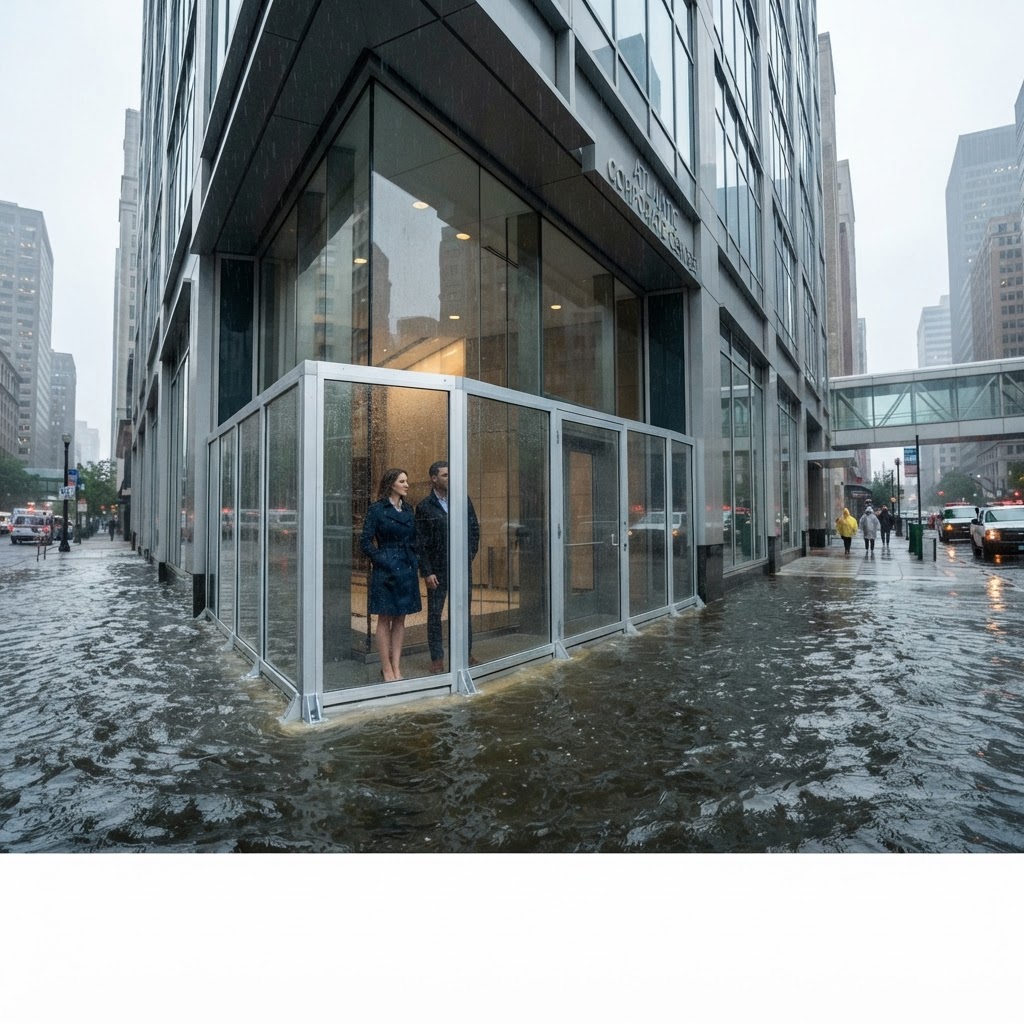
- Standard commercial property policies typically exclude flood damage, creating a significant coverage gap for business owners.
- Assessing your specific flood risk requires looking beyond just FEMA maps to consider local topography, drainage systems, and historical climate patterns.
- Commercial flood insurance provides financial protection for structural damage and business personal property destroyed by rising waters.
- Distinguishing between flood, sewer backup, and water intrusion is vital, as these require different policy endorsements or stand-alone coverage.
- Reviewing FEMA flood maps is essential for determining if you are in a high-risk zone and if your lender will mandate flood insurance.
For most entrepreneurs, the phrase “property insurance” feels like a catch-all safety net. You pay your premiums, you secure your physical assets, and you sleep soundly knowing that if disaster strikes, your business will be rebuilt. However, this sense of security is often tested during extreme weather events. The most common and devastating realization business owners face is that standard commercial property policies almost never cover flood-related damage. In an era where extreme weather patterns are shifting and urban development is changing drainage landscapes, failing to understand your vulnerability can be an existential threat to your company. Whether you operate a retail storefront in a low-lying valley or an office in a high-rise, navigating the complexities of commercial flood insurance is a foundational component of risk management. By taking a proactive approach to understanding your exposure and the limitations of your current coverage, you can ensure that a single storm does not dictate the end of your business venture.
Understanding the Gap: Why Property Insurance Excludes Flooding
Many business owners are shocked to discover that their standard commercial property policy contains a specific exclusion for “flood” or “rising water.” This is not a malicious oversight by insurance carriers; it is a fundamental pillar of the insurance underwriting industry. Insurance models are built on the concept of “fortuitous loss”—events that are accidental and unpredictable. Conversely, flooding is often perceived as a peril that is geographically specific, predictable, and prone to “correlated losses,” meaning thousands of policyholders could be affected simultaneously by a single event.
If every commercial property policy included flood protection, insurers argue that premiums would become prohibitively expensive for every business, regardless of their location. Instead, the industry separates flood coverage from standard property protection. A standard policy typically covers “perils” such as fire, windstorm, theft, or vandalism. Even if a pipe bursts inside your building, your property insurance likely covers that water damage because the source of the water is contained within the structure. However, once water enters your premises from the ground up—due to overflowing rivers, storm surges, or massive accumulation of rainfall—it is classified as a flood.
The “gap” in coverage occurs because business owners assume that if they have “all-risk” coverage, they are covered for all risks. While “all-risk” sounds comprehensive, it is technically an “open perils” policy, meaning it covers everything *except* what is specifically excluded. Flood, earthquake, and war are the “big three” standard exclusions found in almost all business property contracts. If you experience a flood and attempt to file a claim under your standard property policy, your insurance adjuster will likely point to the water damage exclusion clause, leaving you solely responsible for the cleanup, structural repairs, and business interruption costs.
Closing this gap requires dedicated commercial flood insurance or a specific flood insurance endorsement. Small business owners should not assume that their landlord’s policy covers them either. If you lease your space, your landlord’s policy likely only covers the building shell, not your business inventory, equipment, or improvements. Relying on a landlord’s insurance creates a dangerous vulnerability where you are left with no recourse if your inventory is destroyed. Understanding that this gap exists is the first step toward business continuity. By actively separating your flood risk from your general liability and property risk, you create a tiered strategy that accounts for the reality of modern weather patterns rather than the assumed coverage limits of your primary policy.
How to Assess Your Business’s Local Flood Risk
Conducting a thorough flood risk assessment is not a task meant to trigger anxiety; rather, it is a necessary exercise in data-driven business management. Many business owners make the mistake of believing that if they are not in a “high-risk” zone according to government maps, they are entirely safe. This is a common misconception that has led many businesses to disaster. True flood risk assessment considers a variety of factors beyond official designations, incorporating local environmental variables that often change faster than mapping services can update.
Start by evaluating your business’s elevation relative to its surroundings. Even if you are not near a river, you could be located at the bottom of a basin or in an area with poor drainage that becomes a collection point for heavy rainfall. Look at the impervious surfaces around your building—parking lots, concrete sidewalks, and densely packed neighboring structures. These surfaces prevent water from soaking into the ground, forcing it to channel toward the nearest available space, which is often your front door. If you observe water pooling in your parking lot or streets during heavy rain, you are already seeing a red flag.
Another critical step is reviewing local historical data. Talk to long-term neighbors or your local chamber of commerce to learn about previous flooding events. Has the neighborhood experienced “nuisance flooding” where heavy storms cause streets to become impassable? If your building has a basement, crawlspace, or ground-level entrance, you are at a significantly higher risk than a business located on the second floor of a commercial complex. Consider how your HVAC systems, electrical panels, and critical servers are positioned. If these are located on the ground floor or in a basement, a relatively minor flood could incapacitate your entire technical infrastructure.
Furthermore, consider the “macro” environment. Urban development projects near your business can inadvertently change the flow of water. If a new residential complex is built upstream, it may increase the amount of runoff directed toward your area. While you cannot control these environmental factors, you can assess them. Using online mapping tools provided by municipal governments or national agencies provides a baseline, but observing your building during a severe weather event is often the most honest assessment of risk you will ever receive. Documenting these observations helps you make a better case to your insurance provider regarding the limits and premiums you require for your business flood protection.
| Assessment Tool | Purpose | Best For |
|---|---|---|
| FEMA Flood Maps | National regulatory compliance | Determining if you are in a mandatory purchase zone. |
| Municipal Drainage Maps | Hyper-local infrastructure analysis | Identifying bottlenecks or low points near the property. |
| Historical Weather Reports | Temporal data analysis | Understanding the frequency of “nuisance” flooding events. |
| Professional Site Survey | Elevation and structural integrity check | High-value assets or critical infrastructure planning. |
What Commercial Flood Insurance Actually Covers
When you invest in commercial flood insurance, you are essentially purchasing a specialized financial instrument designed to respond to one specific type of peril. Generally, these policies are split into two primary buckets: Building Property and Business Personal Property. Understanding the distinction between the two is vital for ensuring that you are not underinsured at the time of a loss.
Building Property coverage under a flood policy typically protects the physical structure of your building. This includes the building itself, the electrical and plumbing systems, HVAC equipment, water heaters, and often the permanently installed carpeting or paneling. For business owners who own their building, this coverage is essential because the cost to repair structural damage after a flood is immense. Waterlogged walls often require total gutting to prevent mold growth, and the electrical systems in a flooded building frequently need a full replacement to meet modern safety codes.
Business Personal Property coverage, however, is where many small business owners find their greatest relief. This segment of the policy covers the “contents” of your business. This encompasses everything from office furniture and specialized machinery to finished inventory and stock. If you run a retail shop, your merchandise is likely your biggest asset; if that merchandise is stored on the ground floor and damaged by floodwater, your personal property coverage is what enables you to replace that inventory and get back to business. It is important to note that many policies operate on an “Actual Cash Value” basis, meaning they cover the depreciated value of your items, though “Replacement Cost” coverage—which pays for the cost to buy new items at today’s prices—is usually available for an additional premium.
It is equally important to understand what is not covered. Most commercial flood policies will not cover financial losses related to business interruption. If your building is flooded and you are forced to close for three weeks, a standard flood insurance policy will pay to fix the building and replace the inventory, but it will not pay for the lost profits during those three weeks. To bridge that gap, you often need separate Business Interruption insurance. Furthermore, many policies have specific limitations on items located in basements or lower-level areas, as these are considered high-risk zones. Always review the declarations page of your policy to see if there are specific exclusions for high-value items like electronics, artwork, or high-end machinery, which may require additional coverage riders or special endorsements to ensure they are fully protected.
Distinguishing Between Surface Water and Sewer Backup
One of the most confusing aspects of commercial insurance for small business owners is the technical distinction between flood, surface water, and sewer backup. While these events can occur simultaneously during a storm, they are treated differently by insurance companies, and if you have the wrong policy, you could be left with a catastrophic bill for an event you thought was covered.
“Flood” is generally defined as the overflow of inland or tidal waters, or the unusual and rapid accumulation of surface water from any source. This is the definition used by most flood insurance policies. When a river rises and enters your building, that is a classic flood. However, consider a situation where a massive storm overwhelms the municipal sewer system, causing sewage to back up through your floor drains and into your business. This is commonly referred to as “Sewer and Drain Backup.”
Many business owners erroneously assume their flood insurance covers this. In reality, standard flood insurance usually excludes damage caused by a failure of the city sewer system. To cover this, you need a specific endorsement added to your property insurance policy. Conversely, if you have a sewer backup endorsement on your property insurance, it will not cover you if the water entered through your front door due to a rising creek—that is a flood.
This creates a “gray area” that can lead to significant disputes during the claims process. For example, if a massive storm causes local flooding AND causes the sewer system to fail, the insurance company must determine the “proximate cause” of the damage. If they determine the damage was primarily caused by the external flood, they will refer you to your flood insurer. If they determine it was caused by the sewer backup, they will refer you to your property insurer’s endorsement.
To protect your business, it is a best practice to ensure you have both: a dedicated commercial flood insurance policy and a sewer/water backup endorsement on your primary property policy. This “belt-and-suspenders” approach ensures that regardless of whether the water enters via the door or the floor drain, you have a path to recovery. Speak with your agent specifically about “water intrusion” as a broad category, and ask them to map out which policy would respond to different scenarios. You should also consider the physical steps you can take to mitigate these specific risks, such as installing backflow prevention valves in your plumbing system. These valves can physically prevent sewage from backing up into your building, which serves as a first line of defense that keeps you from having to rely on the insurance claim process entirely.
Understanding FEMA Flood Maps and Insurance Requirements
For many businesses, the interaction with FEMA (Federal Emergency Management Agency) maps is their first and only foray into flood risk analysis. FEMA’s Flood Insurance Rate Maps (FIRMs) are the industry standard for determining the risk level of a specific geographic area. These maps delineate Special Flood Hazard Areas (SFHAs)—often referred to as the “100-year floodplain”—where there is a statistical probability of flooding reaching a certain level in any given year.
If your commercial property is located within an SFHA, and you have a mortgage from a federally regulated lender, you are legally required to carry flood insurance. This is a non-negotiable mandate for loan compliance. However, even if you are outside of these high-risk zones, you are not immune to flood risk. The “100-year” terminology is often misunderstood; it means there is a one percent chance of such a flood occurring in any given year. Over the life of a 30-year commercial mortgage, that one percent annual chance actually represents a much higher cumulative probability of experiencing a flood event.
Understanding how to read these maps is a skill every business owner should cultivate. You can access these maps through the FEMA Flood Map Service Center online. By entering your business address, you can see if you are in a high-risk zone (typically marked with an ‘A’ or ‘V’ zone) or a low-to-moderate risk zone (usually ‘X’ zones). However, FEMA maps are not always updated in real-time. They are the result of extensive hydrological studies and can take years to finalize. If your area has seen recent land development, the FEMA map may not reflect the current reality of how water flows through your neighborhood.
Do not allow the absence of a mandatory FEMA requirement to breed complacency. Many businesses located in “X zones” suffer devastating losses precisely because they relied on their status as “low risk” to forgo coverage. Use the FEMA map as a starting point, but view it through the lens of a minimum standard. If your business’s financial stability would be compromised by a temporary closure or the loss of your inventory, then the official FEMA risk classification is largely irrelevant. The true test of your need for coverage is your balance sheet, not a government map. If you choose to purchase coverage in a low-risk zone, you will often find that the premiums are significantly lower than those for high-risk zones, making it an affordable way to secure peace of mind against the unpredictable nature of climate volatility. Always consult with your insurance agent to see if you qualify for preferred risk policies, which are specifically designed for businesses located in lower-risk zones.
How Commercial Flood Insurance Premiums Are Calculated
Understanding how insurers price commercial flood insurance requires looking beyond simple property value. While residential premiums might lean heavily on home replacement costs, commercial policies factor in the operational complexity of a business. Underwriters engage in a rigorous process of risk assessment to determine the likelihood of a loss event and the potential severity of that loss.
One of the primary determinants is the specific location of the business relative to FEMA flood maps. These maps classify land into various zones, ranging from low-risk areas to high-risk Special Flood Hazard Areas (SFHA). Properties located in an SFHA—often designated as “Zone A” or “Zone V”—will typically command higher premiums due to the statistically higher probability of flooding. However, modern actuarial science now incorporates granular data, such as elevation certificates and proximity to secondary water sources, such as drainage canals or non-mapped creeks, which may not appear on legacy FEMA documents.
Building characteristics play an equally significant role. The construction type—whether steel-framed, masonry, or wood-frame—influences how a structure reacts to standing water. Furthermore, the elevation of the first floor relative to the base flood elevation (BFE) is a critical metric. A building elevated above the BFE is viewed as a significantly lower risk than one with a slab-on-grade foundation, as the former is far less likely to suffer structural saturation during a surge event.
Business activity and contents are also assessed. A warehouse containing high-value electronics or moisture-sensitive inventory will carry higher risk profiles than an office space with minimal physical stock. If a business occupies a basement or a subterranean level, the premiums will often reflect the high probability of total loss for any equipment stored below ground. Lastly, the deductible chosen by the business owner drastically impacts the premium; opting for a higher deductible can serve as an effective tool to lower annual costs, provided the business maintains sufficient cash reserves to cover that out-of-pocket amount in the event of a claim.
Key Factors to Consider Before Buying a Policy
Selecting the right commercial flood insurance policy is not a task that should be rushed during a renewal cycle. Business owners must evaluate their unique operational requirements against the limitations of various insurance products. The following factors should guide your decision-making process.
First, evaluate the difference between Replacement Cost Value (RCV) and Actual Cash Value (ACV). RCV policies pay out the amount needed to repair or replace damaged property with materials of like kind and quality, without a deduction for depreciation. ACV policies, by contrast, subtract depreciation from the settlement, which can leave a business with a significant financial shortfall when trying to rebuild. For most small businesses, an RCV policy is the preferred choice for business continuity.
Second, scrutinize the scope of business interruption coverage. Many standard commercial flood policies cover the physical building and its contents, but they may not automatically include lost income if the business is forced to shutter during repairs. If your business depends on physical foot traffic, ensuring that your flood policy includes or is supplemented by a robust Business Interruption rider is essential to survival.
Third, examine the “Excess Flood” options. Standard policies often have caps on total payout limits. If your business assets significantly exceed these caps, you may need to pursue an excess flood insurance policy through a private carrier to bridge the gap. Relying solely on a primary policy when your total exposure is $2 million but your coverage stops at $500,000 is a recipe for bankruptcy.
Finally, investigate the waiting periods. Unlike general liability insurance, which might take effect immediately, flood policies typically enforce a 30-day waiting period from the date of purchase before coverage kicks in. This is designed to prevent “adverse selection,” where business owners buy insurance only when a major storm is already in the forecast. Planning ahead is the only way to ensure you are protected when the skies turn dark.
| Insurance Option | Primary Benefit | Best For |
|---|---|---|
| NFIP (Standard) | Backed by federal government; consistent rates | Low-to-moderate risk small businesses |
| Private Flood Insurance | Higher limits; faster customization | High-value assets; unique risk profiles |
| Excess Flood Coverage | Provides protection above NFIP caps | Large enterprises; high-inventory warehouses |
| Business Interruption Add-on | Covers lost revenue during repairs | Retail shops; high-traffic service businesses |
Steps to Take After a Flood Damage Event
If your business is impacted by a flood, the first 48 hours are critical. The way you document the event will dictate the efficiency and success of your insurance claim. Panic often leads to oversight, but following a structured approach can help preserve your rights to a full settlement.
1. Ensure Personal Safety: Before re-entering any facility, ensure the building is structurally sound and that utility lines (gas, water, and electricity) have been disconnected. Never wade through floodwaters if you suspect the power is still active, as electrical current can remain lethal in standing water.
2. Document Everything: Before beginning any cleanup or debris removal, take extensive photographs and videos of the damage. Capture wide shots of the overall room and close-ups of specific damaged assets. If possible, keep damaged inventory, furniture, or equipment—or at least a portion of it—as evidence for the adjuster. If immediate cleanup is required for health reasons, take high-quality photos before anything is discarded.
3. Notify Your Carrier Immediately: Contact your insurance agent or the claims department of your insurance carrier as soon as it is safe to do so. Provide them with a preliminary assessment of the damage and obtain a claim number. The insurance company will assign an adjuster to inspect the site; keep a log of every conversation, including the name of the representative and the instructions they provided.
4. Implement Temporary Repairs: To prevent further damage, such as mold growth or water rot, take reasonable steps to mitigate the situation. This might include boarding up broken windows, placing tarps over holes, or using professional drying equipment. Keep receipts for all these emergency measures, as most policies reimburse for reasonable mitigation efforts.
5. Maintain Detailed Records: Keep a running folder of all expenditures related to the flood. This includes invoices from contractors, cleaning companies, and temporary facility rentals. The more organized your documentation, the faster the claims process will proceed.
How to Mitigate Flood Risks and Lower Your Insurance Costs
Mitigation is an investment in your business’s longevity. By physically hardening your facility against flood events, you demonstrate a commitment to risk reduction that many insurers reward with lower premiums or better policy terms.
Start by auditing your building’s envelope. Ensure that all ground-level vents are flood-resistant and that drainage systems, such as gutters and downspouts, are clear and directed away from the foundation. If your building sits on a slab, consider installing flood barriers or waterproof shields over doorways. While these might seem like minor improvements, they can significantly reduce the amount of water ingress during a minor surge.
Relocating critical assets is perhaps the most effective strategy. If your warehouse keeps expensive inventory in the basement, moving that stock to a higher level or utilizing elevated racking systems can save your business from a total loss. Furthermore, consider installing smart-water sensors that can alert you via smartphone if water is detected in susceptible areas, allowing you to move equipment before the flood reaches a catastrophic level.
Another powerful tactic is to engage a professional to update your elevation certificate. Over time, infrastructure improvements in your municipality—such as improved levee systems or larger storm drains—may have reduced the flood risk for your property. If your current insurance policy is based on outdated data, an updated elevation certificate could result in a reclassification of your property risk, leading to lower premiums.
Finally, always perform a recurring flood risk assessment. As your business grows, your inventory levels change, and your reliance on specific equipment may evolve. By reviewing your flood readiness annually, you can ensure that your mitigation efforts are keeping pace with your business’s actual exposure, preventing costly gaps in both safety and insurance coverage.
Frequently Asked Questions
Does my standard commercial property insurance cover flood damage?
In almost all cases, the answer is no. Standard commercial property insurance policies typically exclude damage caused by flooding, rising water, or surface water. Flood coverage must be purchased as a separate, stand-alone policy. It is vital to check your policy language or consult with your broker to ensure you have specific flood protection, as assuming you are covered can result in a devastating financial surprise during a disaster.
What is considered “flood” under insurance definitions?
Insurance policies generally define a flood as an overflow of inland or tidal waters, or the unusual and rapid accumulation of surface water from any source. This includes heavy rainfall, storm surges, or the overflowing of rivers and lakes. Water damage that originates inside the building, such as a burst pipe or a leaking roof, is typically covered under a standard property insurance policy, while water that originates from an external natural source is handled by flood insurance.
Can I get flood insurance for a business in a low-risk zone?
Yes, and experts often recommend it. Even if your property is located in an area designated as a low-to-moderate risk on FEMA flood maps, you are still eligible for, and can often benefit from, flood insurance. Many flood claims occur in these areas, and because the risk is perceived to be lower, premiums for these properties are often quite affordable. It serves as a cost-effective safety net for what could be an unpredictable natural event.
Do I need an elevation certificate to get insurance?
While not always strictly required to purchase a basic policy, having an elevation certificate is highly recommended. This document provides precise data about the building’s elevation relative to the base flood elevation in your area. Insurance companies use this data to calculate a more accurate risk profile. Without it, you might be placed in a higher risk tier by default, which could lead to significantly higher premiums than if you had provided the verified elevation data.
Does flood insurance cover the cost of business interruption?
Standard National Flood Insurance Program (NFIP) policies generally do not provide coverage for lost business income or extra expenses incurred while your business is closed for repairs. However, many private insurance carriers offer supplemental coverage or endorsements that can address business interruption. It is essential to review your specific policy add-ons to see if your loss-of-income needs are being met by your current plan.
How does the deductible impact my flood insurance premium?
The deductible is the amount you agree to pay out-of-pocket before your insurance coverage begins to pay for a claim. Similar to other insurance products, choosing a higher deductible can lead to lower annual premiums. However, business owners must balance this against their immediate cash flow. If you choose a high deductible, ensure you have sufficient emergency funds set aside to cover that amount, as you will need to pay it before the insurance payout becomes available for repairs.
Conclusion
Commercial flood insurance is not just a line item on an expense report; it is a fundamental pillar of business continuity. Natural disasters, particularly floods, are unpredictable and can strike even in areas with no history of previous water damage. By understanding how premiums are calculated, performing regular flood risk assessments, and ensuring your coverage limits align with your actual asset value, you are positioning your business to survive and thrive even in the face of environmental challenges.
Do not wait for a flood watch to begin your evaluation. Take the time today to review your current policy, consult with your insurance agent about potential gaps in your protection, and prioritize the hardening of your physical facility. Proactive measures today will pay dividends in the form of peace of mind and financial security for your business’s future.
Ready to secure your business? Contact your insurance professional today to request a quote or an updated flood risk assessment for your property.
By insureiqguru Editorial Team
Leave a Reply