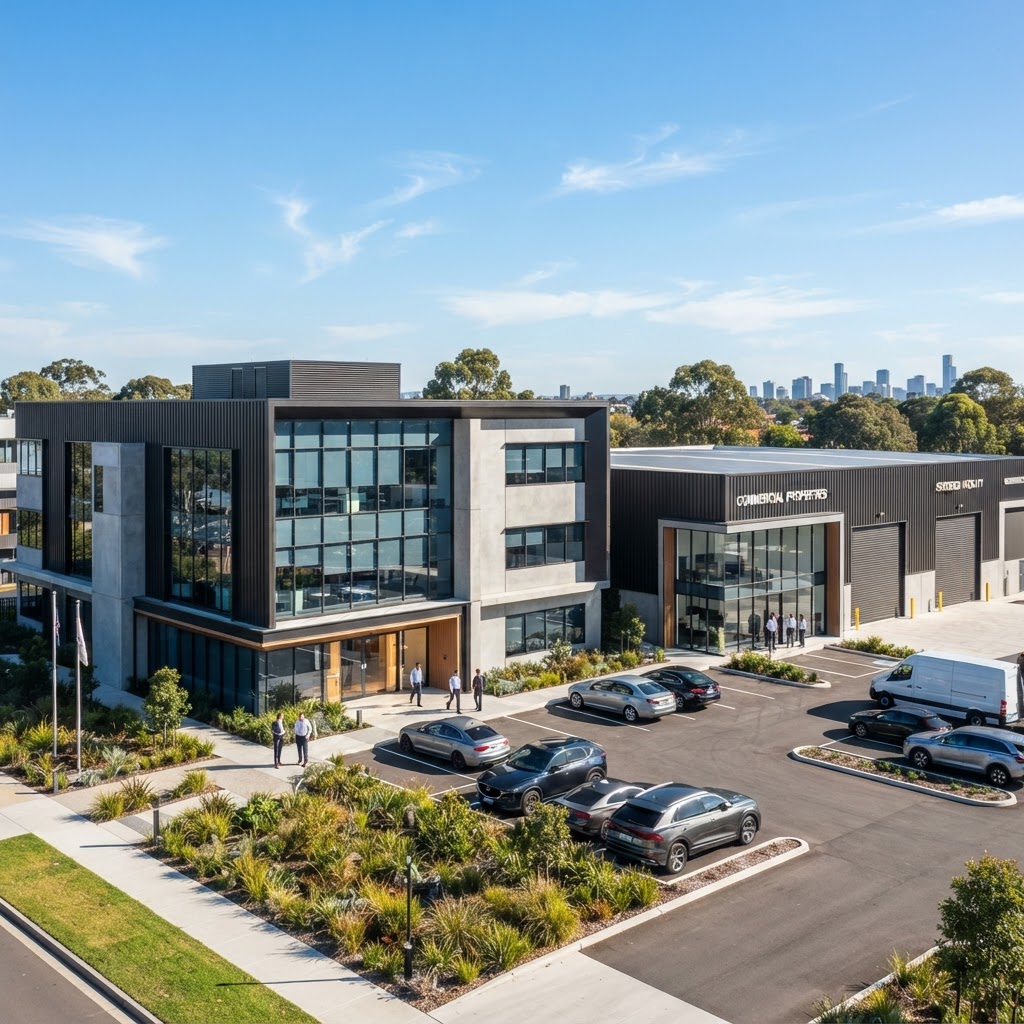
- Commercial property insurance is a foundational safeguard for businesses, protecting physical assets like buildings, inventory, and equipment against unforeseen losses.
- Policy selection centers on the choice between Named Peril and Open Peril coverage, which significantly dictates the scope of your protection.
- Small business insurance costs are highly variable, influenced by location, building age, security measures, and the total value of insured assets.
- Calculating property values requires more than just purchase price; owners must consider replacement costs to avoid underinsurance during a claim.
- Effective asset protection for business requires periodic policy reviews to align coverage with business growth and current market volatility.
As the business landscape evolves in 2026, the physical footprint of an enterprise remains one of its most significant liabilities and assets. Whether you operate a retail storefront, manage a sprawling warehouse, or oversee professional office suites, the infrastructure you rely on is perpetually exposed to risks ranging from natural disasters to human error. Protecting these investments is not merely a precautionary measure; it is a critical component of risk management that ensures organizational continuity. Navigating the nuances of commercial property insurance requires a sophisticated understanding of how policies function, what risks they mitigate, and how premiums are structured in a tightening economic environment. In this comprehensive guide, the insureiqguru Editorial Team explores the intricacies of securing your business assets against the unpredictable challenges of the modern marketplace.
What Is Commercial Property Insurance and Who Needs It?
Commercial property insurance serves as the financial backbone for businesses that own or lease physical space. At its fundamental level, it is a contract between a business owner and an insurer, wherein the insurer agrees to compensate the business for damage or loss to their physical property resulting from covered events. Unlike residential insurance, which focuses on living spaces, commercial property insurance is specifically designed to handle the complex interplay of business assets, including inventory, furniture, fixtures, specialized machinery, and the building itself. This protection is essential for maintaining liquidity when a disaster—such as a fire, severe weather event, or theft—strikes, preventing a sudden loss from becoming a permanent business closure.
Determining who needs this coverage often leads to a simple realization: if your business cannot function without its physical assets, you require protection. While some small business owners assume their landlord’s policy covers their equipment, this is frequently a dangerous misconception. A landlord’s building insurance typically only covers the physical structure itself, leaving the tenant’s personal property, improvements, and business income entirely unprotected. Consequently, any business that maintains physical equipment, stock, or office furniture—regardless of whether they own or lease their premises—must view commercial property insurance as a mandatory expenditure rather than an optional add-on.
The scope of this coverage extends beyond just the four walls of a building. It encompasses “Business Personal Property” (BPP), which includes virtually everything used to conduct business that is not part of the structure. For a restaurant, this includes kitchen appliances and dining room furnishings; for a tech firm, it includes server arrays and employee workstations. Moreover, the definition of need has expanded in recent years to include “off-premises” property coverage, which protects assets temporarily moved to client sites or exhibitions. The experts generally agree that if your business operations would be halted by the destruction of your gear, furniture, or inventory, your insurance strategy should prioritize comprehensive commercial property coverage.
Furthermore, businesses operating in high-risk zones—areas prone to earthquakes, floods, or high crime rates—find this insurance indispensable. Small business insurance costs are often viewed as a significant overhead, but they pale in comparison to the capital outlay required to replace an entire inventory or reconstruct a destroyed facility from scratch. By transferring the financial risk of catastrophic loss to an insurer, business owners can focus their capital on growth and innovation rather than maintaining a massive emergency fund for physical disaster recovery.
Finally, it is worth noting that lenders almost universally require proof of robust commercial property coverage before issuing loans or commercial mortgages. As such, obtaining this insurance is frequently a prerequisite for expansion, acquisition, or operating within commercial real estate markets. Whether you are a sole proprietor operating out of a studio or a mid-sized enterprise with multiple locations, identifying your specific property exposures is the first step in building a resilient business foundation that can withstand the inevitable volatility of the commercial sector.
Core Coverage: What Does Your Policy Protect?
When securing a commercial property policy, understanding the distinction between what is covered and what is excluded is vital for effective asset protection for business. A standard policy typically operates on a “first-party” basis, meaning it compensates the business directly for damages. The coverage generally breaks down into three primary categories: the physical building, the business personal property (contents), and the resulting loss of business income, which is often an optional but highly recommended extension.
The building coverage segment protects the structure itself, including exterior walls, permanent fixtures, and structural components like heating, ventilation, and air conditioning (HVAC) systems. This is where many policies align with the requirements of a mortgage lender. It covers physical damage caused by “covered perils” such as lightning, windstorms, or vandalism. It is important to note that this does not necessarily include land value, which remains untouched even if a building is leveled, making it a critical consideration for businesses calculating their total exposure.
The second core component, Business Personal Property, covers the contents that make the business operational. This category is broad and often surprises new business owners with its depth. It includes office equipment, inventory ready for sale, manufacturing tools, and specialized computer hardware. A crucial detail often missed is the coverage of “leasehold improvements.” If a business rents a space and installs permanent upgrades—such as custom flooring, cabinetry, or light fixtures—these assets technically belong to the building owner, but the insurance policy can be structured to protect the business’s interest in those improvements.
A third, less discussed but equally important, layer is the “Business Income” or “Business Interruption” coverage. While not strictly “property” insurance in the sense of physical assets, it is almost always bundled or added as a rider to commercial property insurance. If a fire renders your office unusable, you lose the ability to generate revenue while still facing fixed costs like payroll, rent, and loan repayments. Business income coverage steps in to replace lost revenue and pay these ongoing expenses during the period of restoration. This prevents a temporary physical loss from spiraling into a total bankruptcy event.
To better understand how these protections are organized, consider the following comparison of policy focuses:
| Policy Focus | Core Protection | Best For |
|---|---|---|
| Building Coverage | Exterior/Interior Structure | Commercial Property Owners |
| Business Personal Property | Equipment, Inventory, Furniture | Retailers, Manufacturers, Offices |
| Business Interruption | Lost Revenue, Fixed Expenses | Service-Based & High-Volume Businesses |
| Extra Expense Coverage | Costs to Operate Elsewhere | Time-Sensitive Businesses |
Finally, modern policies may include “extensions” or “endorsements.” These are specific additions to the core policy that provide coverage for items that might otherwise be excluded. Common examples include debris removal coverage, which assists with the costs of clearing a site after a fire, or ordinance or law coverage, which helps pay for the additional costs to bring a building up to current safety codes during reconstruction. By tailoring these core components to the specific nature of your business—whether you store heavy machinery or delicate digital equipment—you ensure that your asset protection for business is comprehensive rather than generic.
Understanding Named Peril vs Open Peril Policies
The language used in insurance contracts can be notoriously dense, but the distinction between “Named Peril” and “Open Peril” is the most consequential choice a business owner will make. These two policy types define the “how” of the coverage, effectively establishing the threshold that must be crossed before an insurer is obligated to pay a claim. Understanding this distinction is essential because it dictates the level of uncertainty you are willing to accept versus the premium you are willing to pay.
A “Named Peril” policy operates on an exhaustive list approach. The policy explicitly states exactly which causes of loss are covered. If an event occurs that is not on that list, the claim is typically denied. Common named perils often include fire, lightning, windstorm, hail, explosion, riot, aircraft, vehicles, and smoke. Because the list is finite and predictable from the insurer’s perspective, these policies are generally more affordable and often favored by small businesses operating with tight margins in low-risk environments. However, the limitation is significant: if a freak occurrence—such as a specific type of chemical spill or a unique mechanical failure not listed—causes damage, the business is left to absorb the loss alone.
Conversely, “Open Peril” (often referred to as “All-Risk”) policies operate on an exclusion-based approach. Under this structure, all losses are covered unless they are specifically excluded in the policy document. This is significantly broader and generally provides a higher level of protection. While the premiums are typically higher due to the wider net of coverage, the peace of mind offered is substantial. Common exclusions in an Open Peril policy often include war, nuclear hazard, government seizure, intentional acts by the insured, and—critically—floods and earthquakes. Because the coverage is broader, an Open Peril policy shifts the burden of proof; if a loss occurs, the burden is on the insurer to demonstrate that the event is specifically excluded, whereas, in a Named Peril policy, the burden is on the business owner to prove the event was a named peril.
Choosing between these two is often a strategic exercise. For a business with high-value, sensitive assets or a business located in a complex urban environment, the “All-Risk” approach is usually the recommended industry standard. The potential for a non-traditional event—like a massive water main break causing damage to basement servers—is higher in dense areas. A Named Peril policy might not include “accidental discharge of water” unless it is specifically added, leaving a gap in protection. In contrast, an Open Peril policy would likely cover this loss, provided it is not explicitly listed as an exclusion.
Moreover, as we look toward the 2026 economic environment, supply chain volatility and environmental changes suggest that the “unexpected” is becoming more frequent. Experts often point out that business owners who choose the lowest-cost “Named Peril” option frequently do so under the impression they are fully insured, only to find during a claim that the specific cause of their damage was absent from the document. To mitigate this, many businesses now opt for “Open Peril” coverage with “Special Form” endorsements. While this raises small business insurance costs, it provides a crucial safety net that guards against the vast unknown, ensuring that the business remains resilient regardless of how a disaster unfolds.
Factors That Influence Your Insurance Premiums
The cost of commercial property insurance is never a single, flat rate. It is a calculated assessment of risk, derived from a complex set of variables that insurers evaluate to determine the likelihood and severity of potential claims. Understanding these factors allows business owners to take proactive steps to reduce their premiums. By improving the physical safety of a facility or adjusting operational protocols, a business can demonstrate a lower risk profile to insurers, which can lead to more favorable pricing over time.
Location is arguably the most significant factor. Insurers analyze granular data regarding regional disaster history, including proximity to fault lines, flood plains, and wildfire corridors. Beyond natural risks, the local emergency response infrastructure plays a major role. A building located within a few blocks of a professional fire station with a strong rating will typically attract lower premiums than a warehouse in a remote rural area where response times are longer. Furthermore, crime statistics in the surrounding area impact the “theft and vandalism” component of the risk assessment, directly influencing the final cost.
The physical characteristics of the building itself are equally scrutinized. Age and construction materials are paramount. Modern buildings constructed with fire-resistant materials, updated electrical wiring, and advanced plumbing are far less risky than older structures with outdated systems. For instance, knob-and-tube wiring or galvanized piping—which are common in older commercial districts—are red flags for insurers, often resulting in higher premiums or even a refusal to provide coverage until upgrades are made. Additionally, safety features like automatic sprinkler systems, smoke detectors, alarm systems, and high-security locks provide tangible evidence of risk mitigation, which can result in significant premium credits.
The use of the property is another critical variable. A professional office has a vastly different risk profile than a machine shop that uses heavy welding equipment. Insurers categorize businesses based on “occupancy class.” High-hazard occupancies, such as chemical processing, food frying (due to grease fires), or businesses handling high-value electronic components, will naturally incur higher costs. Managing these risks involves maintaining the facility to a high standard, documented by regular inspections and maintenance logs, which can often be shared with insurers during the renewal process to justify lower rates.
Finally, the coverage terms themselves—the deductible and the limit—are levers the business owner can pull to manage costs. A higher deductible, while increasing the business’s out-of-pocket exposure during a minor incident, lowers the annual premium significantly. Many established businesses choose to carry a higher deductible for “nuisance” claims while maintaining high limits for catastrophic events. It is a balancing act of risk tolerance. As business property coverage is essential for long-term stability, many experts suggest finding a balance where the deductible is set at a level that is manageable during a cash-flow dip but high enough to prevent the business from paying for “first-dollar” coverage, which is often inefficient and overpriced.
How to Calculate the Value of Your Business Property
Determining the correct value for your assets is the most common pitfall in the commercial insurance process. Underinsurance is a prevalent issue that can lead to disastrous outcomes during a claim. If you insure your building for $500,000 but the actual cost to rebuild it is $800,000, you may find that the “coinsurance clause” in your policy limits the payout, leaving you to shoulder a substantial portion of the reconstruction costs. Calculating value requires precision, a bit of legwork, and often the assistance of a professional appraisal.
The first step is understanding the difference between “Market Value” and “Replacement Cost.” Market value is what you could sell the property for, which includes the value of the land and the location. Insurance, however, focuses on replacement cost—the amount it would take to rebuild the structure from the ground up using current materials and labor prices. Land value should never be included in your insurance limit, as the land itself is generally not subject to fire, theft, or vandalism. Calculating the replacement cost involves determining the square footage of your facility and multiplying it by the current construction cost per square foot in your specific region. These costs fluctuate with inflation and labor market trends, which is why periodic re-evaluation is necessary.
For Business Personal Property, the calculation involves creating a detailed inventory. Do not rely on old accounting records or purchase prices from five years ago. Instead, utilize the “current replacement cost.” This involves auditing your physical assets, noting their model numbers, age, and current market price for an equivalent new item. Many business owners find it helpful to keep a digital spreadsheet or use asset management software, capturing photos or videos of the equipment as evidence. This is particularly important for specialized tools or proprietary equipment that may have a long lead time for replacement; if you lose a machine that takes six months to order, your coverage needs to account for the total cost of business downtime as well as the hardware replacement.
The “Coinsurance Clause” is a technicality that makes accurate valuation non-negotiable. Most policies require you to carry coverage equal to a specific percentage (usually 80%, 90%, or 100%) of the total replacement cost of the property. If your property is worth $1 million and your policy requires 90% coinsurance ($900,000), but you only carry $600,000 in coverage, the insurer will apply a penalty during a claim. Specifically, they will only pay the proportion of the loss that your coverage represents compared to the required amount. In this scenario, you would only receive a fraction of your claim money, even for a partial loss.
To avoid this, engage a qualified commercial appraiser every few years. They provide an objective, professional valuation that is often accepted by insurers as proof of the replacement cost. Furthermore, consider an “Agreed Value” endorsement, if available. This eliminates the coinsurance requirement by having both you and the insurer agree on the property’s value at the start of the policy term. By removing the guesswork and potential for penalty, you ensure that your asset protection for business is ironclad, allowing you to focus on operations with the confidence that, should the worst occur, your business has the financial resources to rebuild exactly as it was.
Common Exclusions to Watch Out For
While commercial property insurance is a robust safety net for your physical assets, it is not a catch-all solution. One of the most critical aspects of managing your asset protection for business strategy is understanding precisely what your policy does not cover. Many business owners assume that a “comprehensive” policy covers everything, but insurance providers typically include specific exclusions that can leave you financially exposed if you are not proactive.
The most significant exclusion found in standard commercial property policies is damage resulting from floods and earthquakes. Standard “all-risk” policies often exclude these events entirely. If your business is located in a high-risk zone, you will likely need to purchase a separate “difference-in-conditions” policy or a standalone flood/earthquake endorsement to secure your physical structure.
Another common exclusion involves “wear and tear.” Insurance is designed to cover fortuitous events—sudden, accidental losses. It is not intended to cover the gradual deterioration of a building. If a roof collapses because it was 40 years old and improperly maintained, the claim will almost certainly be denied. Similarly, damage caused by mold, pests, or vermin is rarely covered under standard commercial building insurance, as these are viewed as maintenance issues that fall under the owner’s responsibility.
Furthermore, businesses must be wary of “ordinance or law” exclusions. If your building is partially damaged and local building codes require you to upgrade the entire structure to meet current safety standards, your base policy may only pay to repair the damaged portion. Without a specific endorsement for ordinance or law coverage, you would be forced to pay the difference out of pocket to meet the new legal mandates. Understanding these nuances is vital to preventing sudden gaps in your financial security.
The Importance of Business Personal Property Coverage
Many entrepreneurs focus exclusively on the physical structure of their office or warehouse, forgetting that the true value of their business often resides inside. Business personal property coverage is a specialized segment of your policy that protects everything—excluding the building itself—that you use to conduct your daily operations.
This coverage includes office equipment (computers, servers, printers), furniture, inventory, raw materials, and even leased equipment that you are contractually obligated to insure. Without this protection, a single fire or act of vandalism could result in a total loss of your operational capabilities. The goal here is not just replacing items; it is ensuring business continuity.
When assessing your needs, it is important to distinguish between “replacement cost” and “actual cash value” (ACV). Replacement cost coverage reimburses you for the cost to purchase new items of similar quality, which is vital for modern technology and machinery. Conversely, ACV coverage factors in depreciation, meaning you might receive significantly less than what is required to buy new equipment. For most growing businesses, choosing a replacement cost valuation is the superior choice for long-term asset protection.
You should also consider “off-premises” coverage. In an era where employees travel for conferences, client meetings, or work remotely, your property (like laptops or portable diagnostic equipment) is often away from the office. Ensure your commercial property policy types include provisions for items that are temporarily stored or used at locations other than your primary business address.
Tips for Choosing the Right Deductible
Selecting a deductible is a balancing act between managing your small business insurance costs and ensuring your company can survive a major loss. A higher deductible typically lowers your annual premium, but it increases the amount of “skin in the game” you must have in the event of a claim.
When deciding on an appropriate deductible, consider your business’s current liquidity. Can you afford to pay a $5,000 or $10,000 deductible tomorrow if a pipe bursts? If your cash reserves are tight, a lower deductible is a safer play, even if it means paying a slightly higher monthly premium. Conversely, if your business has substantial cash on hand and wants to lower long-term overhead, opting for a higher deductible can serve as a strategic financial decision.
Be aware that some policies use a percentage-based deductible for specific perils like windstorms, hail, or named hurricanes. This is common in coastal regions. If you have a $1 million property and a 5% hurricane deductible, you are responsible for $50,000 in damages before the insurance kicks in. Always review your policy declarations page to see if your deductibles are flat-dollar amounts or percentage-based, as this significantly changes your risk profile during extreme weather events.
| Deductible Strategy | Best For | Impact on Premium |
|---|---|---|
| High Flat Deductible | Established businesses with strong cash reserves. | Lowers annual cost significantly. |
| Low Flat Deductible | Startups and small firms with limited cash flow. | Increases annual premium. |
| Percentage-Based Deductible | Properties in high-risk zones (coastal/fault lines). | Required by many carriers for specific perils. |
Commercial Property Insurance Mistakes to Avoid in 2026
As we navigate 2026, the complexity of business risks continues to evolve. Avoiding common pitfalls is essential to ensuring your business remains protected. The most frequent error is under-insuring your assets. With inflation and supply chain volatility, the cost of labor and building materials has shifted significantly. If you haven’t updated your policy limits in the last two years, you may be “under-insured,” meaning your policy will not cover the full cost of a total loss.
Another major mistake is failing to disclose renovations. If you add a new wing, upgrade your HVAC system, or store expensive new machinery, you must update your insurer. An outdated policy that does not reflect your current physical footprint can lead to a denial of claims or a reduction in payouts due to “co-insurance” clauses.
Additionally, many business owners neglect the importance of documenting their assets. Keeping an updated inventory list, complete with serial numbers, purchase dates, and photos/videos of your property, is essential. When a claim happens, the burden of proof rests on you. Trying to recall every piece of equipment after a disaster is stressful and inefficient. Use cloud-based inventory software to keep a real-time log of your assets.
Finally, avoid the “set it and forget it” mentality. Your insurance needs are dynamic. Review your policy at least once every 12 months with a licensed broker. A review might reveal that your business has outgrown its current coverage limits or that new, more affordable business property coverage options have become available in the market.
How to File a Property Claim Effectively
Filing an insurance claim is a high-pressure situation, but a methodical approach can significantly expedite the process and improve your chances of a fair settlement. The first step, once safety is established, is to mitigate further damage. If your roof is leaking, place tarps over expensive equipment. If a window is smashed, board it up. Your policy typically requires you to take reasonable steps to prevent further loss; failing to do so can sometimes void coverage for secondary damage.
Next, contact your insurance agent or carrier immediately. They will assign an adjuster to your case. Before the adjuster arrives, prepare your documentation. This should include your inventory list, photos taken before and after the incident, and any receipts or invoices related to the damaged property. Having a neat file folder—physical or digital—shows the insurer that you are organized and serious about the claim.
Be honest and specific when speaking with the adjuster. Do not exaggerate losses or guess at values; rely on your documentation. If you believe the adjuster’s assessment is inaccurate, you have the right to request a second opinion or hire a public adjuster to represent your interests. Maintaining professional communication and keeping a log of all interactions with your insurance company will provide a trail of evidence should any disputes arise during the claims process.
Frequently Asked Questions
Is commercial property insurance legally required?
In many cases, commercial property insurance is not mandated by federal or state law. However, if you have a commercial mortgage or lease agreement, your bank or landlord will almost certainly require you to maintain a policy as a condition of your contract. Even when not required, it is considered an essential component of professional risk management.
Does commercial property insurance cover damage from business interruption?
Standard commercial property insurance covers the physical assets themselves. It does not automatically cover lost income while your business is closed due to damage. To recover lost profits and pay continuing expenses (like payroll) during a closure, you need to add “Business Income” or “Business Interruption” coverage to your policy.
What is the difference between replacement cost and actual cash value?
Replacement cost coverage pays for the amount required to repair or replace your damaged items with new ones of like kind and quality, without subtracting for depreciation. Actual cash value, however, pays only for the item’s current market value, which accounts for the wear and tear the item has experienced since you bought it.
Are my employees’ personal belongings covered?
Generally, a commercial property policy is intended to cover business-owned assets. Personal property belonging to employees is usually excluded. If you want to protect your staff’s belongings, you may need to speak with your agent about specific endorsements or encourage your employees to carry their own coverage for personal items kept at the workplace.
How often should I review my insurance limits?
You should review your insurance limits annually, at a minimum. Additionally, you should review your coverage whenever you make significant changes to your business, such as purchasing new expensive equipment, renovating your facility, expanding your inventory, or changing your business operations. This ensures your coverage keeps pace with your company’s growth.
What should I do if my claim is denied?
If your claim is denied, do not panic. First, review your denial letter carefully to understand the specific reason for the rejection. If the reason is a misunderstanding of facts, gather evidence to contest it. You have the right to request a formal appeal with your insurance company. If the disagreement persists, you may consider consulting with a legal professional who specializes in insurance disputes or contacting your state’s insurance commissioner.
Conclusion
Navigating the world of commercial property insurance in 2026 requires more than just picking the cheapest plan; it demands a strategic understanding of your assets, your risks, and the specific terms within your policy. From identifying common exclusions to choosing the right deductible and maintaining precise inventory logs, your approach to insurance is a direct reflection of your commitment to business longevity. By prioritizing comprehensive coverage and maintaining an active dialogue with your insurance provider, you can secure your company against unforeseen setbacks and position yourself for continued growth.
The landscape of risk is always shifting, but you do not have to navigate it alone. Take the proactive step today to audit your current policy and ensure your coverage limits align with the true replacement value of your assets. If you are uncertain about your current level of protection, reach out to a licensed insurance professional to schedule a gap analysis.
By insureiqguru Editorial Team
Leave a Reply