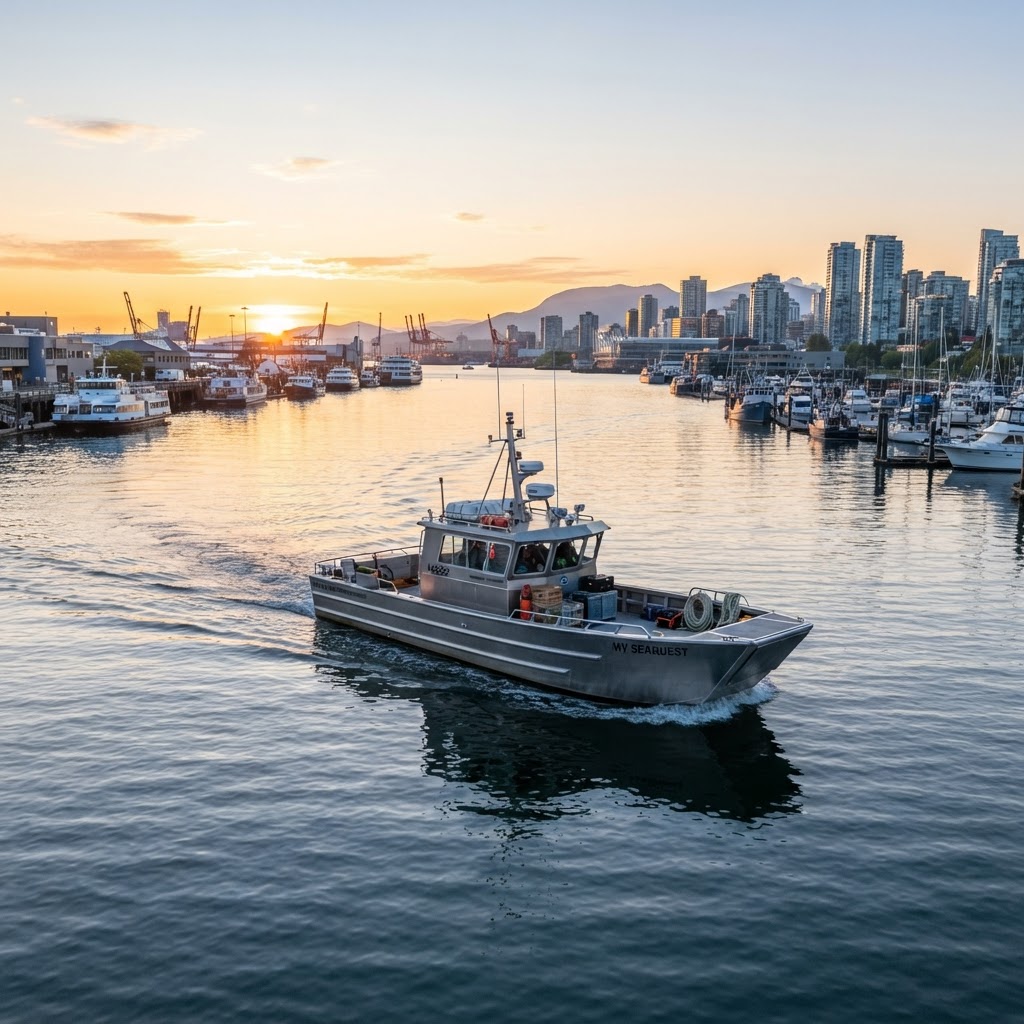
- Commercial watercraft insurance is distinct from personal boat policies and is a mandatory financial safeguard for any marine-based business.
- General liability insurance policies almost universally exclude water-based commercial activities, creating significant coverage gaps.
- Marine liability, hull and machinery, and P&I (Protection and Indemnity) coverage form the backbone of a comprehensive maritime risk management strategy.
- Business marine insurance needs evolve as you scale; specialized coverage is essential for vessel owners, charter operators, and marine contractors.
- Selecting the right commercial vessel coverage requires a careful audit of your specific nautical activities, regional risks, and operational hazards.
As the marine economy evolves toward 2026, the intersection of business operations and open water has never been more complex or potentially lucrative. Whether you are operating a fleet of tour boats, providing specialized marine logistics, or utilizing vessels for construction, the risks associated with maritime commerce are immense. Many entrepreneurs make the costly mistake of assuming their standard business policies cover their nautical assets, only to face devastating financial exposure when an accident occurs. Navigating the legal and financial tides requires a nuanced understanding of commercial watercraft insurance, a specialized field that serves as the bedrock of long-term maritime success. This guide, provided by the insureiqguru Editorial Team, demystifies the complexities of marine insurance to ensure your assets—and your livelihood—remain protected in an increasingly regulated and unpredictable sea.
What Is Commercial Watercraft Insurance?
At its core, commercial watercraft insurance is a specialized form of marine business insurance designed to mitigate the unique risks inherent in using a vessel for profit-generating activities. Unlike a standard personal boat policy—which is typically structured for recreational use—commercial coverage is underwritten with the understanding that a vessel is a place of business, a carrier of passengers or cargo, or a tool for industrial labor. The regulatory environment surrounding marine operations is notoriously stringent, involving bodies of law that are distinct from standard terrestrial liability.
Commercial vessel coverage provides protection against a broad spectrum of losses, ranging from physical damage to the boat itself to the legal and financial consequences of maritime accidents. Because the maritime environment is inherently hostile—subject to extreme weather, shifting tides, and the corrosive nature of saltwater—insurers apply a different set of underwriting criteria compared to traditional commercial insurance. When you invest in a robust marine insurance program, you are not just insuring a boat; you are protecting your revenue stream, your employees, and your business reputation.
A primary component of this insurance is the protection against damages to third parties. If your commercial vessel causes injury to a guest on a tour, damages a dock, or creates a wake that ruins another ship’s equipment, the associated legal costs and liability claims can escalate into millions of dollars. Without specialized coverage, a single incident could lead to corporate insolvency. Furthermore, commercial marine insurance addresses the “blue water” versus “brown water” distinctions, recognizing that a tugboat operating in an inland harbor has fundamentally different risk profiles than a research vessel operating in the open ocean. By tailoring the policy to the specific operational radius and business activity, owners can ensure they are not overpaying for unnecessary coverage while simultaneously eliminating dangerous gaps in their protection.
The marketplace for these policies is highly specialized. Many global carriers offer business marine insurance, but the terms can vary drastically based on the sophistication of the business. For instance, a commercial diving operation requires specific endorsements that a charter fishing business would never need. Understanding this classification is the first step toward building a resilient business. When you enter the marketplace, insurers will analyze the age, condition, and history of the vessel, as well as the certification levels of the crew. In 2026, we are also seeing a shift toward more integrated risk management tools, where insurers encourage the use of telematics and real-time monitoring to lower premiums. By defining your business under the proper commercial watercraft insurance category, you align your operations with industry standards and regulatory expectations, effectively turning an essential overhead cost into a strategic investment in the longevity of your marine enterprise.
Why General Liability Isn’t Enough for Marine Risks
Many business owners, particularly those new to the maritime sector, often assume that a standard Commercial General Liability (CGL) policy will provide sufficient cover for their watercraft operations. This is a hazardous misconception. CGL policies are designed for brick-and-mortar storefronts, professional offices, or land-based service providers. Most standard CGL contracts contain an explicit “watercraft exclusion” clause, which specifically removes coverage for any liability arising out of the ownership, maintenance, or use of a watercraft, particularly those used for commercial gain.
The maritime legal landscape operates under Admiralty Law, also known as Maritime Law, which functions entirely differently from the civil tort law typically addressed by general liability policies. For example, if an employee is injured while working on a vessel, they may be entitled to “Maintenance and Cure” under the Jones Act or the Longshore and Harbor Workers’ Compensation Act (LHWCA). A standard workers’ compensation policy for a land-based office is rarely equipped to handle these specialized claims. If you rely on a CGL policy in these instances, you will likely find that your insurer will issue a denial letter, leaving your business exposed to unlimited personal liability.
Consider the nature of maritime accidents: a collision at sea, a vessel sinking during a storm, or environmental contamination from fuel spills. These events do not occur in a vacuum; they happen within a jurisdiction that may span state, federal, or even international waters. A standard liability policy lacks the reach and the specific legal expertise required to navigate a maritime courtroom. Furthermore, marine liability claims often involve “salvage” rights, “general average” losses, and complex subrogation claims that are entirely absent in land-based business disputes. When your vessel is your place of business, you are subjecting yourself to the risks of the sea—risks that general liability providers are not licensed or actuarially prepared to underwrite.
Marine business insurance is crafted to address the “perils of the sea.” This means it covers unique risks like hull grounding, collision with submerged objects, and the aforementioned environmental risks. In 2026, environmental regulation is tighter than ever; a small fuel leak can result in massive fines from environmental agencies. A standard CGL policy generally excludes pollution damages or provides only a pittance of coverage. In contrast, specialized commercial watercraft insurance includes provisions for wreck removal and pollution containment that are essential for any business operating in or near the water. Attempting to force a standard business policy to cover these nuances is not just inefficient; it is a fundamental failure of risk management that threatens your ability to operate continuously.
| Insurance Type | Core Function | Best For |
|---|---|---|
| Commercial General Liability | Covers slips, falls, and basic property damage on land. | Land-based retail or office businesses. |
| Marine Liability (P&I) | Covers collision, injury, and maritime legal defense. | Charter boats, tugs, and commercial fishing vessels. |
| Hull & Machinery | Covers physical damage to the vessel and its engine. | Vessel owners with high-value equipment and engines. |
| Bumbershoot/Excess Liability | Provides high-limit umbrella coverage for marine claims. | Large fleets or high-risk industrial marine operations. |
Who Needs Commercial Boat Insurance Coverage?
The requirement for commercial boat insurance coverage extends far beyond what many people perceive as “commercial vessels.” While large shipping conglomerates and cruise lines are obvious candidates, the scope of the maritime industry is vast. Any individual or entity that derives revenue from the use of a vessel must secure specialized coverage. If your business model involves a boat in any capacity, it is time to perform an audit of your insurance requirements.
Charter operators form one of the largest demographics needing this coverage. Whether you are running deep-sea fishing charters, sunset cruises, or event hosting, you are essentially a common carrier. Your liability exposure is heightened because you are transporting members of the public, who are generally afforded higher legal protections. If a passenger slips on a wet deck or suffers from an allergic reaction to food served onboard, you face a potential lawsuit that could shutter your operations. These operators need comprehensive commercial insurance for boats that covers both the vessel and the professional liability of the crew.
Marine contractors and service providers represent another critical segment. This includes underwater welding crews, marine surveyors, dredging companies, and salvage operators. These businesses work in high-hazard environments where the vessel is not just a mode of transport, but a heavy-duty tool. The equipment on board is often worth more than the hull itself, and the nature of the work—involving heavy machinery and hazardous conditions—creates a unique intersection of maritime and industrial liability. For these professionals, marine business insurance must be bundled with specialized equipment floaters and professional liability components.
Additionally, businesses that use watercraft as a tertiary tool need coverage. For example, a waterfront restaurant that operates a water taxi to ferry guests from local marinas or a resort with a fleet of rental jet skis faces significant exposure. Many owners incorrectly assume that these are “incidental” uses covered by their property insurance. However, the moment you charge for the service or include it as a standard part of your business operation, you are engaging in commercial maritime activity. If an accident involving one of these vessels occurs, the owner will be held liable under maritime law. Ensuring you have the correct policy limits is vital, as a single severe accident involving injury can lead to settlements that far exceed the value of the business itself.
Finally, we must consider the rise of the “gig” marine economy. As of 2026, peer-to-peer boat rental platforms have grown significantly. Many private owners who choose to list their vessels for commercial use often fail to notify their insurance provider. Using a personal vessel for commercial purposes without an endorsement or a separate commercial policy is a recipe for a denied claim and potential litigation. If you intend to utilize your vessel for any income-generating purpose, you must transition your protection to a dedicated maritime commercial product to ensure you have the coverage necessary to defend yourself in the event of an incident.
Key Coverages Included in Marine Liability Policies
A comprehensive marine liability policy is not a monolithic product; it is a collection of specific coverages designed to address the multifaceted nature of nautical commerce. The most critical component is Protection and Indemnity (P&I) insurance. Often referred to as the “core” of marine liability, P&I covers damages caused by the vessel to third parties, including other vessels, docks, piers, or underwater cables. It also provides essential coverage for the bodily injury or death of third parties, including passengers and crew members.
One of the most vital aspects of P&I coverage is the defense of legal claims. Maritime law is notoriously dense, and legal fees alone can bankrupt a business long before a court renders a judgment. A robust policy covers the costs of hiring specialized maritime counsel to defend your business against claims brought by passengers, maritime workers, or other vessel operators. Furthermore, P&I often includes coverage for “wreck removal.” Should your vessel sink in a navigational channel, the government may hold you liable for the cost of removing the wreckage, which can be an astronomical sum depending on the depth and location of the incident.
Another fundamental element is the “Collision Liability” or “Running Down Clause.” While P&I handles many third-party damages, the collision clause is specifically designed to cover the repair costs for another vessel that you have damaged. However, it is essential to understand that this typically covers damage to the other ship, not your own. That is why it is almost always paired with Hull and Machinery coverage. In the world of marine insurance, “pollution liability” is also increasingly standard. With strict environmental laws becoming more aggressive, coverage for clean-up costs, containment, and natural resource damage is an absolute necessity for any boat that carries fuel or hazardous materials.
Many policies also include “crew coverage,” which is vastly different from standard workers’ compensation. Because maritime law dictates that an employer has a duty of care to their crew that extends beyond the workplace, this coverage is non-negotiable. It helps pay for the “maintenance and cure”—daily living expenses and medical costs for an injured seaman—until they reach a state of “maximum medical improvement.” Without this specific maritime provision, your standard business insurance would likely leave you liable for these costs out-of-pocket. Understanding these key coverages allows business owners to have an intelligent conversation with their broker. You are not just buying a piece of paper; you are ensuring that if the worst happens, your business has the financial and legal resources to weather the storm.
Understanding Hull and Machinery Coverage
While liability insurance protects your bank account from the actions of others, Hull and Machinery (H&M) coverage is the bedrock of your business’s physical asset protection. In the marine industry, the “Hull” refers to the structure of the boat itself, while the “Machinery” encompasses the propulsion systems, engines, electronics, and navigation gear. Given that these components represent significant capital investment, H&M insurance serves as a vital safeguard for the operational viability of your fleet.
H&M policies are typically “all-risk” or “named-peril.” An all-risk policy provides the broadest protection, covering damage resulting from any external cause unless that cause is specifically excluded in the contract. Common perils covered include stranding, sinking, fire, lightning, collisions, and heavy weather. In contrast, named-peril policies provide coverage only for those specific events listed in the policy. While named-peril policies are often cheaper, they introduce a degree of uncertainty that can be dangerous for a business. For a commercial operation, where the vessel is essential to the revenue model, the stability provided by an all-risk policy is generally preferred.
A crucial detail to monitor in your H&M policy is the “Agreed Value” versus “Actual Cash Value.” In commercial marine insurance, experts generally agree that an Agreed Value policy is the gold standard. Under this arrangement, the insurer and the business owner agree upon a specific value for the vessel at the start of the policy term. In the event of a total loss, the insurer pays that agreed amount, regardless of the vessel’s depreciated market value at the time of the incident. This provides clarity and prevents the disputes that often arise when an insurer attempts to settle based on a fluctuating, subjective market value.
Additionally, H&M coverage often includes specific clauses for “latent defects.” A latent defect is a hidden flaw in the construction of the vessel or machinery that was not discoverable by a reasonable inspection. If a critical part of your engine fails prematurely due to a manufacturing defect, a standard policy might exclude it as “wear and tear.” However, a specialized H&M policy with a latent defect clause can cover the consequential damage caused by the part’s failure. Furthermore, look for “sue and labor” clauses, which provide coverage for costs incurred by the vessel owner to prevent or minimize a loss that is covered by the policy. If your vessel is taking on water and you spend money to stabilize it or bring it to a repair facility to prevent it from sinking, these expenses are often reimbursable under this clause.
In 2026, the complexity of marine electronics and automated navigation systems makes the “Machinery” part of your coverage more important than ever. Ensure your policy includes appropriate limits for modern, high-value tech, and discuss with your provider how they handle repairs. Do they mandate specific repair facilities, or are you free to choose your preferred marine contractor? Having the flexibility to choose a specialized shop that understands your specific engine type can be the difference between a week of downtime and a month of missed business revenue.
Protection and Indemnity: Why It Matters for Business
For any organization operating on the water, Protection and Indemnity (P&I) insurance serves as the bedrock of maritime risk management. Unlike standard general liability policies, which are designed for land-based operations, P&I coverage is specifically tailored to the unique perils of the nautical environment. It is the gold standard for maritime liability, providing essential financial protection against claims that could otherwise bankrupt a small to mid-sized marine enterprise.
At its core, P&I insurance covers liabilities incurred by a vessel owner or operator that arise out of the ownership or operation of a maritime asset. This includes, most notably, liability for the death or injury of crew members, passengers, or third parties. In the maritime industry, the legal framework—often dictated by statutes such as the Jones Act in the United States—places a heavy burden on employers. If a deckhand is injured while performing their duties, the vessel owner may be held liable for maintenance and cure, as well as damages for negligence. Without robust P&I coverage, a single injury claim could result in catastrophic financial losses, including legal defense fees, medical expenses, and significant jury awards.
Beyond personal injury, P&I insurance addresses the complex world of property damage and wreckage removal. Consider a scenario where a commercial vessel accidentally strikes a bridge, a pier, or another vessel. The cleanup costs for a collision, the containment of environmental spills, and the wreck removal of a sunken vessel can reach millions of dollars. Environmental liability, in particular, is a growing concern for business marine insurance providers. P&I policies often incorporate coverage for oil spill cleanup and pollution incidents, which are strictly regulated by both domestic and international maritime law. If your business operates in sensitive ecological zones, failing to carry adequate P&I coverage is an existential risk.
Furthermore, P&I insurance offers protection against contractual liabilities and cargo-related claims. If your business acts as a common carrier, you are responsible for the safe delivery of goods. P&I helps mitigate the risk of cargo loss or damage caused by fire, collision, or improper stowage. By integrating this coverage into your commercial watercraft insurance strategy, you are not just checking a regulatory box; you are building a defensive shield that allows your business to pursue growth and expansion without the constant threat of total financial exposure due to maritime accidents.
How to Assess Your Business’s Maritime Risk Exposure
Assessing risk in a maritime business is not a one-size-fits-all process. It requires a granular examination of your specific operations, the waters you frequent, and the nature of your fleet. To effectively determine your need for commercial vessel coverage, you must first conduct a thorough risk audit.
Begin by mapping your “Operational Footprint.” Are you operating in inland lakes, protected rivers, or open coastal waters? Inland operations generally present different risk profiles than blue-water shipping. An inland dredging company faces risks related to waterway navigation and environmental impact on freshwater ecosystems, whereas a coastal charter boat company faces risks related to volatile weather, passenger safety, and higher-density traffic. Documenting these environmental variables is the first step in determining the limits and types of commercial insurance for boats you need.
Next, evaluate your crew and staffing requirements. A business that employs a full-time, professional crew faces different liability exposure than a business that utilizes part-time staff or seasonal labor. You must account for the legal obligations you have toward these individuals. Are they covered under workers’ compensation, or do they fall under maritime jurisdiction? Understanding the legal classification of your employees is critical, as this will influence how your marine business insurance provider views your labor-related liabilities.
Third, analyze your vessel inventory. An aging fleet may be more prone to mechanical failure, leading to higher risks of navigation issues or collisions. Conversely, a state-of-the-art fleet with advanced navigational technology may reduce certain risks but introduce others, such as cybersecurity threats or the high cost of repairing proprietary technology. Keep meticulous maintenance logs. Insurers often look favorably upon businesses that demonstrate a commitment to proactive maintenance, as it serves as evidence of an established safety culture.
Finally, perform a “Worst-Case Scenario” exercise. Imagine your vessel collides with a high-value object, results in an environmental cleanup event, or causes multiple serious injuries. Review your current assets and ask: can the business survive the legal and operational costs associated with such an event? If the answer is no, your risk tolerance is low, and you need to prioritize comprehensive coverage over cheaper, limited-scope policies. Engaging with a marine risk consultant during this phase can help you identify gaps you might not have considered, such as business interruption insurance, which covers lost revenue while a vessel is undergoing repairs following an insured event.
Factors That Influence Commercial Watercraft Premiums
The cost of commercial watercraft insurance is determined by a wide array of factors, and premiums can fluctuate based on how an underwriter perceives the overall “risk appetite” of your business. Understanding these factors can help you manage costs without compromising on essential protection.
| Coverage Component | Primary Cost Driver | Best For |
|---|---|---|
| Hull and Machinery | Vessel Age and Value | New or high-value vessel operators |
| Protection and Indemnity | Operating Area and Crew Size | Passenger carriers and commercial shipping |
| Pollution Liability | Environmental Sensitivity | Tankers and industrial watercraft |
| Maritime Employers Liability | Employee Headcount/Jurisdiction | Marine construction and offshore services |
The primary factor influencing your premium is the vessel itself. Underwriters evaluate the vessel’s age, construction material, engine type, and safety features. Older vessels, while perhaps cheaper to buy, often command higher premiums due to the increased probability of structural fatigue or equipment failure. In contrast, modern vessels equipped with AIS (Automatic Identification System), radar, and enhanced fire suppression systems are viewed as safer investments, which can often lead to more favorable insurance ratings.
Another major factor is the nature of your operations. An excursion vessel carrying hundreds of passengers daily carries a drastically higher liability risk than a private research boat carrying a crew of three. Insurers analyze your route density and the navigational challenges of your operating area. Navigating through busy international ports carries higher risk than operating on a secluded lake. Furthermore, your business’s track record—specifically, your history of claims and safety incidents—is perhaps the most significant determinant of long-term premium stability. A business with a history of clean operations, well-documented training programs, and few to no claims will naturally qualify for better rates.
Safety management systems also play a pivotal role. Insurers want to see that your business has a culture of safety. If you implement regular crew training, mandatory safety briefings for passengers, and rigorous equipment inspection schedules, you are demonstrating that you are managing risk from the inside out. This proactive stance can sometimes be used as leverage during negotiations with your broker to secure lower premiums or higher coverage limits.
Common Exclusions in Business Marine Insurance Policies
No insurance policy is comprehensive enough to cover every possible contingency. Understanding the exclusions in your marine business insurance policy is just as important as understanding what it covers. Many business owners make the mistake of assuming “all-risk” means “covered for everything,” but in the maritime world, specific exclusions are standard and must be addressed through endorsements or supplemental policies.
One of the most frequent exclusions is “wear and tear.” Insurance is meant to cover fortuitous events—sudden and accidental occurrences—not the gradual deterioration of a vessel or its equipment. If an engine fails because it was poorly maintained or reached the end of its operational lifespan, the claim will typically be denied. Insurers expect operators to adhere to a strict maintenance schedule, and neglect is a common reason for denied claims.
Another common exclusion involves illegal or unauthorized operations. If a vessel is being used in a manner that violates maritime laws or local regulations—such as operating in prohibited zones or carrying more passengers than the vessel’s certificate allows—your coverage may be voided. Similarly, intentional acts or gross negligence, such as operating a vessel while under the influence or failing to heed weather warnings, are almost always excluded from coverage. Maritime liability policies are designed to protect against unforeseen accidents, not the results of reckless decision-making.
Third-party liability for equipment that is not listed on your schedule is also a major gap. If you utilize third-party equipment, such as leased cranes or specialized gear that is not specifically endorsed on your policy, damage to that equipment—or damage caused by that equipment—might not be covered. Always ensure that any borrowed or leased maritime equipment is formally included in your policy documentation before deployment.
Finally, cyber liability is increasingly excluded from standard policies. In an era where modern vessels rely heavily on connected software for navigation, fuel management, and communication, the threat of a cyber-attack is real. Unless you have a specific cyber-endorsement, a data breach or a malicious hack that causes your vessel’s systems to fail will likely fall outside the scope of your standard commercial watercraft insurance policy. Be sure to review your policy language carefully and speak with your broker about “gap coverage” to ensure these common exclusions do not leave your business exposed.
Frequently Asked Questions
Is commercial watercraft insurance legally required for all marine businesses?
While requirements vary by jurisdiction and the size of your vessel, most commercial entities are required to carry at least a minimum level of liability coverage to operate legally. Many ports and marinas also mandate that businesses provide proof of insurance before they are granted slip space or docking privileges.
How does boat liability insurance differ from standard business liability?
Standard business liability insurance is designed for land-based settings and rarely provides coverage for accidents occurring on navigable waters. Marine-specific liability insurance addresses the unique risks of the water, including admiralty law, maritime employment statutes, and specific navigational hazards that general policies typically exclude.
Can I add my business to my personal boat insurance policy?
No, this is a dangerous practice that often leads to denied claims. Personal boat insurance is underwritten for recreational use. If you use your boat for commercial gain, even occasionally, your personal policy likely contains an exclusion that renders it void, leaving you entirely uninsured in the event of an accident.
What happens if I operate my commercial vessel outside of the defined navigation limits?
Most marine insurance policies specify “navigational limits”—the geographic areas where your vessel is permitted to operate. If you operate outside these boundaries without notifying your insurer and obtaining an extension, you may be completely unprotected during the time you are outside those limits, meaning any incident that occurs will not be covered.
Do I need separate coverage for the cargo I transport?
While some commercial vessel policies offer limited cargo liability, it is often insufficient for businesses that transport high-value freight. You should consider a dedicated “Marine Cargo” or “Freight Legal Liability” policy to ensure that your business is fully protected against the loss or damage of the goods you carry.
How does a “Named Perils” policy compare to “All Risks” coverage?
A “Named Perils” policy only covers incidents that are explicitly listed in the contract, such as fire or lightning. “All Risks” coverage is much broader, covering any accidental loss unless it is specifically excluded. For most commercial businesses, “All Risks” is the preferred, albeit more expensive, option to ensure the widest possible range of protection.
Conclusion
Navigating the complex waters of maritime commerce requires more than just a seaworthy vessel; it demands a robust financial safety net. Commercial watercraft insurance is an essential pillar of any marine business, providing the protection necessary to weather both literal and legal storms. By carefully assessing your operational risks, understanding the nuances of Protection and Indemnity coverage, and maintaining a proactive safety culture, you can mitigate the threats inherent in the maritime industry and focus on what you do best: operating your business successfully.
As we move through 2026, the maritime landscape continues to evolve, bringing new technological and environmental challenges. Don’t leave your company’s future to chance. Review your current coverage, consult with a specialized marine insurance broker, and ensure your policies are as resilient as your operations. Secure your vessel, protect your crew, and safeguard your assets by securing comprehensive marine business insurance today.
By insureiqguru Editorial Team
Leave a Reply