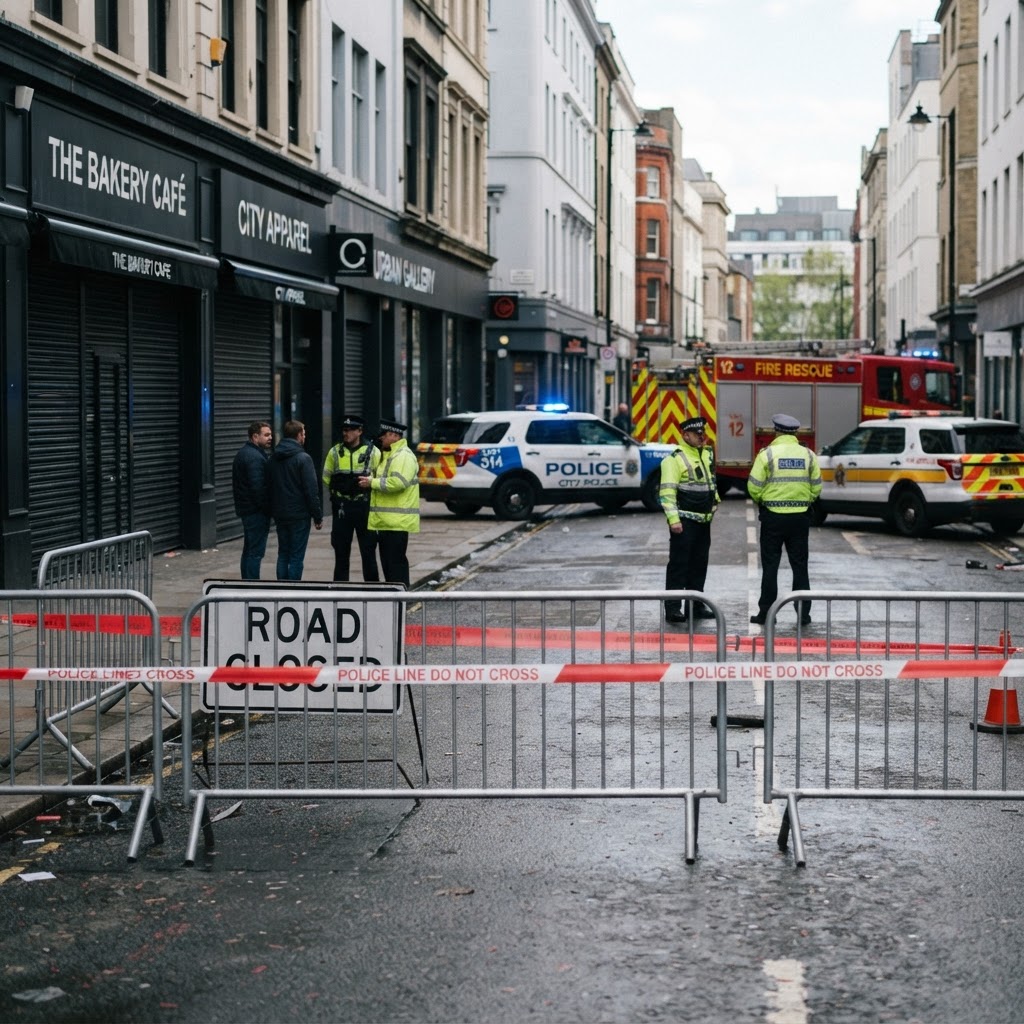
- Civil authority coverage provides financial protection when government mandates prevent access to your business property, even if your physical location remains undamaged.
- This extension is typically found within commercial property insurance policies as a specialized supplement to standard business interruption insurance.
- Most policies require proof that a covered peril—such as fire, wind, or civil unrest—occurred in the immediate vicinity to trigger the mandate.
- Navigating commercial property insurance claims involving civil authority requires precise documentation of government-issued closure notices and financial loss timelines.
- Understanding specific policy sub-limits, waiting periods, and geographic proximity requirements is essential to managing your expectations during a claim.
When a natural disaster strikes, a fire destroys a neighboring building, or a sudden public safety threat forces authorities to cordon off a city block, your business may grind to a halt through no fault of your own. Even if your physical storefront or office remains completely unscathed, the inability to operate because you cannot reach your property can be financially devastating. This is where business interruption civil authority coverage becomes a vital component of your corporate risk management strategy. For many business owners, standard coverage feels like an invisible safety net until an unexpected government order forces the doors shut. By understanding the intricacies of civil authority coverage, business leaders can better prepare their organizations for the sudden, unpredictable interruptions that characterize the modern commercial landscape. This guide explores the essential components of these extensions, how they interact with broader policies, and what you need to track to ensure your recovery process remains efficient.
What Is Civil Authority Coverage in Business Insurance?
Civil authority coverage is an essential extension often found within the broader framework of business interruption insurance. At its core, this coverage is designed to provide financial relief when a government entity, such as a municipal government, state agency, or federal authority, prohibits access to your business premises due to an emergency event. Unlike standard business interruption policies, which typically require direct physical loss or damage to the insured property itself, civil authority coverage acts as a bridge for businesses that are “locked out” by official action.
Think of it as a form of protection against the ripple effects of a disaster. For example, if a major chemical leak occurs three buildings away, local emergency services may establish a security perimeter that effectively prevents customers, staff, and deliveries from reaching your business. Even though your building sustained no damage, you are essentially barred from conducting revenue-generating activities. Because there was no physical damage to your insured property, a standard business interruption claim might be denied. However, because a formal government order has restricted access, the civil authority clause serves as the policy trigger.
It is important to recognize that this is not a standalone policy but rather an extension of your existing commercial property insurance. Most policies categorize this as an “Additional Coverage” or “Coverage Extension.” While the core purpose is to replace lost income and pay for continuing expenses during the period of restoration, the definition of what constitutes a “civil authority” can be quite specific. Typically, it refers to a police department, fire department, military branch, or civil defense agency authorized to enforce public safety.
In practice, this coverage covers the income you would have reasonably expected to earn had the order not been in place. This includes net profit, ongoing fixed costs—such as rent, payroll, and insurance premiums—and sometimes even the costs associated with reopening. Because every insurance carrier drafts its own language, the specific geographic triggers and the duration of the coverage period can vary significantly. Some policies may require the order to be in place for a minimum number of hours before coverage begins, while others may apply immediately upon the issuance of the directive. Understanding these definitions is the first step in assessing whether your current policy is adequate for your specific location and industry risks.
How Civil Authority Coverage Triggers Benefit Payments
Triggering a claim for business interruption civil authority coverage is a structured process that relies heavily on the technical language of your policy. It is rarely as simple as merely closing your doors; you must satisfy specific conditions set by your insurer to demonstrate that the closure was a direct result of an qualifying event. Generally, the mechanism of triggering these benefits follows a logical sequence: the occurrence of a covered peril, the subsequent government action, and the physical restriction of your property.
First, most policies require that the government order be issued in response to a “covered peril.” If your policy covers fire, windstorm, or explosion, the civil authority order must be linked to one of these events occurring in the immediate vicinity of your premises. If the government shuts down your street for a parade or a planned infrastructure upgrade, civil authority coverage does not apply. The trigger requires an emergency situation that poses a threat to public safety.
Second, the issuance of a formal order is paramount. Insurance adjusters will look for documentation showing that a competent authority—such as a Mayor’s office, the Police Chief, or the Fire Marshall—has issued an official directive preventing access. This can sometimes be in the form of a written proclamation, a barricade announcement, or even an official public broadcast. If there is no clear evidence of an order, or if the closure is merely a voluntary decision by the business owner based on safety concerns, the insurer will typically deny the claim. You must be able to prove that you *wanted* to be open, but were legally prevented from doing so.
Third, the geographic proximity requirement must be met. Policies define “vicinity” or “immediate area” with varying degrees of strictness. Some policies might limit the trigger to properties within a one-mile radius, while others may be more flexible. If the disaster occurs ten miles away, even if it leads to a road closure that affects your business, the insurer may argue that the event is too remote to trigger the coverage.
Once these conditions are satisfied, the insurer begins calculating the period of restoration. This is the timeline during which your benefits are paid. It typically begins after a specific “waiting period” (which could be anywhere from 24 to 72 hours) and lasts until the order is rescinded or until a specific maximum duration (often two to four weeks) is reached. Because the waiting period is often significant, it is vital to maintain accurate records of exactly when the restriction began and ended. Maintaining a copy of the government order or a log of police activity in front of your location is a best practice for streamlining the claims process.
Understanding the Difference Between Civil Authority and Business Interruption
Distinguishing between standard business interruption insurance and civil authority coverage is vital for anyone managing commercial property insurance claims. While they are intrinsically linked, they address different causal factors for financial loss. Business interruption insurance is primarily concerned with *direct* consequences, while civil authority acts as a safety valve for *indirect* consequences that nonetheless halt your ability to earn revenue.
Standard business interruption coverage serves to replace the income your business loses after a direct physical loss—such as a fire, storm, or burst pipe—occurs *at your specific premises*. It requires that your building or the equipment inside it be damaged to the point where you cannot operate. In these cases, the “trigger” is the physical damage itself. If a fire burns your warehouse, the loss of business income stems from your inability to fulfill orders or house your inventory due to that specific, localized damage.
Conversely, civil authority coverage does not require any damage to your physical assets. It addresses scenarios where the “damage” is effectively to the accessibility of your location. Imagine a fire occurs at a neighboring gas station. Your own building is perfectly intact, the electricity is running, and your inventory is safe. However, the local fire department declares the entire block a hazardous zone and prohibits all traffic, including your customers and staff, from entering the area. In this instance, your standard business interruption insurance will not pay out because your property hasn’t been damaged. Civil authority coverage becomes the primary mechanism for recovery, as it acknowledges that the government’s intervention—caused by the fire next door—is the root cause of your lost income.
The table below summarizes the core operational differences between these two coverages.
| Feature | Standard Business Interruption | Civil Authority Extension | Best For |
|---|---|---|---|
| Trigger Event | Direct physical damage to your premises | Government-mandated access restriction | Comprehensive protection |
| Proximity Requirement | N/A (Damage must be on-site) | Immediate vicinity of property | Geographically vulnerable sites |
| Dependency | Primary Coverage | Secondary/Extension | Total risk mitigation |
It is critical to note that you cannot “double dip.” If an event occurs that both damages your property and prompts a government closure, the insurer will calculate the loss under the primary business interruption clause. Civil authority is intended to fill the gap where standard coverage falls short, ensuring that you are not left financially vulnerable simply because the damage happened “next door” rather than “in your office.” By understanding this distinction, you can better audit your current insurance policy limits to ensure that both areas of risk are sufficiently covered.
Common Situations Where Civil Authority Coverage Applies
Civil authority coverage is most frequently utilized in response to sudden, unpredictable events that necessitate a fast and protective reaction from local officials. While every event is unique, certain scenarios consistently trigger these types of claims. Being aware of these common occurrences can help business owners conduct a more accurate risk assessment of their operating environment.
One of the most common applications involves severe weather events. If a major storm hits a coastal region, municipal authorities often issue mandatory evacuation orders. These orders are not requests; they are directives that force businesses to shutter their operations to protect human life. Even if the business remains standing once the storm clears, the period during which the evacuation order was in effect is covered under the civil authority provision, provided the order was issued due to the dangerous conditions of the storm.
Another frequent scenario involves infrastructure failures or industrial accidents. A water main break that floods a downtown intersection, a gas line explosion in a nearby industrial park, or a chemical spill in a commercial district can all lead to an immediate and total lockdown of the area by the police or fire department. Because these events present a tangible risk of harm, the government is authorized to declare the area “off-limits.” Since your business occupies space within that restricted perimeter, the financial loss you suffer during the time the perimeter is guarded is eligible for recovery.
Civil unrest also represents a recurring, if volatile, catalyst for civil authority claims. During periods of widespread public protest or social instability, local governments may implement curfews or cordon off specific blocks to maintain public order and prevent property damage. If your business is located within the zone where the government has prohibited movement, you may be able to claim lost income. However, it is essential to check your policy language here; some policies include specific “civil commotion” or “riot” exclusions that may apply depending on the nature of the events.
Finally, unexpected public health directives have emerged as a significant, albeit complex, category. While historical policies were largely designed to address physical damage, some modern interpretations and endorsements have grappled with how government-mandated closures during public health emergencies are treated. Generally, unless the policy specifically covers “communicable disease” or “virus” triggers, many standard civil authority clauses will not provide coverage for lockdowns related solely to health. This highlights the importance of working closely with a broker to review the specific “peril” requirements in your policy. If your business is located in an area prone to specific environmental or security risks, discussing these potential scenarios with your insurance advisor before a loss occurs is the most effective way to ensure your policy isn’t just a document, but a functional tool for business continuity.
Key Exclusions and Limitations to Watch For
While civil authority coverage provides a critical layer of protection, it is rarely an unlimited safety net. Insurance carriers incorporate specific exclusions and limitations to define the boundaries of their risk. Failing to account for these nuances can lead to significant coverage gaps when you need them most. The most sophisticated business owners are those who audit their policies with a critical eye for what is *not* covered.
First, the “waiting period” is a classic limitation. Many commercial property insurance claims involving civil authority are subject to a deductible in the form of a time-based wait. For example, a policy might state that coverage for civil authority does not kick in until 72 hours after the order is issued. If the government restricts access for only 48 hours, you would be responsible for the entire loss. For businesses operating on thin margins, a three-day, non-reimbursable shutdown can still represent a massive hit to cash flow. Always verify the waiting period duration in your specific policy declaration page.
Second, the geographic limitation is a frequent source of contention. Many policies specify that the triggering event must occur within a certain distance—often 1 mile or 5 miles—from your premises. If an explosion occurs 10 miles away, forcing the closure of roads that your employees use to reach your office, the insurer might argue that the event is too geographically removed to satisfy the “immediate vicinity” requirement. Understanding the exact scope of this proximity requirement is vital, especially for businesses in urban environments where a blockade several blocks away could effectively cut off your entire customer base.
Third, look for “peril” exclusions. Civil authority coverage is generally tied to the same perils covered by your property policy. If your policy covers fire and windstorm, but excludes flooding, and a government order is issued to close your area due to rising floodwaters, your claim will almost certainly be denied. Because civil authority is an extension, it inherits the limitations of the underlying coverage. If the primary cause of the government mandate is an excluded event, the extension will not override that exclusion.
Fourth, keep a close watch on your “policy limits.” Civil authority is often subject to a sub-limit. Even if your overall business interruption limit is $1,000,000, your policy might cap the civil authority extension at a much smaller amount, such as $50,000 or $100,000. These sub-limits can be exhausted rapidly if the government order remains in effect for an extended period.
Finally, be wary of the “causation” requirement. The order must be a *direct result* of the covered peril. If the police close your street for an unrelated reason—such as a film shoot or a street fair—there is no coverage. Adjusters will often request the specific official documentation or police reports that led to the restriction to verify the cause. If the stated reason for the closure is bureaucratic or discretionary rather than an emergency response to a covered peril, the financial loss will likely fall outside the scope of your policy protections. Thoroughly vetting these limitations during the policy renewal phase is essential to avoiding unpleasant surprises.
How to Document a Claim for Restricted Business Access
When a government entity restricts access to your place of business, the burden of proof rests heavily on the policyholder. Successfully navigating commercial property insurance claims involving civil authority coverage requires meticulous, contemporaneous documentation. You cannot rely on memory or generalized statements of financial loss; you must provide a clear, forensic trail that links the specific government order to the inability to conduct business operations.
First and foremost, secure a digital and physical copy of the actual government mandate. Whether it is an executive order, a local police blockade, or a health department closure notice, the specific language contained within the document is critical. Insurance adjusters will examine whether the order was issued due to “direct physical loss or damage” to property in the immediate vicinity of your premises. Ensure you have the exact date, time, and geographic scope of the order.
Next, maintain a detailed log of your business operations during the restriction. This log should categorize the specific ways in which the government order prohibited access. For instance, if a road closure prevented employees from reaching the office, document the specific shift times affected and the number of personnel unable to perform their duties. If the restriction prevented customers from entering your retail space, document the average foot traffic for similar time periods in previous years compared to the restricted period.
Financial record-keeping must be granular. Do not simply submit a profit and loss statement for the month. Instead, isolate your daily revenue during the civil authority event. Use historical data to create a “but-for” projection—what your revenue would have been had the restriction not been in place. When seeking reimbursement under business interruption civil authority, you must also be prepared to disclose any expenses saved because of the closure, such as un-incurred utility costs or temporary staff reductions. Transparency in these calculations prevents the perception of padding your claim.
Finally, utilize photographic and video evidence if possible. While you should never breach a legal blockade, document the perimeter of the restriction to show the physical limitations imposed on your business premises. If your facility remained open but empty because of the civil order, interior photos capturing an idle facility serve as powerful evidence of the business interruption.
Determining the Right Coverage Limits for Your Operations
Many business owners mistakenly assume their business interruption insurance is a catch-all safety net. In reality, sub-limits often apply specifically to civil authority coverage. These sub-limits are frequently much lower than the general business interruption limit, sometimes capped at a flat dollar amount or a limited period of time, such as 14 or 30 days. Understanding these constraints is vital during the policy renewal phase.
To determine the appropriate coverage levels, you must perform a comprehensive business impact analysis. Start by calculating your “worst-case scenario” for a sustained government-mandated shutdown. How long could your business remain closed before cash flow becomes critical? Consider your fixed costs—rent, debt service, essential salaries, and insurance premiums—that persist even when revenue drops to zero.
You should also factor in the “geographic risk profile” of your location. Businesses located in urban centers, near major transit hubs, or in areas prone to industrial accidents may face a higher frequency of civil authority events. If your business is located within one mile of a major chemical plant or a high-traffic highway, your exposure to an event that triggers a perimeter closure is statistically higher than a business in a low-density suburban office park.
| Coverage Type | Typical Focus | Best For |
|---|---|---|
| Standard Business Interruption | Losses from damage to your property | Physical destruction of your assets |
| Civil Authority Coverage | Losses from restricted access (nearby) | Businesses impacted by regional disasters |
| Extra Expense Coverage | Costs to relocate or expedite operations | Businesses that must stay open at any cost |
When reviewing your policy with your broker, ask specifically about the “waiting period” or “deductible” associated with your civil authority provisions. Some policies require a 72-hour delay before the coverage kicks in. If your operations typically recover from minor disruptions within 48 hours, a 72-hour waiting period might effectively render your coverage useless. Adjusting these limits and waiting periods is a strategic decision that balances your premium costs against your actual risk exposure.
The Role of Government Orders in Insurance Disputes
The core of most insurance disputes regarding civil authority coverage hinges on the definition of “direct physical loss or damage.” Insurance carriers often argue that a government order is only enforceable if it was issued in response to actual property damage in the surrounding area. For example, if a fire destroys a building two blocks away, and the fire department shuts down the surrounding streets to fight the blaze, that is a classic trigger for civil authority coverage. The damage exists, and the authority has restricted access to protect the public.
However, disputes frequently arise when the government order is issued as a precautionary measure rather than as a reaction to immediate physical destruction. During public health crises or civil unrest, government officials may issue broad proclamations that restrict movement across entire regions. Insurance companies may contest these claims by arguing that the civil authority order was not a direct result of damage to adjacent property, but rather an administrative decision based on generalized risk.
This “proximate cause” issue is a frequent battleground. If you find yourself in a dispute, it is essential to review the specific language of your insurance contract. Does the policy require “physical loss to property” or simply “an act of civil authority”? Policies with broader language are generally more favorable to the policyholder. Furthermore, the distance from your premises to the site of the damage matters. Most policies stipulate a specific radius (e.g., one mile or five miles) for the damage to be considered “proximate” enough to warrant coverage.
If a claim is denied based on the nature of the government order, you should involve legal counsel specializing in insurance coverage. They can help analyze whether the carrier’s interpretation of the policy is overly restrictive. Often, carriers rely on standard denial letters that may not adequately account for the nuances of your specific local mandates. Challenging an initial denial often requires showing that the government order was a direct, localized response to a physical hazard, effectively linking your business’s inability to operate to the protected property nearby.
Proactive Steps to Take Before a Civil Authority Event Occurs
The best time to prepare for a civil authority disruption is long before the police tape goes up. Business resilience planning should integrate insurance strategy as a core component of your risk management framework. First, review your existing policy to map out your specific coverage thresholds. Do not wait for an emergency to discover that your civil authority sub-limit is insufficient for your monthly overhead.
Second, develop a “digital redundancy” plan. Many businesses are forced to close during civil authority events because their physical infrastructure is inaccessible. If your business can operate remotely, ensure that your data is backed up in the cloud and your employees have the remote access tools necessary to maintain operations. If your business can prove that it shifted to remote work immediately following a closure order, you can often mitigate the extent of your business interruption claim, which insurers generally view favorably.
Third, establish a communication protocol with your local authorities. Knowing which department (police, fire, public health, or department of transportation) is likely to issue orders in your area helps you understand the nature of the risks you face. Should an event occur, having a designated point of contact within your business who is responsible for obtaining written documentation of closures is essential. They should be tasked with securing copies of press releases, official notices, and any subsequent updates that might change the scope or duration of the restriction.
Finally, engage in periodic “tabletop exercises” with your management team. Simulate a scenario where a neighboring property is closed due to a major event and walk through the steps required to file a claim. By practicing the collection of financial and operational data, you eliminate the confusion and panic that typically accompany a crisis. A proactive approach not only streamlines the claims process but also demonstrates to your insurer that you are a well-managed entity, which can potentially lead to more favorable terms at renewal.
Frequently Asked Questions
Does civil authority coverage pay for all lost profits during a closure?
Generally, civil authority coverage is intended to replace net income that would have been earned, along with continuing normal operating expenses. However, this is subject to your policy’s specific sub-limits, the duration of the order, and the “waiting period” stipulated in your contract. It rarely covers 100% of potential growth, but rather focuses on stabilizing the business based on historical performance.
What if my business can still operate online while the physical location is closed?
Insurers typically look at the “net” impact on your business. If your online sales successfully offset the losses from your physical storefront, you may find that you have a reduced claim or no claim at all. However, if your physical operation accounts for the vast majority of your revenue, you may still be entitled to a significant portion of your lost income, provided you can document the direct impact of the access restriction.
How far away can the “physical damage” be for me to make a claim?
Most commercial property insurance policies specify a geographic radius within which the “direct physical loss or damage” must occur for your civil authority coverage to trigger. This is commonly limited to one mile or five miles, but it varies significantly by policy. Always check the “Civil Authority” section of your declarations page for the exact language regarding distance.
Do I need to prove my business was profitable before I can file a claim?
While having a profitable business history makes the calculation of “lost income” straightforward, it is not always a strict requirement. If your business was in a startup phase or experiencing a temporary downturn, insurers will use alternative benchmarks, such as industry standards or projected budgets, to determine the “but-for” income. The documentation remains key, regardless of current profitability.
What happens if the government order is extended?
Most civil authority coverages have a maximum time limit, often stated as a consecutive number of days (e.g., 14, 30, or 60 days). If the government mandate exceeds this limit, your coverage will generally cease at the end of the policy’s specified term, even if the closure remains in effect. Review your policy’s “period of restoration” to understand how it applies to civil authority versus standard physical damage.
Can I claim expenses for moving my operations to a temporary location?
You may be able to claim these expenses under “Extra Expense” coverage, which is often bundled with or sits alongside civil authority coverage. If you must set up shop elsewhere to minimize the interruption caused by a government-mandated closure, check your policy to see if “reasonable and necessary” extra expenses are reimbursable. Keeping detailed receipts for all temporary relocation costs is mandatory for these claims.
Conclusion
Navigating the complexities of business interruption civil authority coverage requires more than just a standard insurance policy; it requires a proactive strategy rooted in documentation, risk awareness, and precise policy management. As we have explored, government-ordered access restrictions can threaten the financial viability of even the most resilient enterprises. By understanding the specific triggers of your policy—such as the requirement for physical damage in your vicinity and the constraints of your geographic sub-limits—you can move from a reactive posture to a position of control.
Do not wait until a crisis occurs to review the fine print of your commercial property coverage. Assess your current risk profile, communicate with your insurance broker about potential coverage gaps, and ensure your operational records are robust enough to withstand the scrutiny of a claims adjuster. Being prepared is the most effective way to protect your business assets and ensure your doors can reopen, no matter what external challenges arise.
If you are unsure whether your current business interruption policy provides sufficient protection against civil authority events, schedule a comprehensive audit with your broker today. Secure your operations, safeguard your revenue, and stay informed on the evolving landscape of commercial insurance.
By insureiqguru Editorial Team
Leave a Reply