⭐ EXPERT-REVIEWED  |  ✅ UPDATED 2026  |  🔒 NO SPONSORED BIAS  |  📚 EVIDENCE-BASED

Author: admin

  • What Is EPLI Insurance? Coverage, Benefits, and Why You Need It

    What Is EPLI Insurance? Coverage, Benefits, and Why You Need It

    Key Takeaways

    • EPLI insurance provides a critical financial shield against claims arising from wrongful employment practices, such as discrimination and harassment.
    • Standard general liability policies typically exclude employment-related disputes, making standalone or endorsed EPLI a necessity for risk management.
    • Small and mid-sized businesses are increasingly targeted for litigation, often lacking the deep legal reserves of large corporations.
    • Employment-related litigation can involve significant costs, including attorney fees, settlement payouts, and potential long-term damage to company reputation.
    • Strategic risk mitigation involves combining proactive HR policies, employee training, and comprehensive employer liability insurance coverage.

    In the modern professional landscape, the relationship between an employer and their workforce is governed by an increasingly complex web of federal, state, and local regulations. While business owners focus on growth, innovation, and day-to-day operations, the legal risks associated with hiring, managing, and terminating staff can lead to devastating financial consequences. This is where EPLI insurance becomes a cornerstone of a sound risk management strategy. As workplace environments evolve and legal precedents shift, understanding how to protect your organization from the fallout of employee disputes is no longer an optional endeavor—it is a business imperative. Whether you are a lean startup or a well-established firm, the threat of a workplace lawsuit is a reality that demands proactive preparation and robust coverage.

    What Exactly Is Employment Practices Liability Insurance?

    At its core, Employment Practices Liability Insurance (EPLI) is a specialized form of business insurance designed to protect employers against claims made by employees, former employees, or even job candidates who believe their legal rights have been violated. Unlike standard general liability policies, which typically focus on bodily injury or property damage, EPLI specifically targets the human side of business operations. It covers legal defense costs, settlements, and judgments arising from allegations that an employer’s actions—or lack thereof—violated employment laws or common law employment protections.

    Many business owners mistakenly assume that their general liability policy or their workers’ compensation insurance covers these types of disputes. This is a dangerous misconception. Workers’ compensation is strictly for on-the-job injuries and illnesses, while general liability is tailored for third-party bodily injury or advertising liability. Neither is designed to handle claims such as wrongful termination, sexual harassment, or breach of an employment contract. EPLI fills this massive coverage gap, acting as a financial barrier against the unpredictable nature of personnel management.

    The scope of employment practices liability is broad. It serves to protect the organization as an entity, as well as its directors, officers, and employees, against claims of wrongful conduct. In an era where employees are more aware of their rights and the legal tools available to them, the exposure for employers has grown significantly. From the moment a job advertisement is posted to the final exit interview, every interaction between an employer and staff represents a potential legal touchpoint. EPLI provides the necessary legal counsel to navigate these accusations, ensuring that the company has access to specialized defense attorneys who understand the intricacies of labor and employment law.

    Furthermore, EPLI is not a “one-size-fits-all” solution. It is often structured as a standalone policy or added as an endorsement to a Management Liability package. The coverage can be tailored to address the specific size, industry, and risk profile of the business. For instance, a tech startup with a high turnover rate might require different coverage limits than a stable, family-owned manufacturing firm. By securing this insurance, business owners do more than just shift the financial burden of a potential lawsuit to an insurer; they demonstrate a commitment to professional standards and provide a level of security that allows them to focus on their primary mission: growing their business.

    Common Types of Claims Covered by EPLI

    To truly appreciate the value of this coverage, it is essential to look at the specific scenarios that employer liability insurance is built to address. The spectrum of potential claims is wide, often encompassing sensitive areas of workplace culture, hiring practices, and administrative procedures. While specific coverage varies by policy, most EPLI plans provide protection against a consistent set of core allegations.

    Discrimination claims remain one of the most frequent types of employment-related litigation. These allegations typically arise when an employee feels they have been treated unfairly based on protected characteristics—such as race, color, religion, sex, national origin, age, or disability. An employer might be sued for failure to promote, unfair demotion, or inequitable compensation, even if the business owner believes the decision was based solely on performance. Without EPLI, the legal fees required to prove that a decision was made in good faith can reach tens of thousands of dollars before a trial even begins.

    Sexual harassment and hostile work environment claims are also highly prevalent. These claims often stem from interactions between coworkers, supervisors, and subordinates, and they can be notoriously difficult to defend. The legal bar for what constitutes a “hostile work environment” can be subjective, putting the business in the crosshairs of litigation if proper training and reporting mechanisms were not demonstrably in place. EPLI provides the legal infrastructure to investigate these claims properly and defend the company’s reputation if it is falsely accused.

    Wrongful termination is another high-stakes category. Even in “at-will” employment states, employers can be sued for firing an employee in a manner that is deemed retaliatory or discriminatory. If an employee claims they were fired for blowing the whistle on illegal activity, requesting leave under family medical laws, or simply because of a personal vendetta, the employer must be ready to document their side of the story in a court of law. EPLI serves as a vital safeguard here, covering the costs of defense even if the allegations are ultimately dismissed.

    Coverage Approach Best For Key Benefit
    Standalone EPLI Policy Mid-to-Large Enterprises High, customizable limits and specific policy language
    BOP Endorsement Small Businesses (BOP) Cost-effective, consolidated management
    Package Policy Growing Firms Integration with D&O and other liabilities

    Beyond these primary areas, claims can also involve failure to accommodate individuals with disabilities, negligent evaluation, or invasion of privacy. By providing a comprehensive defense, EPLI allows business owners to focus on maintaining a productive culture while having the peace of mind that their business assets are shielded from the volatility of individual employment grievances.

    What Employment Practices Liability Insurance Excludes

    While the utility of EPLI insurance is undeniable, it is equally important to understand its boundaries. No insurance policy is a blank check, and EPLI is no exception. Business owners who rely on this coverage must be aware of the “carve-outs” and exclusions that typically appear in these policies to avoid unpleasant surprises during a claims process. Understanding these limits is just as important as choosing the right coverage limit itself.

    Most notably, EPLI does not cover criminal acts. If an employer or a company executive is found guilty of intentionally violating the law, such as through fraud, embezzlement, or criminal assault, insurance coverage will typically be voided. The policy is designed to cover the costs of defense for allegations of wrongful practices, but it does not serve as a shield for illegal conduct. Furthermore, intentional acts that result in bodily harm—even in a workplace context—are almost universally excluded, as these are expected to be handled by other insurance instruments like general liability or workers’ compensation.

    Another major exclusion involves contractual liabilities that are not related to employment practices. If a company is sued for breaching a commercial contract or failing to meet a supply agreement, EPLI will not provide coverage. It is strictly limited to the relationship between the employer and the employee. Similarly, many policies exclude claims related to collective bargaining agreements or labor disputes involving unions, unless specifically added by endorsement. Businesses operating in unionized environments should pay close attention to this distinction, as standard EPLI forms are often written with non-unionized workforces in mind.

    Liability arising from government-mandated benefits is also typically excluded. For example, claims related to the failure to provide proper workers’ compensation benefits, unemployment insurance payments, or social security contributions are outside the scope of most EPLI policies. These are considered statutory obligations that the employer must fulfill independently. Additionally, punitive damages—which are sometimes awarded in civil court to punish the defendant—may be excluded or limited depending on the state’s legal landscape and the specific language of the policy contract. Since many states have laws prohibiting insurance companies from covering punitive damages as a matter of public policy, business owners must consult with their agents to understand how these awards are handled in their jurisdiction.

    Finally, there is the common exclusion for prior acts. If an event or a pattern of behavior began before the inception of the policy period, it may not be covered if the employer was already aware of the situation. This reinforces the need to secure workplace lawsuit protection before any internal red flags become full-blown litigation. By being aware of these exclusions, businesses can avoid gaps in their risk management strategy and pursue supplemental coverage where necessary, ensuring that their protection is as comprehensive as possible.

    Why Small Businesses Are Increasingly Targeted by Lawsuits

    A prevailing myth in the business world is that lawsuits are the exclusive burden of massive corporations with deep pockets. In reality, the landscape of hiring legal risks has leveled in a way that disproportionately impacts small and mid-sized enterprises (SMEs). In many cases, smaller firms are actually more vulnerable to employment litigation than their larger counterparts, making EPLI an essential tool for their survival.

    One primary reason is the lack of a dedicated Human Resources department. In a small company, the owner or a small management team often wears every hat—from operations to HR to payroll. This often leads to informal hiring processes, inconsistent disciplinary documentation, and a lack of standardized policies. When a dispute arises, the lack of professional HR oversight often means there is no “paper trail” to defend the company’s decisions. For a plaintiff’s attorney, a small business with unorganized records is an attractive target because it is easier to challenge their actions as being arbitrary or discriminatory.

    Additionally, small businesses often lack the luxury of a long-term “legal war chest.” A single lawsuit can be fatal to the bottom line of an SME, potentially exhausting cash reserves and diverting energy away from the core business. While larger corporations can absorb the legal costs of a lengthy defense as an operating expense, a small business might find itself forced into a settlement purely out of necessity, even if they have a strong defense. Plaintiffs’ attorneys are often aware of this reality and may be more likely to pursue smaller businesses, betting that the company will prefer to pay a settlement rather than face the unpredictable costs of a full courtroom battle.

    The rise of social consciousness and a more litigious culture has also changed the dynamic. Employees at smaller firms are more informed than ever about their rights. The accessibility of online legal resources and the prevalence of employee-friendly labor laws mean that the barrier to filing a complaint is lower than ever. When an employee feels wronged, they are increasingly likely to seek out counsel. Furthermore, small businesses often operate with a closer, more personal relationship between staff and management. While this can lead to high morale, it can also create deeper resentment if that relationship sours, leading to allegations of personal grievances that spill into the legal system.

    By investing in EPLI, small businesses effectively outsource the cost and management of their defense to an insurance provider. This provides a professional buffer. It signals to potential litigants that the company is prepared and supported by experts who will evaluate the claim’s merits rigorously. For a small business, this coverage isn’t just a policy—it is a survival mechanism that allows them to maintain a professional environment without the looming shadow of financial ruin from an unexpected employment dispute.

    Calculating the Potential Cost of Employment-Related Litigation

    To understand the necessity of EPLI, one must look at the financial arithmetic of litigation. The cost of a lawsuit involves much more than just the final judgment or settlement figure; it includes a complex combination of direct and indirect expenses that can quickly spiral out of control. Calculating the potential impact requires looking at the entire lifecycle of a claim, from the initial demand letter to the final verdict.

    The most immediate and predictable cost is legal defense. Even before a case makes it to trial, the hourly fees for specialized employment attorneys can be substantial. These professionals are tasked with responding to complaints, conducting depositions, drafting motions, and negotiating settlements. In complex cases, it is not uncommon for legal fees to accumulate into six-figure amounts before the trial even begins. Because business insurance types like general liability usually do not cover these costs, the business owner is forced to pay out of pocket if they lack EPLI.

    Beyond legal fees, there is the risk of settlement payouts and court-ordered judgments. Settlements are often used as a way to avoid the even higher potential cost of a jury trial, but they can still be significant. These costs reflect not only the alleged damages—such as lost wages or compensatory damages for emotional distress—but also the plaintiff’s legal fees, which the defendant may be required to pay in certain jurisdictions. When added together, these figures can easily threaten the viability of a small-to-mid-sized firm.

    Then, there are the indirect costs that are harder to quantify but no less damaging. The amount of time a business owner or key manager spends preparing for a case, searching for documentation, and attending depositions represents lost productivity. This is “opportunity cost” in its rawest form; every hour spent on legal defense is an hour not spent on customer acquisition, product development, or operational efficiency. Furthermore, there is the potential for reputational damage. Public lawsuits can alienate clients, damage company culture, and make it difficult to attract top talent in the future.

    To estimate potential exposure, many experts suggest that businesses look at their total headcount, the nature of their industry, and their past turnover rates. Industries with high volatility or sensitive workplace environments may be at a higher risk. By reviewing the average costs of past settlements within their industry or geographic region, business owners can get a clearer picture of their financial vulnerability. Using EPLI insurance as a financial anchor helps mitigate these risks, converting a potentially catastrophic, unpredictable loss into a manageable, fixed expense through annual premiums. This provides the predictability required for long-term financial planning and stability in an inherently risky employment landscape.

    Factors That Influence Your Annual EPLI Premium

    Determining the cost of employment practices liability insurance is not a one-size-fits-all process. Insurance carriers utilize complex underwriting models to assess the specific risk profile of your organization. Because the potential for workplace litigation varies significantly between industries and company cultures, premiums can fluctuate widely. Understanding the variables that influence these costs can help business owners proactively manage their risk profile, potentially leading to more favorable pricing over time.

    The primary factor influencing your premium is the size of your workforce. Naturally, an organization with hundreds of employees has a higher frequency of interactions, personnel changes, and management decisions than a small boutique firm. Because every employee represents a potential claimant, larger headcounts generally correlate with higher premiums. However, this is balanced against your industry classification. Businesses operating in sectors known for high employee turnover, significant use of independent contractors, or historically high rates of discrimination and harassment litigation—such as retail, hospitality, and healthcare—are often viewed as higher risk by underwriters.

    Geographic location also plays a pivotal role. Employment laws are not uniform across the globe or even within the United States. States with highly protective labor regulations and a history of significant “pro-plaintiff” court rulings typically see higher EPLI premiums. For example, operating in a jurisdiction known for expansive definitions of wrongful termination or strict wage-and-hour litigation environments will inevitably lead to increased risk exposure for an insurer, which is passed on to the policyholder.

    Your claims history serves as one of the most accurate predictors of future risk. If your business has a track record of previous lawsuits, EEOC charges, or internal settlements, underwriters will view your organization as a higher-risk entity. Conversely, a clean history—or one demonstrating that past issues were handled through robust internal protocols—can sometimes result in more competitive premium tiers. Insurance companies also scrutinize your human resources infrastructure. Do you have a dedicated HR department? Do you have an employee handbook that is reviewed annually by legal counsel? Are your managers trained in conflict resolution? Companies that demonstrate a culture of compliance and professionalized oversight are viewed as more stable and less likely to trigger a claim.

    Finally, your selected coverage limits and deductible amounts will dictate your annual cost. Opting for a higher policy limit provides more significant protection against catastrophic litigation, but it increases the premium. Similarly, choosing a higher deductible can lower your annual premium because you are assuming more of the financial responsibility for smaller claims. Balancing these limits against your risk tolerance is a critical strategic exercise for any management team.

    EPLI vs General Liability: Understanding the Differences

    A common mistake among new business owners is assuming that a standard General Liability (GL) insurance policy offers comprehensive protection for all business-related risks. In reality, GL policies are designed primarily to protect against “bodily injury” and “property damage.” While they cover physical accidents involving third parties, they almost universally exclude employment-related issues. Understanding this distinction is vital to avoiding massive coverage gaps.

    General Liability insurance focuses on external incidents. If a client trips in your lobby or if your company accidentally damages a third party’s property, GL covers the costs. EPLI, conversely, is an “errors and omissions” style product for the internal management of people. It covers the intangible—human behavior, contractual disagreements regarding employment, and allegations of civil rights violations within the workplace.

    Feature General Liability (GL) Employment Practices Liability (EPLI) Best For
    Primary Focus Third-party bodily injury/property damage Allegations of wrongful employment acts Every physical business
    Common Claims Slip and falls, property damage, advertising injury Discrimination, wrongful termination, sexual harassment Employers with staff
    Employee Coverage Typically excluded Central focus of the policy HR and Management protection
    Legal Defense Third-party lawsuits EEOC and civil labor litigation Business continuity

    The distinction often comes down to the source of the claim. If you were sued because an employee was injured on a job site, your Workers’ Compensation policy is the primary responder. If you were sued because an employee felt they were wrongfully terminated or passed over for a promotion due to their background, that is an employment practice issue. Without EPLI, your business would be forced to pay for defense counsel, expert witnesses, and settlement payouts out of your own capital, which can easily exceed the total net worth of a small-to-mid-sized company.

    Steps to Take to Prevent Employment Claims

    While having insurance provides a safety net, the most effective way to manage employment risk is to prevent claims before they originate. An proactive approach to organizational culture is often the best defense against workplace litigation. The following steps form the foundation of a robust risk management strategy.

    1. Develop a Comprehensive Employee Handbook: Your handbook should be more than a set of rules; it should be a clear, legally vetted document that defines expectations, internal complaint procedures, and the consequences of policy violations. Ensure that every employee signs an acknowledgment that they have read and understood the handbook. This serves as your “first line of evidence” should a dispute arise regarding workplace conduct.

    2. Consistent Training Programs: Managers should undergo regular training on how to conduct performance reviews, how to handle sensitive feedback, and how to maintain appropriate boundaries. Many lawsuits are triggered by the inconsistent application of company policy. When one employee is disciplined for an infraction while another is not, you open the door to claims of discrimination or favoritism.

    3. Document Everything: Documentation is the lifeblood of employment defense. If an employee is underperforming, document the specific instances, the feedback provided, and the timeline for improvement. If you have to terminate an employee, ensure that the reasons are well-documented, objective, and tied to business metrics rather than personality conflicts. “He-said-she-said” scenarios are rarely won by the employer in court; objective paper trails are.

    4. Formalize the Complaint Process: Employees must feel that there is a safe, confidential, and effective way to report grievances internally before they feel the need to contact an outside attorney or the EEOC. This should include a clear “non-retaliation” policy, ensuring that employees do not fear negative consequences for reporting harassment or ethical concerns.

    5. Consult Legal Counsel During Transitions: Never initiate a layoff, a mass termination, or a significant change in employment terms without consulting with an employment law attorney. These “high-risk” events are the most frequent triggers for class-action lawsuits or broad discrimination claims. A brief legal review prior to action can save a company from years of litigation.

    How to Choose the Right Coverage Limits for Your Business

    Selecting the appropriate EPLI coverage limit is a balancing act between budget and risk exposure. To make an informed decision, you must first perform a “worst-case scenario” assessment. If your entire management team were named in a high-profile discrimination lawsuit, what would the cost of legal defense look like? In many major cities, legal defense costs alone can quickly reach six figures before a settlement or judgment is even considered.

    Begin by evaluating your financial health. What level of liability could your business absorb without falling into bankruptcy? For some small businesses, a $500,000 policy might be sufficient, while larger organizations with diverse workforces often look at limits ranging from $1 million to $5 million or more. Keep in mind that EPLI defense costs are often “inside the limits,” meaning that if your policy limit is $1 million and you spend $400,000 on legal defense, you only have $600,000 left to cover a potential settlement or judgment.

    Next, consider your industry’s litigation environment. Are there active advocacy groups or legal firms in your area that frequently specialize in suing businesses in your sector? If you are in a highly regulated industry or one prone to public scrutiny, it is safer to lean toward higher limits. Consult with your commercial insurance broker to review recent data on jury awards in your region; these trends can provide a realistic baseline for what your company might face in court.

    Remember that you can also purchase EPLI endorsements. Some policies offer options for “wage and hour” coverage, which is often excluded from standard plans. Because wage-and-hour lawsuits are among the most expensive and frequent claims in the modern business landscape, you must decide if the additional premium cost is worth the specific protection against these types of claims. Always review the policy exclusion list carefully to ensure that your specific business operations are not inadvertently left unprotected.

    When Should You File a Claim Under Your EPLI Policy?

    Timing is everything when it comes to insurance claims. The most important rule to follow is: “When in doubt, report it.” Most EPLI policies are written on a “claims-made” basis, which means the policy that is active at the time the claim is reported is the one responsible for the coverage. Waiting too long to notify your carrier can jeopardize your ability to access your benefits.

    You should contact your insurance provider immediately upon receiving a formal complaint from a government agency like the EEOC or a state labor board. You should also report the situation if you receive a “demand letter” from an attorney representing a current or former employee. Even if you believe the claim is baseless or entirely frivolous, you are not the one who decides whether it has legal merit—that is the role of the insurance defense team.

    In addition to formal litigation, many modern EPLI policies have “notice of circumstance” provisions. If you terminate a key employee or hear credible rumors that an employee is preparing to take legal action, you should inform your insurance carrier. By providing a “notice of circumstance,” you are alerting the insurer to a potential issue that could evolve into a lawsuit. This can be critical for preserving your coverage, especially if you switch insurance carriers in the future. Reporting potential issues early allows the insurer to provide guidance, potentially helping to de-escalate a situation or prepare an early defense strategy that may resolve the matter before it ever reaches a courtroom.

    Frequently Asked Questions

    Does EPLI cover wage and hour claims?

    Standard EPLI policies often exclude wage and hour claims (such as unpaid overtime or minimum wage violations). However, many insurers offer specific endorsements or riders that can extend coverage to these risks for an additional premium. Always confirm this with your broker, as wage and hour lawsuits are a major source of litigation for employers.

    Is EPLI mandatory for businesses?

    Unlike Workers’ Compensation, which is required by state law in almost all jurisdictions, EPLI is a voluntary commercial insurance product. However, many business contracts, investors, or commercial landlords may require you to carry it as part of your overall risk management obligations before entering into a partnership or lease agreement.

    Does EPLI cover independent contractors?

    Coverage for independent contractors depends on the specific language of your policy. In some cases, if a contractor is legally reclassified as an employee, they might be covered, but many standard policies explicitly exclude non-employees. It is essential to discuss your use of contractors with your insurer to ensure your policy does not have a “blind spot” in this area.

    What happens if I switch insurance carriers?

    Because EPLI is a “claims-made” policy, switching carriers can be tricky. You must ensure you have “prior acts” coverage or a “tail” (extended reporting period) if you are moving to a new policy, otherwise, you may have a gap in coverage for incidents that occurred under your previous policy but were not reported until after you switched providers.

    Does EPLI protect the individual managers?

    Yes, most reputable EPLI policies are written to protect not only the entity itself but also its directors, officers, and individual managers. Since employees often name individual supervisors in their lawsuits alongside the business, this personal liability protection is a crucial benefit of the coverage.

    How long does the claims process typically take?

    The duration of a claim depends entirely on the complexity of the allegations and the willingness of both parties to negotiate. Simple internal misunderstandings might resolve in weeks, while complex discrimination lawsuits that reach the trial phase can drag on for several years. Your insurer will provide the legal counsel who will manage this timeline on your behalf.

    Conclusion

    Employment Practices Liability Insurance is no longer a luxury reserved for multinational corporations; it is a fundamental component of responsible business management in the modern legal climate. As the nature of work shifts and the regulatory landscape becomes increasingly complex, your organization remains vulnerable to allegations that can disrupt your productivity, damage your brand reputation, and threaten your financial stability. By investing in EPLI, you are not just purchasing a financial buffer—you are securing the peace of mind necessary to lead your company with confidence.

    When combined with proactive HR practices, a well-defined company culture, and rigorous documentation, EPLI provides the comprehensive protection required to navigate the complexities of managing human capital. Do not wait for a disgruntled employee to file an EEOC charge to realize that your insurance portfolio has a critical gap. Reach out to your commercial insurance representative today to evaluate your current risk level, request a quote, and ensure that your business is shielded from the unexpected costs of workplace litigation.

    By insureiqguru Editorial Team

  • Commercial Auto Insurance: Do You Need It for Your Business?

    Commercial Auto Insurance: Do You Need It for Your Business?

    Key Takeaways

    • Commercial auto insurance is specifically designed to protect businesses from the higher liability risks associated with vehicles used for professional tasks.
    • Personal policies often contain exclusions that deny coverage if an accident occurs while the vehicle is being used for business purposes.
    • Beyond just cars, commercial coverage applies to trucks, vans, and specialty vehicles used for deliveries, trades, and client transport.
    • Business fleet insurance is necessary for companies operating multiple vehicles, providing centralized management and scalable protection.
    • Failure to carry proper business vehicle insurance can result in denied claims, loss of financial assets, and potential legal repercussions.

    As a business owner, you likely understand that your commercial operations require distinct protection compared to your private life. However, one area where many entrepreneurs frequently cut corners—often unintentionally—is in their vehicle coverage. When you use a vehicle to generate revenue, transport goods, or visit clients, the risks shift dramatically from those of a standard commuter. Understanding whether you need commercial auto insurance is not just about regulatory compliance; it is a fundamental aspect of risk management that ensures your business remains solvent in the event of an unforeseen collision or liability claim. In this comprehensive guide, the InsureIQGuru Editorial Team explores the nuances of business vehicle insurance, why your personal policy is likely insufficient, and how to structure a plan that guards your company’s future.

    What Is Commercial Auto Insurance?

    Commercial auto insurance is a specialized form of coverage designed to protect vehicles owned, leased, or utilized by a business. At its core, it functions similarly to a personal policy—offering protection against physical damage to the vehicle and liability for injuries or property damage caused to others—but it is underwritten specifically to address the unique exposures of a commercial operation. While a personal policy is built around the assumption that a car is used for errands, commuting, and leisure, a business auto policy accounts for the fact that a vehicle might be on the road for more hours, carrying expensive equipment, transporting paying passengers, or hauling heavy freight.

    A typical commercial auto insurance package is flexible, ranging from single-vehicle policies for a sole proprietor’s work truck to comprehensive commercial fleet insurance for organizations managing dozens of vehicles. The underwriting process for these policies evaluates factors that are rarely considered in the personal insurance market, such as the type of cargo being hauled, the frequency of business-related stops, the radius of travel, and the specific duties of the drivers involved. For instance, a vehicle used by a plumber to carry tools to various job sites presents a different risk profile than a vehicle used by a real estate agent to occasionally show homes to clients, or a delivery van that spends eight hours a day in high-traffic urban corridors.

    The financial foundation of these policies is typically higher liability limits. Because businesses are often viewed by the legal system as having deeper pockets, and because commercial vehicles are often involved in high-stakes incidents, the legal exposure is magnified. Consequently, insurers structure these plans to provide a buffer that protects the company’s broader balance sheet. Beyond basic liability, these policies often integrate coverage for specialized items, such as equipment permanently attached to the truck—like cranes or custom tool racks—which are generally excluded from personal auto policies. By bridging the gap between standard liability and the high-performance requirements of modern commerce, this coverage ensures that a single accident does not lead to the financial dissolution of a hard-built enterprise.

    Coverage Type Primary Function Best For
    Small Business Auto Policy Basic protection for 1-5 business vehicles. Sole proprietors and small contractors.
    Commercial Fleet Insurance Bundled coverage for large vehicle pools. Logistics firms and service companies.
    Hired and Non-Owned Auto Covers vehicles not owned by the business. Companies with employees using personal cars.

    Personal vs. Commercial Auto Insurance: Key Differences

    The primary distinction between personal and commercial auto insurance lies in the scope of the “permissive use” and the nature of the risk involved. When an insurer writes a personal policy, they base the premium on the driver’s history, the car’s safety features, and the location of the residence. They assume the vehicle is being used for daily life—grocery shopping, driving to the gym, or commuting. Once that same vehicle is used to generate income, that baseline assumption is invalidated. This is where the divide between personal vs. commercial auto coverage becomes critical for business owners to understand.

    One major difference is the definition of liability and the limits provided. Personal policies typically carry lower liability caps, which are sufficient for most individual accidents. In contrast, commercial policies are often written with higher limits because the business entity itself can be named in a lawsuit. If an employee is driving a company-owned van and causes a multi-car pileup, the injured parties are likely to sue not just the driver, but the business, claiming that the company failed to properly train the driver or maintain the vehicle. Commercial auto insurance is specifically designed to provide a legal defense and coverage for these higher-stakes scenarios.

    Another area of divergence is the coverage territory and the “business use” exclusion. Most personal policies contain specific language that excludes coverage if the vehicle is used to deliver goods for compensation or for “livery” services, such as ride-sharing. If an accident occurs while you are delivering catering supplies or driving a client to a site, your personal insurer may point to these exclusions to deny the claim entirely, leaving you personally responsible for thousands of dollars in damages. Furthermore, personal policies do not cover the specific needs of a business owner, such as coverage for “loss of income” while a delivery vehicle is being repaired, or higher levels of medical payments coverage if an employee is injured while on the clock.

    Finally, the administrative approach to these policies differs significantly. Commercial policies often allow for “scheduled” vehicles, meaning you can add or remove cars from the policy as your business grows or downsizes. Some policies even offer “blanket” coverage, which provides protection for any vehicle used in the course of business, regardless of ownership status. This level of flexibility is largely absent in the consumer market, where each vehicle must be listed individually and linked to a specific primary operator. Navigating these differences requires a shift in mindset: stop thinking of your car as a piece of property, and start thinking of it as a vital operational asset that requires a business-grade safeguard.

    Who Specifically Needs a Commercial Auto Policy?

    A common misconception among entrepreneurs is that commercial auto insurance is only for companies that own large, branded trucks or heavy-duty machinery. In reality, the requirement for a business car insurance coverage policy is determined by the activity performed, not just the size of the vehicle. If you are using your personal car to provide a service, you are likely already crossing the threshold into the commercial domain. The question is not whether your car looks like a work vehicle, but whether your insurance provider would classify your activity as professional commerce.

    Service professionals such as real estate agents, landscape architects, house cleaners, and mobile pet groomers often fall into a gray area. While they may use a standard sedan or SUV, the nature of their travel—visiting client sites, transporting materials, and meeting with partners—frequently exceeds the definition of “pleasure use.” If your primary purpose for travel is to reach a job site or transport goods for pay, you typically need a commercial policy. Furthermore, any business that owns vehicles titled in the name of the business entity (such as an LLC or Corporation) must carry a commercial policy, as personal auto policies are strictly written for individuals and cannot properly protect a legal business entity.

    Certain industries are mandated by local or state regulations to hold specific types of commercial coverage. For example, any business that transports goods (common carriers) or passengers (livery services) is almost always required to have a commercial auto policy, and often one with higher-than-average limits to meet Department of Transportation (DOT) or public service commission guidelines. Similarly, if your employees use their personal vehicles to run errands for your company—such as picking up supplies, visiting clients, or attending off-site meetings—you need “Hired and Non-Owned Auto” (HNOA) coverage. This is a critical component of commercial insurance that protects your business if an employee gets into an accident while driving their own car on your behalf.

    To determine if you specifically need this policy, ask yourself a few diagnostic questions: Is my vehicle used for door-to-door delivery? Do I carry heavy tools or expensive trade equipment on a regular basis? Is the vehicle owned by my business entity? Do I have employees who use their vehicles to perform work tasks? If you answered “yes” to any of these, you are operating in the commercial space. Failing to secure the right policy can result in a catastrophic coverage gap. It is significantly more affordable to transition to a business policy now than it is to handle a liability claim that has been denied by a personal insurer, which could result in the loss of your business and personal assets.

    What Does Commercial Auto Insurance Actually Cover?

    To understand the depth of protection afforded by business vehicle insurance, it is helpful to break the policy down into its standard components. Much like a personal policy, it contains elements of liability, collision, and comprehensive coverage, but these elements are calibrated to handle the rigors of business operations. Liability coverage remains the most significant component; it covers bodily injury and property damage for which you are held responsible. In a commercial context, this also extends to the costs of legal defense, which can be astronomical even if the business is ultimately cleared of fault. Because commercial vehicles are often heavier or driven more frequently, the risk of higher-severity accidents is priced into these liability limits.

    Collision and comprehensive coverages are equally important but tailored for professional use. Collision coverage pays to repair your business vehicle after an accident, regardless of who is at fault. Comprehensive coverage protects against non-collision incidents such as theft, vandalism, fire, or severe weather damage. For a business, this is not just about the car; it is about the “downtime.” Many policies can be structured to include endorsements for “loss of use” or rental reimbursement, which ensures that if your primary work truck is in the shop for repairs, you have the financial means to rent a replacement vehicle immediately, allowing your operations to continue without skipping a beat.

    A unique aspect of commercial policies is the inclusion of “Combined Single Limit” (CSL) options. Unlike personal policies, which often split liability into specific buckets for bodily injury per person, per accident, and property damage, a CSL provides a total pool of money that can be used for any combination of claims. This flexibility is highly prized by business owners who want to simplify their insurance management. Additionally, commercial policies often include coverages for “uninsured or underinsured motorists,” which is crucial because you cannot always rely on the other driver to have sufficient coverage. If one of your employees is struck by a driver without insurance, this coverage prevents the financial impact from landing squarely on your business balance sheet.

    Furthermore, commercial auto insurance can be tailored to include “towing and labor” for specialized service vehicles, as well as coverage for equipment installed within the vehicle. If you are a mobile contractor, the tools you carry are often worth more than the vehicle itself. A standard policy might ignore these, but a well-structured commercial policy will ensure that the equipment is covered against theft or damage, provided it is properly scheduled. By aggregating these protections, the policy acts as a comprehensive shield, allowing the business owner to focus on scaling the operation rather than worrying about the potential financial ruin caused by a traffic incident.

    The Risks of Using Personal Insurance for Business Travel

    Using a personal auto policy for business-related travel is often referred to as “insurance fraud by omission.” While it may seem like a harmless oversight—simply neglecting to update your agent on how you use your vehicle—the financial and legal ramifications are severe. When you purchase a personal policy, you sign an agreement stating how the vehicle will be used. If you habitually use that vehicle for business—such as delivery, client transport, or professional site visits—and fail to disclose this, you are technically misrepresenting the risk to the insurer. In the eyes of many providers, this creates a situation where the policy can be voided entirely at the time of a claim.

    The most immediate risk is a claim denial. Consider a scenario where you are driving to a client meeting and are involved in a collision. When the police report or the claims adjuster begins to look into the details, they may discover you were on a business errand. Once the insurer discovers the vehicle is being used for business purposes not disclosed in your application, they may deny the liability claim. This leaves you, the business owner, personally liable for all medical bills, property damages, and potential lawsuits arising from the accident. In the blink of an eye, your personal savings, home equity, and retirement funds could become the target of litigation.

    Beyond the denial of claims, there is the risk of policy cancellation or “rescission.” If an insurer discovers you were using a personal policy for commercial activities, they have the right to cancel your policy mid-term and may even place a mark on your record in industry databases, making it difficult or significantly more expensive to obtain coverage from any reputable carrier in the future. This creates a ripple effect, potentially impacting your ability to obtain general liability insurance, workers’ compensation, or even bonding for future contracts. The professional credibility of your business can be questioned if you are unable to provide proof of valid, adequate insurance coverage to prospective clients or landlords.

    Finally, there is the risk of “gaps” in the coverage itself. Even if an insurer decides to honor a claim as a gesture of goodwill, a personal policy lacks the specialized endorsements that a business actually requires. It will not cover the loss of business income, it will not protect the expensive tools or inventory you might be carrying, and it certainly won’t provide the level of legal defense that a commercial policy offers. By relying on a personal policy, you are essentially gambling with the survival of your business. The cost savings of maintaining a personal policy instead of a commercial one are usually negligible compared to the astronomical potential cost of an uninsured incident. Choosing the appropriate coverage is an investment in the long-term stability and professional reputation of your company.

    Factors That Influence Commercial Auto Insurance Costs

    Determining the premium for a small business auto policy is a complex process. Unlike personal auto insurance, which relies heavily on individual driving history and credit scores, commercial rates are built upon the specific risk profile of the business operation. Several variables come into play, and understanding them can help business owners manage their insurance overhead more effectively.

    First and foremost, the nature of the business is a primary driver of cost. An insurance provider evaluates the cargo being transported, the destination of the vehicles, and the frequency of use. For instance, a florist delivering local bouquets faces different liability risks than a contractor hauling heavy machinery or hazardous materials across state lines. The greater the exposure to potential accidents, theft, or cargo damage, the higher the insurance premium will typically be.

    The types and age of vehicles in your fleet also carry significant weight. Insurers look at the replacement cost of the vehicle, its safety ratings, and the cost of parts if repairs are needed. Large trucks, specialized utility vans, and heavy-duty trailers have much higher repair and replacement costs than standard passenger sedans. Furthermore, modern vehicles equipped with advanced safety features, such as collision avoidance systems, may sometimes qualify for premium discounts, whereas older vehicles without these safety mechanisms might be viewed as higher risk.

    Driving records and personnel screening remain crucial. Even if the business is the policyholder, the human element—the drivers—is central to underwriting. Insurers will examine the Motor Vehicle Records (MVRs) of all employees authorized to operate company vehicles. A history of moving violations, accidents, or DUI charges significantly increases the risk profile. Many savvy business owners mitigate these costs by implementing strict driver-hiring policies and conducting regular safety training, which shows insurers that the company takes fleet management seriously.

    Geographic location is another vital factor. Operating in a densely populated urban center typically invites higher premiums due to the increased frequency of traffic congestion, accidents, and vehicle theft compared to rural operations. Additionally, local weather patterns and regional litigation trends—how frequently courts in a specific area award high damages in accident lawsuits—can influence the overall risk assessment for that territory.

    Finally, the coverage limits and deductibles selected directly impact your bottom line. Opting for higher liability limits—often necessary to protect corporate assets in the event of a significant lawsuit—will increase the premium. Conversely, choosing a higher deductible can lower your immediate monthly or annual insurance costs, though it requires the business to have adequate cash reserves to cover smaller out-of-pocket expenses if an incident occurs.

    Understanding Hired and Non-Owned Auto Liability

    One of the most misunderstood aspects of business vehicle insurance is the distinction between owned, hired, and non-owned vehicles. Many business owners mistakenly assume their standard policy covers any vehicle used for business purposes, but that is rarely the case. Hired and Non-Owned Auto (HNOA) coverage is a vital, yet often overlooked, component of a comprehensive risk management strategy.

    Hired Auto Liability covers vehicles that your business leases, rents, or borrows. If you send an employee to a rental agency to pick up a cargo van for a temporary project, that vehicle falls under the “hired” category. Should that employee be involved in an accident while using the van for business, your commercial policy—specifically the hired auto provision—provides the necessary liability protection. Without it, you might be left relying on the rental agency’s basic insurance, which often carries low limits and high deductibles that may not be sufficient for a business-related claim.

    Non-Owned Auto Liability is even more critical for businesses that rely on employee-owned vehicles. This happens frequently: an employee uses their personal car to visit a client, run to the post office, or attend a job site. If that employee causes an accident while performing a work-related task, the business can be held vicariously liable for the damages. Personal auto insurance policies typically include “business use” exclusions, meaning the employee’s personal insurer may deny the claim if they find out the vehicle was being used for professional purposes. In this scenario, your business is left directly exposed to lawsuits.

    Non-owned auto liability provides a secondary layer of protection. It steps in to protect the business entity itself when a legal claim is brought against the company because of an employee’s actions in their own vehicle. It is essential to note that this coverage typically does not cover the employee’s personal vehicle for physical damage; it is strictly meant to protect the employer from liability lawsuits.

    Business owners should ensure that their small business auto policy specifically includes an endorsement for HNOA coverage if any of the following apply to their daily operations:

    • Employees frequently run errands using their own cars.
    • The business occasionally rents vans, box trucks, or cars for client transport or logistics.
    • The business relies on independent contractors who use their own vehicles to provide services.

    By integrating HNOA coverage, you close a dangerous gap in your business insurance portfolio, ensuring that your company is protected even when your employees are behind the wheel of a vehicle that isn’t owned by the firm.

    How to Choose the Right Coverage Limits for Your Fleet

    Selecting appropriate coverage limits for commercial fleet insurance requires a balance between risk tolerance and financial capacity. There is no one-size-fits-all approach; the right limit for a local landscaping firm is vastly different from that of a regional logistics provider. To choose wisely, you must evaluate your “worst-case scenario.”

    Begin by calculating the total value of your fleet assets and the potential for a catastrophic liability event. A single serious accident involving a commercial truck can lead to medical expenses, lost wages, and pain and suffering claims that reach into the millions. If your liability limit is too low, the court may order the business to liquidate assets—such as real estate, equipment, or capital—to pay the remaining judgment.

    Industry standards often suggest that businesses carry at least $1 million in combined single-limit liability coverage. This is a common requirement in many commercial contracts. However, if your fleet consists of heavy-duty vehicles or if you operate in high-traffic environments, you may need to consider an umbrella policy to extend your limits further. Umbrella insurance provides an extra layer of protection that kicks in once the primary policy’s limits are exhausted.

    Coverage Type Primary Benefit Best For
    Standard Liability Covers third-party injury/property damage. Small businesses with low-risk operations.
    Comprehensive/Collision Covers repairs to your owned vehicles. Businesses with significant investment in fleet assets.
    Hired/Non-Owned Covers liability in non-company vehicles. Companies with mobile, field-based staff.
    Umbrella/Excess Extends limits beyond primary policy. Large fleets or high-risk logistics operations.

    When determining your limits, consider the “litigation environment.” If your business interacts with the public, such as food delivery or transport, you are statistically at a higher risk of being named in a liability suit. In these cases, it is safer to err on the side of higher limits. It is also wise to consult with an insurance advisor who understands your specific industry, as they can provide data on the average claim amounts for companies of your size in your specific sector.

    Lastly, review your limits annually. As your business grows, your fleet may expand, or your operational footprint may shift to new states with different legal standards. Keeping your insurance policy static while your business evolves is a recipe for coverage gaps that can leave you financially vulnerable.

    Common Mistakes When Insuring Business Vehicles

    Even seasoned business owners can fall into traps when navigating the complexities of commercial auto insurance. Avoiding these common pitfalls can save your company from denied claims and significant financial losses.

    1. Relying on personal auto insurance for business tasks. This is the most frequent and dangerous mistake. Many business owners think they can save money by simply keeping their vehicles on a personal policy. However, when an insurance provider discovers that a vehicle was being used for business purposes at the time of an accident—such as deliveries or client meetings—they will likely deny the claim, leaving the business owner personally liable for every cent of damage and legal costs.

    2. Failing to update the policy when fleet dynamics change. Businesses are fluid. You might buy a new, high-value delivery van, sell an old sedan, or hire a new driver with a spotty record. Failing to notify your insurance agent of these changes can result in gaps in coverage. An unlisted vehicle is an uninsured vehicle, and an unlisted driver might not be covered under your policy’s liability provisions.

    3. Underestimating the need for “Uninsured Motorist” coverage. While liability insurance protects others from you, Uninsured Motorist (UM) and Underinsured Motorist (UIM) coverage protect you from them. If one of your employees is hit by someone who has no insurance or insufficient limits, and your own policy lacks UM/UIM protection, your business will have to absorb the costs of vehicle repair and employee medical bills.

    4. Misclassifying the vehicle use. Insurers categorize vehicles based on how they are used, such as “service use,” “retail use,” or “commercial hauling.” If you categorize your van as a simple service vehicle but start using it for heavy-duty long-haul deliveries, your risk profile changes. If you do not update this classification, the insurer may argue that you misrepresented your risk, which can lead to policy cancellation or a denial of coverage in the event of a claim.

    5. Ignoring the importance of cargo coverage. Many owners assume commercial auto insurance automatically covers the items in the vehicle. In many cases, it does not. If you are a plumber, your tools might be covered under a separate “inland marine” or “tool floater” policy, not the auto policy. If you are a courier, you need specialized motor truck cargo insurance. Reviewing exactly what is and is not covered is essential to ensuring your livelihood remains protected while in transit.

    Frequently Asked Questions

    Does my personal car insurance cover me if I use my car for work occasionally?

    Typically, no. Most personal auto insurance policies contain a “business use” exclusion. If you are involved in an accident while using your vehicle for business purposes—like transporting products or visiting clients—your personal insurance carrier may deny the claim. You should check with your agent to see if you can add a business use endorsement to your personal policy or if you require a separate business policy.

    What is the difference between commercial fleet insurance and a small business auto policy?

    The distinction is primarily about scale. A small business auto policy is designed for companies with one or just a few vehicles. Commercial fleet insurance is a specialized program for businesses that own a larger number of vehicles (typically five or more). Fleet policies are often more customizable, allowing for centralized management, easier administrative tracking, and potentially better pricing based on economies of scale.

    Are independent contractors covered under my business auto insurance?

    Generally, independent contractors are considered separate entities. If they drive their own vehicles, they should carry their own commercial insurance. However, if your business is held liable for their actions, you need Hired and Non-Owned Auto Liability coverage to protect the business entity. Never assume that your business policy automatically covers your subcontractors.

    Can I insure my employees on my business vehicle policy if they have bad driving records?

    You can, but it will affect your premiums. When you add a driver to your policy, the insurer will review their driving history. If a driver has multiple accidents or moving violations, your insurance company may increase your rates or, in some cases, refuse to cover that specific driver. It is crucial to be transparent with your insurer to ensure all your drivers are properly covered.

    What happens if my business vehicle is stolen?

    If you have “Comprehensive” coverage included in your commercial auto policy, your insurer will typically cover the theft of the vehicle, subject to your deductible. Comprehensive coverage also protects against other non-collision events, such as vandalism, fire, or damage caused by falling objects. Always keep a detailed inventory of your vehicles and ensure that theft protection is part of your policy structure.

    Do I need commercial auto insurance if I am a sole proprietor?

    Yes. Many sole proprietors mistakenly believe that since they are the only ones working, they don’t need commercial coverage. However, your business is a separate legal risk. If you are driving for business purposes, you are putting your personal assets at risk if you only hold a personal policy. A commercial auto policy is the best way to separate your business liabilities from your personal finances.

    Conclusion

    Navigating the world of commercial auto insurance may seem daunting, but it is an indispensable element of protecting your company’s future. Whether you operate a single vehicle or manage a large, complex fleet, the risks associated with daily operations are simply too significant to leave to chance. By understanding the nuances of personal vs commercial auto coverage, securing the right liability limits, and avoiding common pitfalls like coverage gaps, you ensure that your business can weather the unexpected challenges of the road.

    Don’t wait for an accident to occur to discover your coverage gaps. Take the time today to review your current policy, assess your fleet’s exposure, and consult with a qualified insurance professional who can tailor a policy to your specific business needs. Safeguarding your vehicles is not just about compliance—it is about securing the stability and longevity of your entire enterprise.

    Ready to strengthen your business defenses? Reach out to your insurance provider today to conduct a comprehensive risk audit and ensure your fleet is protected for the road ahead.

    By insureiqguru Editorial Team

  • Inland Marine Insurance: Do You Need It for Your Business?

    Inland Marine Insurance: Do You Need It for Your Business?

    Key Takeaways

    • Inland marine insurance provides crucial protection for mobile assets and equipment that standard property policies often exclude.
    • Despite its name, this coverage has nothing to do with ships or ocean freight; it is designed for land-based business operations.
    • It is an essential component of risk management for contractors, photographers, and any business that frequently transports goods.
    • Understanding the distinction between inland marine vs property insurance is vital for identifying gaps in your current coverage.
    • Comprehensive inland marine policies can protect high-value equipment from risks such as theft, collision, and fire while in transit or at a job site.

    Every business owner understands that their physical assets—tools, machinery, inventory, and computers—are the lifeblood of their daily operations. However, a common mistake many entrepreneurs make is assuming that a standard business owner’s policy (BOP) or commercial property insurance provides blanket protection for everything they own. The reality is that once your equipment leaves the four walls of your office or warehouse, or if you rely on specialized high-value machinery, your standard coverage may leave you dangerously exposed. This is where inland marine insurance steps in. Often misunderstood but frequently essential, this specialized form of coverage acts as a safety net for property that is mobile, in transit, or held by third parties. For many small business owners, it is the difference between a minor operational hurdle and a catastrophic financial loss.

    What Is Inland Marine Insurance and How Does It Work?

    Inland marine insurance is a type of business insurance that covers assets that are transported over land, held in the custody of a third party, or used as essential infrastructure for mobile operations. At its core, it is designed to provide “floater” coverage—meaning the policy follows the property rather than being anchored to a specific physical address. For many small business owners, this is the most effective way to secure their movable business property.

    To understand how it works, consider the limitation of standard commercial property insurance. Most traditional property policies are “location-specific,” meaning they cover items only while they remain inside the building listed on your declarations page. If you are a landscape contractor and your trailer is stolen from a remote job site, or if you are a consultant and your expensive laptop is swiped from your car, your standard policy may explicitly deny the claim because the loss occurred away from your insured premises. Inland marine insurance bridges this gap.

    When you purchase an inland marine policy, you are typically securing a “named perils” or “all-risk” policy that protects against specific losses such as theft, fire, lightning, windstorm, and, most importantly, transit accidents. Because businesses have vastly different needs, these policies are often highly customizable. For example, a construction company might structure its policy to specifically cover tools left overnight at a job site, while a local boutique might use inland marine coverage to protect inventory during a holiday pop-up market.

    The mechanics of how these policies function often rely on an “agreed value” or “replacement cost” basis. When an incident occurs, the insurer assesses the damage or loss based on the terms established at the time the policy was written. Unlike some rigid commercial insurance products, inland marine is designed to adapt to the fluid nature of modern business. It recognizes that in a globalized, mobile economy, the traditional “brick and mortar” approach to asset protection is simply insufficient. By covering property that is moved from place to place or property that is particularly sensitive to damage, inland marine insurance ensures that your business can recover its equipment and resume operations as quickly as possible following a covered incident, minimizing downtime and the associated loss of income.

    Why the Name Inland Marine Can Be Misleading

    If you have ever felt confused by the name “inland marine,” you are certainly not alone. It is widely considered one of the most poorly named products in the insurance industry. The terminology is a historical relic, a vestige of the 19th-century insurance market where “ocean marine” insurance covered ships and cargo crossing international waters. As commerce evolved and companies began transporting goods by rail, truck, and even animal-drawn carts, insurers realized they needed a way to provide coverage for this “inland” transport of cargo.

    The industry adopted the term “inland marine” to distinguish this land-based transit coverage from the traditional maritime policies. Over time, the scope of what this insurance covers expanded far beyond simple transportation to include virtually any high-value, movable equipment or property. Despite this evolution, the name stuck, leading many modern business owners to assume it only applies to shipping or logistics companies.

    The misnomer is a frequent barrier for small business owners who could benefit from the coverage but never research it because the title feels irrelevant to their specific niche. If you are a professional photographer hauling $20,000 worth of lenses to a wedding, or a local plumber with a van full of expensive tools, you might dismiss the idea of “marine” insurance as something reserved for cargo ships and port authorities. In reality, the “inland” aspect simply refers to the geographic scope of the coverage—which is essentially everywhere on land—and “marine” serves as a historical nod to the transportation roots of the coverage.

    When you look past the name, you find a sophisticated risk management tool that has little to do with the ocean. The name essentially functions as a catch-all category for property that doesn’t fit neatly into a stationary commercial property box. For modern professionals, the name should ideally be interpreted as “Mobile Asset Protection.” By ignoring the historical weight of the terminology, you can better see the policy for what it truly is: a flexible, essential safety net for any business that operates outside of a single, permanent office location.

    What Types of Property Does Inland Marine Insurance Cover?

    Inland marine insurance is incredibly versatile, but it is primarily categorized by the nature of the property being insured. While every carrier has slightly different definitions, the types of property covered generally fall into a few key buckets. Understanding these categories is the first step in determining whether you need to supplement your current business insurance.

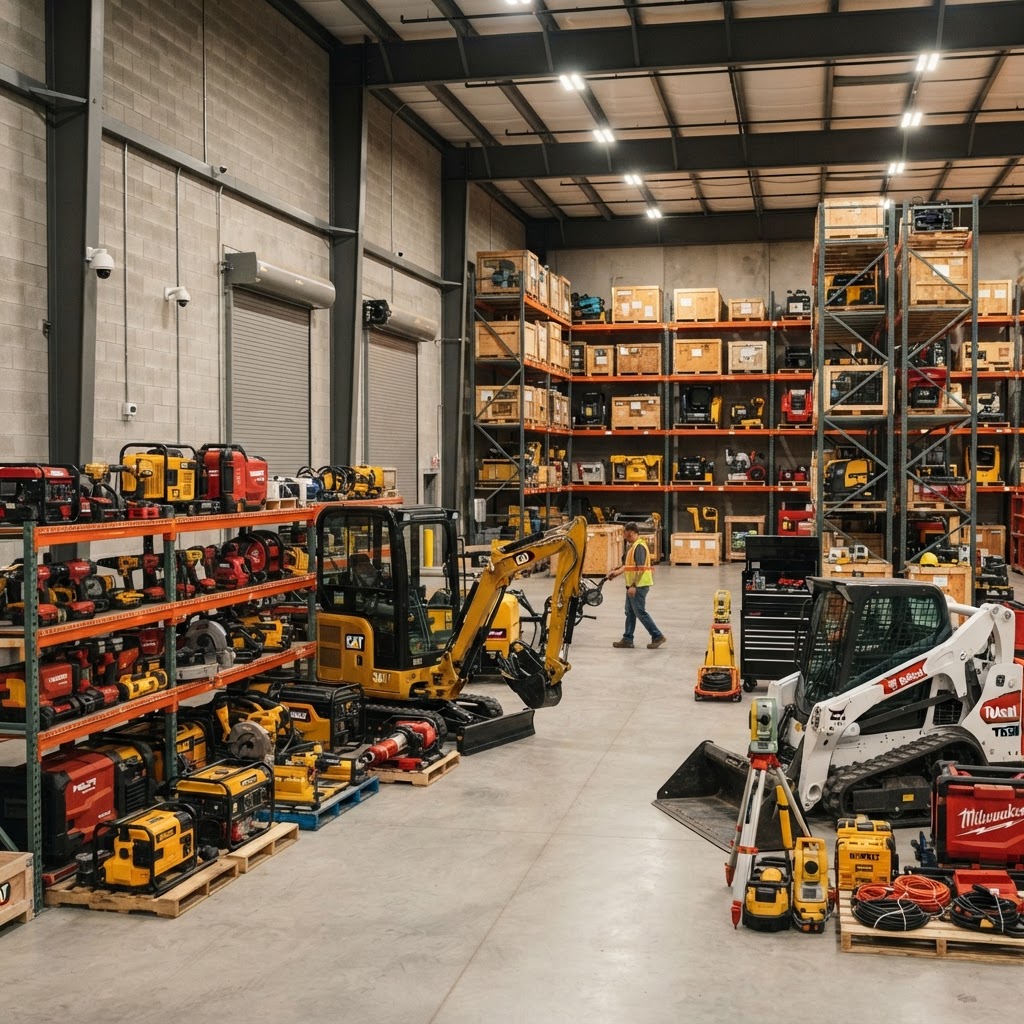
    First, it covers “mobile equipment.” This includes everything from heavy-duty construction machinery—like bulldozers and cranes—to smaller, specialized tools used by contractors. This is why many refer to this coverage as contractor inland marine insurance. If these items are stolen from a job site, damaged during a move, or accidentally dropped, the policy provides a path to replacement. Without this coverage, contractors are often on the hook for the entire replacement cost, which can easily reach tens or hundreds of thousands of dollars.

    Second, it covers “goods in transit.” This is the most literal interpretation of the policy. If you ship inventory to a distributor or carry materials to a client site, you are vulnerable to accidents. Standard commercial property insurance rarely follows your goods once they leave your facility. Inland marine insurance covers your inventory while it is being loaded, moved, and unloaded. This also extends to businesses that use third-party shipping services; while common carriers like FedEx or UPS provide limited liability, their terms often exclude full replacement value, making inland marine a vital secondary layer of protection.

    Third, it covers “bailee’s customer” property. This applies when you are in possession of someone else’s property for repair, service, or storage. Think of a dry cleaner, an electronics repair shop, or a musical instrument repair store. If a customer’s item is destroyed while in your shop due to a fire or theft, you are legally liable for its value. Inland marine covers your responsibility to the customer, ensuring your business doesn’t suffer the reputational or financial ruin of being unable to replace a client’s high-value item.

    Finally, there is coverage for “instrumentalities of transportation and communication.” This is a technical category that covers items like bridges, radio towers, and television equipment. While this sounds highly specific, it also covers IT infrastructure, data processing equipment, and specialized signage that is essential for a business to communicate or conduct operations. Because these items are often high-value and critical to revenue, covering them under a dedicated inland marine policy ensures they are protected against hazards that a landlord’s or building owner’s policy would likely ignore.

    Policy Type Key Focus Best For
    Commercial Property Fixed, permanent structures and assets Office-based businesses with fixed desks and inventory
    Inland Marine Mobile, transportable, or third-party assets Contractors, traveling photographers, and shipping operations
    General Liability Third-party bodily injury and property damage All businesses facing interaction with the public

    Inland Marine vs. Standard Commercial Property Insurance

    A frequent point of friction during the claims process is the ambiguity between inland marine vs property insurance. Business owners often assume that because they have “full coverage” on their commercial property policy, they are protected against any damage that occurs to their equipment. However, the fine print in a standard policy often reveals significant territorial and circumstantial limitations. A standard commercial property policy is designed for stability. It is built to cover risks that occur at a specific location—usually the address you provided when you signed the contract. It focuses on the building, the furniture attached to the floor, and the inventory kept in your warehouse.

    The “territorial” limitation is where most claims disputes arise. If your policy states that it covers equipment “at the premises,” it means the physical building. If a storm hits and damages your equipment while it is in the back of your truck five miles away, the insurer can rightly deny the claim. Inland marine, by contrast, is designed to be location-agnostic. It is inherently “portable,” meaning it is explicitly written to cover the items regardless of where they are, provided they are being used for business purposes.

    Furthermore, standard commercial property insurance usually employs “named perils,” meaning they only cover losses caused by specific events listed in the policy—such as fire or theft. If a loss occurs due to an accident not on that list, you are out of luck. Many inland marine policies, however, are written on an “all-risk” or “open-perils” basis. This shifts the burden of proof, effectively covering any risk unless it is specifically excluded in the document. This is a much broader and more protective stance for business assets that are constantly exposed to the unpredictability of the outside world.

    When evaluating the two, consider the nature of your risk. If you are a stationary retail store that rarely moves inventory off-site, standard commercial property insurance will likely meet your needs. But the moment you start delivering products, attending trade shows, or deploying technicians to client sites, your risk profile changes. Relying on property insurance alone forces you to operate in a state of constant, unmanaged risk. By layering inland marine coverage on top of your existing property policy, you effectively plug the holes in your safety net. This is not about paying for redundant coverage; it is about creating a comprehensive strategy that recognizes your assets move, change hands, and face a wider variety of threats than stationary items sitting in a locked building. Many experts advise that these two policies should be viewed as partners—the property policy protects the foundation, while the inland marine policy protects the action.

    Top Industries That Benefit Most From Inland Marine Coverage

    While almost any business that moves assets can benefit from inland marine coverage, certain industries are particularly susceptible to risks that make this type of policy non-negotiable. If your business falls into one of these categories, you should prioritize a conversation with your agent about securing this coverage immediately.

    First and foremost are construction and trade contractors. Whether you are an electrician, plumber, roofer, or landscaper, your “office” is essentially a truck, and your assets are scattered across various job sites. These environments are high-risk. Tools are frequently stolen from trucks overnight, damaged by heavy materials, or lost due to simple human error. Contractor inland marine insurance is the standard for this industry because it accounts for the unique reality of tools being stored at sites that you do not own or control. Without this, a single theft event of a specialized saw or a high-end diagnostic tool could halt your project and set you back thousands of dollars.

    Second are professional services that rely on high-value portable technology. This includes photographers, videographers, and graphic designers who travel to capture content. These professionals often carry tens of thousands of dollars in cameras, lenses, lights, and computers. Because this gear is constantly moved between venues, studios, and outdoor sets, it faces a high risk of damage from drops, weather, and theft. Many standard policies place strict limits on how much gear is covered away from the office, often leaving photographers severely underinsured. An inland marine policy ensures that all your professional equipment is covered at full value, no matter where your next shoot takes you.

    Third are the medical and scientific fields. Mobile clinics, traveling veterinarians, and specialized testing companies often utilize expensive diagnostic equipment that must be transported to different facilities. This equipment is not only high-value but also extremely sensitive. If a specialized ultrasound machine is damaged during transport, the financial impact isn’t just the repair cost—it is the loss of appointments and the difficulty of finding a replacement. Inland marine provides the financial security to manage these specialized risks.

    Finally, there are the logistics and retail sectors. Small businesses that manage their own shipping or utilize regional distribution channels face the constant risk of damaged goods during transit. Whether you are a local furniture maker delivering custom pieces or a high-end food producer distributing your wares, inland marine coverage protects your inventory when it is no longer under your direct supervision. It ensures that if a truck breaks down, a package is dropped, or a pallet is misplaced, the financial burden rests on the insurance company rather than your bottom line. In every one of these cases, the common denominator is that the asset is vital to revenue generation and is subject to the unpredictable dangers of being moved in the open market.

    How to Assess Your Business Assets for Insurance Needs

    Assessing your business assets is the foundational step in securing adequate coverage. Many small business owners make the mistake of relying on outdated balance sheets or failing to account for assets that frequently leave their primary place of business. To determine if you require inland marine insurance, you must first create a comprehensive inventory of your movable property.

    Begin by conducting a physical walkthrough of your facilities. Identify every piece of equipment, inventory item, or technological asset that is essential to your operations. Categorize these assets based on their mobility. Stationary items—such as fixed warehouse shelving, office furniture, and permanent machinery—are typically covered under standard business property insurance. However, assets that circulate in the field, such as construction tools, mobile medical devices, photographic equipment, or computer hardware used at client sites, fall squarely into the realm of inland marine insurance.

    Once you have identified your mobile assets, document the current replacement cost for each. It is vital to distinguish between “actual cash value” (which accounts for depreciation) and “replacement cost” (the amount required to purchase a brand-new item of similar quality). Experts generally suggest aiming for replacement cost coverage, as this ensures your business can resume operations quickly without having to cover the gap caused by the depreciation of older equipment.

    Consider the total value of these assets when they are in transit or at a job site. If you are a contractor, you likely have thousands of dollars worth of tools in the back of a truck or stored in a temporary container at a construction site. Assess the risk factors for these items. Are they prone to theft during the night? Are they susceptible to damage while being transported between locations? By mapping out where your assets spend most of their time and what risks they face in those specific environments, you can determine the appropriate coverage limits required to protect your financial health.

    Furthermore, review your contracts with clients. Many service-based contracts contain “care, custody, and control” clauses that hold you liable for damage to equipment you do not own but are using to perform work. If you frequently rent or lease heavy equipment, these assets should also be included in your asset assessment to ensure you are not underinsured against potential damage claims from your suppliers.

    Common Inland Marine Insurance Claims and Examples

    Understanding real-world scenarios helps clarify why inland marine insurance is often considered a critical safety net for mobile businesses. Unlike property insurance, which focuses on stationary perils like fire or smoke damage within your office walls, inland marine insurance is designed to follow your property wherever it goes.

    Theft from Vehicles: A common claim involves tools stolen from a locked service van parked at a job site or overnight at an employee’s home. Because these tools are essential to the business, the theft represents not just the cost of the tools, but also the potential loss of income due to project delays.

    Transit Accidents: Imagine a professional photographer transporting high-end camera gear and lighting setups to a destination wedding. If the vehicle carrying the equipment is involved in a collision and the gear is destroyed, standard commercial auto insurance may not cover the full cost of the specialized equipment inside. An inland marine policy specifically protects the property itself while in transit.

    Damage at Customer Sites: A HVAC contractor might be working in a client’s high-rise building. If an employee accidentally drops a expensive testing unit down an elevator shaft or through a glass window, or if a fire at the client’s site destroys the contractor’s specialized installation equipment, inland marine insurance provides the necessary financial protection.

    Equipment Breakdown: Some inland marine policies cover “floater” risks, which include damage caused by the accidental dropping of equipment, liquid spills, or even mechanical breakdown depending on the policy endorsements. For example, a mobile pet grooming business may face an unexpected equipment failure while on the road; a comprehensive inland marine policy can help cover the repair or replacement costs for that specialized grooming station.

    Warehouse and Storage Perils: Even when equipment is stored in a temporary warehouse or a storage container (a common practice in landscaping or trade-show businesses), inland marine insurance provides coverage against events like collapse, vandalism, or water damage that might otherwise fall into a grey area between standard property coverage and long-term storage liability.

    Coverage Type Primary Focus Best For
    Business Property Insurance Stationary assets at a fixed address Retail stores, offices, and brick-and-mortar restaurants.
    Inland Marine Insurance Movable assets and cargo in transit Contractors, photographers, and mobile service providers.
    Commercial Auto Insurance The vehicle itself and liability Business-owned fleets and logistics companies.
    Builder’s Risk Insurance Materials during construction projects General contractors and real estate developers.

    Key Factors That Influence Your Annual Insurance Premiums

    The cost of inland marine insurance is not a one-size-fits-all figure. Insurance underwriters evaluate several variables to determine the level of risk your business presents. Understanding these factors can help you make informed decisions about how to manage your business operations to potentially lower your premiums.

    The Total Value of Property (The “Limit”): The most significant driver of your premium is the total dollar amount of the property being insured. If you are covering $50,000 worth of equipment versus $500,000, your premiums will scale accordingly. It is important to maintain accurate records, as over-insuring leads to wasted capital, while under-insuring leaves you vulnerable.

    Type of Equipment: Some equipment is inherently more risky than others. For example, high-value, easily stolen, or highly fragile electronics are more expensive to insure than ruggedized, low-value hand tools. Specialized machinery that is difficult to repair or replace will also command higher premiums due to the complexity of a potential claim.

    Loss History: Similar to personal auto insurance, your business’s history of claims plays a major role. If your company has a history of frequent, small claims, underwriters view you as a higher risk. Implementing robust security measures, such as installing GPS trackers on equipment or requiring employees to sign off on formal safety protocols, can help demonstrate a lower risk profile to your insurer.

    Security and Storage Practices: How do you store your assets when they are not in use? Businesses that store equipment in secure, alarmed, and monitored facilities typically receive better rates than those that keep equipment in unsecured areas. Similarly, showing that your vehicles are equipped with anti-theft devices can reduce the likelihood of a claim, which insurers often reward with lower premiums.

    Geographic Exposure: The regions where you operate impact your pricing. If you frequently travel through high-crime areas or regions prone to specific weather-related perils (such as coastal areas susceptible to flooding), your premiums may be adjusted to account for the increased exposure to these external risks.

    How to Choose the Right Inland Marine Insurance Policy

    Selecting the right policy requires a strategic balance between comprehensive protection and cost-efficiency. Because inland marine insurance is often customized—frequently referred to as “floater” policies—there is significant room to tailor the coverage to your specific business model.

    First, audit your existing business property policy. Many standard property insurance policies offer limited coverage for “off-premises” property, but this limit is often inadequate for growing businesses. Ensure that your inland marine policy fills these specific gaps rather than overlapping with coverage you already possess.

    Second, pay close attention to the definition of “covered perils.” Does your policy only cover specific events like fire, lightning, and theft (named perils), or does it offer “all-risk” coverage, which includes anything not explicitly excluded? While all-risk policies are more expensive, they provide significantly better protection for businesses whose equipment faces a diverse range of environmental and transit-related threats.

    Third, examine the deductible options. A higher deductible can significantly lower your annual premium, but you must ensure that your business has enough cash reserves to handle that deductible in the event of a major loss. If your business is highly reliant on a specific piece of equipment that is very expensive to replace, a lower deductible might be the wiser investment for your cash-flow stability.

    Finally, work with a licensed commercial insurance broker who specializes in your specific industry. A broker who understands the needs of contractors, for example, will know the standard clauses and common exclusions that you might miss. They can help you negotiate policy endorsements—special additions to your contract—that provide coverage for niche needs, such as equipment rental reimbursement, which pays for the cost of renting replacement equipment while yours is being repaired.

    Frequently Asked Questions

    Is inland marine insurance legally required for my business?

    Generally, no. Unlike commercial auto insurance or workers’ compensation, inland marine insurance is rarely mandated by law. However, it is frequently required by contract. Many property owners, general contractors, or equipment lessors will mandate that you carry this coverage before they allow you on their job site or before they rent expensive equipment to you.

    What is the difference between inland marine insurance and ocean marine insurance?

    Inland marine insurance covers property moving over land or located at sites other than your primary business premises. Ocean marine insurance, by contrast, is specifically designed for international shipping, imports, and exports, typically covering goods while they are on the water or in ports. They are distinct types of coverage for very different transit environments.

    Can I add inland marine coverage to my existing business owner’s policy?

    Yes, many insurance providers allow you to add “inland marine endorsements” or “floaters” to your standard business owner’s policy (BOP). This is often the most cost-effective and convenient way to secure coverage, provided that your specific needs do not exceed the limits typically offered as an add-on.

    Does inland marine insurance cover equipment while it is in my home?

    Typically, yes, provided your business is registered to your home or you have disclosed that you use your home as a base of operations. If you bring equipment home from a job site for safety, a well-structured inland marine policy should extend coverage to that location. Always confirm this with your insurance agent to avoid coverage disputes.

    Are my employees’ personal tools covered under my policy?

    Generally, business insurance covers business assets, not employee personal property. If your employees use their own tools to perform work for you, those items typically would not be covered unless you specifically negotiate for a “bailee” or “employee tools” endorsement, or if you assume legal responsibility for those tools in your employment contracts.

    How often should I review my inland marine coverage?

    You should review your coverage at least annually, or whenever your business undergoes significant changes. This includes purchasing new, expensive equipment, expanding your service area, taking on larger contracts, or shifting your storage practices. Failing to update your policy limits after buying new gear is a leading cause of underinsurance.

    Conclusion

    Inland marine insurance is far more than a niche product for shipping companies; it is a vital layer of protection for any small business that relies on mobile assets to generate revenue. Whether you are a contractor hauling heavy machinery, a tech consultant traveling with high-value hardware, or a freelancer with expensive studio equipment, the reality is that your most critical business tools are at their most vulnerable when they are away from the office.

    By assessing your assets, understanding the specific perils your equipment faces, and working with a knowledgeable professional to tailor your policy, you can ensure that a single accident, theft, or transit mishap does not derail your hard-earned progress. Don’t wait until an incident occurs to check your coverage limits. Take the time today to audit your equipment inventory and discuss your protection options with an advisor. Investing in the right inland marine policy today is the surest way to secure the operational continuity of your business tomorrow.

    By insureiqguru Editorial Team

  • Product Liability Insurance: Do You Need It in 2026?

    Product Liability Insurance: Do You Need It in 2026?

    Key Takeaways

    • Product liability insurance protects your business from financial ruin when a product causes injury, illness, or property damage.
    • Even if you don’t manufacture the product yourself, you can still be held liable if you sell or distribute it.
    • Product defect coverage typically addresses design flaws, manufacturing errors, and failure-to-warn issues.
    • Risk management is not just about safety; it is a foundational pillar of small business insurance that ensures long-term operational continuity.
    • Product recall protection is an essential add-on for businesses in the supply chain to cover the logistical costs of pulling defective goods from the market.

    As we navigate the commercial landscape of 2026, the complexity of global supply chains and the rapid evolution of consumer protection laws have made risk management more critical than ever for business owners. Whether you are a startup selling niche handicrafts on an e-commerce platform or an established regional manufacturer, the risk of a product-related lawsuit is a constant shadow hanging over your operations. Many entrepreneurs mistakenly assume that because they do not manufacture their goods from scratch, they are immune to legal consequences, but modern legislation often casts a wide net that captures distributors, wholesalers, and retailers alike. Understanding the nuances of product liability insurance is no longer just an administrative task for the accounting department; it is a vital strategy for protecting your brand’s reputation and your company’s solvency. In this comprehensive guide, the insureiqguru Editorial Team explores why this coverage remains a non-negotiable component of a robust small business insurance portfolio and how you can navigate the claims process effectively in an increasingly litigious environment.

    What Is Product Liability Insurance?

    At its core, product liability insurance is a specific type of commercial insurance designed to shield businesses from the significant financial burdens that arise when a product causes physical injury or property damage. When a consumer uses a product—or even attempts to use it—and experiences harm, they may pursue legal action against anyone involved in the chain of commerce. This includes everyone from the original designer and manufacturer to the wholesaler and the final retailer. Without adequate protection, a single liability claim can lead to legal defense fees, medical costs, and compensatory damages that far exceed the liquid assets of a small or medium-sized enterprise.

    It is important to distinguish this coverage from general liability insurance. While general liability covers accidents that happen on your premises or through your general day-to-day operations, product liability specifically focuses on the goods you have placed into the stream of commerce. Even if your internal quality control processes are meticulous, human error, unforeseen material fatigue, or environmental factors can result in a defective product reaching the customer. This insurance acts as a financial buffer, ensuring that your business can cover the costs of defending against these claims—even those that may eventually be proven groundless.

    Furthermore, this coverage frequently addresses the nuance of product defect coverage, which is essential for companies dealing with complex supply chains. Many modern policies also offer extensions for related legal risks. For instance, when a product is found to be dangerous, the regulatory scrutiny or consumer backlash can be overwhelming. Some policies may be bundled or structured to include product recall protection, which helps defray the heavy costs of notifying customers, retrieving products, and disposing of them safely. As we look toward the business climate of 2026, where digital transparency is the norm, having this insurance is often a prerequisite for securing contracts with larger distributors, who will almost certainly require proof of coverage before allowing you to list your items in their stores or online marketplaces.

    From an operational standpoint, having this insurance changes how your team approaches safety. When a business knows it is insured, it can afford to be transparent about potential issues rather than hiding them out of fear of bankruptcy. This shifts the focus from defensive litigation tactics to proactive risk management. By working closely with an insurance advisor, businesses can identify potential vulnerabilities in their production cycle or sourcing strategy, effectively utilizing their policy as a diagnostic tool rather than just a safety net. For the modern entrepreneur, viewing this coverage as a necessary investment in stability, rather than an unwanted overhead cost, is the hallmark of a resilient enterprise.

    Who Needs Product Liability Coverage?

    The misconception that product liability insurance is only for heavy industrial manufacturers is one of the most dangerous myths in the business world. In reality, the criteria for needing this coverage are based on your role in the supply chain rather than the complexity of your product. If you bring a product into the market, you are essentially “signing” for its safety. This means that retailers, wholesalers, and even private-label brands are prime targets for litigation if something goes wrong. Even businesses that sell digital products with accompanying hardware, or companies that modify products, find themselves in the crosshairs of liability laws.

    Consider the e-commerce landscape. Many small businesses source products from overseas, rebrand them, and sell them through popular online marketplaces. Under many jurisdictions, the entity that puts its name on the label is considered the manufacturer in the eyes of the law. If a faulty battery pack in a branded gadget causes a fire, the distributor or the private-label owner is often the first entity sought for damages. Therefore, if your business involves selling, importing, distributing, or manufacturing physical goods, you are at risk. The legal principle of “strict liability” means that a claimant does not always need to prove that you were negligent; they only need to prove that the product was defective and that the defect caused them harm.

    To help business owners identify their specific coverage needs, the following table breaks down how different entities should approach their liability requirements:

    Business Type Primary Exposure Best For
    Retailers/E-commerce Liability for goods sold Broad-form product liability
    Component Manufacturers Integrity of parts Manufacturing insurance
    Private Labelers Brand accountability Policy with broad naming rights
    Wholesalers/Distributors Storage and handling Liability with transit coverage

    Furthermore, businesses operating in specialized sectors—such as food and beverage, pharmaceuticals, toys, and electronics—face heightened regulatory requirements. For these sectors, manufacturing insurance that includes comprehensive product liability is often mandated by contractual obligations from partners or regulators. Even if you run a “low-risk” business, such as selling apparel, you are not immune. Synthetic fibers or chemicals used in clothing dyes have historically led to skin irritation claims that resulted in significant class-action lawsuits. When you factor in the rising costs of legal defense, it becomes clear that for almost any business handling physical inventory, the question is not “Should I have this insurance?” but rather “How much coverage is sufficient to protect my specific operational risk?”

    Finally, consider the long-tail nature of these claims. A product you sold three years ago could result in a claim tomorrow. This is why maintaining a continuous policy is crucial. Many policies operate on an “occurrence” basis, meaning they cover incidents that happen while the policy is active, regardless of when the claim is filed. As you expand your inventory or enter new markets, your risk profile shifts, requiring a professional review of your policy limits to ensure that your small business insurance keeps pace with your growth. Ignoring these requirements in 2026 can be catastrophic, as modern search engines and consumer advocacy sites can turn a single claim into a viral reputation issue, multiplying the financial impact far beyond the courtroom.

    Common Types of Product Defects Explained

    When legal experts and insurance adjusters talk about liability, they generally categorize product defects into three distinct areas. Understanding these categories is vital for anyone engaging in risk management, as it helps identify exactly where a potential breakdown might occur in your supply chain. These categories dictate how a court views the liability of the business and determine the complexity of the defense. Whether you are dealing with a simple physical item or a sophisticated technical product, the following classifications form the foundation of most liability claims.

    First, we have “Design Defects.” These are perhaps the most dangerous from a company’s perspective because they imply that the product is inherently dangerous by design—not because it was built incorrectly, but because the blueprint itself was flawed. For example, if a child’s toy is designed with small parts that are easily detached despite being intended for toddlers, the design itself is the problem. If a claim is successful here, it often implies that the entire product line is dangerous, which can lead to massive class-action lawsuits and expensive, mandatory recalls. Product defect coverage in these cases is essential to cover the long-term legal battle, as you will likely have to prove that no safer, cost-effective alternative existed during the design phase.

    Second, we encounter “Manufacturing Defects.” These occur when the product design is sound, but something goes wrong during the assembly or creation process. Perhaps a machine calibration was slightly off, or a contaminated batch of raw materials was introduced. In these cases, only a specific batch or a select number of units are typically affected. While still serious, these claims are often easier to isolate than design flaws. For manufacturers, having comprehensive manufacturing insurance is critical here, as it may cover the costs associated with identifying the specific batch and managing the resulting liabilities. The ability to demonstrate a rigorous quality assurance program is often a key factor in these insurance negotiations, as it signals to your insurer that you are proactively minimizing the risk of a “bad batch” escaping your facility.

    Third, we have “Failure-to-Warn” or “Marketing Defects.” This is the most common area where companies of all sizes—even those with high-quality, perfectly manufactured goods—find themselves in trouble. This defect refers to the inadequacy of instructions or warnings provided with the product. If a consumer is injured because they used a product in a way that wasn’t explicitly warned against, or if the assembly instructions were so ambiguous that they led to a hazardous configuration, the business may be held liable. In 2026, as user interfaces become more digitized, this also extends to digital manuals and app-based instructions. If your labeling, packaging, or digital documentation is unclear about the hazards associated with the product’s use, you have created a liability vacuum that can be easily exploited in court.

    Integrating these categories into your risk management strategy involves more than just buying insurance. It requires a cross-functional review of your entire product lifecycle. Product designers must consider the end-user’s potential for misuse, manufacturers must maintain documented quality logs for every production run, and marketing departments must ensure that warning labels are not only visible but also legally compliant with local and international standards. By treating these three defect types as distinct risk categories, business owners can create a layered defense system that minimizes the likelihood of a claim ever reaching the threshold of litigation. Insurance is the final safety net, but internal controls are the primary wall against liability.

    What Does Product Liability Insurance Cover?

    A frequent question among business owners is what exactly falls under the umbrella of product liability insurance. While specific policy wordings vary between providers, the core of the coverage is focused on the aftermath of a product causing harm. It is designed to act as your financial proxy in the event that your product is alleged to have caused a loss. This coverage is generally triggered when a third party—a customer or another business—claims that your product led to physical injuries or property damage. However, the scope of coverage is multifaceted, and understanding its components is key to ensuring you are not underinsured.

    Legal Defense Fees: The most immediate and often the most expensive component of a liability claim is the cost of legal representation. Litigation can drag on for years, involving discovery, expert witness fees, and courtroom hours. Even if your business is found not liable, the cost to defend yourself can be ruinous. Your policy covers the cost of hiring specialized legal counsel, gathering evidence, and navigating the complexities of the judicial system. For many small businesses, this “cost of defense” coverage is the primary value of the policy, as it allows them to fight claims without draining their working capital.

    Compensatory Damages: If a court finds your business liable for damages, you may be required to pay the claimant for their losses. This can include medical bills, lost wages, and rehabilitation costs for an injured person. In the case of property damage, this could cover the repair or replacement costs of items destroyed by your product. These compensatory damages are designed to make the victim “whole” again, and they can reach astronomical figures depending on the severity of the incident. Your policy limits are essentially the maximum amount the insurer will pay toward these judgments, making it vital to select limits that reflect the worst-case scenario for your specific product type.

    Settlement Costs: Not all cases go to trial. In fact, most liability claims are settled out of court to avoid the uncertainty and expense of a jury verdict. Your insurer will generally manage the negotiation process with the claimant’s legal team. A well-structured policy allows the insurer to reach a settlement that balances the cost of the payout against the predicted costs of full-scale litigation. This ensures that your business can resolve the issue discreetly and move forward, avoiding the reputational damage that can stem from a high-profile, prolonged court battle.

    Product recall protection: This is an increasingly sought-after add-on. Traditional product liability insurance does not typically cover the costs of a voluntary or mandatory recall. If you discover a defect and decide to pull your products from shelves, you are responsible for the logistics, communication, and disposal costs. However, many insurers now offer specific recall coverage as a supplemental endorsement. This covers expenses such as customer notification, the shipping of returned goods, and the cost of destruction. As supply chain volatility continues into 2026, this protection is becoming a standard expectation for any business aiming to maintain trust in the market. Knowing that you have the resources to perform a safe and efficient recall can prevent a localized mistake from becoming a brand-ending crisis.

    Real-World Examples of Liability Claims

    To truly understand the necessity of product liability insurance, it is helpful to look at how these claims manifest in the real world. Many entrepreneurs think of “defective products” as large, obvious disasters, like an exploding lithium battery. While those certainly happen, the vast majority of claims are much more nuanced. Consider the case of a home goods company that imported trendy, lightweight coffee carafes. The design appeared safe, but over time, the handle design proved prone to stress fractures. Several customers suffered minor burns when the handles snapped during normal use. Because the company was the importer of record, they were held liable. Their liability policy covered the medical bills of the injured parties and the cost of a nationwide recall, saving the company from complete closure.

    Another classic scenario involves the “failure-to-warn” issue. A company producing a natural, organic cleaning agent experienced a claim when a user mixed their product with a common household bleach, creating a hazardous chemical reaction. The product label warned against mixing with other chemicals but did not explicitly name bleach. The claimant argued that the warning was insufficient. While the company eventually settled the case, the legal fees alone were significant. This scenario highlights how small businesses often overlook the importance of precise, expert-vetted labeling. Without the support of their insurer’s legal and technical teams, the company would have been forced to navigate complex chemical-safety regulations while simultaneously defending their brand’s integrity.

    We must also consider the role of small business insurance in the retail sector. A boutique clothing brand that sourced specialized synthetic fabrics faced a lawsuit when a batch of garments caused severe allergic reactions among several customers. The issue was traced back to a specific chemical dye used by an overseas supplier. The brand owner, believing they were just a reseller, had no product liability coverage. They were forced to cover the legal costs out-of-pocket while their brand’s reputation took a hit on social media. Had they possessed a robust policy, the insurer would have likely stepped in to handle the product testing, the settlement negotiations, and the logistics of removing the defective garments from retail partners, likely minimizing the public fallout.

    In 2026, these scenarios are only becoming more common due to the rapid growth of “niche” products. When a business creates a new product category—like a smart-home integration tool or a specialized fitness accessory—there is no historical “standard of care” to rely on. These businesses are often the first to experience these kinds of liabilities. For example, a startup creating an app-controlled exercise machine might face a claim not just for mechanical failure, but for a software glitch that causes the machine to move unexpectedly. This blurs the line between software liability and physical product liability insurance. Businesses must ensure that their policies are flexible enough to bridge these gaps, as today’s products are rarely just “physical objects” and are almost always part of a complex, interconnected ecosystem.

    How Product Liability Insurance Differs from General Liability

    Business owners often assume that their General Liability (GL) insurance policy acts as a catch-all safety net for every potential lawsuit. However, this is a dangerous misconception. While General Liability is a fundamental component of any small business insurance strategy, it is intentionally limited in scope, particularly when it comes to the specific, complex risks associated with physical goods sold to the public.

    General Liability insurance is primarily designed to cover “premises and operations” risks. It protects your business against claims of bodily injury or property damage that occur on your business property—for instance, if a customer slips and falls in your retail store—or claims of personal and advertising injury, such as libel, slander, or copyright infringement. In some policies, there is a small provision for “products-completed operations” coverage, but this is frequently insufficient for manufacturers, wholesalers, and retailers who handle complex supply chains.

    Product Liability insurance is a specialized form of manufacturing insurance and retail protection that triggers specifically when a consumer alleges that your product caused them harm or financial loss due to a defect. The distinction lies in the origin of the injury. If a customer trips over a rug in your lobby, that is a GL claim. If that same customer buys the rug, takes it home, and the rug’s chemical treatment causes a severe allergic reaction or a fire, that is a product liability claim.

    Because product liability involves the intricate web of design, manufacturing, and marketing, the risks are often exponentially higher than standard slip-and-fall claims. A single design flaw can affect thousands of units simultaneously, leading to a class-action lawsuit. General Liability policies often carry sub-limits for product-related claims, meaning the total payout cap might be far too low to handle the legal defense costs and settlement amounts associated with a major recall or a mass tort claim.

    Feature General Liability (GL) Product Liability Insurance Best For
    Primary Focus Physical Premises & Operations Product Defects & Failures All Businesses
    Claim Trigger Slip, fall, or property damage on-site Injury or harm caused by sold goods Manufacturers & Retailers
    Scope Broad, operational coverage Specific to design, mfg, & marketing E-commerce & Physical Goods
    Claim Scale Usually localized/single person Can involve widespread recalls/class actions Scalable Product Businesses

    Key Factors That Influence Insurance Costs

    Calculating the premium for product liability insurance is rarely a “one-size-fits-all” process. Insurance underwriters look at a variety of variables to assess your unique risk profile. Understanding these factors is vital for any entrepreneur seeking to manage their business liability costs effectively.

    The Nature of the Product: This is arguably the most significant factor. An insurance carrier will view a company manufacturing children’s toys, medical devices, or power tools as significantly higher risk than a company selling stationery or decorative art. Products that carry an inherent risk of ingestion, flammable components, or complex electrical circuitry will always attract higher premiums due to the likelihood of severe injury.

    Annual Revenue and Sales Volume: Your total sales volume acts as a proxy for your exposure. The more units you have circulating in the marketplace, the higher the statistical probability that a defect will manifest or a user will misuse the item. Underwriters evaluate your gross annual revenue to determine the breadth of your market reach.

    Product Lifecycle and Age: How long your products remain in circulation matters. Durable goods that last for decades present a different long-term risk profile than consumable products that are used and discarded within days. If your product has a long shelf life, your business remains exposed to potential litigation for much longer.

    Quality Control Processes: A company with robust, documented quality assurance procedures, such as ISO certification or rigorous third-party testing, is viewed as a “better risk” by insurers. If you can demonstrate a proactive approach to identifying defects before they reach the consumer, you may be eligible for more favorable pricing.

    Claims History: Previous history of litigation is a major red flag. If your business has faced previous product liability lawsuits, insurers will scrutinize your current risk management protocols. Conversely, a clean history of zero claims over many years of operation can help you negotiate better rates.

    Essential Steps to Reduce Your Product Liability Risk

    Insurance is the safety net, but risk management is the platform that keeps your business from falling in the first place. By adopting a “safety-first” culture, you can minimize your insurance premiums while simultaneously protecting your brand reputation.

    1. Implement Stringent Quality Control (QC): Establish a multi-tiered inspection process. From raw material sourcing to the final assembly, every stage should involve documented checks. If you outsource production, ensure that your contractual agreements include strict indemnity clauses and quality requirements.
    2. Maintain Detailed Documentation: Keep records of every batch, testing result, and user feedback submission. If a claim arises, this “paper trail” can prove that your company followed industry standards and regulatory requirements, which is essential for a successful legal defense.
    3. Perfect Your Labeling and Warnings: A surprising number of liability cases are won by plaintiffs because of “failure to warn.” Ensure your user manuals, packaging, and digital guides explicitly list potential risks, proper usage instructions, and safety disclaimers. Use clear, non-technical language that the average consumer can understand.
    4. Conduct Regular Product Testing: Don’t rely solely on initial design testing. Periodic testing throughout the product’s lifecycle—and following any updates or manufacturing changes—helps catch latent defects before they become public health or safety concerns.
    5. Establish a Clear Recall Plan: Even the most careful companies can experience a manufacturing error. Having a documented, tested, and swift recall procedure allows you to control the narrative, limit consumer harm, and mitigate the damage that a widespread product failure can cause.

    How to Choose the Right Coverage Limits for Your Business

    Choosing the correct coverage limits is an exercise in balancing cost and peace of mind. Under-insuring leaves your business vulnerable to bankruptcy if a catastrophic claim occurs, while over-insuring wastes precious capital that could be reinvested into growth. Experts generally recommend the following approach when determining your policy limits:

    First, analyze your potential “worst-case scenario.” Consider the total cost of a recall, the legal fees for a multi-year defense, and the potential settlement amount if a serious injury were to occur. For many small businesses, a one-million-dollar per-occurrence limit is the entry point, but businesses with large distribution networks often find that two, five, or ten-million-dollar aggregate limits are necessary to provide adequate protection.

    Second, review your contracts. If you sell through major retailers or operate within the B2B space, your partners may require you to carry specific minimum limits of product liability insurance as a condition of doing business. Failing to meet these requirements can result in the loss of major contracts.

    Third, consult with a broker who understands your specific niche. A generic insurance provider may not understand the specific risks of the medical device sector versus the artisan food sector. A specialist broker can help you interpret industry-specific trends and suggest limits that align with the risks typical for your sector.

    Frequently Asked Questions

    Does product liability insurance cover me if my supplier is at fault?

    While insurance generally covers claims made against your business, you may be able to seek recovery from the supplier if a defect originated at their end. This is often handled through “vendor coverage” or contractual indemnity clauses. Always ensure your contracts with suppliers clearly define who is responsible for defects in raw materials or components.

    Is product recall protection included in standard policies?

    In many cases, standard product liability policies do not cover the direct costs of a product recall, such as the logistics of retrieving items or customer refunds. You often need to add a “product recall endorsement” or a separate policy to cover these specific expenses, which can be significant.

    What happens if I sell my products internationally?

    Selling globally creates complex legal exposure. A domestic policy usually only covers claims within your home country. If you export, you may need a global or export-specific liability policy to ensure you are protected against lawsuits initiated in foreign jurisdictions where legal standards differ significantly.

    Can I get coverage if I am a startup with no sales history?

    Yes, startups can and should get coverage. Insurers often use business plans, industry standards, and the background of the founders to underwrite policies for new businesses. It is better to establish coverage early, as some contracts require a minimum period of insurance history.

    What is the difference between “claims-made” and “occurrence” policies?

    An “occurrence” policy covers you for any claim arising from a product sold during the policy period, regardless of when the claim is filed. A “claims-made” policy only provides coverage if the policy is active both when the product was sold and when the claim is filed. Understanding this distinction is crucial to avoid coverage gaps.

    Does this insurance protect my business reputation during a scandal?

    While the insurance pays for legal defense and damages, it does not typically cover the cost of public relations or crisis management firms. However, managing the legal side of a product scandal effectively is the first step toward salvaging your reputation, and some comprehensive policies now offer limited coverage for reputation-related costs.

    Conclusion

    Product liability is an unavoidable reality for any business that brings physical goods to market in 2026 and beyond. As supply chains become more global, consumer expectations for safety increase, and the legal landscape grows more complex, relying on guesswork is no longer a viable business strategy. By distinguishing between general and product-specific liability, implementing rigorous risk management protocols, and selecting insurance coverage that aligns with your specific exposure, you secure not just your balance sheet, but the future of your brand.

    Don’t wait for a notification letter from a law firm to start thinking about your risk profile. The best time to assess your coverage is today, while you have full control over your operations and quality systems. Take the initiative to review your policy with a qualified broker, audit your manufacturing partners, and ensure your labeling leaves no room for ambiguity.

    Ready to fortify your business against unforeseen risks? Contact our network of independent insurance specialists today to get a personalized assessment of your liability needs and find the coverage that makes the most sense for your 2026 operations.

    By insureiqguru Editorial Team

  • Workers’ Compensation Insurance: A Complete Guide for 2026

    Workers’ Compensation Insurance: A Complete Guide for 2026

    Key Takeaways

    • Workers’ compensation insurance is a mandatory protection in most jurisdictions designed to cover medical expenses and lost wages for employees injured on the job.
    • State business insurance requirements vary significantly, meaning small business owners must verify local mandates to avoid severe penalties and legal liability.
    • Coverage extends beyond acute physical injuries to include occupational illnesses and repetitive strain conditions developed over time.
    • Workplace accidents create a “hidden cost” ripple effect that goes well beyond medical bills, impacting productivity, morale, and long-term insurance premiums.
    • Premiums for 2026 are primarily driven by your business’s industry risk classification, payroll size, and historical claims experience rating.

    As we move further into 2026, the landscape for small business ownership continues to evolve, bringing with it both new opportunities and complex regulatory challenges. One constant remains the paramount importance of protecting your most valuable asset: your employees. Workers’ compensation insurance stands as the bedrock of a responsible business strategy, providing a structured safety net that mitigates the devastating financial impact of workplace accidents. For a growing business, navigating these insurance requirements can feel like an overwhelming administrative hurdle, yet it is arguably the most critical defensive measure an owner can take. This comprehensive guide, compiled by the insureiqguru Editorial Team, aims to demystify the intricacies of employer obligations, financial risk management, and the evolving nature of safety compliance in today’s modern workplace.

    What Exactly Is Workers’ Compensation Insurance?

    At its core, workers compensation insurance is a form of no-fault business insurance that provides medical and wage-replacement benefits to employees who suffer job-related injuries or illnesses. Unlike general liability insurance, which protects your business against claims from third parties, this coverage is specifically designed for your internal team. The “no-fault” aspect is crucial: in exchange for guaranteed benefits, the employee generally forfeits the right to sue the employer for negligence related to the incident. This framework creates a predictable legal environment where injured workers can receive care without entering into protracted litigation, while employers gain protection against potentially ruinous lawsuits.

    The mechanism functions as a mutual agreement between the employer, the insurer, and the employee. When an employee experiences a work-related injury, the insurance policy covers medical expenses, rehabilitation costs, and a portion of lost wages during the recovery period. In the most tragic instances, these policies also provide death benefits to the dependents of employees who lose their lives due to occupational hazards.

    It is a common misconception that this insurance is only necessary for high-risk industries like construction or heavy manufacturing. In reality, modern office environments, retail outlets, and remote-work operations all face unique risks. From repetitive stress injuries caused by poorly configured workstations to trips and falls in a retail space, the potential for an incident exists in almost every professional setting. Furthermore, many small business owners are surprised to learn that they are often required to carry this insurance even if they have only one employee.

    Understanding this coverage requires looking at it through the lens of business stability. Without an active policy, an employer becomes personally liable for every medical bill, physical therapy session, and lost paycheck. For a small business operating on thin margins, a single catastrophic accident could result in bankruptcy. By transferring this risk to an insurance carrier, you are effectively buying peace of mind. It allows the business owner to focus on growth and operations rather than looming financial ruin. Additionally, having a robust safety program paired with insurance can improve employee morale; workers are more likely to commit to a company that demonstrates a clear, tangible investment in their long-term health and wellbeing. Ultimately, this insurance is not merely a bureaucratic checkbox; it is a fundamental pillar of modern risk management that enables a workforce to operate safely and confidently.

    Legal Requirements for Small Business Employers

    Legal requirements regarding business insurance vary drastically depending on the state, the number of employees, and the specific nature of your industry. In most jurisdictions, as soon as a business hires its first employee, the clock begins ticking on the obligation to secure coverage. Failing to comply with these requirements is a serious legal liability that can lead to heavy fines, stop-work orders, and even criminal charges in some states.

    The complexity of these requirements is largely due to state-by-state governance. There is no singular federal mandate for private-sector workers’ compensation. Instead, states establish their own laws, enforcement mechanisms, and penalty structures. For instance, some states require coverage for all employees immediately, while others may offer exemptions for small businesses with fewer than three or five staff members. Some states operate “exclusive state fund” models where insurance must be purchased through a state-run entity, whereas other jurisdictions allow for a “competitive market” where private carriers offer various insurance products.

    Small business owners must also be aware of the “employee vs. contractor” distinction, which is a frequent area of confusion and regulatory scrutiny. Misclassifying an employee as an independent contractor to avoid insurance premiums is considered insurance fraud in many regions. Regulators look at the degree of control the business has over the worker’s daily activities, the nature of the work performed, and the tools used. If a court or state agency determines that an individual should have been classified as an employee, the business will be held retroactively liable for unpaid premiums, hefty fines, and the costs of any accidents that occurred during the misclassification period.

    Beyond the basic mandate, employers often have a legal obligation to post notices in the workplace detailing how to report an injury and where to seek medical care. These “informational posters” are a common requirement across many states and help facilitate a transparent process when an accident occurs. Failure to adhere to these reporting and posting requirements can trigger audits and administrative penalties.

    Because of this shifting landscape, many experts generally agree that businesses with a mobile workforce—those who employ staff across state lines—face the highest level of complexity. If your business operates in multiple states, you must ensure your policy satisfies the coverage requirements of every location where employees perform work. Failure to do so can result in an “extraterritorial” coverage gap, where an employee injured out of state may not be fully covered, leaving the employer exposed to direct litigation. It is highly recommended that business owners consult with a licensed insurance broker who specializes in multi-state compliance to ensure there are no unintended gaps in their coverage.

    Approach Best For Pros Cons
    Direct State Fund High-risk industries or new businesses Guaranteed coverage availability Limited customization of plans
    Private Insurance Carrier Businesses seeking bundle discounts Flexible payment options and bundles Requires underwriting approval
    Professional Employer Org (PEO) Small teams outsourcing HR duties Simplified administration and HR support Higher management fees per employee

    What Injuries and Illnesses Are Typically Covered?

    The scope of employee injury coverage is often wider than small business owners realize. While the classic image of a workplace injury involves a construction site fall or a heavy equipment accident, modern coverage is designed to address a variety of occupational health issues. Generally, to be covered, an injury or illness must be “arising out of and in the course of employment.” This means the event occurred while the employee was performing work-related tasks or acting in the interest of the employer.

    Acute physical injuries remain the most common claims. This category includes fractures, lacerations, burns, and strains that occur suddenly. Whether it is a kitchen worker suffering a deep cut, a warehouse staffer dealing with a back injury from lifting heavy boxes, or an administrative professional tripping over a loose rug in the breakroom, these incidents are standard examples of compensable events. The coverage covers the full spectrum of emergency care, surgical interventions, and subsequent physical therapy.

    Beyond acute events, coverage also extends to repetitive strain injuries (RSIs) and occupational illnesses. These are often more complex to manage because they develop over time rather than occurring in a single, distinct moment. Examples include carpal tunnel syndrome in data-entry roles, chronic back pain resulting from repetitive heavy lifting, or respiratory issues caused by long-term exposure to chemicals or poor air quality in a manufacturing facility. For these claims, the burden of proof rests on demonstrating that the condition was indeed caused by the work environment and not by external, personal lifestyle factors.

    Mental health injuries are also increasingly being recognized in the landscape of workers’ compensation. While the standards for “mental-mental” claims (where psychological stress causes a psychological injury) remain strict and vary by state, many jurisdictions now provide coverage for psychological trauma stemming from a physical injury or a “sudden and extraordinary” stressful event. For example, if an employee witnesses a violent workplace accident, the resulting PTSD might qualify for coverage.

    Finally, it is essential to distinguish between what is and is not covered. Injuries occurring during an employee’s daily commute are almost universally excluded from coverage, as these are considered personal travel. Similarly, injuries sustained while an employee is under the influence of illegal substances or while engaged in “horseplay” are often excluded. However, these exclusions are highly specific and dependent on the particular statutes of the state in which the business operates. Employers should maintain a clear policy regarding workplace behavior and safety to minimize gray areas. By fostering a culture of small business safety, owners can proactively prevent many of these injuries, reducing both the frequency of claims and the long-term stress placed on the workforce.

    The Financial Impact of Workplace Accidents

    The financial consequences of a workplace accident extend far beyond the immediate medical bills. For many small business owners, the “visible” costs—such as the medical copays and the initial wage replacement—represent only the tip of the iceberg. The true impact is found in the hidden costs that ripple through the business, often quietly draining resources and stifling growth for months or even years.

    First, there is the issue of productivity loss. When an employee is injured, the business loses the output of that individual. If the role requires a specialized skill set, finding a qualified temporary replacement can be expensive and time-consuming. Furthermore, existing staff are often required to pick up the slack, leading to fatigue, reduced quality of work, and an increased risk of further errors or additional accidents among the remaining team. The domino effect of a single injury on a small, tight-knit team can cause a significant dip in overall operational efficiency.

    Then, there is the administrative burden. Managing a workers’ compensation claim involves extensive paperwork, coordination with insurance adjusters, potential legal correspondence, and internal safety investigations. For a business owner who is already wearing multiple hats, this time commitment is a massive distraction from core business development. The effort required to get an employee back to work safely, often involving accommodations or phased reentry plans, also requires careful coordination with medical providers and HR professionals.

    Insurance premiums also experience long-term upward pressure. Most workers’ compensation policies utilize an “experience modification factor” (often called an “ex-mod” or “experience mod”). This is a numerical representation of your company’s safety performance compared to other businesses in your industry. A string of claims will drive this factor up, which leads to higher insurance premiums for future years. Essentially, an accident today can make your business insurance more expensive for three years or more, punishing the company’s overhead long after the injured employee has returned to work.

    Finally, there is the intangible, yet vital, impact on company culture and morale. If employees perceive that their workplace is unsafe or that the employer is indifferent to their wellbeing, trust erodes. This can lead to higher turnover rates, increased difficulty in recruiting top talent, and a general decline in employee engagement. Conversely, businesses that prioritize safety demonstrate a genuine commitment to their team, which often results in higher retention and a more collaborative atmosphere. Investing in preventative measures is not just an insurance requirement; it is a financial strategy. By lowering the likelihood of accidents, you are directly protecting your bottom line, preserving your experience rating, and ensuring that your human capital remains healthy and productive. The goal is to move from a reactive posture—where you deal with costs after they occur—to a proactive safety-first culture.

    How Insurance Premiums Are Calculated for 2026

    Determining workers comp cost is not a random process; it is a highly regulated calculation based on data, risk, and historical performance. As we look at the pricing structures for 2026, understanding the variables that influence your premium can help you take concrete steps to manage your business’s insurance budget.

    The foundational element of the calculation is the classification code. Every business is assigned a specific “class code” based on the industry it operates in and the nature of the work performed by its employees. The National Council on Compensation Insurance (NCCI) or individual state rating bureaus define these codes. A business with employees performing high-risk work, such as steel erection or roofing, will naturally have a higher premium rate than a business consisting entirely of low-risk clerical or office staff. These rates are adjusted annually based on the aggregate experience of that entire industry, meaning that even if your specific business has a clean record, your base rate may fluctuate based on industry-wide trends.

    Once the base rate is determined, it is applied to the company’s total payroll. For the purposes of workers’ compensation, payroll is typically calculated per $100 of compensation. If your class code rate is $1.50 and your payroll is $500,000, the basic calculation would involve dividing the payroll by 100 and multiplying it by the rate. This is why accurately tracking payroll and correctly classifying employees is vital; using the wrong classification code is the most common cause of overpaying or underpaying premiums.

    The next critical factor is your Experience Modification Rate (EMR). This is the “report card” of your business’s safety history. An EMR of 1.0 is considered the industry average. If your business has fewer claims than expected, your EMR will drop below 1.0, effectively providing a discount on your premiums. Conversely, if your business has frequent or high-cost claims, your EMR will rise above 1.0, which acts as a multiplier, significantly increasing your annual costs. For many small businesses, the EMR is a three-year rolling average, meaning that a bad year of accidents will affect your premiums for several years to come.

    Finally, insurance carriers may apply “premium credits” or “surcharges” based on their individual underwriting guidelines. They look at your specific safety programs, your employee training protocols, and your history of implementing preventative measures. Some carriers provide discounts for businesses that have formalized safety committees, regular audits, or verified return-to-work programs. A return-to-work program is particularly effective; by bringing an injured employee back into a light-duty role as soon as medically advised, you reduce the time they spend on wage-replacement benefits, which in turn reduces the total cost of the claim and minimizes the negative impact on your EMR. Keeping detailed records of these safety initiatives can often provide your broker with the leverage needed to negotiate better pricing with underwriters, proving that your business is a lower-risk investment than the average entity in your classification.

    Steps to Take When an Employee Reports an Injury

    When an employee reports an injury, your immediate response can significantly impact both the employee’s recovery process and your business’s financial stability. The process is often high-pressure, but maintaining a structured, empathetic, and organized approach helps manage legal liability and keeps the workers’ compensation process moving efficiently.

    First and foremost, prioritize medical care. If the injury is severe, do not wait for paperwork; call emergency services immediately. Once the situation is stable, ensure the employee receives professional medical attention from an approved provider if your state’s regulations mandate specific medical networks. Provide the employee with any necessary forms they need to carry to the clinic, which helps medical staff understand that this is a work-related incident covered by workers’ compensation insurance.

    Second, initiate the internal incident reporting process as soon as possible. Documentation is the bedrock of a successful claim. Create a formal record that includes the date, time, exact location of the injury, and a detailed description of what the employee was doing when the injury occurred. Collect witness statements while memories are fresh. Do not rely on verbal confirmations; keep a dedicated incident logbook or a digital portal for these records to ensure they are easily retrievable for auditors or insurance adjusters.

    Third, notify your insurance carrier promptly. Most policies include strict notification windows. Delaying this report can cause administrative headaches and, in some cases, lead to denied claims. Provide the insurer with all the documentation you have gathered. Be transparent and objective. While you want to support your employee, avoid speculating on the cause of the injury or accepting liability before the investigation is complete. Let the insurance adjuster determine the scope of coverage based on the facts provided.

    Finally, keep an open line of communication with the injured employee. Often, litigation or hostile feelings arise because an employee feels ignored or discarded after an accident. Check in periodically to see how they are doing and if they have questions about their benefits. When it comes time for them to return to work, collaborate with their healthcare provider to understand their specific physical limitations and develop a transitional return-to-work program if necessary. This not only aids employee morale but can also lower your experience modification rate over time.

    Avoiding Common Workers’ Compensation Mistakes

    Small business owners often navigate workers’ compensation insurance with a “set it and forget it” mentality, which is a dangerous approach. One of the most common mistakes is failing to classify employees correctly. Misclassifying an employee as an independent contractor to avoid paying premiums is a violation of labor laws and can lead to massive back-payment penalties, interest, and even criminal charges. If an individual is under your control, uses your equipment, and follows your schedule, they are almost certainly an employee, and they require coverage.

    Another frequent oversight is neglecting to update payroll information with the insurance provider. Your premiums are calculated based on your payroll data. If your business grows and your payroll increases, but you fail to report it, you will likely face a massive “audit shock” at the end of the policy term, where you are billed for the entire discrepancy at once. Always communicate changes in your workforce size or industry classification to your broker as they occur.

    Many business owners also neglect the importance of maintaining a culture of safety. If your workplace is disorganized or lacks proper signage, accidents become more frequent. A disorganized workspace is not just a productivity killer; it is a liability nightmare. Furthermore, failing to provide proper training on equipment or hazardous materials can be viewed as negligence, which complicates insurance claims and increases your risk of litigation.

    Lastly, do not treat the “return to work” phase as an afterthought. Many employers wait until the doctor gives a 100% “all-clear” before bringing an employee back. This is a mistake. By working with physicians to create “light duty” tasks that comply with the employee’s medical restrictions, you can bring the employee back to productivity sooner. This reduces the time the insurer pays for lost wages and demonstrates that the company cares about the employee’s ongoing involvement in the business.

    How to Reduce Your Workers’ Comp Costs Effectively

    Reducing workers’ compensation costs is not about cutting corners on insurance; it is about proactive risk management. The most effective way to lower premiums is to focus on your Experience Modification Rate (EMR). Your EMR compares your historical claim costs to the expected costs for businesses of your size and industry. A rate of 1.0 is the industry average; if your rate is lower, you pay less, and if it is higher, you pay more. You can lower this rate by preventing claims from happening in the first place.

    Implementing a rigorous small business safety program is the primary driver of cost reduction. This goes beyond hanging “safety first” posters on the wall. Conduct monthly safety audits of your physical space. If you work in construction, ensure that fall protection is inspected daily. If you operate an office, ensure that ergonomics are addressed to prevent repetitive strain injuries. Training sessions should be documented, and employees should be required to sign off on safety protocols.

    Another strategic move is to establish a clear drug-free workplace policy. Many states offer premium discounts to businesses that have certified drug-testing programs. By reducing the likelihood of impairment-related accidents, you create a safer environment and may qualify for direct savings on your policy premiums.

    Furthermore, analyze your claims history annually. If you notice a pattern of similar injuries—such as multiple back injuries in your warehouse—you know exactly where to direct your safety training efforts. Investing in specific equipment, such as ergonomic lifting devices or specialized protective gear, can be a one-time capital expense that saves you thousands in long-term premium increases caused by frequent minor injuries.

    Finally, shop for a policy that offers “pay-as-you-go” billing. Traditional policies require a significant upfront deposit, which can strain cash flow. Pay-as-you-go programs tie your premiums directly to your actual monthly payroll. This ensures your payments are always accurate, prevents end-of-year audit surprises, and keeps your operational costs predictable.

    The following table compares different insurance approaches to help you decide which is best for your specific business needs.

    Provider Category Key Benefit Best For
    Direct National Carriers Financial stability and wide coverage options. Large-scale businesses with complex needs.
    Specialized Niche Insurers Deep expertise in specific industry risks. High-risk sectors like construction or manufacturing.
    Digital/Insurtech Providers Fast, automated claims and pay-as-you-go. Tech-forward startups and small retail shops.
    State Insurance Funds Coverage of last resort for hard-to-insure firms. New businesses or those with poor claims history.

    Choosing the Right Insurance Provider for Your Needs

    Selecting an insurance provider is a long-term business relationship, not just a transaction. When evaluating potential partners, look beyond the quoted premium. A low price is useless if the provider lacks the infrastructure to handle a claim professionally when you need them most.

    Start by evaluating the provider’s claims-handling process. Do they have a 24/7 hotline? Can you file claims via a mobile app? A provider that makes it difficult to report injuries will eventually cost you time and money. Look for providers that offer integrated case management, which helps coordinate between the doctor, the injured employee, and your business to get things resolved as fast as possible.

    Consider the provider’s focus on loss control. The best insurance companies act as risk management partners. Do they offer free safety training videos? Do they provide tools for creating an employee safety manual? A provider that is invested in helping you prevent accidents is inherently better for your long-term bottom line than one that simply waits to pay out on claims.

    Additionally, check the financial stability ratings of the insurance company. You want to ensure that if a major disaster occurs or if you face a catastrophic workplace incident, your insurer has the capital to fulfill its obligations. Ratings from industry-standard organizations like A.M. Best can provide peace of mind regarding the insurer’s solvency.

    Lastly, look at their technology integration. Can their portal integrate with your current payroll provider? Automating your payroll reports reduces human error and ensures that your premiums remain accurate throughout the year. The more seamless the integration between your business operations and your insurance carrier, the less administrative burden you will face on a daily basis.

    Frequently Asked Questions

    Is workers’ compensation mandatory for all small businesses?

    While laws vary significantly by state, almost every state requires that businesses with one or more employees carry some form of workers’ compensation insurance. Some states have exemptions for certain industries or businesses with very few employees, but the trend is moving toward mandatory coverage for almost all employers. Failure to carry the required insurance can result in heavy daily fines, stop-work orders, and personal liability for the business owner in the event of an injury.

    What exactly does workers’ compensation cover for the employee?

    Workers’ compensation generally covers two main areas: medical expenses and lost wages. This includes costs for emergency room visits, surgeries, prescription medications, physical therapy, and rehabilitation services related to the injury. It also provides a portion of the employee’s lost salary if they are unable to work for a specific period during their recovery. In many cases, it may also include disability benefits if the employee suffers a permanent injury that limits their future earning capacity.

    Can an independent contractor be covered under my workers’ compensation policy?

    Generally, workers’ compensation policies are designed to cover employees, not independent contractors. However, in some jurisdictions, if a contractor is not covered by their own policy, the hiring business could be held liable for their injuries. It is standard best practice to require all independent contractors to provide a Certificate of Insurance (COI) proving they have their own workers’ compensation coverage before they begin work on your project.

    Does workers’ compensation cover injuries that happen off-site?

    Yes, if the injury occurs while the employee is performing work-related duties, it is typically covered, regardless of whether the incident took place on the company premises. This includes travel for business meetings, running work-related errands, or attending conferences. However, the injury must have occurred while the employee was acting within the “scope of employment.” Commuting to and from work is generally not covered, as it is considered personal travel.

    How does a high number of claims affect my future premiums?

    A high volume of claims will negatively impact your Experience Modification Rate (EMR). Because your premium is adjusted based on your historical risk, a series of claims indicates to the insurer that your business is high-risk. This usually leads to increased premiums for several years. Conversely, keeping your workplace safe and maintaining a low claims frequency will help lower your EMR, which directly leads to lower annual insurance costs.

    What is the difference between workers’ compensation and general liability?

    General liability insurance covers injuries to third parties—such as customers or delivery drivers—who may be injured while on your property or due to your business operations. It does not cover your own employees. Workers’ compensation specifically covers your staff members for work-related illnesses or injuries. You generally need both types of coverage to fully protect your business from legal and financial risks.

    Conclusion

    Navigating the complexities of workers’ compensation insurance is a vital responsibility for any small business owner. While it may seem like just another administrative burden, it is actually the most reliable safety net you can provide for your staff and the most essential shield for your business’s future. By understanding the requirements, fostering a culture of safety, and choosing a provider that aligns with your operational needs, you are not just ticking a compliance box—you are building a sustainable foundation for growth.

    Do not wait for an audit or an injury to happen before you take your coverage seriously. Review your current policy, assess your risks, and start implementing the safety protocols discussed in this guide today. A proactive approach is the best investment you can make in your team and your business.

    Need help finding the best insurance provider for your specific industry? Contact our team at insureiqguru today to receive a customized risk assessment and connect with top-rated insurance carriers for your 2026 coverage.

    By insureiqguru Editorial Team

  • General Liability Insurance for Freelancers: Do You Need It?

    General Liability Insurance for Freelancers: Do You Need It?

    Key Takeaways

    • General liability insurance acts as a critical financial safety net against claims of bodily injury, property damage, and personal injury.
    • Freelancers are often exposed to risks that professional liability alone cannot cover, such as physical accidents at a client’s office.
    • Not every freelancer needs the same policy; coverage requirements often depend on your industry and the nature of your contracts.
    • Exclusions are a standard part of insurance contracts, making it essential to understand what is not covered before finalizing a purchase.
    • Securing the right freelance business insurance helps build professional credibility and protects your personal assets from litigation.

    Navigating the modern gig economy requires more than just a laptop and a specialized skill set; it demands a strategic approach to risk management. As the number of independent contractors continues to rise, the lines between personal and professional liability have become increasingly blurred. Many professionals mistakenly believe that their existing homeowners’ or renters’ policies will shield them from business-related lawsuits, but this is rarely the case. Understanding the role of general liability insurance for freelancers is not merely a matter of administrative housekeeping—it is a fundamental step in safeguarding your livelihood. Whether you are a digital nomad, a consultant, or a creative service provider, knowing how to protect yourself against unforeseen legal and financial challenges is the hallmark of a resilient freelance business.

    What Is General Liability Insurance and How Does It Work?

    At its core, general liability insurance for freelancers is a foundational policy designed to protect business owners from the most common financial threats involving third parties. It is often referred to as “commercial general liability” (CGL) or “slip-and-fall” insurance. Unlike specialized policies that cover specific industry mishaps—such as errors in your work—general liability focuses on broader physical and reputational risks. When you operate as an independent entity, you assume the same legal responsibilities as a large corporation, meaning you can be held personally liable if your business activities cause harm to someone else’s person or property.

    The mechanism of how this insurance works is straightforward yet powerful: you pay a periodic premium to an insurance carrier in exchange for financial protection. If an incident occurs that triggers a claim—such as a client slipping on a piece of your equipment during an on-site visit—the insurance company steps in. They typically cover the costs associated with your legal defense, including attorney fees, court costs, and any settlements or judgments up to the limit defined in your policy. This is vital because even a meritless lawsuit can cost thousands of dollars in legal fees, which could easily bankrupt a small, self-employed operation.

    It is important to understand that general liability is not a “catch-all.” It works in tandem with other forms of coverage. For instance, while a general liability policy handles physical damage, it typically does not address professional mistakes, such as giving bad advice or missing a deadline. Many freelancers find that layering different types of coverage creates a robust safety net. By investing in this insurance, you are essentially outsourcing the financial risk of accidents to a third party. When a claim is filed, the insurer manages the investigation and negotiation, allowing the freelancer to focus on their actual work rather than courtroom litigation.

    Moreover, the structure of these policies is designed for scalability. As your freelance business grows—perhaps you hire a contractor or move into a physical studio space—your risk exposure shifts. General liability policies are generally flexible, allowing for adjustments to coverage limits to match your business’s current size and risk profile. It is a proactive measure that changes the narrative from “how will I pay for this disaster” to “I have a plan in place to handle this challenge.” Most experts agree that this type of policy serves as the backbone of a comprehensive risk management strategy for any independent professional.

    Common Risks Freelancers Face in the Digital Age

    While many assume that freelancing is low-risk because the work is done behind a screen, the reality is often quite different. Even if your operations are primarily digital, you likely interact with the physical world in ways that create liability. One of the most common risks is “bodily injury.” For example, if you meet a client for a project consultation at a local coffee shop or a coworking space, you could accidentally knock over a heavy lighting fixture or trip over your own power cord, causing a client or a third party to be injured. In such an scenario, you could be held liable for their medical expenses and subsequent loss of income.

    Property damage is another significant concern. Imagine you are working on-site at a client’s office and you accidentally spill a drink on their expensive server equipment or an high-end electronic device. Because you were on their premises performing a service, the client will likely expect you to cover the cost of the repair or replacement. Without freelance business insurance, you would have to pay those costs out of your own personal savings, which could be catastrophic to your finances. The digital age has also introduced risks related to “personal and advertising injury,” which includes claims of libel, slander, or copyright infringement. If you publish content on your website or social media channels that inadvertently defames a competitor or uses protected intellectual property without permission, you could face a high-stakes lawsuit.

    Furthermore, freelancers often operate under a “contractual liability” umbrella. Many client contracts contain indemnity clauses that require you to hold the client harmless if your actions result in a lawsuit. If you do not have liability coverage, you may be signing away your future financial security by agreeing to these terms. It is also important to consider the “invisible” risks. Even a simple misunderstanding about a project scope can lead to a client accusing you of failing to meet agreed-upon standards, which can escalate into a dispute over damages that a general liability policy might help mitigate or settle.

    Geographic mobility also introduces complexity. If you work from different locations—traveling to conferences, client sites, or even working from hotels—you are constantly navigating different environments with unique safety hazards. Freelancers who carry equipment like cameras, drones, or heavy technical gear are particularly vulnerable to property damage claims. The interconnected nature of modern business means that one minor mishap can have a ripple effect, leading to claims that persist long after the original contract has concluded. Recognizing these risks is the first step toward determining if you need a policy.

    Does Your Freelance Business Actually Need Liability Coverage?

    Determining whether is business insurance necessary for freelancers often comes down to an assessment of your client requirements and your personal risk tolerance. Many professionals operate under the assumption that they are “too small” to be sued, but legal professionals consistently note that size is irrelevant in the eyes of the law. If a client perceives that you have caused them harm, they have the right to seek damages, regardless of your annual revenue or the number of employees you have. In fact, smaller freelancers may be even more vulnerable because they lack the corporate infrastructure to handle complex legal battles.

    One of the most common drivers for purchasing insurance is client demand. Many larger companies or corporate clients now mandate that independent contractors show proof of insurance before signing a contract. This is a standard risk-mitigation practice for them. If your goal is to work with high-paying, professional clients or government agencies, providing a Certificate of Insurance (COI) is often a baseline requirement. If you cannot produce this, you may be disqualified from lucrative opportunities, effectively limiting the growth potential of your freelance business.

    Beyond contractual requirements, consider the “what-if” scenarios related to your physical footprint. Do you meet clients in person? Do you have a home office where clients visit? Do you use equipment that could potentially fail or cause damage to others? If the answer to any of these is yes, then your need for coverage is significantly higher. Even if you work 100% remotely, the risk of “advertising injury”—such as accidentally infringing on a trademark while branding your services—remains a tangible threat. Every freelancer should conduct a risk audit of their business model to identify where they are most exposed.

    It is also worth noting that your personal insurance, such as home or renters insurance, almost never covers business-related activities. In fact, filing a business claim under a personal policy can sometimes lead to a denial of coverage or even the cancellation of your personal policy. Separating your business risk from your personal life is a critical step in professionalizing your operation. While the cost of insurance might seem like an unnecessary expense when you are starting out, the cost of a single lawsuit is vastly higher. For many, the peace of mind provided by self-employed insurance is worth the premium, as it allows them to take on more ambitious projects without the looming fear of financial ruin.

    Insurance Type Coverage Focus Best For
    General Liability Bodily injury, property damage, advertising injury Almost all freelancers who meet clients in person or hold contracts
    Professional Liability Errors, omissions, negligence, malpractice Consultants, designers, writers, and technical specialists
    Business Owner’s Policy Combines General Liability + Property coverage Freelancers with a home office or physical studio space
    Cyber Liability Data breaches, digital theft, identity fraud Freelancers who store client data or handle sensitive info

    What Exactly Does General Liability Insurance Cover?

    To understand the full value of a policy, one must break down the specific components of a standard general liability plan. The primary pillar is bodily injury. This covers medical costs for third parties who are injured on your property or as a result of your business operations. This is not for your own injuries—which would require workers’ compensation or personal health insurance—but rather for someone else who you accidentally harm. If you are conducting a workshop and a participant falls, this coverage ensures that their medical bills are addressed without requiring you to liquidate your personal savings account.

    The second pillar is property damage. This provides protection if you accidentally damage someone else’s property. While you may take great care, accidents are an inherent part of doing business. If you are a freelance photographer and you knock over a client’s antique vase while setting up a shoot, your policy could pay for the repair or the replacement cost of that item. The scope of property damage coverage is quite broad, making it a versatile tool for professionals in many different creative and service-based fields.

    Third, these policies cover personal and advertising injury. This is a crucial element in the digital age. It protects against claims such as libel (written defamation), slander (spoken defamation), and copyright infringement. For example, if you write a blog post for your business and accidentally use a copyrighted image or write something that a competitor finds damaging to their reputation, they might sue you for damages. A general liability policy often covers the legal costs associated with defending your business against these types of claims, which are increasingly common in the era of social media and global content distribution.

    Finally, general liability insurance typically includes “medical payments” coverage. This is a unique feature that allows the insurer to pay for minor medical expenses for an injured party regardless of whether you were technically at fault. This can be a strategic move because it often prevents a minor incident from escalating into a full-blown lawsuit. By covering the small costs upfront, you show good faith and potentially resolve the issue before it reaches a courtroom. It is a proactive, low-cost way to maintain good relationships with your clients even when accidents happen. When considering liability coverage for independent contractors, ensuring these four areas are adequately addressed is essential for comprehensive protection.

    Exclusions to Watch Out for in Your Policy

    While general liability insurance is an essential tool, it is not a cure-all. Every policy comes with a list of exclusions—events or circumstances that the insurer will not cover. Understanding these exclusions is just as important as understanding what is covered, as it prevents a false sense of security. One of the most significant exclusions is “professional services” or “errors and omissions.” If you provide advice, consulting, or specialized services, and a client sues you because your work did not produce the promised results or contained errors that led to financial loss, a general liability policy will typically not cover this. You would need a separate Professional Liability (E&O) insurance policy for that.

    Another major exclusion involves employee-related issues. General liability is designed to cover third parties, not your own staff. If an employee or an independent contractor working for you is injured on the job, you will generally need workers’ compensation insurance to cover their medical needs and lost wages. Trying to claim these under a general liability policy will result in a denial. Additionally, intentional acts are almost never covered. If you or an employee deliberately cause harm or damage, the insurance company will not provide a defense or pay for settlements. The policy is specifically designed for accidents, not willful misconduct.

    Damage to your own property is also excluded. Your general liability insurance covers property belonging to others; it does not function like a business property policy. If your own equipment—such as your computer, camera, or office furniture—is damaged in a fire or theft, you must look to a business property policy or a Business Owner’s Policy (BOP) to recoup those costs. Relying on a general liability policy for your own equipment will leave you unprotected.

    Finally, be aware of exclusions regarding specific industries. Some high-risk professions, such as those involving construction, hazardous waste, or certain medical procedures, may be excluded from standard policies. These industries often require specialized underwriting. Always read the “Exclusions” section of your policy document carefully. If you are unsure about a specific exclusion, do not hesitate to ask your insurance broker for clarification. Being proactive about identifying gaps in your coverage allows you to purchase additional endorsements or policies, ensuring that your freelance business insurance covers every facet of your unique professional life.

    How Much Does General Liability Insurance Cost for Freelancers?

    One of the primary reasons many independent professionals delay purchasing coverage is the misconception that it is prohibitively expensive. In reality, general liability insurance for freelancers is often one of the most affordable business expenses you will encounter. While specific pricing varies based on individual risk profiles, many freelancers find that their annual premiums are equivalent to the cost of a few professional software subscriptions or a high-end office chair.

    Most insurers structure freelance business insurance policies based on a “base premium” model, which is then adjusted upward or downward based on your specific industry and operational footprint. For many low-risk professions, such as writers, graphic designers, or consultants, annual premiums can start at relatively low baseline amounts. However, if your work involves physical interaction with clients, high-value equipment, or hazardous environments, the cost of self-employed insurance will naturally climb to reflect that elevated level of risk.

    It is important to remember that liability coverage for independent contractors is an investment in your business’s continuity. When you consider the potential cost of legal fees, settlements, or court judgments—which can easily reach tens of thousands of dollars—the annual premium for an insurance policy is a negligible expense. Most providers offer flexible payment schedules, allowing you to pay monthly rather than in one large lump sum, which can significantly improve your cash flow management.

    Furthermore, when budgeting for your policy, remember to factor in the potential for “bundled” savings. Many providers offer packages that include professional liability (errors and omissions) alongside general liability. While this will increase your total premium, it is often more cost-effective than purchasing separate policies from different carriers, and it eliminates potential coverage gaps between two different insurers.

    Factors That Influence Your Freelance Insurance Premiums

    Insurance underwriters use specific data points to determine your risk profile. Understanding these variables can help you make strategic decisions about how you operate your business. Here are the primary factors that influence your premiums:

    • Your Industry and Profession: This is arguably the most significant factor. An IT consultant working from home is statistically less likely to trigger a general liability claim than a freelance carpenter or an event photographer who works on-site at busy venues. Higher risk industries command higher premiums.
    • Annual Revenue: Your gross income often acts as a proxy for the size and scope of your operations. Insurers assume that higher revenue indicates a larger volume of client work, more frequent interactions, and a wider scope of potential liability.
    • Claims History: If you have previously filed claims, your insurance company may view you as a higher risk. Conversely, maintaining a clean record over several years can sometimes make you eligible for loyalty discounts or lower rate increases at renewal.
    • Location: Business environments differ by region. If you operate in an area where litigation is more frequent, your insurance provider may adjust your premium accordingly to account for the local legal landscape.
    • Policy Limits and Deductibles: The higher your coverage limit, the higher your premium will be. Similarly, choosing a lower deductible (the amount you pay out-of-pocket before insurance kicks in) typically increases your monthly or annual costs.

    To help you compare how different types of insurance providers serve specific freelance business models, refer to the table below.

    Provider Type Primary Benefit Best For
    Specialized Niche Insurers Industry-specific policy tailoring Creative professionals, consultants, and IT experts.
    Large National Carriers Extensive infrastructure and financial stability Freelancers scaling into agency models.
    Digital-First Insurtech Rapid, user-friendly quoting and purchasing Solopreneurs needing immediate, instant coverage.
    Professional Association Plans Group rates and specialized advocacy Freelancers in trade guilds or industry unions.

    How to Choose the Right Insurance Provider for Your Needs

    Selecting the right insurance carrier is just as important as selecting the right policy. Not all companies understand the unique challenges faced by the modern gig economy. When evaluating potential partners for your self-employed insurance, prioritize companies that demonstrate a clear understanding of the freelance landscape.

    Start by evaluating the company’s reputation for claims processing. A low premium is worthless if the provider makes it difficult to file a claim or lacks the legal resources to defend you effectively when you need them most. Look for online reviews, independent industry ratings, and testimonials from other freelancers in your specific field. You want a provider that is responsive, transparent, and communicative.

    Next, consider the ease of policy management. As a freelancer, your business needs may change rapidly. You might transition from a home office to a co-working space, or begin traveling internationally for projects. Choose a provider that offers an intuitive digital portal where you can update your coverage, download Certificates of Insurance (COI) on demand, and adjust your policy limits without having to endure lengthy phone calls or physical paperwork.

    Another critical aspect is the quality of the customer support. Test their responsiveness before you buy. If you have questions about your coverage or need advice on whether a specific clause applies to a new contract, will you be able to speak with a knowledgeable human being? Many highly-rated providers now offer chat support or dedicated agent lines specifically for independent contractors, which can be an invaluable asset when you are navigating a complex client contract.

    Common Mistakes Freelancers Make When Buying Liability Insurance

    The process of securing insurance is often rushed, leading to avoidable errors that can leave you exposed. Avoiding these common mistakes will ensure your coverage is robust and effective:

    1. Ignoring Contractual Requirements: Many freelancers wait until a client demands a COI before looking for insurance. This puts you in a position of desperation, potentially leading you to purchase an inadequate policy just to satisfy the contract. Secure your insurance early so you are never caught off-guard.
    2. Misrepresenting Business Activities: Be completely honest on your application. If you list your profession as “Administrative Assistant” but you are actually performing “On-site IT installations,” your insurer may deny a claim because your activities do not match your description. Always update your insurer if your business model shifts.
    3. Overlooking Professional Liability Coverage: New freelancers often mistakenly believe that general liability insurance covers everything. It does not. General liability covers bodily injury and property damage, while professional liability (E&O) covers negligence or errors in your professional services. Relying solely on the wrong type of insurance is a common pitfall.
    4. Choosing Based Solely on Price: While budget is important, the cheapest policy often features low coverage limits, high deductibles, or extensive exclusions that render the policy useless in a real legal crisis. Always read the policy exclusions carefully.
    5. Failing to Review Annually: Your business evolves, and so should your insurance. Failing to review your coverage at least once a year—especially after scaling your revenue or adding new services—can lead to underinsurance.

    How to File a Claim if You Face a Lawsuit

    If you find yourself in a situation where you are facing a potential lawsuit or a significant property damage claim, remaining calm is your first priority. Your insurance policy is designed to handle this exact scenario, provided you follow the correct procedure. The first step is to contact your insurer immediately—do not wait to see if the problem “goes away.”

    Notify your insurance provider as soon as you receive notice of a claim or become aware of an incident that could lead to one. Most policies have a specific notification clause; failing to inform your insurer in a timely manner can jeopardize your right to coverage. During this initial conversation, be prepared to provide as much documentation as possible, including contracts, communications with the claimant, and any evidence of the incident (such as photos or maintenance records).

    It is vital that you do not admit fault or offer any form of settlement to the claimant without consulting your insurance company first. Doing so can be seen as an admission of liability, which may invalidate your policy protections. Allow your insurer’s claims department to handle the investigation and negotiations; they have the experience and legal resources to determine whether the claim is valid and how it should be resolved.

    Keep a dedicated file for the incident. Document every conversation you have with your insurer, the claimant, and any legal representatives involved. This paper trail will be crucial if there are disagreements over coverage or if the legal process drags on. By following the guidance provided by your insurer and relying on their legal team, you can protect your personal and business assets while the claim is being processed.

    Frequently Asked Questions

    Does general liability insurance cover work performed at home?

    In many cases, standard homeowner’s or renter’s insurance does not cover business-related liability. While some general liability policies cover work from home, you must specify your primary place of business in your application to ensure your residential activities are properly included under your business umbrella.

    What is a Certificate of Insurance and why do clients ask for it?

    A Certificate of Insurance (COI) is a standard document that serves as proof that you hold active insurance coverage. Clients request it to verify that you are protected, which shifts the potential financial risk of an accident or lawsuit away from them and onto your insurance provider.

    Is business insurance necessary for freelancers if I have an LLC?

    Yes. While an LLC provides some protection for your personal assets by creating a legal separation between you and your business, it does not prevent a lawsuit. If your business is sued, the assets held by the LLC (such as bank accounts or equipment) are still at risk. Insurance provides the legal defense and financial coverage required to protect those assets.

    Can I add my client as an “Additional Insured” on my policy?

    Many insurers allow you to name a client as an “Additional Insured” on your policy, usually for a small additional fee. This is common when working on-site at a corporate office or a construction project, as it provides the client with an extra layer of protection under your policy.

    What is the difference between General Liability and Professional Liability?

    General liability covers you for “physical” risks, such as bodily injury or property damage caused to others. Professional liability, often called Errors and Omissions (E&O) insurance, covers you against financial losses resulting from mistakes in your professional advice, services, or work product.

    How long does it take to get covered once I apply?

    In the digital age, many providers can issue an active policy, along with a printable certificate of insurance, within minutes of completing an online application. As long as you have accurate information regarding your revenue and services ready, you can often secure coverage almost instantly.

    Conclusion

    Navigating the world of freelance business insurance may seem daunting at first, but it is an essential step toward building a sustainable, professional career. By understanding the nuances of general liability coverage, accurately assessing your risks, and selecting a partner who understands your unique business model, you are protecting not only your current income but also your long-term reputation. Is business insurance necessary for freelancers? The answer is a resounding yes for anyone who wishes to operate with true confidence and security in a competitive global market.

    Do not wait for a legal crisis to force your hand. The peace of mind that comes with knowing you are protected from the unexpected is a powerful asset in itself. Take the time today to evaluate your current business exposure, request quotes from reputable providers, and choose a plan that aligns with your professional growth. Your future self will thank you for the foresight to secure your livelihood now.

    Ready to protect your freelance career? Start by comparing quotes from top-rated providers today to find the coverage that fits your unique needs.

    By insureiqguru Editorial Team

  • Commercial Property Insurance: What It Covers and Costs in 2026

    Commercial Property Insurance: What It Covers and Costs in 2026

    Key Takeaways

    • Commercial property insurance is a foundational safeguard for businesses, protecting physical assets like buildings, inventory, and equipment against unforeseen losses.
    • Policy selection centers on the choice between Named Peril and Open Peril coverage, which significantly dictates the scope of your protection.
    • Small business insurance costs are highly variable, influenced by location, building age, security measures, and the total value of insured assets.
    • Calculating property values requires more than just purchase price; owners must consider replacement costs to avoid underinsurance during a claim.
    • Effective asset protection for business requires periodic policy reviews to align coverage with business growth and current market volatility.

    As the business landscape evolves in 2026, the physical footprint of an enterprise remains one of its most significant liabilities and assets. Whether you operate a retail storefront, manage a sprawling warehouse, or oversee professional office suites, the infrastructure you rely on is perpetually exposed to risks ranging from natural disasters to human error. Protecting these investments is not merely a precautionary measure; it is a critical component of risk management that ensures organizational continuity. Navigating the nuances of commercial property insurance requires a sophisticated understanding of how policies function, what risks they mitigate, and how premiums are structured in a tightening economic environment. In this comprehensive guide, the insureiqguru Editorial Team explores the intricacies of securing your business assets against the unpredictable challenges of the modern marketplace.

    What Is Commercial Property Insurance and Who Needs It?

    Commercial property insurance serves as the financial backbone for businesses that own or lease physical space. At its fundamental level, it is a contract between a business owner and an insurer, wherein the insurer agrees to compensate the business for damage or loss to their physical property resulting from covered events. Unlike residential insurance, which focuses on living spaces, commercial property insurance is specifically designed to handle the complex interplay of business assets, including inventory, furniture, fixtures, specialized machinery, and the building itself. This protection is essential for maintaining liquidity when a disaster—such as a fire, severe weather event, or theft—strikes, preventing a sudden loss from becoming a permanent business closure.

    Determining who needs this coverage often leads to a simple realization: if your business cannot function without its physical assets, you require protection. While some small business owners assume their landlord’s policy covers their equipment, this is frequently a dangerous misconception. A landlord’s building insurance typically only covers the physical structure itself, leaving the tenant’s personal property, improvements, and business income entirely unprotected. Consequently, any business that maintains physical equipment, stock, or office furniture—regardless of whether they own or lease their premises—must view commercial property insurance as a mandatory expenditure rather than an optional add-on.

    The scope of this coverage extends beyond just the four walls of a building. It encompasses “Business Personal Property” (BPP), which includes virtually everything used to conduct business that is not part of the structure. For a restaurant, this includes kitchen appliances and dining room furnishings; for a tech firm, it includes server arrays and employee workstations. Moreover, the definition of need has expanded in recent years to include “off-premises” property coverage, which protects assets temporarily moved to client sites or exhibitions. The experts generally agree that if your business operations would be halted by the destruction of your gear, furniture, or inventory, your insurance strategy should prioritize comprehensive commercial property coverage.

    Furthermore, businesses operating in high-risk zones—areas prone to earthquakes, floods, or high crime rates—find this insurance indispensable. Small business insurance costs are often viewed as a significant overhead, but they pale in comparison to the capital outlay required to replace an entire inventory or reconstruct a destroyed facility from scratch. By transferring the financial risk of catastrophic loss to an insurer, business owners can focus their capital on growth and innovation rather than maintaining a massive emergency fund for physical disaster recovery.

    Finally, it is worth noting that lenders almost universally require proof of robust commercial property coverage before issuing loans or commercial mortgages. As such, obtaining this insurance is frequently a prerequisite for expansion, acquisition, or operating within commercial real estate markets. Whether you are a sole proprietor operating out of a studio or a mid-sized enterprise with multiple locations, identifying your specific property exposures is the first step in building a resilient business foundation that can withstand the inevitable volatility of the commercial sector.

    Core Coverage: What Does Your Policy Protect?

    When securing a commercial property policy, understanding the distinction between what is covered and what is excluded is vital for effective asset protection for business. A standard policy typically operates on a “first-party” basis, meaning it compensates the business directly for damages. The coverage generally breaks down into three primary categories: the physical building, the business personal property (contents), and the resulting loss of business income, which is often an optional but highly recommended extension.

    The building coverage segment protects the structure itself, including exterior walls, permanent fixtures, and structural components like heating, ventilation, and air conditioning (HVAC) systems. This is where many policies align with the requirements of a mortgage lender. It covers physical damage caused by “covered perils” such as lightning, windstorms, or vandalism. It is important to note that this does not necessarily include land value, which remains untouched even if a building is leveled, making it a critical consideration for businesses calculating their total exposure.

    The second core component, Business Personal Property, covers the contents that make the business operational. This category is broad and often surprises new business owners with its depth. It includes office equipment, inventory ready for sale, manufacturing tools, and specialized computer hardware. A crucial detail often missed is the coverage of “leasehold improvements.” If a business rents a space and installs permanent upgrades—such as custom flooring, cabinetry, or light fixtures—these assets technically belong to the building owner, but the insurance policy can be structured to protect the business’s interest in those improvements.

    A third, less discussed but equally important, layer is the “Business Income” or “Business Interruption” coverage. While not strictly “property” insurance in the sense of physical assets, it is almost always bundled or added as a rider to commercial property insurance. If a fire renders your office unusable, you lose the ability to generate revenue while still facing fixed costs like payroll, rent, and loan repayments. Business income coverage steps in to replace lost revenue and pay these ongoing expenses during the period of restoration. This prevents a temporary physical loss from spiraling into a total bankruptcy event.

    To better understand how these protections are organized, consider the following comparison of policy focuses:

    Policy Focus Core Protection Best For
    Building Coverage Exterior/Interior Structure Commercial Property Owners
    Business Personal Property Equipment, Inventory, Furniture Retailers, Manufacturers, Offices
    Business Interruption Lost Revenue, Fixed Expenses Service-Based & High-Volume Businesses
    Extra Expense Coverage Costs to Operate Elsewhere Time-Sensitive Businesses

    Finally, modern policies may include “extensions” or “endorsements.” These are specific additions to the core policy that provide coverage for items that might otherwise be excluded. Common examples include debris removal coverage, which assists with the costs of clearing a site after a fire, or ordinance or law coverage, which helps pay for the additional costs to bring a building up to current safety codes during reconstruction. By tailoring these core components to the specific nature of your business—whether you store heavy machinery or delicate digital equipment—you ensure that your asset protection for business is comprehensive rather than generic.

    Understanding Named Peril vs Open Peril Policies

    The language used in insurance contracts can be notoriously dense, but the distinction between “Named Peril” and “Open Peril” is the most consequential choice a business owner will make. These two policy types define the “how” of the coverage, effectively establishing the threshold that must be crossed before an insurer is obligated to pay a claim. Understanding this distinction is essential because it dictates the level of uncertainty you are willing to accept versus the premium you are willing to pay.

    A “Named Peril” policy operates on an exhaustive list approach. The policy explicitly states exactly which causes of loss are covered. If an event occurs that is not on that list, the claim is typically denied. Common named perils often include fire, lightning, windstorm, hail, explosion, riot, aircraft, vehicles, and smoke. Because the list is finite and predictable from the insurer’s perspective, these policies are generally more affordable and often favored by small businesses operating with tight margins in low-risk environments. However, the limitation is significant: if a freak occurrence—such as a specific type of chemical spill or a unique mechanical failure not listed—causes damage, the business is left to absorb the loss alone.

    Conversely, “Open Peril” (often referred to as “All-Risk”) policies operate on an exclusion-based approach. Under this structure, all losses are covered unless they are specifically excluded in the policy document. This is significantly broader and generally provides a higher level of protection. While the premiums are typically higher due to the wider net of coverage, the peace of mind offered is substantial. Common exclusions in an Open Peril policy often include war, nuclear hazard, government seizure, intentional acts by the insured, and—critically—floods and earthquakes. Because the coverage is broader, an Open Peril policy shifts the burden of proof; if a loss occurs, the burden is on the insurer to demonstrate that the event is specifically excluded, whereas, in a Named Peril policy, the burden is on the business owner to prove the event was a named peril.

    Choosing between these two is often a strategic exercise. For a business with high-value, sensitive assets or a business located in a complex urban environment, the “All-Risk” approach is usually the recommended industry standard. The potential for a non-traditional event—like a massive water main break causing damage to basement servers—is higher in dense areas. A Named Peril policy might not include “accidental discharge of water” unless it is specifically added, leaving a gap in protection. In contrast, an Open Peril policy would likely cover this loss, provided it is not explicitly listed as an exclusion.

    Moreover, as we look toward the 2026 economic environment, supply chain volatility and environmental changes suggest that the “unexpected” is becoming more frequent. Experts often point out that business owners who choose the lowest-cost “Named Peril” option frequently do so under the impression they are fully insured, only to find during a claim that the specific cause of their damage was absent from the document. To mitigate this, many businesses now opt for “Open Peril” coverage with “Special Form” endorsements. While this raises small business insurance costs, it provides a crucial safety net that guards against the vast unknown, ensuring that the business remains resilient regardless of how a disaster unfolds.

    Factors That Influence Your Insurance Premiums

    The cost of commercial property insurance is never a single, flat rate. It is a calculated assessment of risk, derived from a complex set of variables that insurers evaluate to determine the likelihood and severity of potential claims. Understanding these factors allows business owners to take proactive steps to reduce their premiums. By improving the physical safety of a facility or adjusting operational protocols, a business can demonstrate a lower risk profile to insurers, which can lead to more favorable pricing over time.

    Location is arguably the most significant factor. Insurers analyze granular data regarding regional disaster history, including proximity to fault lines, flood plains, and wildfire corridors. Beyond natural risks, the local emergency response infrastructure plays a major role. A building located within a few blocks of a professional fire station with a strong rating will typically attract lower premiums than a warehouse in a remote rural area where response times are longer. Furthermore, crime statistics in the surrounding area impact the “theft and vandalism” component of the risk assessment, directly influencing the final cost.

    The physical characteristics of the building itself are equally scrutinized. Age and construction materials are paramount. Modern buildings constructed with fire-resistant materials, updated electrical wiring, and advanced plumbing are far less risky than older structures with outdated systems. For instance, knob-and-tube wiring or galvanized piping—which are common in older commercial districts—are red flags for insurers, often resulting in higher premiums or even a refusal to provide coverage until upgrades are made. Additionally, safety features like automatic sprinkler systems, smoke detectors, alarm systems, and high-security locks provide tangible evidence of risk mitigation, which can result in significant premium credits.

    The use of the property is another critical variable. A professional office has a vastly different risk profile than a machine shop that uses heavy welding equipment. Insurers categorize businesses based on “occupancy class.” High-hazard occupancies, such as chemical processing, food frying (due to grease fires), or businesses handling high-value electronic components, will naturally incur higher costs. Managing these risks involves maintaining the facility to a high standard, documented by regular inspections and maintenance logs, which can often be shared with insurers during the renewal process to justify lower rates.

    Finally, the coverage terms themselves—the deductible and the limit—are levers the business owner can pull to manage costs. A higher deductible, while increasing the business’s out-of-pocket exposure during a minor incident, lowers the annual premium significantly. Many established businesses choose to carry a higher deductible for “nuisance” claims while maintaining high limits for catastrophic events. It is a balancing act of risk tolerance. As business property coverage is essential for long-term stability, many experts suggest finding a balance where the deductible is set at a level that is manageable during a cash-flow dip but high enough to prevent the business from paying for “first-dollar” coverage, which is often inefficient and overpriced.

    How to Calculate the Value of Your Business Property

    Determining the correct value for your assets is the most common pitfall in the commercial insurance process. Underinsurance is a prevalent issue that can lead to disastrous outcomes during a claim. If you insure your building for $500,000 but the actual cost to rebuild it is $800,000, you may find that the “coinsurance clause” in your policy limits the payout, leaving you to shoulder a substantial portion of the reconstruction costs. Calculating value requires precision, a bit of legwork, and often the assistance of a professional appraisal.

    The first step is understanding the difference between “Market Value” and “Replacement Cost.” Market value is what you could sell the property for, which includes the value of the land and the location. Insurance, however, focuses on replacement cost—the amount it would take to rebuild the structure from the ground up using current materials and labor prices. Land value should never be included in your insurance limit, as the land itself is generally not subject to fire, theft, or vandalism. Calculating the replacement cost involves determining the square footage of your facility and multiplying it by the current construction cost per square foot in your specific region. These costs fluctuate with inflation and labor market trends, which is why periodic re-evaluation is necessary.

    For Business Personal Property, the calculation involves creating a detailed inventory. Do not rely on old accounting records or purchase prices from five years ago. Instead, utilize the “current replacement cost.” This involves auditing your physical assets, noting their model numbers, age, and current market price for an equivalent new item. Many business owners find it helpful to keep a digital spreadsheet or use asset management software, capturing photos or videos of the equipment as evidence. This is particularly important for specialized tools or proprietary equipment that may have a long lead time for replacement; if you lose a machine that takes six months to order, your coverage needs to account for the total cost of business downtime as well as the hardware replacement.

    The “Coinsurance Clause” is a technicality that makes accurate valuation non-negotiable. Most policies require you to carry coverage equal to a specific percentage (usually 80%, 90%, or 100%) of the total replacement cost of the property. If your property is worth $1 million and your policy requires 90% coinsurance ($900,000), but you only carry $600,000 in coverage, the insurer will apply a penalty during a claim. Specifically, they will only pay the proportion of the loss that your coverage represents compared to the required amount. In this scenario, you would only receive a fraction of your claim money, even for a partial loss.

    To avoid this, engage a qualified commercial appraiser every few years. They provide an objective, professional valuation that is often accepted by insurers as proof of the replacement cost. Furthermore, consider an “Agreed Value” endorsement, if available. This eliminates the coinsurance requirement by having both you and the insurer agree on the property’s value at the start of the policy term. By removing the guesswork and potential for penalty, you ensure that your asset protection for business is ironclad, allowing you to focus on operations with the confidence that, should the worst occur, your business has the financial resources to rebuild exactly as it was.

    Common Exclusions to Watch Out For

    While commercial property insurance is a robust safety net for your physical assets, it is not a catch-all solution. One of the most critical aspects of managing your asset protection for business strategy is understanding precisely what your policy does not cover. Many business owners assume that a “comprehensive” policy covers everything, but insurance providers typically include specific exclusions that can leave you financially exposed if you are not proactive.

    The most significant exclusion found in standard commercial property policies is damage resulting from floods and earthquakes. Standard “all-risk” policies often exclude these events entirely. If your business is located in a high-risk zone, you will likely need to purchase a separate “difference-in-conditions” policy or a standalone flood/earthquake endorsement to secure your physical structure.

    Another common exclusion involves “wear and tear.” Insurance is designed to cover fortuitous events—sudden, accidental losses. It is not intended to cover the gradual deterioration of a building. If a roof collapses because it was 40 years old and improperly maintained, the claim will almost certainly be denied. Similarly, damage caused by mold, pests, or vermin is rarely covered under standard commercial building insurance, as these are viewed as maintenance issues that fall under the owner’s responsibility.

    Furthermore, businesses must be wary of “ordinance or law” exclusions. If your building is partially damaged and local building codes require you to upgrade the entire structure to meet current safety standards, your base policy may only pay to repair the damaged portion. Without a specific endorsement for ordinance or law coverage, you would be forced to pay the difference out of pocket to meet the new legal mandates. Understanding these nuances is vital to preventing sudden gaps in your financial security.

    The Importance of Business Personal Property Coverage

    Many entrepreneurs focus exclusively on the physical structure of their office or warehouse, forgetting that the true value of their business often resides inside. Business personal property coverage is a specialized segment of your policy that protects everything—excluding the building itself—that you use to conduct your daily operations.

    This coverage includes office equipment (computers, servers, printers), furniture, inventory, raw materials, and even leased equipment that you are contractually obligated to insure. Without this protection, a single fire or act of vandalism could result in a total loss of your operational capabilities. The goal here is not just replacing items; it is ensuring business continuity.

    When assessing your needs, it is important to distinguish between “replacement cost” and “actual cash value” (ACV). Replacement cost coverage reimburses you for the cost to purchase new items of similar quality, which is vital for modern technology and machinery. Conversely, ACV coverage factors in depreciation, meaning you might receive significantly less than what is required to buy new equipment. For most growing businesses, choosing a replacement cost valuation is the superior choice for long-term asset protection.

    You should also consider “off-premises” coverage. In an era where employees travel for conferences, client meetings, or work remotely, your property (like laptops or portable diagnostic equipment) is often away from the office. Ensure your commercial property policy types include provisions for items that are temporarily stored or used at locations other than your primary business address.

    Tips for Choosing the Right Deductible

    Selecting a deductible is a balancing act between managing your small business insurance costs and ensuring your company can survive a major loss. A higher deductible typically lowers your annual premium, but it increases the amount of “skin in the game” you must have in the event of a claim.

    When deciding on an appropriate deductible, consider your business’s current liquidity. Can you afford to pay a $5,000 or $10,000 deductible tomorrow if a pipe bursts? If your cash reserves are tight, a lower deductible is a safer play, even if it means paying a slightly higher monthly premium. Conversely, if your business has substantial cash on hand and wants to lower long-term overhead, opting for a higher deductible can serve as a strategic financial decision.

    Be aware that some policies use a percentage-based deductible for specific perils like windstorms, hail, or named hurricanes. This is common in coastal regions. If you have a $1 million property and a 5% hurricane deductible, you are responsible for $50,000 in damages before the insurance kicks in. Always review your policy declarations page to see if your deductibles are flat-dollar amounts or percentage-based, as this significantly changes your risk profile during extreme weather events.

    Deductible Strategy Best For Impact on Premium
    High Flat Deductible Established businesses with strong cash reserves. Lowers annual cost significantly.
    Low Flat Deductible Startups and small firms with limited cash flow. Increases annual premium.
    Percentage-Based Deductible Properties in high-risk zones (coastal/fault lines). Required by many carriers for specific perils.

    Commercial Property Insurance Mistakes to Avoid in 2026

    As we navigate 2026, the complexity of business risks continues to evolve. Avoiding common pitfalls is essential to ensuring your business remains protected. The most frequent error is under-insuring your assets. With inflation and supply chain volatility, the cost of labor and building materials has shifted significantly. If you haven’t updated your policy limits in the last two years, you may be “under-insured,” meaning your policy will not cover the full cost of a total loss.

    Another major mistake is failing to disclose renovations. If you add a new wing, upgrade your HVAC system, or store expensive new machinery, you must update your insurer. An outdated policy that does not reflect your current physical footprint can lead to a denial of claims or a reduction in payouts due to “co-insurance” clauses.

    Additionally, many business owners neglect the importance of documenting their assets. Keeping an updated inventory list, complete with serial numbers, purchase dates, and photos/videos of your property, is essential. When a claim happens, the burden of proof rests on you. Trying to recall every piece of equipment after a disaster is stressful and inefficient. Use cloud-based inventory software to keep a real-time log of your assets.

    Finally, avoid the “set it and forget it” mentality. Your insurance needs are dynamic. Review your policy at least once every 12 months with a licensed broker. A review might reveal that your business has outgrown its current coverage limits or that new, more affordable business property coverage options have become available in the market.

    How to File a Property Claim Effectively

    Filing an insurance claim is a high-pressure situation, but a methodical approach can significantly expedite the process and improve your chances of a fair settlement. The first step, once safety is established, is to mitigate further damage. If your roof is leaking, place tarps over expensive equipment. If a window is smashed, board it up. Your policy typically requires you to take reasonable steps to prevent further loss; failing to do so can sometimes void coverage for secondary damage.

    Next, contact your insurance agent or carrier immediately. They will assign an adjuster to your case. Before the adjuster arrives, prepare your documentation. This should include your inventory list, photos taken before and after the incident, and any receipts or invoices related to the damaged property. Having a neat file folder—physical or digital—shows the insurer that you are organized and serious about the claim.

    Be honest and specific when speaking with the adjuster. Do not exaggerate losses or guess at values; rely on your documentation. If you believe the adjuster’s assessment is inaccurate, you have the right to request a second opinion or hire a public adjuster to represent your interests. Maintaining professional communication and keeping a log of all interactions with your insurance company will provide a trail of evidence should any disputes arise during the claims process.

    Frequently Asked Questions

    Is commercial property insurance legally required?

    In many cases, commercial property insurance is not mandated by federal or state law. However, if you have a commercial mortgage or lease agreement, your bank or landlord will almost certainly require you to maintain a policy as a condition of your contract. Even when not required, it is considered an essential component of professional risk management.

    Does commercial property insurance cover damage from business interruption?

    Standard commercial property insurance covers the physical assets themselves. It does not automatically cover lost income while your business is closed due to damage. To recover lost profits and pay continuing expenses (like payroll) during a closure, you need to add “Business Income” or “Business Interruption” coverage to your policy.

    What is the difference between replacement cost and actual cash value?

    Replacement cost coverage pays for the amount required to repair or replace your damaged items with new ones of like kind and quality, without subtracting for depreciation. Actual cash value, however, pays only for the item’s current market value, which accounts for the wear and tear the item has experienced since you bought it.

    Are my employees’ personal belongings covered?

    Generally, a commercial property policy is intended to cover business-owned assets. Personal property belonging to employees is usually excluded. If you want to protect your staff’s belongings, you may need to speak with your agent about specific endorsements or encourage your employees to carry their own coverage for personal items kept at the workplace.

    How often should I review my insurance limits?

    You should review your insurance limits annually, at a minimum. Additionally, you should review your coverage whenever you make significant changes to your business, such as purchasing new expensive equipment, renovating your facility, expanding your inventory, or changing your business operations. This ensures your coverage keeps pace with your company’s growth.

    What should I do if my claim is denied?

    If your claim is denied, do not panic. First, review your denial letter carefully to understand the specific reason for the rejection. If the reason is a misunderstanding of facts, gather evidence to contest it. You have the right to request a formal appeal with your insurance company. If the disagreement persists, you may consider consulting with a legal professional who specializes in insurance disputes or contacting your state’s insurance commissioner.

    Conclusion

    Navigating the world of commercial property insurance in 2026 requires more than just picking the cheapest plan; it demands a strategic understanding of your assets, your risks, and the specific terms within your policy. From identifying common exclusions to choosing the right deductible and maintaining precise inventory logs, your approach to insurance is a direct reflection of your commitment to business longevity. By prioritizing comprehensive coverage and maintaining an active dialogue with your insurance provider, you can secure your company against unforeseen setbacks and position yourself for continued growth.

    The landscape of risk is always shifting, but you do not have to navigate it alone. Take the proactive step today to audit your current policy and ensure your coverage limits align with the true replacement value of your assets. If you are uncertain about your current level of protection, reach out to a licensed insurance professional to schedule a gap analysis.

    By insureiqguru Editorial Team

  • Directors and Officers Insurance: Do Small Businesses Need It?

    Directors and Officers Insurance: Do Small Businesses Need It?

    Key Takeaways

    • Directors and Officers insurance is no longer just for massive corporations; small businesses face unique liability risks that can threaten personal assets.
    • A D&O policy provides vital financial protection for leadership decisions, covering legal fees and settlements arising from claims of mismanagement.
    • Understanding the three “sides” of coverage is essential for ensuring both the entity and the individual executives are properly shielded.
    • General Liability insurance protects against physical accidents, whereas D&O insurance addresses the “paper” risks inherent in business decision-making.
    • Proactive risk management, combined with adequate executive protection, helps small businesses attract top talent and maintain stability during legal challenges.

    When small business owners think about business liability protection, their minds often drift toward physical accidents—a customer slipping on a wet floor or a contractor damaging property on a job site. However, the most significant threat to a growing company is often found not in the warehouse or the storefront, but in the boardroom. As a business scales, the decisions made by its leaders carry increasingly heavy consequences. Whether it is a dispute with an investor, a conflict with a regulatory body, or an accusation from an employee regarding corporate mismanagement, the executives of a small business are personally exposed to substantial legal peril. This is where Directors and Officers insurance, or D&O insurance, becomes a critical component of a robust risk management strategy. For years, this type of coverage was viewed as an exclusive necessity for publicly traded giants, but the modern legal landscape has shifted, making D&O insurance for small business owners a standard requirement for long-term survival.

    What Is Directors and Officers Insurance?

    Directors and Officers insurance is a specialized form of business insurance designed to protect the personal assets of an organization’s leaders if they are sued for alleged wrongful acts performed in their capacity as company decision-makers. Unlike property insurance that guards a building or general liability insurance that protects against bodily injury, D&O insurance focuses on the fiduciary and managerial duties of those at the helm. It is essentially executive protection, ensuring that if a director or officer is accused of poor judgment, breach of duty, or mismanagement, they are not forced to pay for legal defenses or settlements out of their personal savings.

    At its core, a D&O policy coverage structure acts as a safety net for the leadership team. When an individual takes on the role of a director or officer—whether in a startup, a family-owned LLC, or a growing nonprofit—they assume a fiduciary responsibility to act in the best interest of the organization and its stakeholders. If these stakeholders, which can include shareholders, employees, creditors, or government agencies, believe that a leader has failed in this duty, they can initiate legal action. This is true even if the business is privately held. The common misconception is that because a company is small, it lacks the complex hierarchy or public scrutiny that would invite litigation. In reality, the legal system does not differentiate between the size of the entity when determining whether a breach of duty has occurred.

    The policy typically covers the costs associated with defending these individuals in court, including the hiring of specialized legal counsel, which can often be prohibitively expensive for a small business. Furthermore, it covers settlements or judgements that might be awarded if the claim is proven, up to the policy’s limits. It is important to note that D&O insurance is not a “get out of jail free” card; it does not cover criminal acts, intentional fraud, or personal profit that was gained illegally. Instead, it provides a crucial shield for the risks inherent in the daily act of running a business. By securing this protection, small business owners ensure that their leadership can continue to make bold, forward-thinking decisions without the paralyzing fear that one misstep—or even a false accusation—could lead to personal financial ruin. This peace of mind is vital for retaining talented board members and executives who would otherwise be hesitant to join a smaller organization without guaranteed indemnification.

    Why Small Businesses Are Increasingly Targeted by Lawsuits

    The landscape of business litigation is evolving rapidly, and small businesses are no longer immune to the pressures that once exclusively faced Fortune 500 companies. One of the primary drivers behind this trend is the increasing complexity of regulations. As small businesses adopt more sophisticated technology, handle larger volumes of data, and enter international markets, they are subject to a growing web of federal, state, and local mandates. A simple error in data privacy compliance or a failure to adhere to evolving employment laws can trigger a lawsuit from government regulators or affected third parties, naming the directors or officers directly.

    Another major factor is the rise in stakeholder litigation. Even in a small, privately held business, the relationship between owners, investors, and employees can turn sour. If an investor feels their capital has been mismanaged, or if an employee feels that their termination was the result of a retaliatory or discriminatory decision made by leadership, they may pursue legal action. In a small company, these disputes are often deeply personal, increasing the likelihood that they will escalate into formal litigation. Furthermore, as the corporate governance standards for small businesses become more aligned with those of larger companies, the expectations for transparency and accountability have risen. Stakeholders now have more avenues to demand information and scrutinize business practices than they did in previous decades.

    The financial impact of a lawsuit can be devastating for a small entity. While a large corporation might view the costs of legal defense as a manageable line item in an annual budget, the same expense can bankrupt a small business or force the owner to liquidate assets to settle a claim. This financial vulnerability is often precisely what motivates plaintiffs; they know that a small business may be forced to settle a meritless claim simply because they cannot afford the legal fees required to fight it in court. By carrying a D&O policy, a small business effectively levels the playing field. The existence of insurance coverage signals to potential litigants that the company is prepared to mount a vigorous defense. This reality changes the calculus for lawyers and plaintiffs, often leading to earlier dismissals or more favorable settlements.

    The digital age has also amplified the risks. Social media and online review platforms have made it easier than ever for disgruntled parties to air grievances, which can lead to reputational damage that quickly morphs into legal claims regarding mismanagement or defamation. In this environment, executive protection is not just about defending against a lawsuit; it is about protecting the viability of the business itself. Experts generally agree that as the global economic environment continues to fluctuate, small businesses should view litigation as a standard business risk rather than an unlikely outlier, making the adoption of comprehensive insurance strategies more vital than ever.

    Understanding the Three Sides of D&O Insurance Coverage

    When exploring D&O insurance for small business needs, one will frequently hear the terms “Side A,” “Side B,” and “Side C” coverage. Each of these components serves a distinct purpose, and a well-structured policy typically incorporates a combination of these elements to ensure comprehensive protection.

    Side A coverage is arguably the most critical for individual executives. It provides personal protection for directors and officers when the company itself is unable or legally prohibited from indemnifying them. This often occurs during bankruptcy or if the business lacks the liquid cash to cover legal costs. In these instances, Side A steps in to cover the individual’s legal fees and settlements directly, acting as a “personal” policy that remains intact even if the corporation fails. It is the primary shield for personal assets and is a non-negotiable requirement for many experienced board members when joining a small business.

    Side B coverage, often referred to as “corporate reimbursement,” exists to reimburse the company for the expenses it incurs when it chooses to indemnify its directors and officers. Most companies have bylaws that state they will pay for the legal defense of their leaders if they are sued for actions taken on the company’s behalf. Side B ensures that if the company spends its own money to defend those leaders, the insurance company will reimburse the firm for those costs. This protects the company’s treasury, ensuring that legal defense costs do not deplete the capital required to keep the business operational.

    Side C coverage, also known as “entity coverage,” provides protection for the business entity itself against claims naming the corporation as a defendant. In many modern suits, both the individuals and the company are named as defendants. Side C is essential because, without it, the company would have to pay out of pocket to defend its own interests in a suit where its officers are also involved. While Side C is standard in many commercial D&O packages, it is important to review the policy limits, as entity coverage can sometimes consume the policy’s limit, leaving less protection for the directors and officers themselves.

    The following table provides a breakdown of these coverage types to help you visualize how they serve different stakeholders within your organization.

    Coverage Type Primary Beneficiary Best For
    Side A Individual Directors & Officers Personal asset protection when the company cannot pay.
    Side B The Business Entity Reimbursing the company for costs incurred during indemnification.
    Side C The Business Entity Defending the corporation itself against securities or management claims.

    Common Risks Covered by D&O Policies

    D&O insurance is designed to address a specific class of “wrongful act” allegations. These claims are generally defined as any error, misstatement, misleading statement, act, omission, neglect, or breach of duty committed by an individual in their official capacity. In the context of a small business, the variety of scenarios that trigger these policies is broader than one might expect.

    One common area of concern involves employment-related practices. While many companies purchase a separate Employment Practices Liability Insurance (EPLI) policy, D&O policies often overlap or provide specific protections regarding management’s oversight of HR issues. For example, if a leadership team is sued for failing to oversee a workplace culture properly, or for systemic failures in hiring or firing processes that lead to discrimination claims, a D&O policy may be triggered.

    Financial mismanagement is another frequent source of litigation. In a small business, this could involve accusations from investors or partners that the directors failed to properly disclose financial health, leading to inaccurate valuations or investment losses. It could also involve claims that leadership failed to fulfill fiduciary duties to creditors, perhaps by misallocating funds during a period of financial distress. Regulatory investigations also represent a significant risk. If a state agency investigates the company for antitrust violations, failure to follow environmental regulations, or non-compliance with industry-specific rules, the directors and officers may be personally questioned or named in the investigation. The legal costs of responding to these regulatory inquiries—even if no wrongdoing is ultimately found—can be astronomical.

    Furthermore, contractual disputes that escalate into allegations of bad faith or negligence in board decisions are common. If the board of directors approves a merger, acquisition, or a significant contract that subsequently harms the company’s financial position, stakeholders may sue, alleging that the board failed in its “duty of care.” This duty requires directors to be fully informed, act in good faith, and make decisions that are in the best interest of the company. Proving that a director was “fully informed” when a deal goes sour is a high bar, and the legal battle to defend such a decision is precisely what D&O policies are built to finance.

    Finally, there is the risk of “derivative suits,” where a shareholder or investor sues the directors on behalf of the company itself. The plaintiff claims that the directors have damaged the company, and they are demanding that the company be compensated. These are notoriously complex, time-consuming cases that require specialized defense counsel. Because these claims strike at the very heart of the company’s operations and management, having a policy that provides expert legal support is a critical component of professional corporate governance.

    Key Differences Between D&O and General Liability Insurance

    A common point of confusion for many small business owners is the distinction between General Liability (GL) insurance and D&O insurance. While both are essential for business liability protection, they address fundamentally different types of risks. Misunderstanding the gap between these two can lead to significant coverage voids that could leave a business exposed during a critical event.

    General Liability insurance is the most common form of commercial coverage. It is primarily concerned with “physical” risks. If a customer trips over a rug in your office, if you accidentally damage a client’s equipment during a service call, or if someone claims your advertising has caused them personal injury or libel, your GL policy is designed to step in. It is a protective barrier against accidents and unforeseen events that happen in the physical world. In short, GL covers the “oops” moments that can happen to any business regardless of its size or management structure.

    D&O insurance, by contrast, is concerned with the “mental” and “procedural” risks of business. It covers the consequences of high-level decision-making. If you make a strategic business move that results in financial loss, if you are accused of violating a shareholder agreement, or if your board fails to perform the due diligence required by law, your GL policy will almost certainly deny coverage. GL policies specifically exclude claims related to professional errors or fiduciary breaches. If you try to file a claim under your GL policy for an investor lawsuit, you will likely find that it does not apply to corporate mismanagement, administrative errors, or governance-related disputes.

    To visualize the difference, consider the “what” and the “how.” GL covers *what* happens in the facility (the accidents). D&O covers *how* the company is managed (the decisions). If you are a consultant and you accidentally break a client’s laptop during a presentation, that is a GL claim. However, if the client sues your consulting firm for breach of contract, claiming your advice was negligent and led to their company losing revenue, that is a professional liability issue, and if they name you as an officer for misrepresenting your firm’s capabilities, that is a D&O issue.

    Integrating these two types of insurance is the hallmark of a mature business insurance guide. Many small businesses make the mistake of over-insuring against physical risks while completely ignoring their exposure to management-related litigation. By understanding that these two policies complement each other rather than overlap, you can construct a safety net that protects your employees, your physical assets, your management team, and your bottom line. Relying solely on GL insurance is an incomplete strategy that leaves the decision-makers themselves vulnerable to the most expensive category of legal risk: claims directed at their personal integrity and professional conduct. Ensuring your business has both active coverage for physical premises and active coverage for governance decisions is the baseline for sustainable operations in a litigious market.

    Factors That Influence Your D&O Insurance Premiums

    When businesses investigate Directors and Officers (D&O) insurance for small business, one of the most common questions revolves around the cost. Unlike general liability or property insurance, which rely heavily on physical assets and square footage, D&O premiums are rooted in risk exposure linked to corporate governance and executive decision-making. Insurers analyze several specific variables to determine the likelihood of a claim and the potential severity of a loss.

    The financial health of your business is arguably the most significant driver of your premium. Underwriters look closely at debt-to-equity ratios, cash flow stability, and recent growth patterns. A company struggling to meet payroll or one that has recently undergone significant restructuring may be viewed as a higher risk for insolvency-related claims. If your business appears unstable, creditors and investors are more likely to pursue legal action against leadership if the company defaults or fails to meet financial obligations.

    Another critical factor is the industry in which your company operates. Certain sectors—such as technology, healthcare, and finance—are historically subject to more frequent litigation. For example, a tech startup facing rapid innovation and high-stakes patent challenges may find its leadership under greater scrutiny than a local retail shop. Similarly, industries heavily regulated by government bodies are inherently riskier, as the potential for regulatory enforcement actions or investigations is significantly higher.

    Your company’s organizational structure and funding status also play a pivotal role. Privately held small businesses often receive lower premiums than publicly traded entities, yet they are not immune to scrutiny. If your company has accepted venture capital or private equity funding, your board of directors is subject to higher expectations. Investors often exert significant influence, and disagreements between majority and minority shareholders—or between founders and external investors—are common sources of D&O claims. The presence of outside directors on your board can actually influence your premium; while their expertise is beneficial, their presence implies a more complex governance structure that requires robust protection.

    Finally, your past claims history and existing risk management practices influence pricing. If your organization has faced legal challenges in the past, insurers may perceive a systemic issue with your management style or internal controls. Conversely, businesses that can demonstrate a mature corporate governance framework—including established bylaws, documented meeting minutes, and clear conflict-of-interest policies—often appear as more attractive, lower-risk clients to insurance carriers.

    Real-World Examples of D&O Claims in Small Businesses

    Small business owners often operate under the misconception that they are too small to be sued. However, the reality of business liability protection is that legal costs can be devastating regardless of company size. The following scenarios illustrate how typical D&O claims arise in the small business ecosystem.

    Scenario 1: Shareholder Disputes and Mismanagement
    Imagine a small private software company where two founders hold the majority of shares. A third, early-stage investor holds a minority stake. When the company decides to pivot its product offering, the project stalls, and the company’s valuation drops. The minority investor sues the directors, alleging that the pivot was a result of gross mismanagement and a breach of fiduciary duty. Without D&O insurance, the founders would have to pay for their own legal defense, which could easily bankrupt the company.

    Scenario 2: Employment-Related Issues
    D&O policies often contain extensions for Employment Practices Liability (EPL). A small marketing firm terminates a high-level executive during a round of cost-cutting. The executive files a lawsuit claiming wrongful termination and discrimination. Even if the firm is ultimately found innocent, the cost to defend against such allegations is immense. A D&O policy that includes EPL coverage provides the necessary resources to manage the defense costs and potential settlements.

    Scenario 3: Regulatory Investigations
    A small medical device distributor is accused by a regulatory agency of failing to adhere to strict marketing compliance rules. While the company believes they followed standard procedures, the agency launches a formal investigation. The directors find themselves needing specialized counsel to handle the government inquiry. D&O insurance for small business often provides coverage for “investigative costs,” helping to cover the legal fees associated with these high-stakes government interactions.

    Scenario Primary Risk Best For
    Investor Conflict Breach of Fiduciary Duty Startups with VC/Angel funding
    Executive Termination Wrongful Termination/Discrimination Growth-stage companies hiring/firing talent
    Regulatory Scrutiny Government Investigation Regulated industries (Healthcare/Tech)
    Creditor Lawsuits Insolvency/Bankruptcy claims Companies with significant business debt

    Evaluating Your Need for D&O Insurance Coverage

    To determine if you need D&O insurance, you must perform a candid audit of your company’s exposure. Start by asking yourself: Who would be motivated to sue our directors? If your company relies on external funding, the answer is almost certainly your investors. If you have significant debt, your creditors are also potential claimants. Employees, especially high-level management or those in protected classes, are another frequent source of litigation.

    Consider the complexity of your governance. Do you have a board of directors? Are there independent, non-employee board members? Outside directors often require D&O insurance as a condition of their service. They are professional assets, and they are unlikely to put their personal assets at risk for a company that does not provide robust indemnification and insurance protection. If you are struggling to attract experienced board members, the lack of D&O coverage may be a significant barrier.

    Furthermore, evaluate your current indemnification bylaws. Most corporate bylaws include an indemnification clause, which is a promise from the company to reimburse directors for legal costs. However, a promise is only as good as the bank account backing it. If the company is sued for something that wipes out its liquid capital, it will be unable to fulfill its promise of indemnification. D&O insurance acts as the “funding” for that indemnification promise, ensuring that the protection is there even if the company’s own treasury is depleted.

    How to Choose the Right D&O Policy for Your Company

    Selecting the right policy is more than just looking at the annual premium; it is about understanding the structure of the policy coverage. Most standard D&O policies are structured into three parts, often referred to as “Sides.”

    Side A covers individual directors and officers when the company cannot indemnify them. This is the most crucial layer of protection, as it protects the personal net worth of your leadership team. Side B covers the company for the costs it incurs to reimburse directors (the indemnification layer). Side C covers the company itself for its own liability in certain claims, particularly regarding securities-related litigation.

    When evaluating quotes, ensure you are looking for “Side A DIC” (Difference in Conditions) coverage. This provides an additional layer of protection specifically for directors if the underlying policy limits are exhausted or if the insurer refuses to pay a claim. It is an essential safeguard for modern executive protection.

    Additionally, examine the “scope” of the policy. Does it include coverage for prior acts? Are there specific exclusions that effectively neuter the policy? Many policies have “insured vs. insured” exclusions, which prevent the company from suing its own directors and then claiming the insurance money. While this is standard, ensure you understand how broadly these exclusions are defined. Seek a policy that offers “broad form” coverage for investigations, ensuring that even informal inquiries from regulators are covered, not just formal lawsuits.

    Common Mistakes to Avoid When Purchasing D&O Insurance

    The most common error small business owners make is assuming their general liability (GL) policy provides sufficient coverage. General liability policies are designed to cover bodily injury and property damage, not “wrongful acts” related to business decisions or administrative management. Relying on GL for D&O issues leaves a catastrophic gap in your business liability protection.

    Another frequent mistake is “buying on price alone.” While keeping costs low is important, a cheap policy with high deductibles or extensive exclusions may be worthless when a claim actually occurs. In the world of insurance, you generally get what you pay for. A policy that limits legal defense costs, for example, is a significant danger, as these costs often comprise the majority of the total loss in a D&O claim.

    Failure to update your policy as the company grows is also a major oversight. If your company expands into new markets, adds new board members, or changes its ownership structure, you must inform your insurer. A policy that was sufficient for a three-person startup will not provide adequate protection for a company that has raised Series A funding and doubled its staff. Regular reviews—at least annually or after any major business milestone—are critical to ensure your coverage remains relevant.

    Frequently Asked Questions

    Is D&O insurance mandatory for small businesses?

    No, there is no legal requirement to carry D&O insurance at the federal level. However, many investors, lenders, and potential board members will require you to carry it as a condition of their involvement. Without it, you may find it difficult to secure funding or attract high-quality leadership.

    Does D&O insurance cover criminal activities by directors?

    D&O policies typically contain exclusions for intentional fraud, criminal acts, or illegal personal profit. While the policy will often cover the defense costs until a final adjudication of guilt is reached, it will generally not pay for settlements or judgments if the director is found to have knowingly broken the law.

    How is D&O different from Professional Liability (Errors & Omissions)?

    Professional Liability (E&O) insurance covers claims arising from the services or products you provide to clients. D&O insurance covers claims arising from the management and governance decisions of the company’s leadership. They are distinct policies that cover fundamentally different business risks.

    Can a small company afford D&O insurance?

    Yes, many insurance carriers offer specialized “private company” D&O policies specifically priced for smaller organizations. These policies are generally much more affordable than the complex policies written for large, publicly traded corporations, often starting at a few thousand dollars per year depending on the risk profile.

    What happens to my D&O coverage if I sell my business?

    When a business is sold, your existing D&O policy will likely terminate. However, you should negotiate for “tail coverage” or “run-off” coverage. This extends your protection for a set period after the sale, ensuring you are still covered for decisions made while you were running the company even after you have exited.

    Who needs to be listed on a D&O policy?

    Typically, the policy covers all past, present, and future directors and officers of the company. It is important to ensure the policy definition includes not just the board members, but also senior management and key employees who may be named in a lawsuit due to their decision-making authority.

    Conclusion

    Directors and Officers insurance is more than just an administrative box to check; it is a vital component of a resilient business strategy. By protecting the personal assets of your leadership team, you not only attract better talent and secure investor confidence but also ensure the longevity of your organization in the face of legal uncertainty. In an increasingly litigious environment, small businesses must treat corporate governance with the same seriousness as larger enterprises. Whether you are navigating investor relationships, regulatory landscapes, or day-to-day management decisions, having the right D&O policy provides the peace of mind necessary to lead with conviction.

    Do not wait for a legal challenge to discover the gaps in your corporate protection. Take the time today to audit your current governance policies and consult with an insurance professional to evaluate your specific risks. Secure your company’s future by investing in the protection that allows your leaders to innovate without fear. Contact an experienced broker today to request a quote tailored to the unique size and sector of your small business.

    By insureiqguru Editorial Team

  • Key Person Insurance: Why Your Business Needs It in 2026

    Key Person Insurance: Why Your Business Needs It in 2026

    Key Takeaways

    • Key person insurance acts as a financial buffer, ensuring your business survives the unexpected loss of a vital team member.
    • Identifying key personnel requires looking beyond titles; focus on individuals whose absence would cause immediate revenue decline.
    • Business continuity planning is incomplete without addressing the potential vacuum created by the loss of specialized knowledge or relationships.
    • Coverage amounts should be calculated based on the specific revenue impact or replacement cost of the role, rather than arbitrary figures.
    • While similar to standard life insurance in mechanics, these policies are specifically designed to protect the entity’s balance sheet rather than the individual’s family.

    As we navigate the complexities of 2026, the resilience of a small business is often tested by challenges that have nothing to do with market competition or economic trends. For many entrepreneurs, the most significant risk to stability is not a supply chain disruption or a sudden shift in consumer behavior, but the sudden absence of a mission-critical individual. Whether it is a founder with unique intellectual property, a lead salesperson with exclusive client relationships, or a technical director who serves as the backbone of your infrastructure, certain people are simply irreplaceable in the short term. Key person insurance serves as the ultimate safety net for these scenarios, providing the liquid capital necessary to stabilize your operations while you navigate the transition. As businesses grow increasingly interconnected and specialized, understanding how to safeguard your human capital has become a fundamental component of proactive risk management and long-term strategic growth.

    What Is Key Person Insurance and How Does It Work?

    Key person insurance is a form of business life insurance designed to protect a company from the financial disruption caused by the death or, in some cases, the disability of a critical employee. Unlike standard personal policies that provide for a family, this coverage is owned and paid for by the business itself. The business is the beneficiary, which means that in the event of a covered loss, the company receives a tax-free cash injection. This capital is intended to serve as a bridge, giving the organization the breathing room to hire a replacement, pay off pressing debts, or cover the loss of income while the company realigns its internal structure.

    From an operational standpoint, the process is straightforward but requires careful planning. The business identifies the employee whose services are vital to the firm’s bottom line—this is the “key person.” The business then applies for a policy on the individual’s life, requiring the employee’s consent. Once the policy is in effect, the business pays the premiums. If the unthinkable occurs, the insurance carrier pays the death benefit to the company. The purpose of these funds is purely corporate; they can be used to recruit a high-level successor, reassure nervous investors, or provide liquidity to settle outstanding business loans.

    Many owners often confuse this with basic life insurance, but the intent is fundamentally different. While a standard policy is a personal financial tool, key person insurance is a strategic financial tool. It is effectively a way to hedge against the loss of your most valuable assets: your people. This is particularly relevant in 2026, as the “war for talent” means that losing a top performer is not just a personal tragedy—it is a business crisis that could potentially lead to bankruptcy if the entity lacks the liquidity to bridge the gap. By formalizing this protection, you are essentially purchasing a “continuity guarantee” for your business, ensuring that your long-term roadmap is not derailed by a single catastrophic event.

    Why Every Small Business Owner Needs to Identify Key Personnel

    Identifying key personnel is often the most revealing exercise a business owner can undertake. It forces you to look beyond the organizational chart and analyze where the actual value of your business resides. A key person is not necessarily the person with the highest salary or the most impressive title. Instead, they are the individual whose absence would trigger an immediate, measurable decline in your revenue or operational capacity. When you start the process of protecting small business interests, you must look for “value bottlenecks”—individuals who hold unique knowledge, control critical client relationships, or possess specialized technical expertise that no one else in the company shares.

    In a small business environment, the loss of a founder or a lead developer can feel existential. If you rely on one individual to maintain your core server architecture, or if your entire enterprise is built around a single person’s ability to secure contracts, you are operating in a state of high vulnerability. Identifying these people involves a few critical questions: Does this person control a significant portion of our sales pipeline? Is this person the sole custodian of our proprietary technology? If they left tomorrow, would our bank or our investors pull their support? If the answer to these questions is yes, they are, by definition, a key person.

    This exercise is also essential for business continuity planning. By identifying who is truly critical, you can begin to implement cross-training and succession planning. It forces a conversation about redundancy. If your head of sales is the only one who knows how to close a deal with your top three enterprise clients, your risk profile is dangerously high. Once you identify this person, you can prioritize their insurance coverage while simultaneously looking for ways to distribute that knowledge more broadly across the team. Recognizing these dependencies is not about lack of trust in your employees; it is about acknowledging the practical reality that your business needs to survive even if the human elements within it change. When you formally identify these roles, you create a hierarchy of risks that allows you to allocate your insurance budget toward the most high-impact areas first, ensuring you get the highest return on your investment in executive protection insurance.

    How Key Person Insurance Protects Business Continuity

    Business continuity planning is often viewed through the lens of data backups and physical location security, but human capital continuity is the missing piece of the puzzle. Key person insurance is the financial backbone of this continuity. When a vital team member passes away or becomes unable to work, the business faces an immediate and often crushing set of pressures. Without a dedicated policy, the sudden loss of income or the expenses associated with a hurried search for a replacement can put a severe strain on the company’s cash flow.

    The protection offered is multi-faceted. First, it acts as a liquidity buffer. In the event of a death, the business can use the payout to settle debts that might otherwise have been called in by skittish lenders who fear the loss of your key personnel. Second, it provides the “recruitment runway.” Finding an executive or a lead engineer can take months, and the salary requirements for such talent are typically high. The insurance benefit provides the resources to hire executive search firms, offer competitive sign-on bonuses, and perhaps even pay for a short-term consultant to keep the ship afloat while the search is underway.

    Third, it provides psychological and reputational stability. Employees, suppliers, and clients are all perceptive; they will notice if your business appears to be stumbling after a key leader departs. The knowledge that the company has a “war chest” to manage the transition can be the difference between retaining your remaining staff and suffering a talent drain. It signals to all stakeholders that the business is resilient and prepared for any eventuality. This kind of planning also helps with creditworthiness. In many cases, banks will look much more favorably on a small business that has taken the step to insure its key leaders. It removes the uncertainty of “what happens if the founder dies?” from the lending equation. By integrating these policies into your broader strategy, you aren’t just buying insurance; you are investing in the long-term reliability of your firm, ensuring that the relationships and knowledge you have painstakingly built remain shielded from the vagaries of the human condition.

    Determining the Right Amount of Coverage for Your Business

    Determining how much coverage you actually need is a balancing act between the potential financial damage of losing a key person and the cost of the premiums. Many small business owners make the mistake of choosing an arbitrary round number, like $500,000 or $1 million, without a rigorous analysis. While any coverage is better than none, a lack of precision can leave your company under-insured during a critical time or over-spending on premiums that could have been reinvested into growth.

    Experts generally suggest using a “replacement cost” approach. Ask yourself: what would it cost to fill this person’s shoes? This calculation should include several factors. First, consider the direct costs: the salary of the new hire, the cost of the recruitment firm’s fee, and any training expenses to bring them up to speed. Second, calculate the lost revenue impact. If your key person is a salesperson who accounts for 30% of your annual revenue, estimate how much of that revenue might be lost during the six to twelve months it takes for a new person to build those same client relationships.

    Third, factor in the debt and liability side. Do you have business loans that contain “key person” triggers? Some loan agreements require the business to maintain insurance on the life of the owner as a condition of the lending agreement. Finally, consider the loss of specific intellectual property. If the key person is the only individual who understands how to manage your unique product ecosystem, you might need enough coverage to hire an expensive, short-term expert to document the process or maintain it until a permanent hire is onboarded.

    Coverage Type Primary Benefit Best For
    Term Key Person Insurance Affordable, fixed-period protection Businesses covering debt-related risks or specific project timelines.
    Whole Life Key Person Insurance Permanent protection with cash value accumulation Owners seeking a long-term asset that can be used for business borrowing.
    Universal Life Key Person Insurance Flexible premiums and death benefits Companies with fluctuating cash flow that need adjustable coverage levels.

    By mapping out these specific financial impacts, you arrive at a much more defensible number. While key man insurance costs will vary based on age, health, and policy type, the goal is to find a premium level that feels sustainable for your cash flow while providing enough of a cushion to allow the business to survive the transition without forcing a distressed sale or an emergency liquidation of assets.

    Key Person Insurance vs Standard Life Insurance Policies

    Understanding the fundamental differences between key person insurance and standard personal life insurance is critical for tax and legal compliance. While both utilize life insurance instruments, they serve entirely different masters. A standard personal life insurance policy is a contract between an individual and an insurer, designed to provide a financial safety net for the individual’s beneficiaries—usually a spouse, children, or other family members. The premium is paid by the individual, and the proceeds are paid to the family to replace lost income, pay for housing, or fund education.

    In contrast, key person insurance is a business asset. The business pays the premiums, and the business is the owner and beneficiary of the policy. The key person has no control over the policy, and their family generally has no claim to the death benefit. This distinction is vital because it affects how the premiums are treated by tax authorities. In many jurisdictions, premiums paid for key person insurance are not tax-deductible as a business expense, because the policy is considered an asset of the company. However, the death benefit payout is usually received by the company tax-free, which provides a massive advantage over other forms of income or capital gains.

    Another key difference lies in the underwriting process and the amount of coverage. Standard personal policies are often capped based on the individual’s “insurable interest,” which is typically a multiple of their salary. While key person insurance also uses a form of insurable interest, it is based on the *business’s* financial reliance on that individual. You can often justify much higher coverage amounts for a key person than you could for a personal policy because you can demonstrate the massive revenue loss that would result from their absence.

    Furthermore, these policies are designed with business continuity in mind. They can include riders or structural features that are specifically tuned to corporate needs, such as the ability to transfer the policy to a successor or the option to adjust the coverage as the business grows. Using a personal policy for business protection is almost always a mistake; it creates a legal and financial tangle, as the proceeds would go to the individual’s heirs rather than the business. When the business needs the cash to keep the doors open, having those funds locked up in a personal estate is a recipe for disaster. By keeping these two types of policies separate, you maintain a clean, professional distinction between your personal estate planning and your business risk management, ensuring that both are optimized for their respective purposes.

    Tax Implications of Key Person Insurance Premiums and Benefits

    Navigating the fiscal landscape of business life insurance requires a clear understanding of how the Internal Revenue Service (IRS) and local tax authorities view these policies. For the vast majority of small businesses, the primary distinction lies in whether the premium payments are considered a tax-deductible business expense or a non-deductible capital outlay.

    Typically, in a standard key person insurance arrangement, the business is both the owner and the beneficiary of the policy. In this structure, the IRS generally views the premiums as a non-deductible business expense. Because the business stands to benefit financially from the death of the insured, the premium payments are considered a cost of protecting an asset rather than a functional business operating expense. While this may seem disadvantageous at first glance, the trade-off is often found in the tax treatment of the policy proceeds.

    When the key individual passes away and the insurance company issues a death benefit payout to the business, these proceeds are generally received income tax-free. This provides a significant liquidity injection precisely when the company needs it most, allowing for debt repayment, recruitment costs, or operational stabilization without adding a massive federal tax burden to the company’s balance sheet during an already difficult transition period.

    However, business owners must remain aware of the “transfer-for-value” rule. If a policy is transferred from one party to another for valuable consideration, a portion of the death benefit may become taxable. Furthermore, if a business structure is unconventional—such as a split-dollar arrangement where the business and the employee share the premiums or the death benefits—the tax implications can become exponentially more complex. In these scenarios, the premiums might be treated as taxable income to the employee, or the proceeds might lose their tax-free status. Because tax laws are subject to change and vary based on the specific legal structure of your company—whether it is a C-corp, S-corp, LLC, or partnership—consulting with a certified public accountant or a tax attorney is a mandatory step before finalizing any premium payment structure.

    The Application Process and Eligibility Requirements

    Securing executive protection insurance is not as simple as clicking a button; it involves an underwriting process designed to assess risk, longevity, and the financial health of both the key person and the business entity. Insurance carriers want to ensure that the coverage amount requested aligns with the actual financial loss the business would suffer if the key person were no longer available.

    The first stage of the application typically involves a detailed financial questionnaire. You will be expected to demonstrate a “financial interest” in the life of the individual. If you attempt to insure an employee for an amount that far exceeds their documented contribution to the company’s bottom line, the application will likely be flagged. Underwriters often look for data points such as the individual’s salary, their role in generating revenue, and their influence on the company’s valuation.

    Once the initial documentation is submitted, the key person will usually undergo a medical examination. This is often more comprehensive than a standard physical. It may include blood work, urinalysis, and potentially EKG readings, depending on the age of the applicant and the face value of the policy. For higher coverage amounts, the underwriting department may also request medical records from the applicant’s primary care physician to verify past health conditions or chronic illnesses.

    Eligibility requirements also extend to the business itself. Insurance carriers may review the company’s financial statements, tax returns, or business plans to ensure the entity is stable enough to pay premiums consistently over the long term. A company that is experiencing severe financial distress or is in the process of liquidation may find it difficult to obtain a policy, as the provider may view the coverage as a moral hazard or an unstable risk. Being proactive by having your financial documentation, incorporation papers, and a clear explanation of the key person’s value ready will significantly expedite the underwriting phase.

    Common Mistakes to Avoid When Purchasing Key Person Coverage

    Many business owners approach key person insurance as a “set it and forget it” task, which is a frequent error that can lead to catastrophic gaps in coverage. One of the most common mistakes is failing to update the policy as the business grows. If a key executive was worth $500,000 to the firm three years ago, but the company’s revenue has doubled since then, that coverage amount is likely woefully inadequate. Experts suggest reviewing policies annually or during major structural changes to ensure the payout matches current economic reality.

    Another prevalent mistake is choosing the wrong type of policy. Small businesses sometimes opt for the cheapest term life option without considering the “convertibility” clause. If the key person eventually transitions into an equity partner or a long-term owner, you might want to convert that temporary coverage into permanent life insurance. If your initial policy doesn’t allow for this conversion, you may be forced to start the underwriting process from scratch later, which could be impossible if the individual’s health has declined in the interim.

    Business owners also occasionally err by making the key person the owner of the policy, rather than the business. If the individual owns the policy, the business lacks legal control over the beneficiary designation, and it complicates the tax-free status of the payout. Always ensure that the business entity itself owns the policy and pays the premiums directly to maintain clear legal ownership and tax benefits.

    Finally, do not underestimate the importance of the “buy-sell” agreement connection. Often, key person insurance is purchased in isolation, without considering how it interacts with existing buy-sell agreements. If the key person is also an owner, the life insurance should ideally be integrated into a well-drafted buy-sell agreement to ensure that the surviving owners have the necessary funds to purchase the deceased’s interest, preventing the shares from passing to unwanted heirs or external parties.

    How to Choose the Best Insurance Provider for Your Needs

    Selecting the right insurance provider is as much about the carrier’s financial stability as it is about the policy’s features. Because you are relying on this company to provide a massive liquidity injection during a potential crisis, you need a partner that is not going anywhere. Look for providers with strong financial strength ratings from independent agencies such as AM Best, Moody’s, or Standard & Poor’s. These ratings provide a window into the insurer’s ability to meet its long-term obligations.

    Furthermore, consider the provider’s experience with small business needs. Some insurers focus exclusively on individual life insurance and may lack the specialized underwriting teams that understand the complexities of business continuity planning. Look for carriers that offer “business owner-friendly” features, such as flexible billing cycles, riders that allow for business expansion, and robust customer service teams that specialize in commercial applications.

    Don’t ignore the importance of a skilled broker. An independent insurance broker—not a captive agent—can shop the market for you, comparing multiple carriers to find the best balance of key man insurance costs, coverage terms, and underwriting speed. They act as your advocate during the application process, helping you frame your business case so that underwriters fully understand the value of the key person you are looking to insure.

    Provider Type Best For Key Advantage
    Tier-1 Mutual Insurers Long-term stability and high-net-worth protection Financial strength and potential policy dividends
    Online Tech-Enabled Brokers Startups and rapid-growth businesses Fast, digitized application and quick underwriting
    Independent Commercial Brokers Complex partnerships and multi-key person coverage Ability to compare dozens of carriers and negotiate terms
    Small Business Specialized Carriers Businesses with specific, non-standard risk profiles Tailored riders and business-focused support staff

    Frequently Asked Questions

    Is key person insurance the same thing as buy-sell insurance?

    While they are closely related and often function similarly, they are not identical. Key person insurance is designed to compensate the business for the lost revenue and replacement costs associated with the death of a valuable employee. A buy-sell agreement, however, is a formal arrangement often funded by life insurance that dictates how an owner’s share of the company is handled upon their death or disability, ensuring that remaining partners can acquire the shares and maintain control of the company.

    Can I insure a key employee if they do not own any equity in the business?

    Yes, absolutely. Key person insurance is frequently used for high-level executives, specialized software engineers, lead sales personnel, or creative directors who own no shares of the company but whose absence would cause significant financial strain or a disruption in operations. The eligibility relies on demonstrating that the individual is critical to revenue generation, not on their ownership status.

    How is the “value” of a key person determined for insurance purposes?

    Insurance companies typically look at a combination of factors, including the individual’s current salary, bonuses, the amount of revenue they personally generate, and the projected cost to recruit, hire, and train a replacement. Most carriers will allow you to insure an individual for a multiple of their compensation, often ranging from 5 to 10 times their annual salary, provided the business can justify the necessity of that coverage amount.

    What happens to the policy if the key person leaves the company?

    If the key person leaves the firm, the business typically has three options. First, the business can cancel the policy, though you may not receive any cash value unless it is a permanent policy. Second, the business can retain the policy and change the insured, though this is rarely possible. Third, many companies offer the employee the option to purchase the policy from the business, allowing them to keep the coverage as their own personal life insurance—a common benefit included in executive compensation packages.

    Are there policies that cover both death and disability?

    Yes, many providers offer disability riders that can be attached to a key person insurance policy. While death is the primary trigger, business continuity can be just as severely impacted by a long-term disability. A comprehensive business life insurance plan often integrates both life and disability coverage to ensure that the business has the liquidity to survive regardless of whether the key person is absent due to death or a health-related inability to work.

    Do I need a separate policy for every key employee?

    In most cases, yes. Each policy is tied specifically to the insurable interest of that particular individual. While you could technically have a “blanket” policy for a small team, it is generally considered best practice to have individual policies for each critical person. This allows you to tailor the benefit amounts to the specific contributions of that individual and manage the premiums for each policy separately, which is more administratively efficient as your team changes over time.

    Conclusion

    Protecting your small business in 2026 requires a proactive stance against the uncertainties of the future. Key person insurance serves as a foundational pillar of business continuity planning, acting as an essential financial buffer that transforms a potentially devastating loss into a manageable transition. By carefully analyzing which individuals drive your revenue, selecting a reputable provider, and keeping your coverage in line with your company’s current valuation, you are not just buying a policy—you are securing the legacy of your organization.

    Do not wait for a crisis to identify your vulnerabilities. The most stable companies are those that plan for the “what ifs” before they occur. Take the time this month to evaluate your team, consult with a qualified broker, and ensure your business is shielded from the unexpected. Your employees, your stakeholders, and your future self will thank you for the foresight.

    Ready to fortify your business? Start your search for the right coverage today and speak with an independent advisor to secure your company’s future.

    By insureiqguru Editorial Team

  • Business Interruption Insurance: Do You Need Coverage?

    Business Interruption Insurance: Do You Need Coverage?

    Key Takeaways

    • Business interruption insurance is designed to replace lost income when a covered peril forces a temporary cessation of operations.
    • This coverage is typically an add-on or endorsement to commercial property insurance rather than a standalone policy.
    • It acts as a critical pillar of disaster recovery planning, helping companies survive the “gap” period between a disaster and full operational restoration.
    • Most policies require physical property damage to trigger a payout, meaning simple economic downturns or pandemics often fall outside standard coverage.
    • Determining the necessity of coverage depends on your operational reliance on a physical location and the length of your potential recovery period.

    For most entrepreneurs, the greatest fear is not the day-to-day grind of managing expenses or navigating competitive markets; it is the catastrophic event that stops the revenue stream entirely. Imagine a sudden fire at your primary manufacturing facility or a severe flood that renders your retail storefront inaccessible for months. While your commercial property insurance might cover the cost of repairing the building and replacing damaged inventory, it rarely addresses the silent killer of small and mid-sized businesses: the loss of income while your doors remain closed. This is where business interruption insurance becomes a vital safety net. By providing the financial liquidity to keep your business viable during a period of forced suspension, this coverage serves as the bridge between a disaster and your eventual return to profitability. Whether you are a local boutique or a regional logistics firm, understanding the nuances of business continuity insurance is essential for long-term survival in an increasingly volatile economic landscape.

    What Is Business Interruption Insurance?

    Business interruption insurance, often referred to as business income coverage, is a specialized form of insurance designed to compensate a business for lost income following a covered disaster. It is important to emphasize that this coverage does not function as a standalone product. Instead, it is almost exclusively found as an endorsement or a specific component of a broader commercial property insurance policy. The fundamental purpose of this coverage is to place the business in the same financial position it would have occupied had no loss occurred. When your business is forced to suspend operations, your fixed expenses—such as payroll, rent, taxes, and loan interest—do not stop arriving. Without the cash flow generated by daily sales or services, many organizations find themselves facing insolvency within weeks.

    The scope of business interruption insurance is specifically tailored to address the “downtime” cost. It is often misunderstood as insurance that covers loss of profits due to competitive shifts or economic recessions, which is a common point of frustration for business owners during insurance claims. Rather, it is strictly triggered by physical damage to the insured premises resulting from a covered peril. For instance, if a hurricane destroys your warehouse roof and forces a shutdown, your business income coverage kicks in to replace the net profit you would have earned during the repair period, as well as the funds necessary to pay your ongoing operating expenses.

    Experts generally agree that disaster recovery planning is incomplete without a robust assessment of potential interruption costs. When evaluating this coverage, owners must distinguish between the “period of restoration” and the duration of their own business recovery. The period of restoration begins at the date of direct physical loss and ends when the property should be reasonably repaired, rebuilt, or replaced with “due diligence and dispatch.” This means that if you choose to wait six months to begin repairs, the insurance company will likely only pay for the time it *should* have taken to repair the damage, not the time it actually took due to your inaction. This reality makes thorough planning essential, as the financial burden of extended closures often falls entirely on the business owner if the policy limits or time frames are exceeded. By understanding exactly what the policy defines as an interruption, business leaders can better align their financial reserves with their insurance coverage to ensure the company remains resilient, regardless of the physical obstacles that may arise.

    How Business Income Coverage Works

    The mechanics of business income coverage can feel complex, yet they rely on a clear set of financial parameters. When you file a claim, the insurer evaluates your historical financial performance to establish a “baseline” for what your revenue would have been during the period of interruption. This process typically involves reviewing your previous tax returns, profit and loss statements, and year-over-year revenue trends. By comparing these figures against the projected earnings had the disaster not occurred, the insurer calculates the “loss of business income.”

    In addition to net income, this coverage typically provides for “extra expenses.” Extra expenses are costs incurred to minimize the interruption or to expedite the resumption of operations. For example, if your printing shop burns down, you might need to rent temporary space or outsource work to a competitor at a higher price just to fulfill existing contracts and retain your customer base. Because these actions help reduce the overall payout the insurer might owe for a longer period of shutdown, they are usually incentivized and covered under the terms of the policy. This illustrates the partnership aspect of the insurance: both the insurer and the insured have a mutual interest in getting the business back on its feet as quickly as possible.

    The calculation of your limit is another critical aspect. When you purchase the policy, you will select a limit of insurance based on your estimated annual income and projected growth. Under-insuring is a common risk for many business owners who underestimate the severity of a total shutdown. If you are under-insured, you may be subject to a “coinsurance” clause, which can significantly reduce the payout you receive even if your loss is covered. Therefore, maintaining an accurate, updated valuation of your business income is a fundamental responsibility of management. Furthermore, the policy usually includes an “extended period of indemnity.” This covers the time after your physical repairs are complete, during which your business might still be struggling to regain its previous customer base. It acknowledges that even when the doors reopen, the revenue does not always snap back to pre-disaster levels immediately. By including this extension, owners can protect themselves against the lingering impact of an interruption, ensuring that their recovery is stable rather than a frantic rush back to profitability.

    Policy Feature Key Functionality Best For
    Standard Business Income Replaces net profit and pays ongoing fixed costs. Established businesses with high fixed overhead.
    Extra Expense Coverage Covers costs to keep the business running elsewhere. Service businesses that can operate remotely.
    Contingent Business Interruption Covers losses from supplier or client failures. Companies with complex supply chain dependencies.
    Civil Authority Endorsement Covers losses when authorities block access to site. Retailers in urban or disaster-prone districts.

    Common Events Covered Under Your Policy

    To understand what events trigger business interruption insurance, one must look at the “named perils” or “all-risk” language within the underlying commercial property insurance policy. The most common triggers are natural disasters, such as fires, windstorms, and hail. For businesses located in high-risk zones, these are often the primary drivers for purchasing coverage. When a wildfire or a severe wind event renders a facility uninhabitable, the connection to business interruption is immediate and direct. The fire destroys the physical property, and the resulting cessation of business operations is the direct consequence, meeting the threshold for a valid claim.

    Water damage and pipe bursts also frequently lead to successful claims. While these might seem less dramatic than a building-wide fire, the resulting damage can be just as paralyzing. For instance, a burst sprinkler system in a sensitive tech facility or a manufacturing floor can cause significant damage to expensive equipment, leading to a long downtime for repairs or equipment replacement. Because the interruption resulted from a physical peril—the plumbing failure—the business income coverage applies. This also extends to lightning strikes and explosions, which, while less frequent, are typically included in standard commercial property packages.

    Vandalism and theft that cause significant property destruction are also generally covered. If a break-in results in the destruction of vital machinery, forcing an operational halt, the business income coverage can provide the necessary support. However, it is vital to remember that the coverage is centered on the restoration of the property. If your business is closed because the electricity grid failed across your city, that is generally not covered unless you have a specific endorsement, as the “physical damage” typically must occur on your own premises or within a very specific proximity. This distinction is where many business owners find themselves surprised. Effective disaster recovery planning requires knowing exactly which perils are named in your policy. For example, in coastal regions, wind damage might be covered, but flood damage may require a separate, stand-alone flood policy. If your business interruption coverage is linked only to your fire/wind policy, a flood event would not trigger your income replacement. Reviewing these definitions with an insurance advisor is the only way to ensure your coverage aligns with the actual risks your business faces in its specific geographic and operational environment.

    What Business Interruption Insurance Does Not Cover

    A frequent misconception is that business interruption insurance is a catch-all solution for any event that results in lower revenues. This is far from the truth. The most significant exclusion in almost every standard policy is the lack of coverage for losses stemming from non-physical events. Economic downturns, shifts in consumer behavior, increased market competition, and interest rate fluctuations are all inherent risks of running a business; they are not considered “insured” events. If your retail shop sees a 50% drop in revenue because a competitor opens across the street or because of a general recession, business interruption insurance will not provide a payout. The core requirement remains physical damage to the insured premises.

    Another area where many business owners face disappointment involves viral pandemics or communicable diseases. While this became a major point of contention during the global health crises of the early 2020s, most standard commercial property policies contain “virus or bacteria” exclusions. Unless a specific, specialized policy or endorsement was purchased—which are rare and often prohibitively expensive—the mere government mandate to close due to a health emergency does not trigger coverage, because there is no direct physical damage to the property. The building remains standing and intact, even if it is legally barred from hosting customers. This is a crucial distinction that differentiates “loss of use” from “physical loss.”

    Furthermore, standard policies generally do not cover utility interruptions caused by events off-premises, unless specifically endorsed. If a regional power grid failure shuts down your operations for three days, you will not be covered unless you have a “utility services” endorsement. Even then, the coverage is often limited. Similarly, acts of war, nuclear contamination, and intentional damage caused by the policyholder or an employee are universally excluded. Furthermore, if you are unable to operate simply because you cannot find qualified staff or because your supply chain is delayed, you are not covered. The policy protects against the *physical* inability to operate, not the operational or logistical challenges that might make running the business difficult or less profitable. Understanding these limitations is not meant to discourage you from seeking coverage, but rather to encourage a comprehensive approach to risk management where insurance is used to cover specific, measurable physical threats, while other operational threats are addressed through cash reserves, contingency contracts, and diversified revenue streams.

    Who Specifically Needs This Type of Insurance?

    Determining whether your business requires interruption coverage is less about the size of your company and more about your dependency on a specific physical location. If your business model relies on a brick-and-mortar storefront, a warehouse, or a specific factory floor, you are a prime candidate for this coverage. Retailers, in particular, are at high risk. Their revenue is generated entirely at the point of sale, and any day the doors are locked is a day of lost revenue that can never be recovered. Because retail margins are often thin, even a two-week closure for minor roof repairs could wipe out the entire annual profit for a small store.

    Manufacturing and industrial firms are perhaps even more dependent on this type of coverage. When a factory goes down, the entire production chain stops. Not only does the company lose the ability to sell its finished goods, but it may also face massive contractual penalties for failing to deliver to clients on time. The “extra expense” component is particularly valuable for manufacturers who may need to pay for overtime at a secondary facility or rush the shipping of replacement parts to get back up and running. In these sectors, business interruption insurance isn’t just a safety net; it is a fundamental part of the company’s ability to fulfill its obligations to its stakeholders and creditors.

    Service-based businesses, such as law firms, consultancy agencies, or digital design houses, often mistakenly believe they are immune to these risks because they can “just work from home.” While this is true for some, the reality is that many service businesses still rely on centralized servers, specialized hardware, or physical client-facing offices that serve as the hub of their operation. Even a disruption to the physical office can lead to a period of lower productivity and increased costs as the team scrambles to adapt to a remote environment. Ultimately, if your business would be unable to generate its typical monthly revenue without access to your primary office or facility, you need to conduct a thorough business continuity audit. Ask yourself: If we had to shut down for thirty days tomorrow, what would our fixed costs be, and how long could we survive on our cash reserves? If the answer is “less than thirty days,” you have a dangerous gap in your disaster recovery planning that only business interruption insurance can effectively bridge.

    How to Calculate Your Necessary Coverage Limits

    Determining the appropriate level of business income coverage is perhaps the most critical step in your disaster recovery planning. Unlike general liability insurance, where limits are often based on industry-standard averages, business interruption insurance requires a deep dive into your unique financial data. To calculate your necessary limits, you must first accurately forecast your business income for the upcoming policy term.

    The standard formula for calculating your required limit begins with your projected gross earnings. You should start by taking your net profit and adding back all continuing expenses that would persist even if your operations were suspended. This typically includes payroll for key employees, taxes, rent, loan interest, insurance premiums, and contractual obligations that cannot be voided. By calculating these projected figures for a twelve-month period, you establish a baseline for your business continuity insurance needs.

    It is important to differentiate between revenue and “gross earnings” as defined by your insurance carrier. Many policies focus on “net income plus continuing expenses.” If you drastically underestimate these figures, you risk falling victim to a “coinsurance” clause. A coinsurance clause is a provision that requires you to insure your business for a certain percentage of its total value. If you fail to meet this requirement, the insurer may reduce the payout on any claim proportionally. Therefore, experts generally recommend performing this calculation quarterly to account for seasonal growth or fluctuations in your operational costs.

    Furthermore, consider the “period of restoration.” If you operate a specialized manufacturing facility, it might take 18 to 24 months to replace custom machinery or rebuild a facility. If you only purchase a 12-month limit, you would be left without coverage during the final months of your recovery. Always factor in potential supply chain lead times and local permitting processes when selecting your limit.

    Understanding Waiting Periods and Indemnity Limits

    Business interruption insurance is rarely “instant.” Most policies include a specific waiting period, often referred to as a “deductible period” or “time deductible.” This is a mandatory duration of time that must elapse after the triggering event before your coverage kicks in. For example, a 72-hour waiting period means that if your shop is closed for two days due to a fire, your policy will not compensate you for that lost revenue. However, if the closure extends to ten days, you would be covered for seven of those days (the ten days minus the three-day waiting period).

    Indemnity limits are the parameters that define the maximum duration for which an insurer will pay. These are typically expressed in months—commonly 6, 12, 18, or 24 months. It is a common misconception that this limit is a “bank account” of money you can access at any time; rather, it is a time-bound window during which the insurer provides reimbursement for lost income until your business is fully restored to its pre-loss operational capacity.

    When reviewing these terms, pay close attention to “Extended Period of Indemnity” (EPI) endorsements. Standard business income coverage often ends the moment your physical property is repaired or replaced. However, your business may not return to full capacity immediately. Your customers may have migrated to competitors, or your supply chains may remain disrupted. An EPI endorsement extends your coverage for an additional period—typically 30, 60, or 90 days post-restoration—to allow for a gradual return to normal revenue levels.

    Feature Standard Business Income Extended Period of Indemnity Best For
    Coverage Trigger Physical loss at premises Completion of repairs General Business Continuity
    Primary Benefit Pays during downtime Pays during “ramp-up” phase Businesses with slow recovery
    Typical Duration 12 to 24 months 30 to 90 days Client-retention sensitive firms

    The Difference Between Property Damage and Interruption

    It is essential for business owners to understand that commercial property insurance and business interruption insurance serve two distinct purposes. Commercial property insurance is designed to provide the capital necessary to repair or replace the physical assets of your business. This includes the building itself, inventory, equipment, furniture, and office technology. If a roof collapses during a storm, your property insurance pays for the construction crews and the materials required to fix it.

    Business interruption insurance, by contrast, is designed to replace the “intangible” financial loss that occurs while those physical assets are being repaired. It replaces the lost revenue you would have generated had the disaster never occurred. If you view commercial property insurance as a tool to put the “bricks and mortar” back in place, view business interruption insurance as a mechanism to keep your business’s “lifeblood”—its cash flow—circulating.

    A critical point of confusion often arises regarding the “trigger.” You cannot claim business interruption coverage in isolation. It is almost always a secondary or “time element” coverage that is attached to a property insurance policy. If your business suffers a decline in revenue due to a market downturn, a competitor opening across the street, or a general economic slump, you do not have a claim. There must be an underlying “covered peril” (such as a fire, windstorm, or theft) that causes physical damage to your property, which then leads to the suspension of your operations. Without the initial physical damage, the interruption coverage remains inactive.

    How to File a Claim for Lost Business Income

    Filing a claim for lost business income requires meticulous documentation and proactive communication. The first step, immediately after ensuring the safety of your personnel, is to notify your insurer. Most policies require prompt reporting of any event that could potentially lead to a claim. Do not wait to see if the downtime is brief; document the incident as soon as it happens.

    Once the initial report is filed, you must begin building a robust evidentiary file. This file should include the following items:

    • Financial Records: Past tax returns, profit and loss statements from the previous year, and detailed bank statements leading up to the date of loss.
    • Proof of Loss: Photographs and videos of the damage, police reports, fire marshal reports, and inventories of damaged stock or ruined equipment.
    • Documentation of Efforts: Receipts and logs of all expenses incurred to mitigate the loss (e.g., costs associated with renting temporary office space, moving equipment to a secondary location, or paying for emergency repairs).
    • Projections: Detailed business plans or contracts that demonstrate the revenue you would have realistically achieved had the interruption not occurred.

    Throughout the claims process, keep a dedicated log of every conversation you have with your insurance adjuster. Note the date, time, and the specific topics discussed. Remember that your insurer’s adjuster is tasked with verifying the loss, so transparency is your best asset. If the insurer requests additional documentation, provide it as quickly as possible. If the interruption is long-term, you may be entitled to “partial payments” to help manage your ongoing operational costs; ensure you ask your adjuster about this possibility early in the process.

    Common Mistakes to Avoid When Purchasing Coverage

    The most dangerous mistake a business owner can make is purchasing insurance based solely on the premium cost. Choosing a “bare-bones” policy often results in significant gaps when you are most vulnerable. Many owners fail to account for “civil authority” clauses. If a fire damages a neighboring building and the local government cordons off your street, preventing access to your premises, you have experienced a shutdown. Without a civil authority endorsement, your standard policy might not pay because the damage occurred at your neighbor’s property, not yours.

    Another common oversight is failing to insure for “extra expense.” While business income insurance covers lost profit, “extra expense” coverage pays for the additional costs you incur to continue operating. For example, if you have to pay overtime to employees to work at an alternate location, or if you need to ship products via expensive overnight mail because your primary logistics hub is offline, these costs are typically covered under an extra expense provision.

    Many businesses also fail to review their “vendor and supply chain” dependencies. If your entire business model relies on a single supplier of raw materials, and that supplier experiences a catastrophic fire, your own facility could be forced to close. Standard business interruption insurance typically covers your own premises. You may need to purchase “contingent business interruption” (CBI) coverage to protect against the failure of key suppliers or critical customers.

    Finally, avoid the “set it and forget it” mentality. Your business is not static. If you have recently expanded, opened a new branch, or increased your inventory levels, your old policy limits are likely insufficient. Review your coverage with a professional agent at least annually, especially if your revenue has trended upward or your risk profile has changed due to new operational realities.

    Frequently Asked Questions

    Does business interruption insurance cover losses due to a pandemic or virus?

    Most standard business interruption policies require “direct physical loss or damage” to trigger a claim. As such, many insurers explicitly exclude losses related to viruses, bacteria, or pandemics unless a specific endorsement is purchased. Always check your policy’s specific exclusions regarding communicable diseases.

    Can I get coverage for a cyberattack that shuts down my network?

    Typically, property-based business interruption insurance does not cover cyber events. You would generally need a separate cyber liability policy that includes “cyber business interruption” coverage, which is specifically designed to compensate for lost revenue caused by server outages, data breaches, or ransomware attacks.

    Is the cost of renting temporary equipment covered?

    Yes, if your policy includes “extra expense” coverage, the costs associated with renting temporary equipment, temporary workspace, or outsourcing work to third-party vendors to maintain your business operations are generally covered, provided these actions are taken to minimize your overall business loss.

    What if my business makes a profit even during a partial closure?

    If you can still operate partially but at a significantly reduced capacity, your policy may provide a “partial loss” payment. This is calculated based on the reduction in revenue compared to what you would have earned under normal conditions, after accounting for any avoided expenses.

    Do I need insurance if I am a home-based business?

    Homeowners’ insurance typically provides very limited coverage for business-related income loss. If your business generates a significant portion of your income, you should consult with your provider about adding a business endorsement or purchasing a separate commercial policy to ensure your livelihood is protected in the event of a home-related disaster.

    How do insurance companies verify my lost income?

    Insurers look at your historical financial performance, typically comparing the period of interruption against the same period from the previous year. They will also look at current market trends, your signed contracts, and your ongoing operational expenses to determine a fair estimate of what you would have reasonably generated had the disaster not occurred.

    Conclusion

    Disasters are rarely predictable, but the financial impact of a prolonged shutdown can be managed with the right preparation. Business interruption insurance acts as the safety net that allows your company to survive the gap between a catastrophic event and a full recovery. By accurately calculating your limits, understanding the nuances of indemnity periods, and ensuring your policy covers both direct losses and extra expenses, you transform an existential threat into a manageable operational hurdle.

    Don’t wait for a crisis to discover the gaps in your protection. Start your disaster recovery planning today by assessing your revenue streams and speaking with a qualified insurance professional. The peace of mind that comes with knowing your business can weather the storm is an investment in your company’s long-term sustainability.

    By insureiqguru Editorial Team