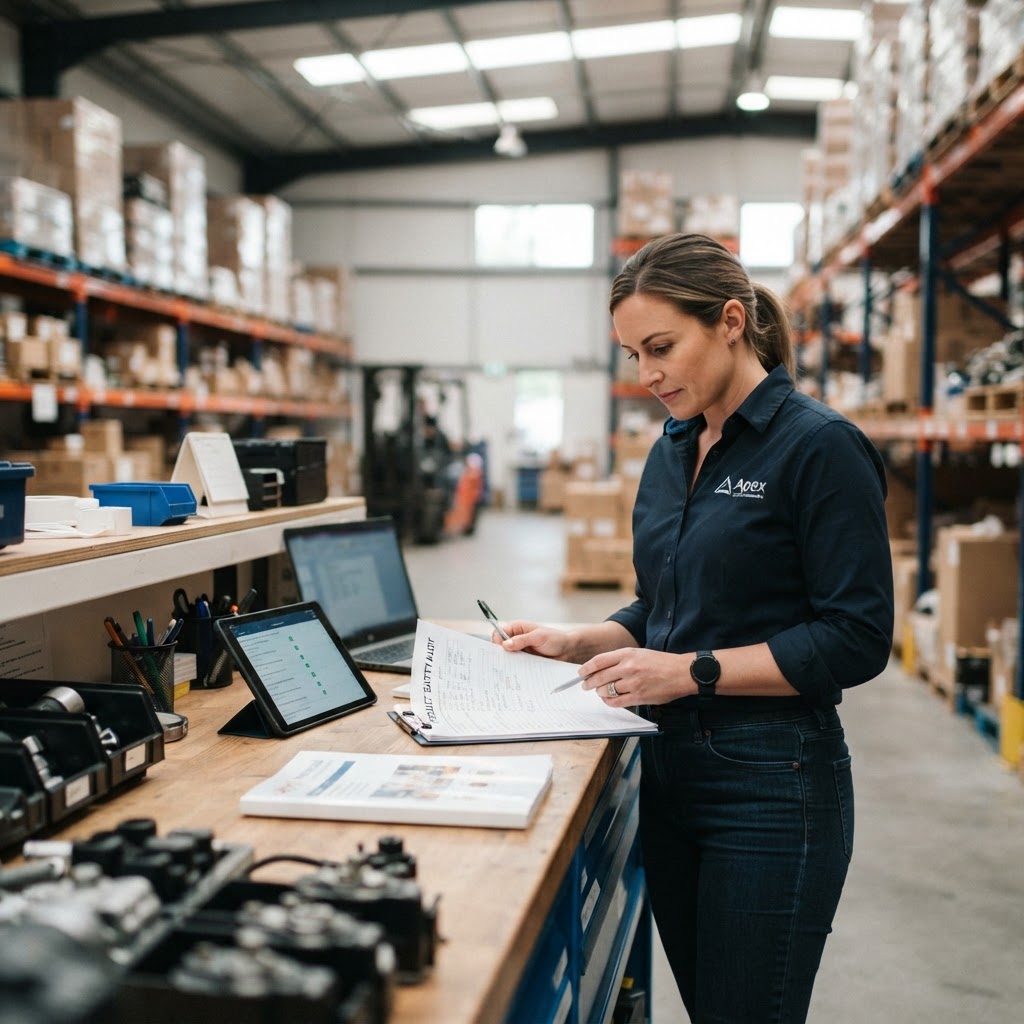
- Product liability insurance protects your business from financial ruin when a product causes injury, illness, or property damage.
- Even if you don’t manufacture the product yourself, you can still be held liable if you sell or distribute it.
- Product defect coverage typically addresses design flaws, manufacturing errors, and failure-to-warn issues.
- Risk management is not just about safety; it is a foundational pillar of small business insurance that ensures long-term operational continuity.
- Product recall protection is an essential add-on for businesses in the supply chain to cover the logistical costs of pulling defective goods from the market.
As we navigate the commercial landscape of 2026, the complexity of global supply chains and the rapid evolution of consumer protection laws have made risk management more critical than ever for business owners. Whether you are a startup selling niche handicrafts on an e-commerce platform or an established regional manufacturer, the risk of a product-related lawsuit is a constant shadow hanging over your operations. Many entrepreneurs mistakenly assume that because they do not manufacture their goods from scratch, they are immune to legal consequences, but modern legislation often casts a wide net that captures distributors, wholesalers, and retailers alike. Understanding the nuances of product liability insurance is no longer just an administrative task for the accounting department; it is a vital strategy for protecting your brand’s reputation and your company’s solvency. In this comprehensive guide, the insureiqguru Editorial Team explores why this coverage remains a non-negotiable component of a robust small business insurance portfolio and how you can navigate the claims process effectively in an increasingly litigious environment.
What Is Product Liability Insurance?
At its core, product liability insurance is a specific type of commercial insurance designed to shield businesses from the significant financial burdens that arise when a product causes physical injury or property damage. When a consumer uses a product—or even attempts to use it—and experiences harm, they may pursue legal action against anyone involved in the chain of commerce. This includes everyone from the original designer and manufacturer to the wholesaler and the final retailer. Without adequate protection, a single liability claim can lead to legal defense fees, medical costs, and compensatory damages that far exceed the liquid assets of a small or medium-sized enterprise.
It is important to distinguish this coverage from general liability insurance. While general liability covers accidents that happen on your premises or through your general day-to-day operations, product liability specifically focuses on the goods you have placed into the stream of commerce. Even if your internal quality control processes are meticulous, human error, unforeseen material fatigue, or environmental factors can result in a defective product reaching the customer. This insurance acts as a financial buffer, ensuring that your business can cover the costs of defending against these claims—even those that may eventually be proven groundless.
Furthermore, this coverage frequently addresses the nuance of product defect coverage, which is essential for companies dealing with complex supply chains. Many modern policies also offer extensions for related legal risks. For instance, when a product is found to be dangerous, the regulatory scrutiny or consumer backlash can be overwhelming. Some policies may be bundled or structured to include product recall protection, which helps defray the heavy costs of notifying customers, retrieving products, and disposing of them safely. As we look toward the business climate of 2026, where digital transparency is the norm, having this insurance is often a prerequisite for securing contracts with larger distributors, who will almost certainly require proof of coverage before allowing you to list your items in their stores or online marketplaces.
From an operational standpoint, having this insurance changes how your team approaches safety. When a business knows it is insured, it can afford to be transparent about potential issues rather than hiding them out of fear of bankruptcy. This shifts the focus from defensive litigation tactics to proactive risk management. By working closely with an insurance advisor, businesses can identify potential vulnerabilities in their production cycle or sourcing strategy, effectively utilizing their policy as a diagnostic tool rather than just a safety net. For the modern entrepreneur, viewing this coverage as a necessary investment in stability, rather than an unwanted overhead cost, is the hallmark of a resilient enterprise.
Who Needs Product Liability Coverage?
The misconception that product liability insurance is only for heavy industrial manufacturers is one of the most dangerous myths in the business world. In reality, the criteria for needing this coverage are based on your role in the supply chain rather than the complexity of your product. If you bring a product into the market, you are essentially “signing” for its safety. This means that retailers, wholesalers, and even private-label brands are prime targets for litigation if something goes wrong. Even businesses that sell digital products with accompanying hardware, or companies that modify products, find themselves in the crosshairs of liability laws.
Consider the e-commerce landscape. Many small businesses source products from overseas, rebrand them, and sell them through popular online marketplaces. Under many jurisdictions, the entity that puts its name on the label is considered the manufacturer in the eyes of the law. If a faulty battery pack in a branded gadget causes a fire, the distributor or the private-label owner is often the first entity sought for damages. Therefore, if your business involves selling, importing, distributing, or manufacturing physical goods, you are at risk. The legal principle of “strict liability” means that a claimant does not always need to prove that you were negligent; they only need to prove that the product was defective and that the defect caused them harm.
To help business owners identify their specific coverage needs, the following table breaks down how different entities should approach their liability requirements:
| Business Type | Primary Exposure | Best For |
|---|---|---|
| Retailers/E-commerce | Liability for goods sold | Broad-form product liability |
| Component Manufacturers | Integrity of parts | Manufacturing insurance |
| Private Labelers | Brand accountability | Policy with broad naming rights |
| Wholesalers/Distributors | Storage and handling | Liability with transit coverage |
Furthermore, businesses operating in specialized sectors—such as food and beverage, pharmaceuticals, toys, and electronics—face heightened regulatory requirements. For these sectors, manufacturing insurance that includes comprehensive product liability is often mandated by contractual obligations from partners or regulators. Even if you run a “low-risk” business, such as selling apparel, you are not immune. Synthetic fibers or chemicals used in clothing dyes have historically led to skin irritation claims that resulted in significant class-action lawsuits. When you factor in the rising costs of legal defense, it becomes clear that for almost any business handling physical inventory, the question is not “Should I have this insurance?” but rather “How much coverage is sufficient to protect my specific operational risk?”
Finally, consider the long-tail nature of these claims. A product you sold three years ago could result in a claim tomorrow. This is why maintaining a continuous policy is crucial. Many policies operate on an “occurrence” basis, meaning they cover incidents that happen while the policy is active, regardless of when the claim is filed. As you expand your inventory or enter new markets, your risk profile shifts, requiring a professional review of your policy limits to ensure that your small business insurance keeps pace with your growth. Ignoring these requirements in 2026 can be catastrophic, as modern search engines and consumer advocacy sites can turn a single claim into a viral reputation issue, multiplying the financial impact far beyond the courtroom.
Common Types of Product Defects Explained
When legal experts and insurance adjusters talk about liability, they generally categorize product defects into three distinct areas. Understanding these categories is vital for anyone engaging in risk management, as it helps identify exactly where a potential breakdown might occur in your supply chain. These categories dictate how a court views the liability of the business and determine the complexity of the defense. Whether you are dealing with a simple physical item or a sophisticated technical product, the following classifications form the foundation of most liability claims.
First, we have “Design Defects.” These are perhaps the most dangerous from a company’s perspective because they imply that the product is inherently dangerous by design—not because it was built incorrectly, but because the blueprint itself was flawed. For example, if a child’s toy is designed with small parts that are easily detached despite being intended for toddlers, the design itself is the problem. If a claim is successful here, it often implies that the entire product line is dangerous, which can lead to massive class-action lawsuits and expensive, mandatory recalls. Product defect coverage in these cases is essential to cover the long-term legal battle, as you will likely have to prove that no safer, cost-effective alternative existed during the design phase.
Second, we encounter “Manufacturing Defects.” These occur when the product design is sound, but something goes wrong during the assembly or creation process. Perhaps a machine calibration was slightly off, or a contaminated batch of raw materials was introduced. In these cases, only a specific batch or a select number of units are typically affected. While still serious, these claims are often easier to isolate than design flaws. For manufacturers, having comprehensive manufacturing insurance is critical here, as it may cover the costs associated with identifying the specific batch and managing the resulting liabilities. The ability to demonstrate a rigorous quality assurance program is often a key factor in these insurance negotiations, as it signals to your insurer that you are proactively minimizing the risk of a “bad batch” escaping your facility.
Third, we have “Failure-to-Warn” or “Marketing Defects.” This is the most common area where companies of all sizes—even those with high-quality, perfectly manufactured goods—find themselves in trouble. This defect refers to the inadequacy of instructions or warnings provided with the product. If a consumer is injured because they used a product in a way that wasn’t explicitly warned against, or if the assembly instructions were so ambiguous that they led to a hazardous configuration, the business may be held liable. In 2026, as user interfaces become more digitized, this also extends to digital manuals and app-based instructions. If your labeling, packaging, or digital documentation is unclear about the hazards associated with the product’s use, you have created a liability vacuum that can be easily exploited in court.
Integrating these categories into your risk management strategy involves more than just buying insurance. It requires a cross-functional review of your entire product lifecycle. Product designers must consider the end-user’s potential for misuse, manufacturers must maintain documented quality logs for every production run, and marketing departments must ensure that warning labels are not only visible but also legally compliant with local and international standards. By treating these three defect types as distinct risk categories, business owners can create a layered defense system that minimizes the likelihood of a claim ever reaching the threshold of litigation. Insurance is the final safety net, but internal controls are the primary wall against liability.
What Does Product Liability Insurance Cover?
A frequent question among business owners is what exactly falls under the umbrella of product liability insurance. While specific policy wordings vary between providers, the core of the coverage is focused on the aftermath of a product causing harm. It is designed to act as your financial proxy in the event that your product is alleged to have caused a loss. This coverage is generally triggered when a third party—a customer or another business—claims that your product led to physical injuries or property damage. However, the scope of coverage is multifaceted, and understanding its components is key to ensuring you are not underinsured.
Legal Defense Fees: The most immediate and often the most expensive component of a liability claim is the cost of legal representation. Litigation can drag on for years, involving discovery, expert witness fees, and courtroom hours. Even if your business is found not liable, the cost to defend yourself can be ruinous. Your policy covers the cost of hiring specialized legal counsel, gathering evidence, and navigating the complexities of the judicial system. For many small businesses, this “cost of defense” coverage is the primary value of the policy, as it allows them to fight claims without draining their working capital.
Compensatory Damages: If a court finds your business liable for damages, you may be required to pay the claimant for their losses. This can include medical bills, lost wages, and rehabilitation costs for an injured person. In the case of property damage, this could cover the repair or replacement costs of items destroyed by your product. These compensatory damages are designed to make the victim “whole” again, and they can reach astronomical figures depending on the severity of the incident. Your policy limits are essentially the maximum amount the insurer will pay toward these judgments, making it vital to select limits that reflect the worst-case scenario for your specific product type.
Settlement Costs: Not all cases go to trial. In fact, most liability claims are settled out of court to avoid the uncertainty and expense of a jury verdict. Your insurer will generally manage the negotiation process with the claimant’s legal team. A well-structured policy allows the insurer to reach a settlement that balances the cost of the payout against the predicted costs of full-scale litigation. This ensures that your business can resolve the issue discreetly and move forward, avoiding the reputational damage that can stem from a high-profile, prolonged court battle.
Product recall protection: This is an increasingly sought-after add-on. Traditional product liability insurance does not typically cover the costs of a voluntary or mandatory recall. If you discover a defect and decide to pull your products from shelves, you are responsible for the logistics, communication, and disposal costs. However, many insurers now offer specific recall coverage as a supplemental endorsement. This covers expenses such as customer notification, the shipping of returned goods, and the cost of destruction. As supply chain volatility continues into 2026, this protection is becoming a standard expectation for any business aiming to maintain trust in the market. Knowing that you have the resources to perform a safe and efficient recall can prevent a localized mistake from becoming a brand-ending crisis.
Real-World Examples of Liability Claims
To truly understand the necessity of product liability insurance, it is helpful to look at how these claims manifest in the real world. Many entrepreneurs think of “defective products” as large, obvious disasters, like an exploding lithium battery. While those certainly happen, the vast majority of claims are much more nuanced. Consider the case of a home goods company that imported trendy, lightweight coffee carafes. The design appeared safe, but over time, the handle design proved prone to stress fractures. Several customers suffered minor burns when the handles snapped during normal use. Because the company was the importer of record, they were held liable. Their liability policy covered the medical bills of the injured parties and the cost of a nationwide recall, saving the company from complete closure.
Another classic scenario involves the “failure-to-warn” issue. A company producing a natural, organic cleaning agent experienced a claim when a user mixed their product with a common household bleach, creating a hazardous chemical reaction. The product label warned against mixing with other chemicals but did not explicitly name bleach. The claimant argued that the warning was insufficient. While the company eventually settled the case, the legal fees alone were significant. This scenario highlights how small businesses often overlook the importance of precise, expert-vetted labeling. Without the support of their insurer’s legal and technical teams, the company would have been forced to navigate complex chemical-safety regulations while simultaneously defending their brand’s integrity.
We must also consider the role of small business insurance in the retail sector. A boutique clothing brand that sourced specialized synthetic fabrics faced a lawsuit when a batch of garments caused severe allergic reactions among several customers. The issue was traced back to a specific chemical dye used by an overseas supplier. The brand owner, believing they were just a reseller, had no product liability coverage. They were forced to cover the legal costs out-of-pocket while their brand’s reputation took a hit on social media. Had they possessed a robust policy, the insurer would have likely stepped in to handle the product testing, the settlement negotiations, and the logistics of removing the defective garments from retail partners, likely minimizing the public fallout.
In 2026, these scenarios are only becoming more common due to the rapid growth of “niche” products. When a business creates a new product category—like a smart-home integration tool or a specialized fitness accessory—there is no historical “standard of care” to rely on. These businesses are often the first to experience these kinds of liabilities. For example, a startup creating an app-controlled exercise machine might face a claim not just for mechanical failure, but for a software glitch that causes the machine to move unexpectedly. This blurs the line between software liability and physical product liability insurance. Businesses must ensure that their policies are flexible enough to bridge these gaps, as today’s products are rarely just “physical objects” and are almost always part of a complex, interconnected ecosystem.
How Product Liability Insurance Differs from General Liability
Business owners often assume that their General Liability (GL) insurance policy acts as a catch-all safety net for every potential lawsuit. However, this is a dangerous misconception. While General Liability is a fundamental component of any small business insurance strategy, it is intentionally limited in scope, particularly when it comes to the specific, complex risks associated with physical goods sold to the public.
General Liability insurance is primarily designed to cover “premises and operations” risks. It protects your business against claims of bodily injury or property damage that occur on your business property—for instance, if a customer slips and falls in your retail store—or claims of personal and advertising injury, such as libel, slander, or copyright infringement. In some policies, there is a small provision for “products-completed operations” coverage, but this is frequently insufficient for manufacturers, wholesalers, and retailers who handle complex supply chains.
Product Liability insurance is a specialized form of manufacturing insurance and retail protection that triggers specifically when a consumer alleges that your product caused them harm or financial loss due to a defect. The distinction lies in the origin of the injury. If a customer trips over a rug in your lobby, that is a GL claim. If that same customer buys the rug, takes it home, and the rug’s chemical treatment causes a severe allergic reaction or a fire, that is a product liability claim.
Because product liability involves the intricate web of design, manufacturing, and marketing, the risks are often exponentially higher than standard slip-and-fall claims. A single design flaw can affect thousands of units simultaneously, leading to a class-action lawsuit. General Liability policies often carry sub-limits for product-related claims, meaning the total payout cap might be far too low to handle the legal defense costs and settlement amounts associated with a major recall or a mass tort claim.
| Feature | General Liability (GL) | Product Liability Insurance | Best For |
|---|---|---|---|
| Primary Focus | Physical Premises & Operations | Product Defects & Failures | All Businesses |
| Claim Trigger | Slip, fall, or property damage on-site | Injury or harm caused by sold goods | Manufacturers & Retailers |
| Scope | Broad, operational coverage | Specific to design, mfg, & marketing | E-commerce & Physical Goods |
| Claim Scale | Usually localized/single person | Can involve widespread recalls/class actions | Scalable Product Businesses |
Key Factors That Influence Insurance Costs
Calculating the premium for product liability insurance is rarely a “one-size-fits-all” process. Insurance underwriters look at a variety of variables to assess your unique risk profile. Understanding these factors is vital for any entrepreneur seeking to manage their business liability costs effectively.
The Nature of the Product: This is arguably the most significant factor. An insurance carrier will view a company manufacturing children’s toys, medical devices, or power tools as significantly higher risk than a company selling stationery or decorative art. Products that carry an inherent risk of ingestion, flammable components, or complex electrical circuitry will always attract higher premiums due to the likelihood of severe injury.
Annual Revenue and Sales Volume: Your total sales volume acts as a proxy for your exposure. The more units you have circulating in the marketplace, the higher the statistical probability that a defect will manifest or a user will misuse the item. Underwriters evaluate your gross annual revenue to determine the breadth of your market reach.
Product Lifecycle and Age: How long your products remain in circulation matters. Durable goods that last for decades present a different long-term risk profile than consumable products that are used and discarded within days. If your product has a long shelf life, your business remains exposed to potential litigation for much longer.
Quality Control Processes: A company with robust, documented quality assurance procedures, such as ISO certification or rigorous third-party testing, is viewed as a “better risk” by insurers. If you can demonstrate a proactive approach to identifying defects before they reach the consumer, you may be eligible for more favorable pricing.
Claims History: Previous history of litigation is a major red flag. If your business has faced previous product liability lawsuits, insurers will scrutinize your current risk management protocols. Conversely, a clean history of zero claims over many years of operation can help you negotiate better rates.
Essential Steps to Reduce Your Product Liability Risk
Insurance is the safety net, but risk management is the platform that keeps your business from falling in the first place. By adopting a “safety-first” culture, you can minimize your insurance premiums while simultaneously protecting your brand reputation.
- Implement Stringent Quality Control (QC): Establish a multi-tiered inspection process. From raw material sourcing to the final assembly, every stage should involve documented checks. If you outsource production, ensure that your contractual agreements include strict indemnity clauses and quality requirements.
- Maintain Detailed Documentation: Keep records of every batch, testing result, and user feedback submission. If a claim arises, this “paper trail” can prove that your company followed industry standards and regulatory requirements, which is essential for a successful legal defense.
- Perfect Your Labeling and Warnings: A surprising number of liability cases are won by plaintiffs because of “failure to warn.” Ensure your user manuals, packaging, and digital guides explicitly list potential risks, proper usage instructions, and safety disclaimers. Use clear, non-technical language that the average consumer can understand.
- Conduct Regular Product Testing: Don’t rely solely on initial design testing. Periodic testing throughout the product’s lifecycle—and following any updates or manufacturing changes—helps catch latent defects before they become public health or safety concerns.
- Establish a Clear Recall Plan: Even the most careful companies can experience a manufacturing error. Having a documented, tested, and swift recall procedure allows you to control the narrative, limit consumer harm, and mitigate the damage that a widespread product failure can cause.
How to Choose the Right Coverage Limits for Your Business
Choosing the correct coverage limits is an exercise in balancing cost and peace of mind. Under-insuring leaves your business vulnerable to bankruptcy if a catastrophic claim occurs, while over-insuring wastes precious capital that could be reinvested into growth. Experts generally recommend the following approach when determining your policy limits:
First, analyze your potential “worst-case scenario.” Consider the total cost of a recall, the legal fees for a multi-year defense, and the potential settlement amount if a serious injury were to occur. For many small businesses, a one-million-dollar per-occurrence limit is the entry point, but businesses with large distribution networks often find that two, five, or ten-million-dollar aggregate limits are necessary to provide adequate protection.
Second, review your contracts. If you sell through major retailers or operate within the B2B space, your partners may require you to carry specific minimum limits of product liability insurance as a condition of doing business. Failing to meet these requirements can result in the loss of major contracts.
Third, consult with a broker who understands your specific niche. A generic insurance provider may not understand the specific risks of the medical device sector versus the artisan food sector. A specialist broker can help you interpret industry-specific trends and suggest limits that align with the risks typical for your sector.
Frequently Asked Questions
Does product liability insurance cover me if my supplier is at fault?
While insurance generally covers claims made against your business, you may be able to seek recovery from the supplier if a defect originated at their end. This is often handled through “vendor coverage” or contractual indemnity clauses. Always ensure your contracts with suppliers clearly define who is responsible for defects in raw materials or components.
Is product recall protection included in standard policies?
In many cases, standard product liability policies do not cover the direct costs of a product recall, such as the logistics of retrieving items or customer refunds. You often need to add a “product recall endorsement” or a separate policy to cover these specific expenses, which can be significant.
What happens if I sell my products internationally?
Selling globally creates complex legal exposure. A domestic policy usually only covers claims within your home country. If you export, you may need a global or export-specific liability policy to ensure you are protected against lawsuits initiated in foreign jurisdictions where legal standards differ significantly.
Can I get coverage if I am a startup with no sales history?
Yes, startups can and should get coverage. Insurers often use business plans, industry standards, and the background of the founders to underwrite policies for new businesses. It is better to establish coverage early, as some contracts require a minimum period of insurance history.
What is the difference between “claims-made” and “occurrence” policies?
An “occurrence” policy covers you for any claim arising from a product sold during the policy period, regardless of when the claim is filed. A “claims-made” policy only provides coverage if the policy is active both when the product was sold and when the claim is filed. Understanding this distinction is crucial to avoid coverage gaps.
Does this insurance protect my business reputation during a scandal?
While the insurance pays for legal defense and damages, it does not typically cover the cost of public relations or crisis management firms. However, managing the legal side of a product scandal effectively is the first step toward salvaging your reputation, and some comprehensive policies now offer limited coverage for reputation-related costs.
Conclusion
Product liability is an unavoidable reality for any business that brings physical goods to market in 2026 and beyond. As supply chains become more global, consumer expectations for safety increase, and the legal landscape grows more complex, relying on guesswork is no longer a viable business strategy. By distinguishing between general and product-specific liability, implementing rigorous risk management protocols, and selecting insurance coverage that aligns with your specific exposure, you secure not just your balance sheet, but the future of your brand.
Don’t wait for a notification letter from a law firm to start thinking about your risk profile. The best time to assess your coverage is today, while you have full control over your operations and quality systems. Take the initiative to review your policy with a qualified broker, audit your manufacturing partners, and ensure your labeling leaves no room for ambiguity.
Ready to fortify your business against unforeseen risks? Contact our network of independent insurance specialists today to get a personalized assessment of your liability needs and find the coverage that makes the most sense for your 2026 operations.
By insureiqguru Editorial Team
Leave a Reply